





The cranes are moving again. After a period of stagnation defined by soaring inflation, high interest rates, and geopolitical uncertainty, the European construction sector is showing definitive signs of life. But here is the critical question for developers, contractors, and investors: Are you prepared for the new shape of this recovery?
For the past two years, the narrative has been one of survival. Input costs skyrocketed, and financing dried up. However, data from late 2024 and early 2025 suggests a pivot. We are not just seeing a return to business as usual; we are witnessing a fundamental transformation driven by the “Renovation Wave,” green energy mandates, and a desperate demand for affordable housing.
The European construction rebound is real, but it is uneven. It favors those who understand the new rules of sustainability and digitalization. If you are still operating with a 2019 mindset, you will miss the boat.
In this comprehensive guide, we will dissect the anatomy of this recovery. We will move beyond vague economic theories and provide you with actionable strategies to position your business for profit. Whether you are a small contractor in Manchester or a developer in Munich, this is your roadmap to navigating the resurgence of Europe’s built environment.
۱. Decoding the Market: Signs of the European Construction Rebound
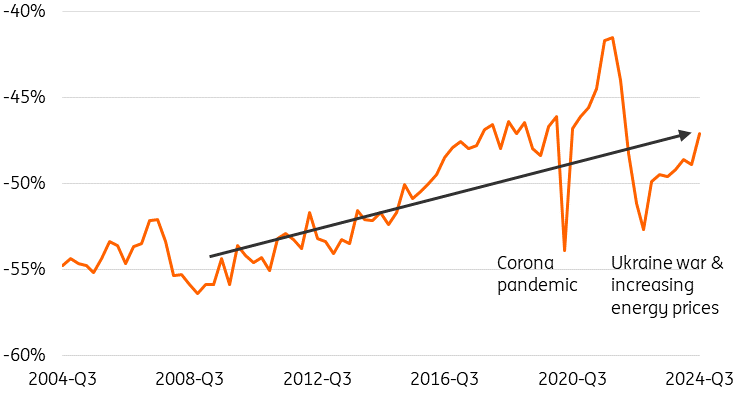
To navigate the future, we must accurately read the present. The doom and gloom of recent years is lifting, but the recovery is specific to certain sectors. Understanding where the money is flowing is the first step to capitalization.
The Shift from Stagnation to Stability
According to recent reports from Euroconstruct and major financial institutions, the sharp decline in residential permits has bottomed out. While interest rates remain higher than the zero-percent era, stability has returned. Investors hate uncertainty more than they hate high costs. With inflation stabilizing across the Eurozone, capital is beginning to unlock.
The Two-Speed Recovery
Not all Europe is rebounding at the same pace. We are seeing a “Two-Speed Europe”:
-
Eastern & Central Europe: Countries like Poland and Romania are seeing faster growth due to infrastructure spending and nearshoring of manufacturing.
-
Western Europe: Germany and France are recovering slower, driven primarily by renovation rather than new builds.
Actionable Strategy: The Market Audit
Do not rely on general EU statistics. You need to audit your specific micro-market.
-
Step 1: Check local municipal planning approvals for the last quarter. Are they trending up?
-
Step 2: Identify the funding source. Is it private equity (volatile) or state-backed infrastructure (stable)?
-
Step 3: Pivot your marketing. If new builds are slow in your region, aggressively market toward complex renovation projects.
Key Insight: The European construction rebound is currently volume-driven by civil engineering and non-residential renovation, not just new luxury apartments.
۲. The “Renovation Wave”: The Engine of Profit
If there is one gold rush in Europe right now, it is retrofitting. The European Union’s “Renovation Wave” strategy aims to double the renovation rates in the next ten years to meet climate goals. This is not just policy; it is a pipeline of guaranteed work.
Why Renovation Beats New Build
New builds are capital intensive and sensitive to land prices. Renovation is labor-intensive and supported by subsidies. With the Energy Performance of Buildings Directive (EPBD) tightening, millions of building owners must upgrade their properties or face penalties (and loss of asset value).
Targeting the “Worst Performing” Buildings
The biggest opportunity lies in “G” and “F” rated buildings. These assets are currently distressed. Upgrading them to a “C” or “B” rating creates massive instant equity.
Table: Renovation vs. New Build Opportunities
| Feature | New Build Projects | Deep Renovation / Retrofit |
| Permitting Speed | Slow (1-3 years) | Fast (3-6 months) |
| Material Cost Impact | High | Medium |
| Subsidies Available | Limited | High (EU Grants) |
| Competition | High (Major Developers) | Moderate (Specialized SMEs) |
Actionable Strategy: Become an Energy Consultant
Don’t just offer construction services; offer “Energy Compliance.”
-
Partner Up: Form a joint venture with a certified energy auditor.
-
The Pitch: Approach commercial building owners with a proposal that calculates ROI based on energy savings and increased asset value, not just construction costs.
-
Certify: Get your team certified in installing heat pumps and external insulation systems (EIFS). These are the two most in-demand retrofitting activities.
۳. Navigating Labor Shortages with Technology
The European construction rebound faces one massive hurdle: a chronic lack of skilled labor. The workforce is aging, and fewer young people are entering the trades. You cannot hire your way out of this problem; you must innovate your way out.
The Rise of Modular and Offsite Construction
Prefabrication is no longer about cheap, temporary structures. It is about precision engineering. shifting 40% of the work from the muddy site to a controlled factory floor reduces reliance on transient labor and minimizes weather delays.
BIM is No Longer Optional
Building Information Modeling (BIM) is now a requirement for public tenders in many EU countries. However, smaller firms still resist it. This is a mistake. BIM reduces rework—the biggest profit killer in construction—by detecting clashes before a shovel hits the ground.
Actionable Strategy: The “Hybrid Crew” Model
You need to do more with fewer people.
-
Implement Digital Tracking: Use apps like Procore or Fieldwire. If your site manager is still using pen and paper, you are losing 10% efficiency weekly.
-
Invest in Exoskeletons: It sounds futuristic, but mechanical exoskeletons for heavy lifting reduce worker fatigue and injury. This extends the career life of your older, most experienced workers.
-
Standardize: Instead of custom-building every detail, develop a “library” of standard details for your projects to speed up execution.
۴. Supply Chain Resilience: Sourcing for Stability
The pandemic and geopolitical conflicts taught us that Just-in-Time (JIT) delivery is dangerous. The recovery is increasing demand for materials, which could trigger a new wave of price volatility.
The Shift to “Just-in-Case”
Smart construction firms are moving to a “Just-in-Case” inventory model for critical, low-cost items (fixings, sealants) while securing long-term contracts for high-cost items (steel, concrete).
Local vs. Global
There is a strong push toward “Nearshoring.” Sourcing materials from within Europe (or even within your specific country) might look more expensive on the invoice than sourcing from Asia, but when you factor in transport reliability and tariffs (like CBAM – Carbon Border Adjustment Mechanism), local often wins.
Actionable Strategy: The Supplier Stress Test
Do not wait for a shortage to talk to your suppliers.
-
Diversify: Never rely on a single supplier for critical materials like cement or timber. Have three: a primary, a secondary, and a local emergency backup.
-
Lock Prices: Negotiate bulk purchases with a “hold for delivery” clause. You pay a deposit to lock the price, but the supplier holds the stock until you need it.
-
Check CBAM Compliance: If you import steel or aluminum, ensure your suppliers are compliant with the EU’s new Carbon Border tax, or you will face unexpected costs.
۵. Financing the Rebound: Where is the Money?
Banks are cautious, but liquidity is available if you know where to look. The European construction rebound is being fueled by “Green Finance.”
Green Bonds and ESG Loans
Banks are under pressure to clean up their loan books. They want to lend to green projects. If your project meets EU Taxonomy standards for sustainability, you can access loans with interest rates 0.5% to 1.5% lower than standard financing.
Public-Private Partnerships (PPPs)
Governments cannot fund infrastructure alone. We are seeing a resurgence of PPP models, especially in social housing and healthcare facilities. These contracts are complex but offer guaranteed long-term revenue.
Actionable Strategy: The “Green Folder”
When approaching a lender, prepare a specific “Green Folder” alongside your financial statements.
-
Certifications: Clearly list targeted certifications (BREEAM, LEED, DGNB).
-
Lifecycle Assessment: Show a basic calculation of the building’s carbon footprint.
-
EU Taxonomy Alignment: Explicitly state how your project aligns with EU environmental goals. This language triggers “green light” protocols in bank credit committees.
۶. The Infrastructure Boom: Beyond Residential
While residential construction gets the headlines, civil engineering is the backbone of the European construction rebound.
Energy Infrastructure
Europe is rewiring itself. The transition to renewable energy requires massive construction work: wind farm bases, solar parks, hydrogen storage facilities, and grid expansion.
Transport and Logistics
The growth of e-commerce has not stopped. The demand for “last-mile” logistics centers and high-tech warehouses remains insatiable. Furthermore, rail infrastructure is seeing massive investment to replace short-haul flights.
Actionable Strategy: Diversify into Civils
If you are a residential builder, look for “crossover” skills.
-
Concrete Expertise: If you pour foundations for condos, you can pour bases for EV charging stations.
-
Groundworks: The skills for residential groundworks transfer directly to light infrastructure projects.
-
Sub-contracting: Large infrastructure giants often need agile local subcontractors for smaller packages of work. Register on the supply chain portals of major players like VINCI, Bouygues, or Hochtief.
۷. Smart Cities and Digital Twins
The buildings of the future are data platforms. The concept of “Smart Cities” is moving from theory to reality in cities like Amsterdam, Barcelona, and Copenhagen.
What is a Digital Twin?
A Digital Twin is a virtual replica of a physical building. It allows owners to simulate maintenance, energy usage, and occupancy. For construction companies, handing over a Digital Twin alongside the physical keys is a massive value-add.
IoT (Internet of Things) Integration
Buildings are being wired with sensors for air quality, occupancy, and temperature. Installing these systems requires a new type of coordination between electricians, IT specialists, and general contractors.
Actionable Strategy: Upskill in Low-Voltage Systems
The “Smart” layer of a building is the highest margin layer.
-
Training: Send your electrical teams to training for smart home protocols (KNX, Zigbee, Dali).
-
Partnerships: Partner with a system integrator. You build the shell; they give it a brain.
-
Maintenance Contracts: Offer post-construction maintenance contracts based on the data from these smart sensors. This creates recurring monthly revenue (MRR) for your construction business.

۸. Risk Management in a Recovering Market
A rebounding market is dangerous because it encourages over-expansion. Many construction companies go bankrupt during the recovery phase, not the recession, because they run out of cash trying to fund growth.
The Cash Flow Trap
Taking on too many projects requires upfront cash for materials and labor. If payment cycles are slow (60-90 days), you can be profitable on paper but insolvent in the bank.
Inflation Clauses
Although inflation has slowed, it has not disappeared. Fixed-price contracts are suicide in a volatile recovery.
Actionable Strategy: The “Open Book” Contract
Push for collaborative contracting models.
-
Escalation Clauses: Ensure every contract has a clause that adjusts the price if material costs rise by more than 5%.
-
Mobilization Payments: Demand higher upfront payments (15-20%) before mobilizing to site to cover your initial cash outlay.
-
Credit Checks: Be ruthless. Check the credit rating of your developers. If they are leveraging high-interest debt, they are a risk to you.
Conclusion: Seizing the Moment
The European construction rebound is not a tide that will lift all boats equally. It will lift the boats that are green, digital, and agile. The era of speculative, cheap-money building is over. We have entered the era of purposeful, efficient, and sustainable construction.
To thrive in 2025 and beyond, you must stop viewing yourself as just a builder. You are an environmental steward, a technology integrator, and a financial strategist.
Summary of Key Takeaways:
-
Pivot to Renovation: The “Renovation Wave” is the most secure pipeline of work.
-
Digitize or Die: BIM and digital tracking are non-negotiable for efficiency.
-
Secure the Supply: localize your supply chain to avoid global disruptions.
-
Green is Gold: align with EU Taxonomy to unlock cheaper financing.







نظرات ۰