


In the competitive world of the ceramic tile industry, do you know how to stand up to global giants? This analytical article examines the international challenges facing manufacturers and provides proven strategies for success. Read now to gain a competitive edge.
The New Battleground for Ceramics
In 2024, the global ceramic tile and sanitaryware market surpassed a value of $400 billion, with forecasts predicting it will reach $450 billion by 2026, growing at a Compound Annual Growth Rate (CAGR) of 6.2%. Amidst this impressive growth, a fundamental question arises: in an industry where Italy and Spain lead with quality and design, China and India compete aggressively on price, and Turkey and Brazil emerge as new players, how can a manufacturer maintain or increase its market share?
This is precisely the pain point many managers, exporters, and marketers in the ceramic tile industry grapple with. Rising logistics costs, evolving environmental standards, shifting consumer tastes, and trade tariff wars are just part of the complex obstacles ahead.
This article serves as a roadmap to navigate this minefield. Through a deep analysis of 7 key international competitive challenges, providing up-to-date data, and introducing successful strategies from industry leaders, we will equip you for strategic decision-making and creating sustainable competitive advantage.
۱. The Price vs. Quality War: The Core Challenge of the Global Tile Market
On the international stage of the ceramic tile industry, a clear battle line exists: the West versus the East. On one side, countries like Italy and Spain have solidified their position in the high-end market segment by leveraging a rich design heritage, technological innovation, and unparalleled quality. On the other, China, India, and Vietnam, utilizing massive production scale, lower labor costs, and government subsidies, have captured the mid-range and economy markets.
۱.۱. Current Situation Analysis and Key Data (2024-2025)
According to the Ceramic World Review:
-
The average production cost per square meter of tile in Italy is approximately €۱۵-۲۰, while in China it is around €۶-۹.
-
However, the profit margin for luxury Italian brands like Florim or Marazzi often exceeds 30%, whereas for mass-producing Chinese manufacturers, this figure barely reaches 10%.
-
The tariff war has also impacted this equation. Following the EU’s imposition of anti-dumping duties on Chinese tiles, China’s exports to Europe fell by about 12% in 2024, but its market share increased in Southeast Asia and Africa.
۱.۲. Survival Strategies: How to Endure in This War?
Manufacturers positioned in the middle of this spectrum (such as those in Turkey, Brazil, Iran, or Mexico) require intelligent hybrid strategies:
-
Niche Specialization: Focusing on a specific market segment, such as antibacterial tiles for hospitals, frost-resistant ceramics for cold regions, or unique traditional patterns.
-
Value Addition through Services: Offering design, installation, and extended warranty services can justify a higher product price.
-
Automation and Productivity: Investing in robotic and smart production lines to reduce labor costs and increase consistent precision and quality.
-
Supply Chain Localization: Shifting towards local or regional raw materials to reduce costs and logistical risks.
۲. The Great Logistics Wall and Unstable Supply Chains
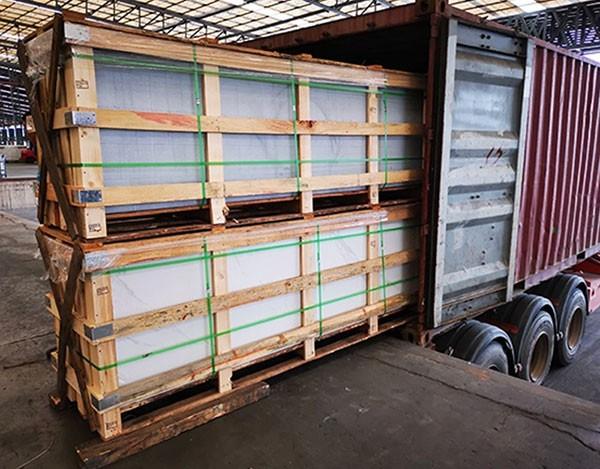
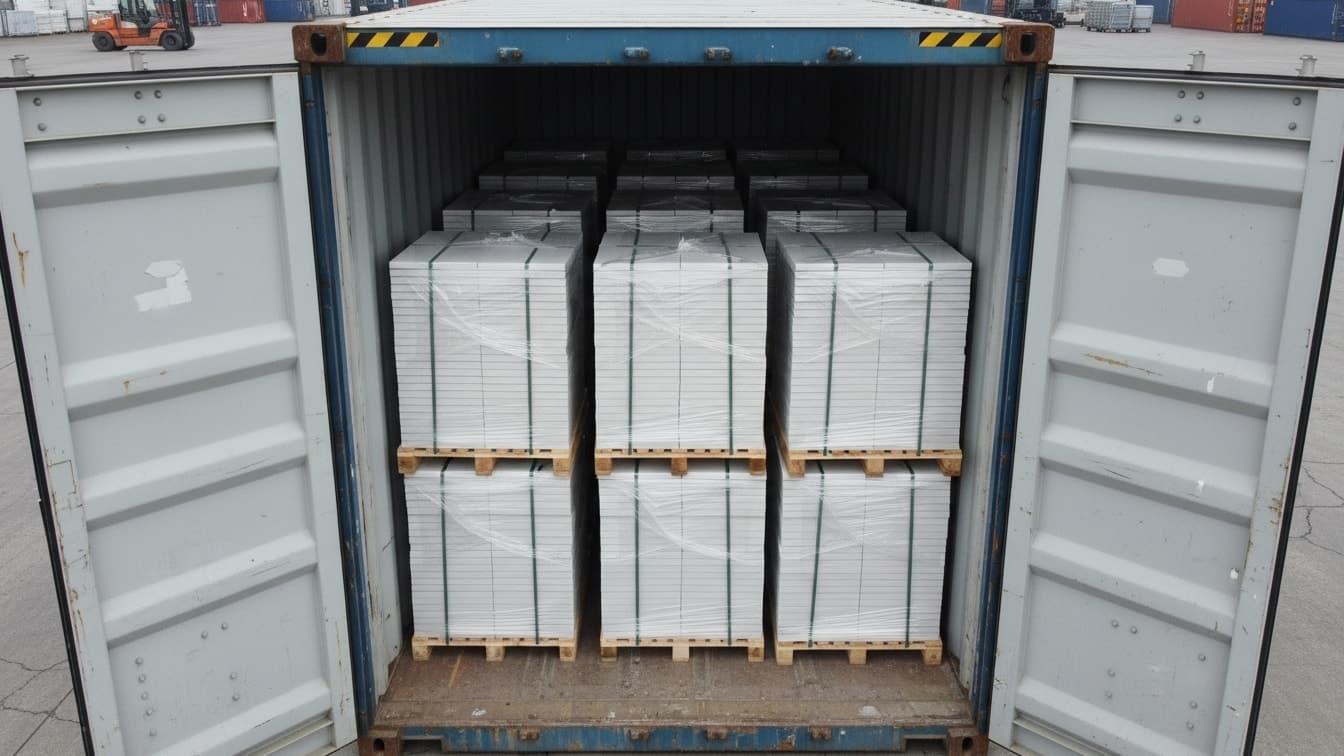
One of the deepest competitive challenges in the ceramic tile industry is the very nature of the product: heavy, bulky, and fragile. The global logistics crisis triggered by the pandemic and geopolitical conflicts exposed the vulnerability of this industry’s traditional supply chain.
۲.۱. Key Statistics You Should Know
-
The cost of shipping a container by sea from China to Western Europe rose from about $2,000 pre-crisis to a peak of $14,000 in 2022 and currently (2024) fluctuates between $3,500-$5,000.
-
According to a Deloitte report, approximately 68% of heavy industry manufacturers (including ceramics) experienced significant supply chain disruption in 2023.
-
Delays in supplying key raw materials like high-quality kaolin, feldspar, and color pigments can halt entire production lines.
۲.۲. Solutions for Building Logistical Resilience
-
Establishing Regional Hubs: Instead of direct export from the factory, setting up wholesale warehouses in key target markets (e.g., Eastern Europe, the Persian Gulf, or Central America) can reduce delivery times from months to weeks.
-
Diversifying Raw Material Suppliers: Dependence on a single country or specific mine is highly risky. Seeking alternative sources in different geographical regions is essential.
-
Packaging Optimization: Investing in smart, lightweight, multi-layer packaging that protects the product while occupying less space can significantly reduce shipping costs.
-
Advanced Forecasting and Planning: Utilizing ERP and SCM software equipped with AI for demand forecasting and inventory management.
۳. The Green Revolution: Mounting Pressure from Environmental Standards
The European Union’s Green Deal is setting the future policy for many industries, including ceramics. Regulations like the EU Carbon Border Adjustment Mechanism (CBAM) directly tax exporters with carbon-intensive production processes. This poses a major challenge for manufacturers reliant on fossil fuels.
۳.۱. People Also Ask: How Polluting is the Ceramic Tile Industry?
-
Is ceramic tile production harmful to the environment?
Yes, traditionally it is an energy-intensive industry. Firing tiles in kilns at 1200-1300°C consumes significant natural gas or electricity, leading to CO2 emissions. Additionally, raw material extraction can have environmental impacts. -
What are the green solutions in this industry?
-
Using modern kilns with heat recovery systems that reduce energy consumption by up to 30%.
-
Replacing fuels with renewable energy sources like biomass or solar power.
-
Recycling factory waste (crushed tiles) back into the production line (creating a closed-loop cycle).
-
Producing thin tiles, which require less raw material and energy.
-
۳.۲. How to Turn “Being Green” into a Competitive Advantage?
Obtaining international environmental certifications like LEED (for the product) or ISO 14001 (for the Environmental Management System) is no longer a luxury but a necessity for entering many advanced markets. Branding around sustainability and transparency in reporting a product’s carbon footprint can attract end customers (especially younger generations) and architects.
۴. The Transformation in Global Consumer Taste and Behavior
Today’s consumer is not just looking to cover a wall or floor. They seek identity expression, sensory experience, and smart solutions.
۴.۱. Top Design Trends for 2024-2026
-
Extreme Personalization: Demand is rising for digitally printed tiles with unique designs, even in small batches. Inkjet digital printing technology has made this possible.
-
Fusion of Texture and Function: Tiles that are antibacterial, anti-slip with specific textures, and self-cleaning (photocatalytic) are successful examples.
-
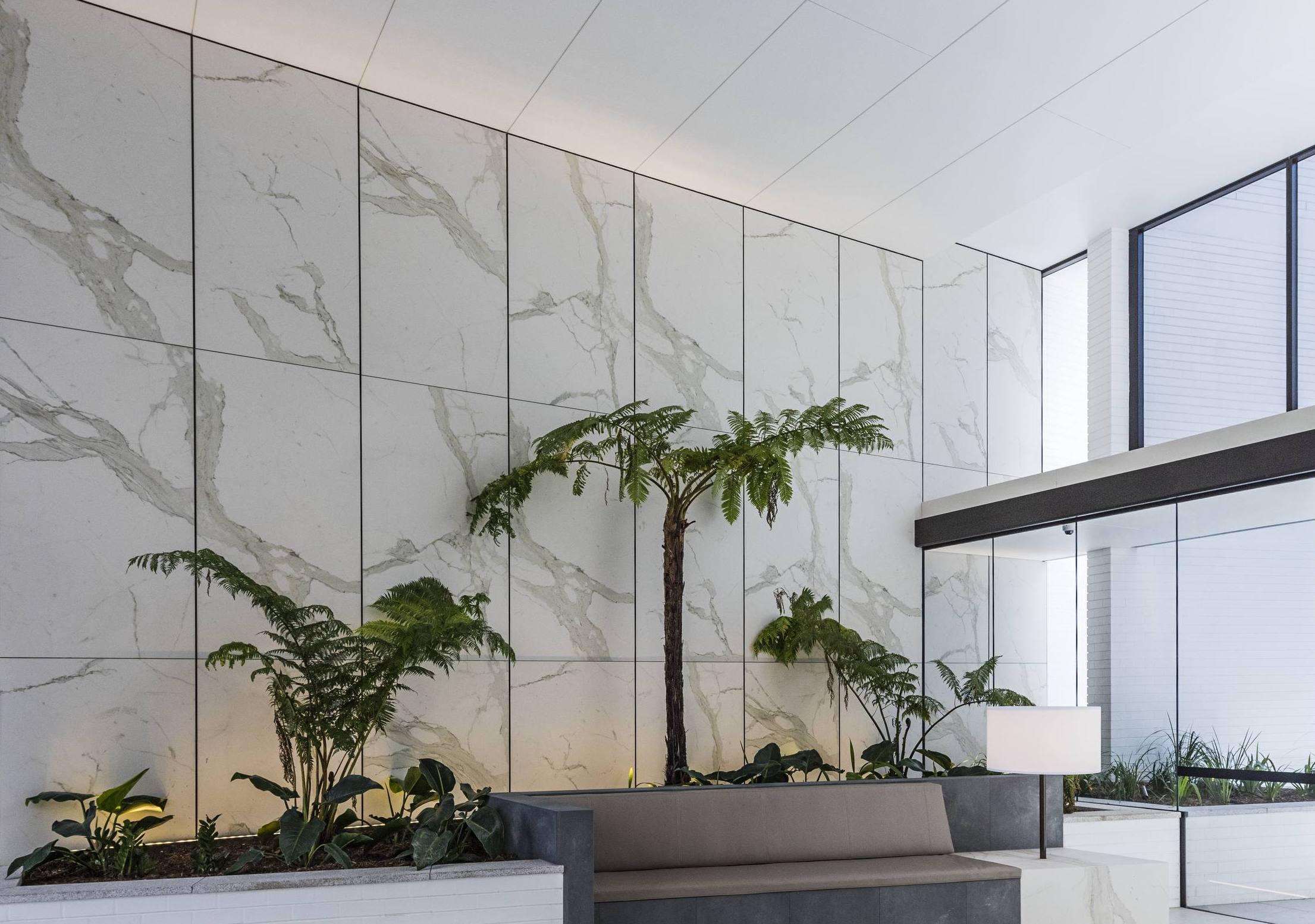
Endless (Fluid) Designs: Use of large-format slabs with marble or abstract patterns installed seamlessly to create a unified space.
-
Return to Authenticity: Trends show demand for handmade tiles, redefined traditional patterns (like modern paisley), and earthy colors (terracotta, jade green, indigo blue).
۴.۲. Marketing Strategy in the Digital Age
-
Augmented Reality (AR) and Visualization: Developing apps that allow customers to use their phone camera to virtually place and view chosen tiles on their walls at home.
-
Education and Content Creation: Creating blogs, videos, and training courses for architects, interior designers, and installers about the latest technologies and installation methods.
-
Activity on Specialized Platforms: Effective presence on platforms like Houzz, Pinterest, and ArchDaily where target audiences are active.
۵. Trade Barriers and Market Access: Tariffs, Standards, and Local Regulations
Every country has its own specific rules. Ignorance of these can lead to heavy fines, shipment rejections, or even market exclusion.
۵.۱. Three Main Non-Tariff Barriers
-
Technical Standards: Standards for water absorption, abrasion resistance, slip resistance, and emission of radioactive gases (e.g., EN 14411 in Europe, ANSI A137.1 in the USA).
-
Health and Safety Regulations: Restrictions on the use of heavy metals (lead, cadmium) in glazes and colors (REACH, Prop 65).
-
Packaging and Recycling Laws: Requirements to use recycled materials in packaging or pay recycling fees.
۵.۲. Guide to Navigating These Barriers
-
Collaboration with Local Consultants: Utilizing the services of trade or legal specialists in the target country.
-
Implementing a Robust Quality Control System: Ensuring product compliance with standards from the production stage itself.
-
Honesty in Documentation: Providing accurate material analysis sheets and certificates from reputable international laboratories.
Conclusion: Who Does the Future Belong To?
The ceramic tile industry stands on the brink of a major transformation. International competition is no longer based solely on raw price or quality, but on a complex combination of sustainability, digital innovation, logistical flexibility, and deep understanding of consumer behavior. Traditional giants may lose their place to more agile players if they ignore technology and the environment. Conversely, mass producers trapped in the low-margin game will struggle if they fail to create added value.
Final Key Takeaway: The future belongs to companies that can best define their “story.” A story where Italian superior quality blends with Scandinavian sustainability, Chinese technology, and unique local design. This story isn’t just in a brochure; it’s embedded in the product’s carbon footprint, its augmented reality app, its after-sales service, and the company’s ethical commitment.
The competition is fierce, but the opportunities are unparalleled. Is your business strategy ready to win the global ceramic battle?
For a professional analysis of your brand’s competitive position in international markets and to design a strategic roadmap, contact our consulting team.

نظرات ۰