

Master the logistics of the Iranian ceramic tile industry . Our 2026 guide covers everything from manufacturing and quality control to shipping routes to Africa and customs clearance. Optimize your supply chain today!
The New Silk Road of Construction
Did you know that as of 2026, Iran has solidified its position as one of the top five global producers in the ceramic tile industry? With an annual production capacity exceeding 700 million square meters, Iranian manufacturers have turned their gaze toward the horizon, specifically the booming construction markets of the African continent. For a developer in Nairobi or a wholesaler in Lagos, the question is no longer if they should source from Iran, but how to navigate the journey from a factory in Yazd to a warehouse in Mombasa.
The primary “pain point” for African importers has traditionally been the logistical “black box”—the uncertainty of shipping times, the complexity of international payments, and the fear of breakage during the long maritime transit. This article serves as a definitive roadmap. We will deconstruct the entire lifecycle of an export order, providing you with the technical knowledge needed to secure high-quality materials while minimizing overhead costs.
Whether you are dealing with large-format porcelain slabs or intricate decorative wall tiles, understanding the nuances of the ceramic tile industry in Iran is essential. We will explore the technological advancements in Iranian factories, the specific packaging standards required for cross-continental travel, and the strategic shipping corridors that connect the Persian Gulf to Africa’s most vital ports. By the end of this guide, you will possess a professional-grade understanding of the Iranian supply chain, leaving no stone—or tile—unturned.
۱. The Powerhouse: Understanding the Iranian Ceramic Tile Industry
The ceramic tile industry in Iran is not a monolithic entity; it is a highly specialized ecosystem centered around geographical hubs like Yazd, Isfahan, and Khorasan. These regions sit atop massive deposits of kaolin, feldspar, and silica, giving Iranian factories a vertical integration advantage that few other nations can claim.
The Technological Leap (2024–۲۰۲۶)
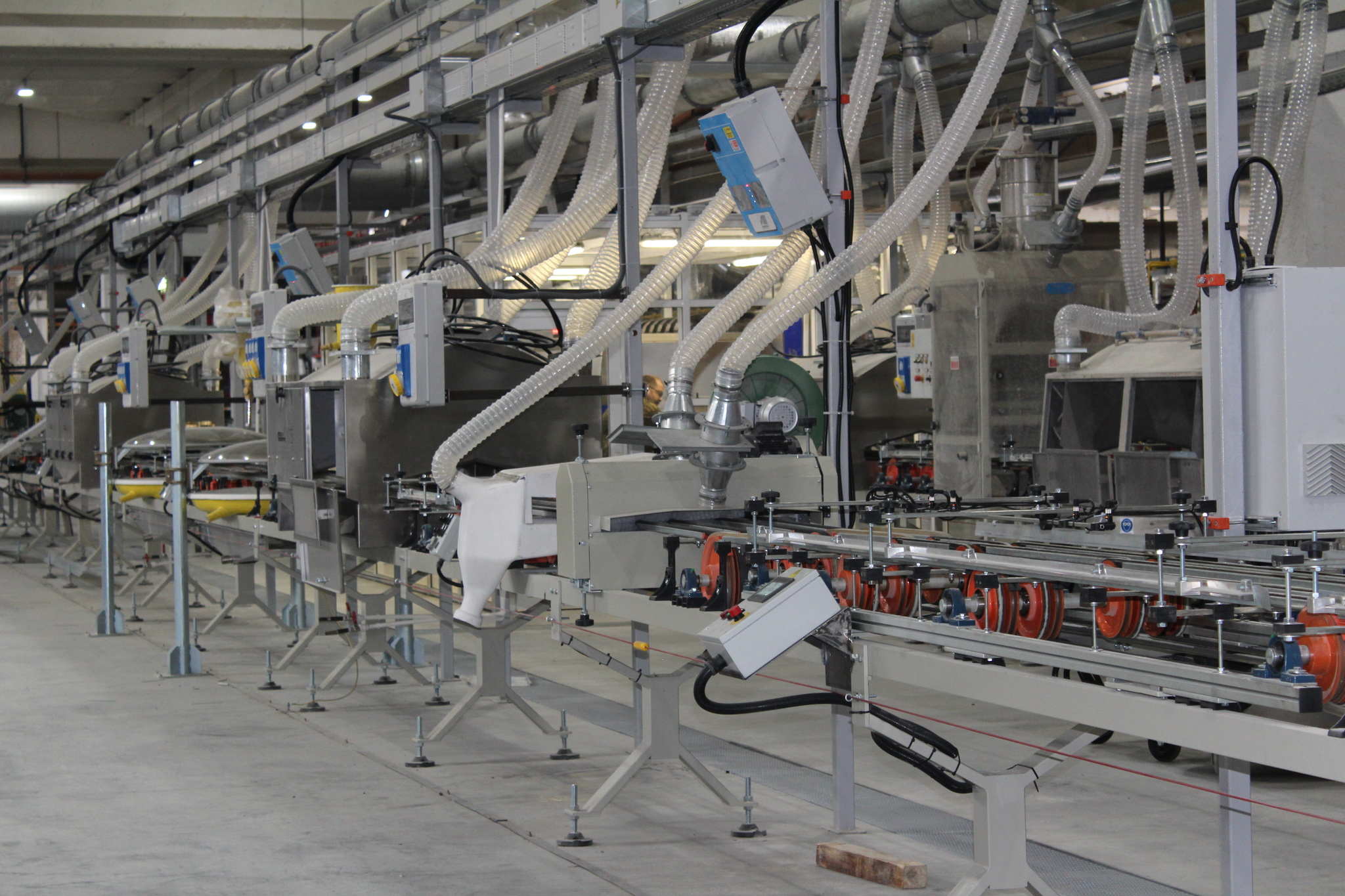
In the last two years, the Iranian ceramic tile industry has undergone a massive digital transformation. Factories have moved beyond traditional ceramics to focus on Glazed Porcelain (GP) and Full-Body Porcelain.
-
Digital Printing: Most top-tier factories now use 12-color digital inkjet printers from Italy and Spain, allowing for hyper-realistic stone and wood textures.
-
Large Format Slabs: The demand in Africa for “Slab” tiles (e.g., $۱۲۰ \times 240$ cm) has led Iranian plants to install 10,000-ton presses that were previously only found in European facilities.
-
Energy Efficiency: Leveraging domestic natural gas, Iran maintains the lowest production cost per square meter in the region, a saving that is passed directly to the African importer.
Quality Benchmarks and Standards
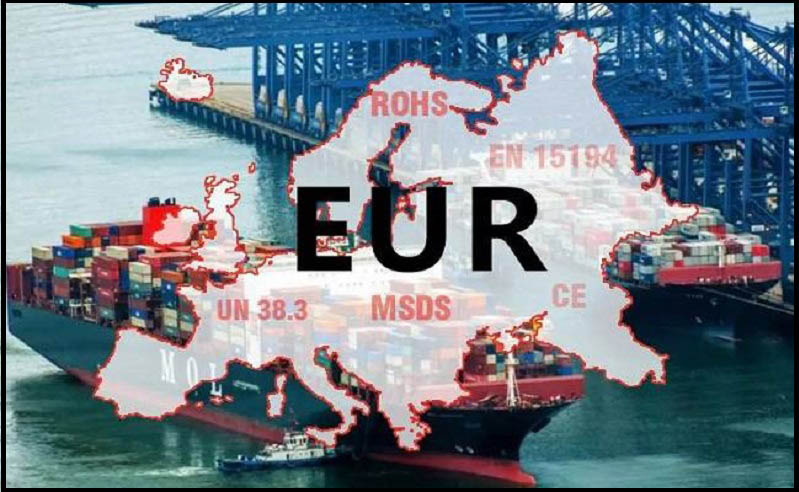
When sourcing from the Iranian ceramic tile industry, one must look for the “Standard-e-Melli” (National Standard) which often exceeds international ISO 13006 requirements. In 2026, most export-oriented factories also hold CE Marking for European exports, ensuring that the tiles you receive in Africa are frost-resistant, chemical-resistant, and possess high breaking strength—crucial for Africa’s varied climatic conditions.
۲. Phase 1: Manufacturing and Quality Verification
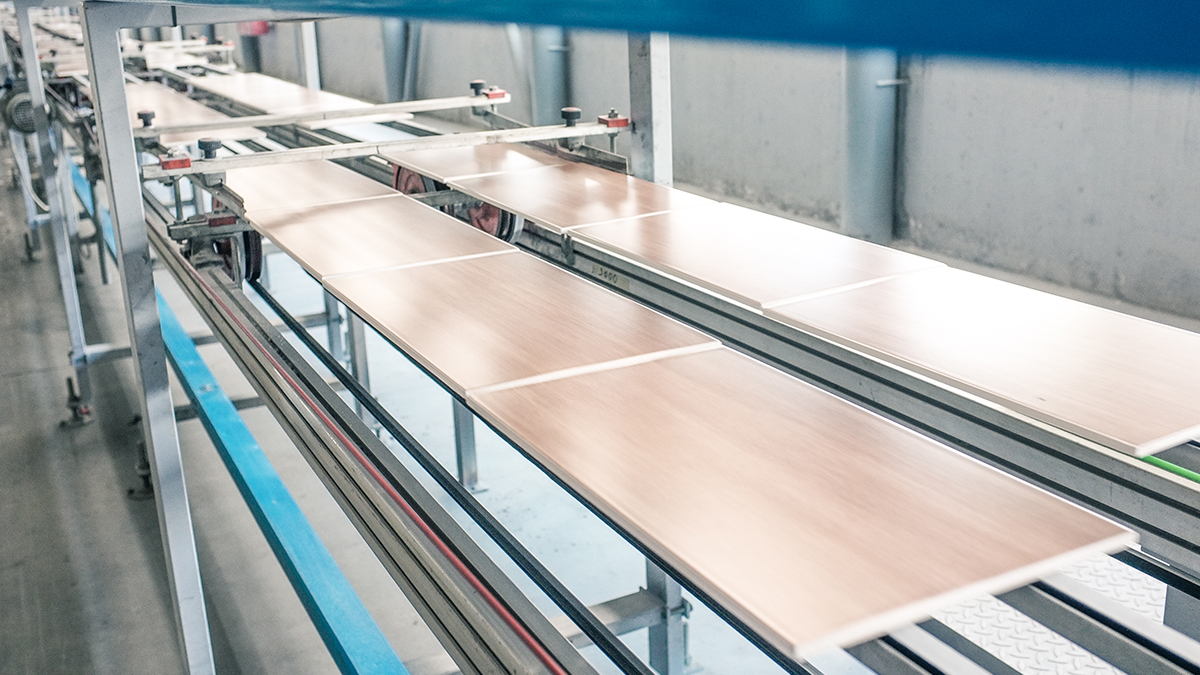
The journey begins on the factory floor. For an African buyer, the “User Intent” is simple: “How do I ensure I’m getting Grade A tiles?” In the ceramic tile industry, grading is everything.
The Grading System
Iranian tiles are typically categorized into Grades 1 through 4. For the African export market, Grade 1 and Grade 2 are the standard.
-
Grade 1: Perfect surface, no edge deviations, and consistent color calibration.
-
Grade 2: May have microscopic surface pinholes invisible to the naked eye from a standing height.
-
Nano-Polishing: Many Iranian porcelain tiles undergo a “Nano” treatment post-firing. This fills the microscopic pores of the tile, making it stain-resistant—a vital feature for high-traffic commercial projects in bustling African cities.
Pre-Shipment Inspection (PSI)
To mitigate risk, professional importers utilize third-party inspection services like SGS or Cotecna. These inspectors visit the factory in Iran during the production or loading phase. They check:
-
Water Absorption: Ensuring it is below 0.5% for porcelain.
-
Dimensional Symmetry: Checking that the tiles are perfectly square.
-
Color Tone (Shade) Consistency: Ensuring that “Box A” matches “Box Z.”
۳. Phase 2: Packaging for the Long Haul
The ceramic tile industry is a “heavy” industry. A single 20-foot container can hold approximately 25 to 28 tons of tiles, but if the packaging fails, the loss rate can exceed 30%.
Palletization Standards
Iranian exporters use two primary types of pallets:
-
Euro-Pallets ($۸۰ \times 120$ cm): Common for smaller tiles.
-
Custom Reinforced Pallets: Essential for slabs and heavy porcelain.
The “Complete Export Journey” requires that each pallet is:
-
Shrink-wrapped: To prevent moisture ingress during sea transit.
-
Corner-protected: Using hard cardboard or plastic buffers.
-
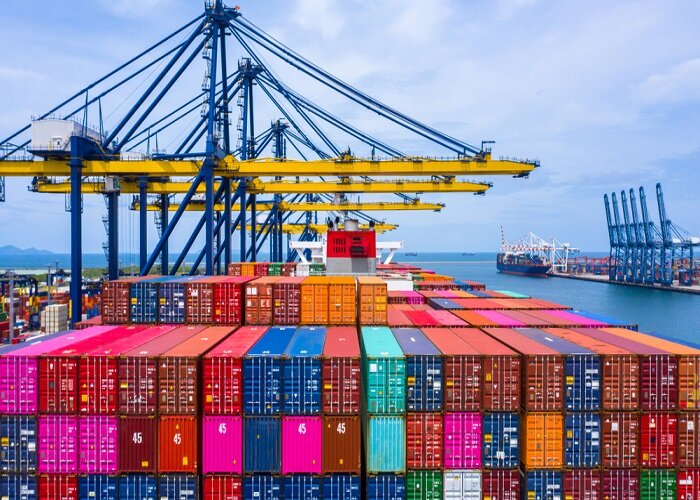
Steel-strapped: To ensure the boxes do not shift when the container is tilted during crane operations at ports like Jebel Ali or Durban.
Container Optimization
In 2026, freight costs are a significant variable. To maximize ROI, Iranian logistics experts optimize “Container Stuffing.” For example, 60×60 cm tiles are stacked differently than 30×90 cm wall tiles to ensure the weight is evenly distributed, preventing the container from becoming “bottom-heavy,” which can lead to rejected shipments at African ports.
۴. Phase 3: Navigating the Maritime Silk Road to Africa
Logistics is the most complex part of the Iranian ceramic tile industry export journey. Since Iran faces certain international banking restrictions, the logistics and financial “handshake” must be precise.
The Shipping Corridors
Most Iranian tiles depart from Bandar Abbas (Shahid Rajaee Port). From here, there are three primary routes to the African continent:
| Route | Destination Region | Major Ports | Estimated Transit (Days) |
| East African Corridor | East Africa | Mombasa, Dar es Salaam, Beira | ۱۵–۲۲ Days |
| Southern Circuit | Southern Africa | Durban, Cape Town, Walvis Bay | ۲۵–۳۵ Days |
| West African Link | West Africa | Lagos (Apapa), Tema, Abidjan | ۴۰–۵۵ Days |
The Role of Jebel Ali (Transshipment)
Frequently, cargo is “transshipped” through Jebel Ali in the UAE. This allows for a change of vessel and sometimes a “Switch Bill of Lading,” which simplifies the documentation process for African banks that may have strict compliance rules regarding direct Iranian shipments.
Freight Forwarding in 2026
With the rise of the African Continental Free Trade Area (AfCFTA), many Iranian companies are now establishing bonded warehouses in countries like Oman or Kenya. This allows African buyers to purchase Iranian tiles “in-country,” drastically reducing the lead time from 45 days to just 48 hours.
۵. Phase 4: Customs, Documentation, and Financial Clearance
The “Paperwork Barrier” is where many novice importers fail. In the ceramic tile industry, the following documents are non-negotiable for smooth clearance at African customs:
-
Commercial Invoice & Packing List: Detailing the net/gross weight and the “HS Code” (typically 6907 for ceramic tiles).
-
Certificate of Origin: Issued by the Iran Chamber of Commerce, crucial for determining import duties.
-
Bill of Lading (B/L): The title of the goods.
-
Verification of Conformity (VoC): Many African nations (like Kenya with its PVoC program) require a certificate showing the tiles meet local safety standards before they leave Iran.
Solving the Payment Puzzle
How do you pay for tiles in a sanctioned environment? In 2026, the ceramic tile industry utilizes three main methods:
-
Currency Exchange Houses (Sarafi): A secure, traditional method of transferring funds through intermediary countries.
-
Tether (USDT) Payments: Increasingly common in 2025–۲۰۲۶, blockchain payments offer instant settlement and zero banking delays.
-
Omani/Turkish Intermediaries: Many Iranian factories have branch offices in Muscat or Istanbul to facilitate standard LC (Letter of Credit) transactions.
۶. Why Iranian Tiles? A Comparative Analysis for the African Market
African construction projects often choose between Chinese, Turkish, and Iranian tiles. Here is why the Iranian ceramic tile industry is currently “winning” in the 2024-2026 cycle:
Iran vs. China
While China offers massive volume, Iranian tiles are often perceived as having a higher “Body Density.” Because Iran has a cooler climate and different clay compositions, their “White Body” porcelain is exceptionally durable for the African heat-expansion cycles.
Iran vs. Turkey
Turkey offers incredible design, but their prices are pegged to the Euro and high energy costs. Iran, with its domestic gas reserves, provides the same “European Aesthetic” at a 20-30% lower price point, making it the favorite for middle-income housing projects in Ethiopia and Egypt.
۷. People Also Ask (PAA)
Q1: What is the minimum order quantity (MOQ) for importing tiles from Iran?
Usually, the MOQ is one 20-foot container, which holds approximately 1,200 to 1,500 square meters of standard 60×60 cm tiles.
Q2: How do I handle breakage insurance?
Most Iranian exports are sold on CFR (Cost and Freight) or CIF (Cost, Insurance, and Freight) terms. It is highly recommended to opt for CIF, ensuring the insurance policy covers “All Risks” including breakage during discharge at the African port.
Q3: Are Iranian tiles suitable for outdoor use in tropical Africa?
Yes, but you must specify Full-Body Porcelain with an R11 or R12 anti-slip rating. These tiles have a water absorption rate of less than 0.05%, meaning they won’t crack under the intense humidity and rain of Central Africa.
Conclusion: Securing Your Supply Chain in 2026
The journey of an Iranian ceramic tile from the kilns of Yazd to the floors of a villa in Nairobi is a testament to the resilience and growth of the ceramic tile industry . In an era where cost-efficiency must meet high-end design, Iran has positioned itself as the ultimate partner for the African construction boom.
By understanding the four pillars of this journey—Quality Selection, Scientific Packaging, Strategic Shipping, and Compliant Documentation—African importers can significantly increase their profit margins and project quality. The future of African architecture is being built with Iranian clay, fueled by Persian gas, and delivered through a sophisticated global network that defies borders.
The “Winner” in the African market is the one who masters the supply chain. Are you ready to optimize your sourcing?


نظرات ۰