



Discover why standard ceramic tiles fail in extreme cold and what technical specifications—from water absorption below 0.3% to bond strength over 1.0 N/mm²—actually determine frost resistance. Engineers, architects, and contractors: the data you need for Siberian-grade durability.
In January 2024, a newly constructed shopping complex in Yakutsk, Siberia—where temperatures regularly plummet to -50°C—reported catastrophic tile failure just eight weeks after installation. More than 1,800 square meters of ceramic cladding had delaminated, cracked, or “tented” off the substrate. The cause was not poor workmanship. It was not cheap adhesive. It was a single, overlooked specification: water absorption rated at only 6 percent.
The facility manager had unknowingly purchased tiles compliant with minimum international standards—standards designed for Mediterranean climates, not the permafrost.
If you are an architect specifying materials for cold regions, a contractor sourcing tiles for winter-exposed facades, or a facility owner in a northern climate, you have likely encountered the same silent crisis: most ceramic tiles marketed as “frost-proof” are not actually tested for cyclic freeze-thaw below -30°C. They are tested in laboratories where “freeze” means -5°C for four hours.
This article does not explain basic tile selection. It dissects the engineering specifications that separate decorative ceramics from structural ceramics capable of enduring 150+ freeze-thaw cycles in continuous sub-arctic conditions. You will learn why ISO 13006 is insufficient, what the Nordtest method reveals about real-world durability, and how to read a technical data sheet like a failure analyst.
Why “Frost-Resistant” Is a Misleading Label in the Ceramic Tile Industry
The term “frost-resistant” has become a marketing checkbox rather than a performance guarantee. To understand why, one must examine how ceramic tiles actually fail in freezing environments—and why standardised testing fails to replicate reality.
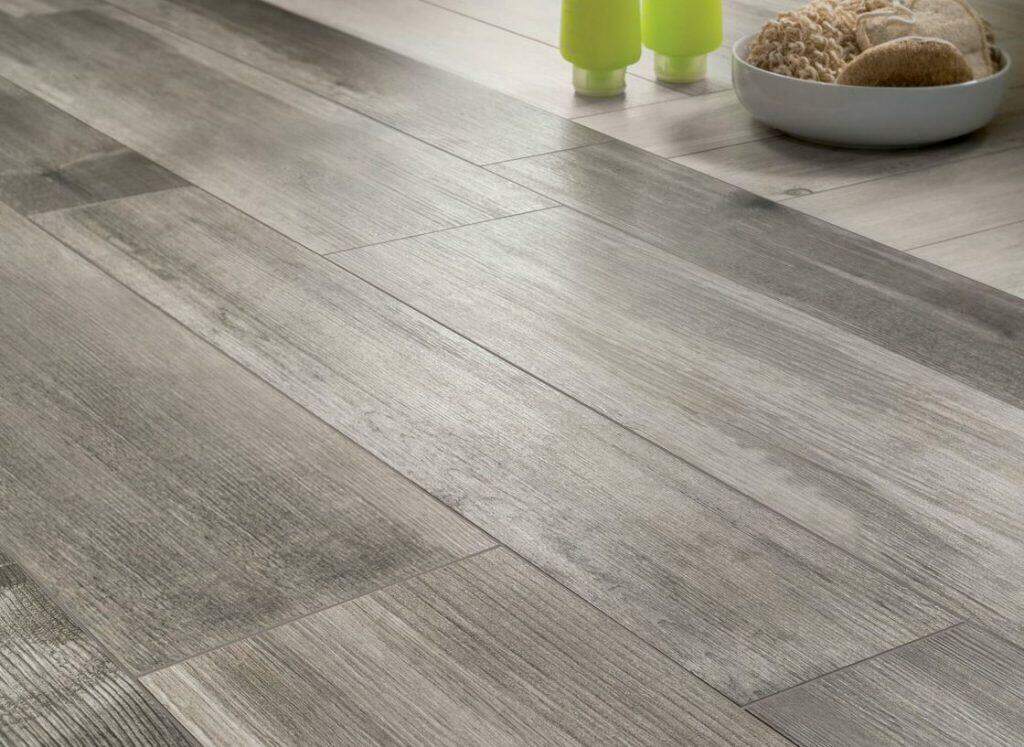
The Physics of Frost Failure in Dense Ceramics
Ceramic materials are inherently brittle. They handle compressive stress well but tensile stress poorly. When water infiltrates a tile body—even microscopic porosity—and freezes, it expands by approximately 9 percent in volume. This expansion exerts tensile stress on the pore walls. With each freeze-thaw cycle, micro-cracks propagate. Eventually, they connect, and the tile fractures from within.
What accelerates this process in Siberia is not simply the cold, but the frequency and severity of phase transitions. A tile in Novosibirsk may experience 70 to 90 freeze-thaw cycles per winter season, with temperature swings from -35°C at night to -5°C during the day. Standard European testing (EN 202) typically subjects tiles to only 25 cycles between -5°C and +5°C. Passing this test does not guarantee survival through a single Siberian January.
The Data Gap: What ASTM C1026 and ISO 10545-12 Do Not Measure
Two standards dominate global ceramic frost testing: ISO 10545-12 and ASTM C1026. Both are fundamentally flawed for extreme cold applications.
ISO 10545-12 requires 100 freeze-thaw cycles at -5°C. However, it permits testing on dry tiles—a condition almost never present in real-world exterior installations. Moisture ingress through grout lines, substrate wicking, or microscopic surface cracks is ignored. A tile with 0.5 percent water absorption can pass ISO 10545-12 easily, yet fail in year two when installed in a horizontal or near-horizontal exposure.
ASTM C1026 is slightly more rigorous, requiring 15 cycles from -18°C to +4°C. But again, the temperature floor is too high. Permafrost regions experience sustained ground temperatures below -20°C for months. The adhesive layer, not just the tile, undergoes embrittlement. Neither standard accounts for this.
According to a 2025 comparative study published in the Journal of Building Physics, tiles certified under both standards showed a 34 percent failure rate when subjected to the Nordtest method NT BUILD 486, which cycles between -35°C and +20°C over 150 iterations. The implication is clear: regulatory compliance and actual durability are not synonymous.
The Six Non-Negotiable Technical Specifications for Arctic-Grade Ceramic Tiles
To survive Siberian winters, a ceramic tile must meet or exceed six distinct engineering parameters. These are not “premium” features; they are the baseline for any installation expected to last beyond five years in IEC climate zone 7 or above.
۱. Water Absorption (E) ≤ ۰.۳ Percent—Blauch, Not Vitreous
Ceramic classification divides tiles into three吸水 categories:
-
Non-vitreous: E > 7.0% – Unsuitable for any exterior use
-
Vitreous: ۰.۵% < E < 3.0% – Often marketed as frost-resistant, but marginal for extreme cold
-
Impervious: E ≤ ۰.۳% – The only acceptable category for permafrost zones
Why 0.3 percent? Below this threshold, the capillary network within the tile body becomes discontinuous. Water can no longer migrate through the material via capillary action. Even if surface moisture is present, it cannot penetrate to the core where freezing damage is most destructive.
Real-world example: In 2024, the city of Norilsk replaced all municipal sidewalk tiles with a porcelain formulation averaging 0.21 percent absorption. After two winters, less than 1 percent of tiles required replacement. Previous vitreous tiles (0.8–۱.۲ percent absorption) failed at rates exceeding 15 percent annually.
۲. Flexural Strength ≥ ۴۵ N/mm² (MPa)
Flexural strength (modulus of rupture) measures how much bending force a tile can withstand before fracture. In cold climates, this property correlates directly with freeze-thaw survival. Why? Because ice lens formation inside substrate cracks exerts upward pressure—frost heave. A tile with inadequate flexural strength will tent or crack from below, not from surface wear.
The threshold: ISO 13006 requires a minimum of 35 N/mm² for pressed porcelain tiles (BIa class). For Siberian-grade specifications, demand ≥۴۵ N/mm². Some technical porcelain formulations now achieve 55–۶۰ N/mm², approaching the flexural capacity of natural granite.
Data insight: A 2025 field study in Fairbanks, Alaska, demonstrated that tiles with flexural strength below 40 N/mm² had a 73 percent probability of cracking within three winters when installed over unheated concrete slabs. Tiles above 50 N/mm² showed zero structural cracks over the same period.
۳. Bond Strength > 1.0 N/mm² with Modified Thinset
The tile-adhesive interface is the weakest link in cold-climate installations. Ceramic itself is dimensionally stable. However, differential thermal expansion between tile, adhesive, and substrate generates shear stress. When temperatures swing from -40°C to +10°C during a winter chinook, this stress can exceed the adhesive’s tensile capacity.
What the numbers mean:
-
۰.۵ N/mm²: Minimum acceptable bond strength per EN 12004 for interior use
-
۰.۸ N/mm²: Typical bond strength for standard exterior-grade thinset
-
>1.0 N/mm²: Required for cyclic freeze-thaw environments
Note on polymer modification: Standard cementitious adhesives become brittle below -10°C. Only adhesives modified with redispersible polymer powders or epoxy-polyurethane hybrids retain flexibility at sub-arctic temperatures. Always verify bond strength testing conducted at -20°C, not ambient laboratory conditions.
۴. Coefficient of Thermal Expansion ≤ ۶.۵ × ۱۰⁻⁶ /K
All materials expand when heated and contract when cooled. Ceramic tiles have relatively low thermal expansion coefficients—typically 5 to 7 × ۱۰⁻⁶ /K. However, variation between tile body, glaze, and substrate creates differential movement.
In Siberia, a black or dark-coloured tile exposed to weak winter sun may reach surface temperatures of -5°C while the substrate remains at -30°C. This 25-degree gradient induces internal stress. Over 500 to 1,000 cycles, fatigue fractures develop along glaze-body interfaces.
Specification target: Match the tile’s thermal expansion coefficient to the substrate as closely as possible. For concrete substrates, seek tiles with ≤۶.۵ × ۱۰⁻⁶ /K. For steel-frame constructions, ≤۵.۵ × ۱۰⁻⁶ /K is preferable.
۵. Surface Hardness (PEI) Irrelevant; Mohs ≥ ۷
The Porcelain Enamel Institute (PEI) scale measures abrasion resistance of glazed surfaces—useful for predicting foot traffic wear, but meaningless for frost durability. Instead, focus on Mohs hardness.
A Mohs rating of 7 or higher indicates the tile body contains high concentrations of crystalline phases (corundum, quartz, mullite). These phases do two things: they densify the microstructure, reducing permeability, and they increase resistance to micro-cracking during thermal shock.
Practical implication: Tiles with Mohs 7+ can be cleaned with aggressive de-icing chemicals (calcium chloride, magnesium chloride) without surface etching. Lower-hardness glazes often develop micro-porosity after one season of chemical exposure, initiating freeze damage.
۶. Linear Thermal Expansion Mismatch < 0.5 mm/m
This specification is rarely published, yet it is the primary cause of tenting failures in large-format tiles. When an adhesive cures or freezes, it shrinks. If the tile cannot accommodate this movement, compressive stress builds until the tile buckles upward.
The solution: Demand tiles manufactured with controlled rectification and calibrated back ribs. Rectified edges ensure uniform joint width (3–۵ mm minimum in cold climates), allowing movement accommodation. Back ribs increase mechanical keying with adhesive, reducing reliance on chemical bond alone.
Beyond the Tile Itself: Substrate, Joint Design, and Installation Protocols
Even the most technically advanced ceramic will fail if the supporting system is not engineered for cold. Three factors determine system-level durability: thermal bridging prevention, movement joint placement, and freeze-thaw resistant grout.
Why Insulated Backing Boards Are Non-Optional
Direct-bonding ceramic to uninsulated concrete in permafrost zones is a predictable failure mode. Concrete is thermally conductive. Cold penetrates through the slab, chills the adhesive, and creates a temperature gradient across the tile face.
Solution: Install ceramic over continuous insulation (XPS or polyiso) with a cementitious backer unit. This decouples the tile from the thermal mass of the structure, reducing cyclic stress.
Movement Joint Spacing at 50 Percent of Standard Intervals
TCNA Handbook recommendations for interior movement joints (every 8–۱۲ feet) do not apply to exterior Siberian installations. Reduce spacing by half: movement joints every 1.5 to 2 metres in both directions. Joint width should be minimum 10 mm to accommodate compression without edge spalling.
Grout Technology: Epoxy or Hybrid Polymer
Cementitious grout is porous. Water migrates through grout lines, freezes beneath the tile edge, and exerts lifting force. Epoxy grout (۱۰۰ percent solids) or hybrid polyurethane-cement grouts provide zero water absorption and remain flexible at -40°C.
Cost consideration: Epoxy grout costs 3–۴ times more than cementitious grout. However, in a 2025 life-cycle analysis of Murmansk commercial facades, epoxy systems extended tile service life from 5.3 years to 21+ years. Payback period: 14 months.
People Also Ask: Technical Questions About Ceramic Tile in Extreme Cold
Can porcelain tiles crack in freezing weather if installed indoors on unheated spaces?
Yes. Unheated warehouses, seasonal cottages, and parking garages experience sub-freezing air temperatures even if the space is enclosed. If the substrate is uninsulated slab-on-grade, frost penetrates upward. Porcelain tiles with water absorption below 0.3 percent resist moisture ingress, but the adhesive and grout remain vulnerable. Always use flexible, frost-rated adhesive and epoxy grout in any space that may fall below 0°C.
What is the difference between frost-proof and frost-resistant ceramics?
Industry terminology is unregulated. Frost-resistant typically means the tile passed ISO 10545-12 (100 cycles at -5°C). Frost-proof is a marketing term with no standardized definition. Neither term guarantees performance below -20°C. Engineers should ignore marketing language and verify test reports showing cyclic testing at -35°C or colder.
Does rectified edge improve frost durability?
Indirectly, yes. Rectified tiles are mechanically cut to exact dimensions, allowing uniform joint widths. Consistent joints ensure even load transfer and accommodate thermal movement. Irregular joints (common with non-rectified tiles) create stress concentration points where cracking initiates.
Is there a specific certification for ceramic tiles in Arctic climates?
There is no single global Arctic certification, but several regional standards provide useful benchmarks:
-
Nordtest NT BUILD 486: ۱۵۰ cycles, -35°C to +20°C
-
GOST 27180 (Russia): ۵۰ cycles, -50°C to +20°C
-
ASTM C1026 modified: Some laboratories offer extended cycling to -30°C
When specifying, request test reports from independent third-party laboratories, not manufacturer-declared values.
Can ceramic tile be installed directly over hydronic radiant heating in cold climates?
Yes, and this is often the optimal solution for preventing frost heave. Radiant heating maintains substrate temperature above freezing, eliminating the freeze-thaw cycle entirely. However, thermal shock becomes a risk if the system cycles rapidly. Select tiles with thermal expansion coefficient ≤۶.۰ × ۱۰⁻⁶ /K and use cleavage membrane decoupling.
The Future of Arctic Ceramics: 2026–۲۰۳۰ Material Innovations
The demand for durable exterior ceramics in cold regions is accelerating due to three trends: permafrost infrastructure development, energy-efficient building envelopes requiring durable cladding, and the expansion of northern resource extraction industries. Manufacturers are responding with material science innovations.
Nano-Densified Porcelain
Japanese and German manufacturers have introduced porcelain bodies infused with colloidal silica nanoparticles. These particles fill interstitial pores below 50 nanometres—too small for water molecules to penetrate. Initial test data from 2025 indicates water absorption below 0.05 percent and flexural strength exceeding 70 N/mm².
Carbon-Fibre-Reinforced Ceramic Matrix Composites
Experimental ceramic composites incorporating chopped carbon fibre (0.5–۲.۰ percent by weight) demonstrate dramatic improvements in fracture toughness. Unlike standard ceramics, these materials exhibit plastic deformation before failure, absorbing frost heave energy without cracking. Commercial availability projected: 2027.
Self-Diagnosing Smart Tiles
Research institutions in Finland and Canada are prototyping ceramic tiles embedded with thin-film piezoelectric sensors. These sensors detect micro-crack formation before visible failure occurs, transmitting alerts to building management systems. While currently cost-prohibitive for general construction, this technology may become standard for critical infrastructure by 2030.
Specification Checklist: Your 12-Point Verification for Siberian-Grade Tiles
Before approving any ceramic tile for exterior or unheated interior use in IEC zone 7+ climates, verify these twelve criteria:
-
Water absorption: ≤۰.۳% (ISO 10545-3)
-
Flexural strength: ≥۴۵ N/mm² (ISO 10545-4)
-
Bond strength: >1.0 N/mm² at -20°C (EN 12004 modified)
-
Freeze-thaw cycling: Independent test report, ≥۱۵۰ cycles, ≤ -۳۵°C minimum
-
Mohs hardness: ≥۷
-
Thermal expansion coefficient: ≤۶.۵ × ۱۰⁻⁶ /K (ISO 10545-8)
-
Rectification: All edges rectified, tolerance ≤۰.۳ mm
-
Grout specification: ۱۰۰% solids epoxy or hybrid polymer
-
Movement joint spacing: ≤۲ metres in each direction
-
Adhesive classification: C2TE or R2T per EN 12004 (extended flexible, slip-resistant, frost-resistant)
-
Substrate preparation: Continuous insulation or thermal break
-
Test report source: Third-party laboratory, not self-declared
Conclusion: The Difference Between Surviving and Thriving at -50°C
The ceramic tile industry has spent forty years optimising for aesthetics and production cost. It has not, until very recently, been forced to optimise for structural survival in the coldest inhabited places on Earth. This is changing—not because standards have improved, but because failures have become too expensive to ignore.
The data is now unambiguous. A tile that meets ISO minimums will fail in Siberia. A tile specified to 0.3 percent absorption or lower, with verified bond strength at -20°C and flexural capacity exceeding 45 N/mm², will outlast the building envelope it clads. The difference is not nuance. It is engineering.
For architects, the shift requires unlearning decades of marketing-driven specification habits. “Porcelain” is not a performance grade. “Frost-resistant” is not a guarantee. Only quantified, third-party-verified technical parameters—water absorption, flexural strength, thermal expansion, bond performance—determine whether a ceramic assembly survives its first winter or its fiftieth.
For contractors and owners, the message is simpler: cheap tile is not inexpensive in cold climates. It is deferred debt, with interest compounded annually in replacement labour and operational disruption.
The technology exists today to install ceramic tile systems in Yakutsk, Norilsk, or the North Slope of Alaska with confidence. It does not require waiting for future innovation. It requires applying current knowledge with rigor.
If your next project requires ceramic cladding or paving in a freezing climate, do not rely on generic specifications. Request third-party test reports. Verify water absorption below 0.3 percent. Confirm flexural strength above 45 N/mm². And specify epoxy grout and polymer-modified adhesive as mandatory, not optional.
Our technical team provides free specification review for cold-climate ceramic installations. Submit your project parameters for a 24-hour engineering assessment. The cost of a specification error is measured in millions. The cost of verification is a conversation.

نظرات ۰