


Struggling with dark winters in Russia? Discover how the right ceramic tile choices can “borrow” and maximize limited daylight. Expert guide on finishes, colors, and layouts to transform your interior.
The Challenge of the Dim Season
Imagine this: It is 3:00 PM in Moscow in late December. The sun, already a rare visitor, is dipping below the horizon, leaving you with another 16 hours of artificial light. For nearly half the year, residents of Russia—from Saint Petersburg to Siberia—engage in a daily battle against the lack of natural illumination. This isn’t just a matter of aesthetics; it directly impacts mood, productivity, and the very perception of space within our homes.
The question every homeowner and designer faces during this period is simple yet profound: How do we make our interiors feel bright, warm, and spacious when the world outside is grey and dark?
While lighting fixtures and paint colors play their roles, the most fundamental, and often overlooked, solution lies beneath our feet. Flooring constitutes the largest single surface area in any room. It is the foundation upon which all other design elements rest. In the context of a Russian winter, the choice of flooring is not just about durability against slush and salt; it is about photonic synergy.
This article delves deep into the science and art of selecting ceramic tiles that don’t just sit in the shadows, but actively “borrow” the scarce winter light. We will move beyond simple color charts and explore the technical specifications, surface finishes, and spatial strategies that allow high-quality ceramics to capture, reflect, and distribute light, effectively pushing the darkness back and creating a sanctuary of warmth and luminosity during the harshest months of the year.
The Physics of Light and Surface: Why Tiles Matter Most
To understand how to choose the perfect tile for a dim Russian winter, we must first understand the relationship between light and the materials it touches. Flooring acts as a giant reflector or absorber. In a room with limited natural light, maximizing reflection is paramount.
The Albedo Effect in Interior Design
In climatology, albedo is the measure of the diffuse reflection of solar radiation out of the total solar radiation received by a surface. A surface with high albedo (like snow or ice) reflects most light back into the atmosphere. A surface with low albedo (like asphalt) absorbs it.
Apply this concept to your home. A dark, matte floor has a low albedo. It greedily absorbs the precious photons entering your window, converting them into heat and leaving the room feeling dim. Conversely, a floor with a high-albedo finish reflects that light back onto walls and ceilings, creating a cascade of illumination.
Data Point: A study by the Lighting Research Center suggests that increasing the reflectance of floor surfaces from 20% (typical dark wood) to 60% (light glossy tile) can reduce the need for artificial lighting by up to 30% during daytime hours. In a country where daylight is a premium commodity, this is not just an aesthetic choice—it is an energy-saving strategy.
Understanding Light Reflectance Value (LRV)
When selecting tiles, look for the Light Reflectance Value (LRV) . This scientific measurement, ranging from 0% (absolute black, absorbing all light) to 100% (pure white, reflecting all light), tells you exactly how much light a tile will bounce back.
-
Low LRV (0-40%): Absorbs light. Creates drama, coziness, but can shrink a space visually. Suitable for accent walls or large, well-lit commercial spaces.
-
Medium LRV (40-60%): A balanced choice. Offers some reflection without the starkness of high-gloss whites.
-
High LRV (60-85%): The “borrowers.” These tiles become secondary light sources. Ideal for hallways, living rooms, and kitchens in winter-dark climates.
Actionable Insight: For a Russian apartment with north-facing windows or limited exposure, target tiles with an LRV of 65% or higher. Don’t just trust your eyes under the bright showroom lights; ask the supplier for the technical datasheet.
The Great Debate: Gloss vs. Matte in Low Light
The debate between glossy and matte finishes is fierce in the tile industry. In the context of a Russian winter, the decision has specific consequences.
Glossy Finishes: The Light Borrowers
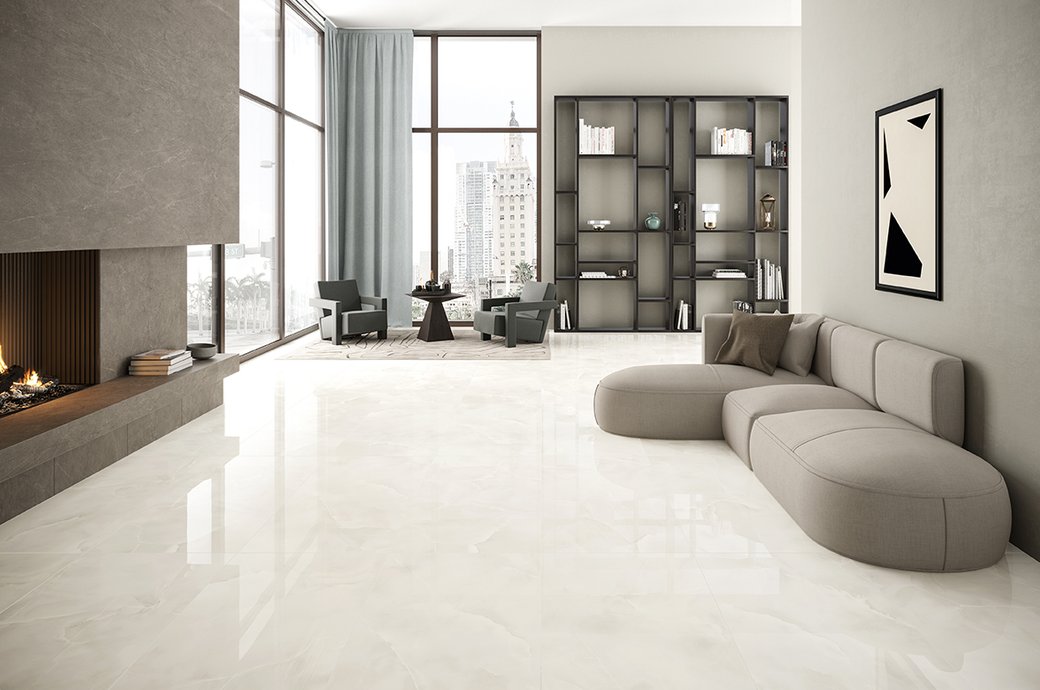
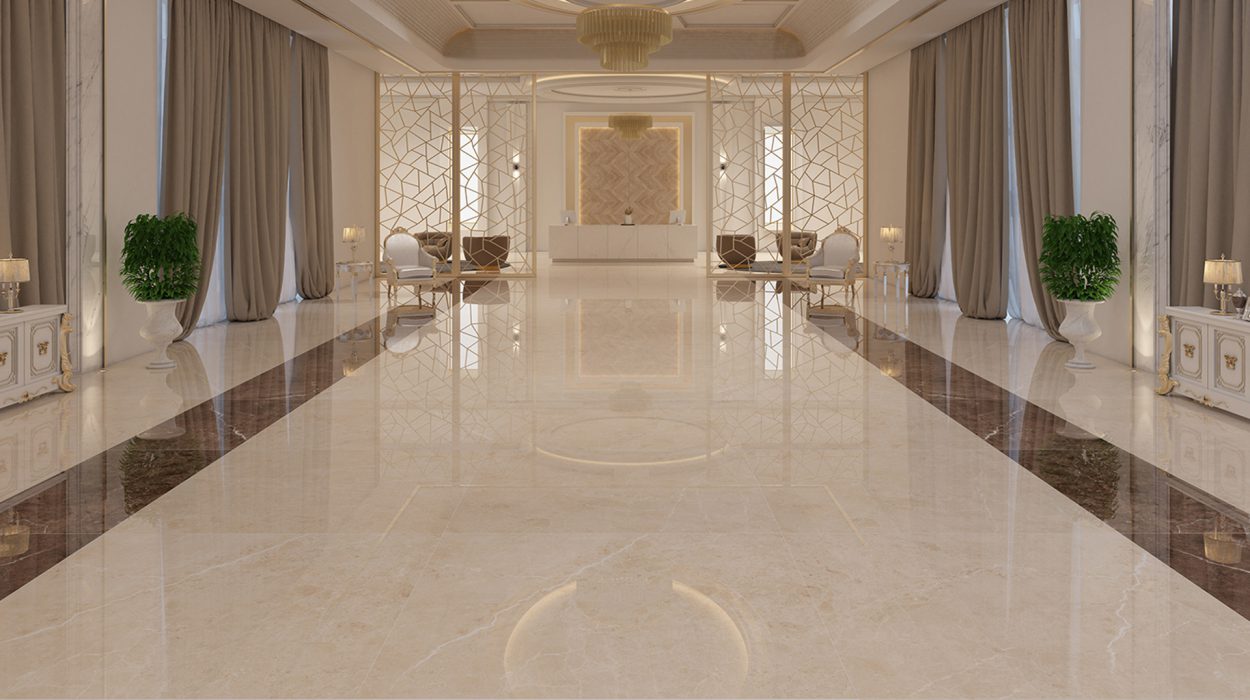
Glazed ceramic and porcelain tiles with a glossy finish (typically with a shine level above 70 on a 0-100 scale) are the undisputed champions of light reflection. They act almost like a still body of water, creating mirror-like reflections of windows and light sources.
Pros for Winter:
-
Maximized Reflection: They bounce the maximum amount of light, making rooms feel significantly larger and brighter.
-
Perceived Cleanliness: In low light, glossiness can make a space feel fresher and more “aired out.”
-
Luxury Aesthetic: High-gloss tiles in light colors are reminiscent of polished stone or expensive resin, adding a layer of sophistication.
Cons for Winter:
-
Safety Concerns: A wet, glossy tile can be slippery. In Russian winters, where melting snow and salt are tracked inside the entryway, this is a critical consideration.
-
Imperfection Visibility: Glossy surfaces show every scratch, dust particle, and water spot. The low winter sun, when it does appear, can create harsh glare.
-
Technological Fix: Look for “rectified” glossy tiles with an anti-slip treatment or an R-rating (anti-slip coefficient) of R9 or R10 for safety.
Matte Finishes: The Silent Workhorses
Matte or satin-finish tiles have gained immense popularity for their natural, tactile look. They mimic stone, linen, or raw concrete.
Pros for Winter:
-
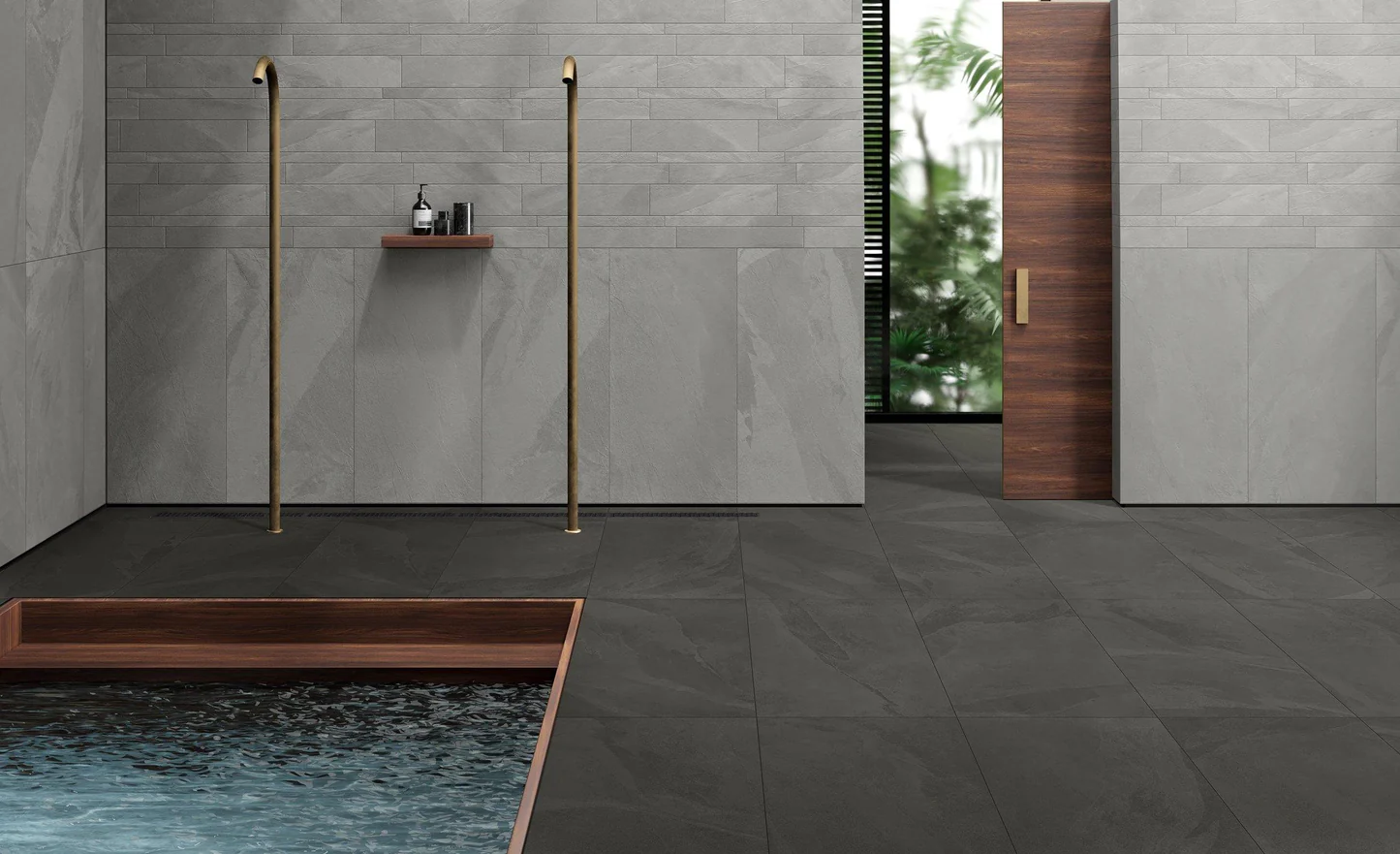
Safety and Practicality: Matte finishes inherently offer better slip resistance, making them ideal for mudrooms, kitchens, and bathrooms.
-
Glare Reduction: They diffuse light softly rather than reflecting it directly, creating a calm, glare-free environment. This is preferable for bedrooms or media rooms.
-
Forgiving Nature: They hide daily wear and tear much better than gloss.
Cons for Winter:
-
Light Absorption: By their very nature, they absorb more light. In a dim room, a large expanse of matte tile can feel flat and dark.
The Verdict:
The ideal strategy is not a binary choice but a zonal approach. Use high-LRV glossy tiles in areas that need the most light stimulation (living areas, hallways) and matte finishes in private, functional spaces (bedrooms, bathrooms) where a soft, diffuse light is preferable.
Color Psychology and Temperature: Warming the Space
Color is the most powerful tool in your arsenal. In the absence of strong natural light, the color of your floor dictates the entire “temperature” and mood of the room.
The Spectrum of Winter Whites
“White” is not a single color. When choosing a light-colored tile for a Russian winter, the undertone is everything.
-
Cool Whites (Blue/Grey Undertones): These can look pristine in a modern, minimalist space. However, under grey winter skies, they can feel stark, cold, and clinical. They amplify the chill of the season.
-
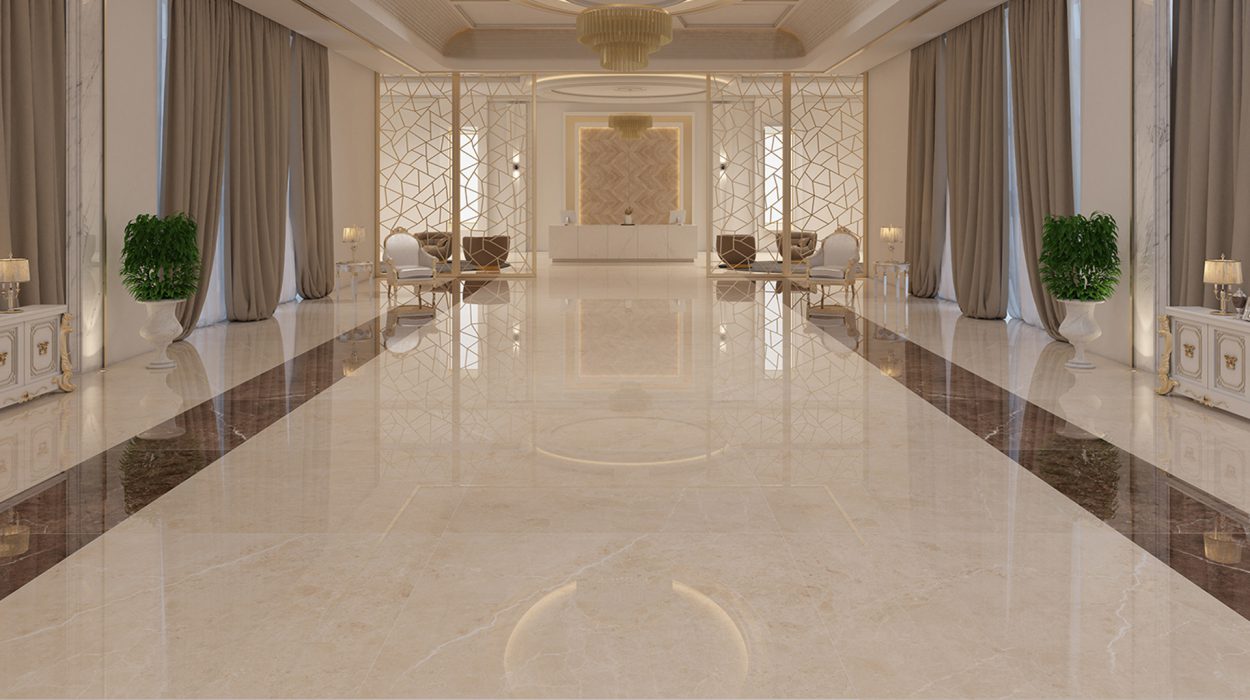
Warm Whites (Beige/Cream/Yellow Undertones): These are the ideal “borrowers.” They capture the cool, limited light and reflect it back with a subtle warmth, psychologically raising the temperature of the room. They mimic the gentle glow of candlelight or natural limestone.
-
Blush and Terracotta Hues: Moving slightly away from pure white, tiles with a whisper of pink (blush) or orange (terracotta) act as “color reflectors.” They borrow the grey light and imbue it with their own warmth, creating a uniquely cozy atmosphere known in Danish as “Hygge” and in Russian as “Уют” (Uyut).
The “Large Format” Optical Illusion
The size of the tile plays a crucial role in how light travels across the floor.
-
Small Tiles (e.g., 10×10 cm): The numerous grout lines break up the visual field, creating texture but also visual noise that can absorb light and make a floor feel busy.
-
Large Format Tiles (e.g., 60×120 cm, 120×240 cm): With fewer grout lines, the surface appears more seamless. This uninterrupted plane acts as a more effective reflector of light. It creates a “lake effect” where the light can travel smoothly across the room.
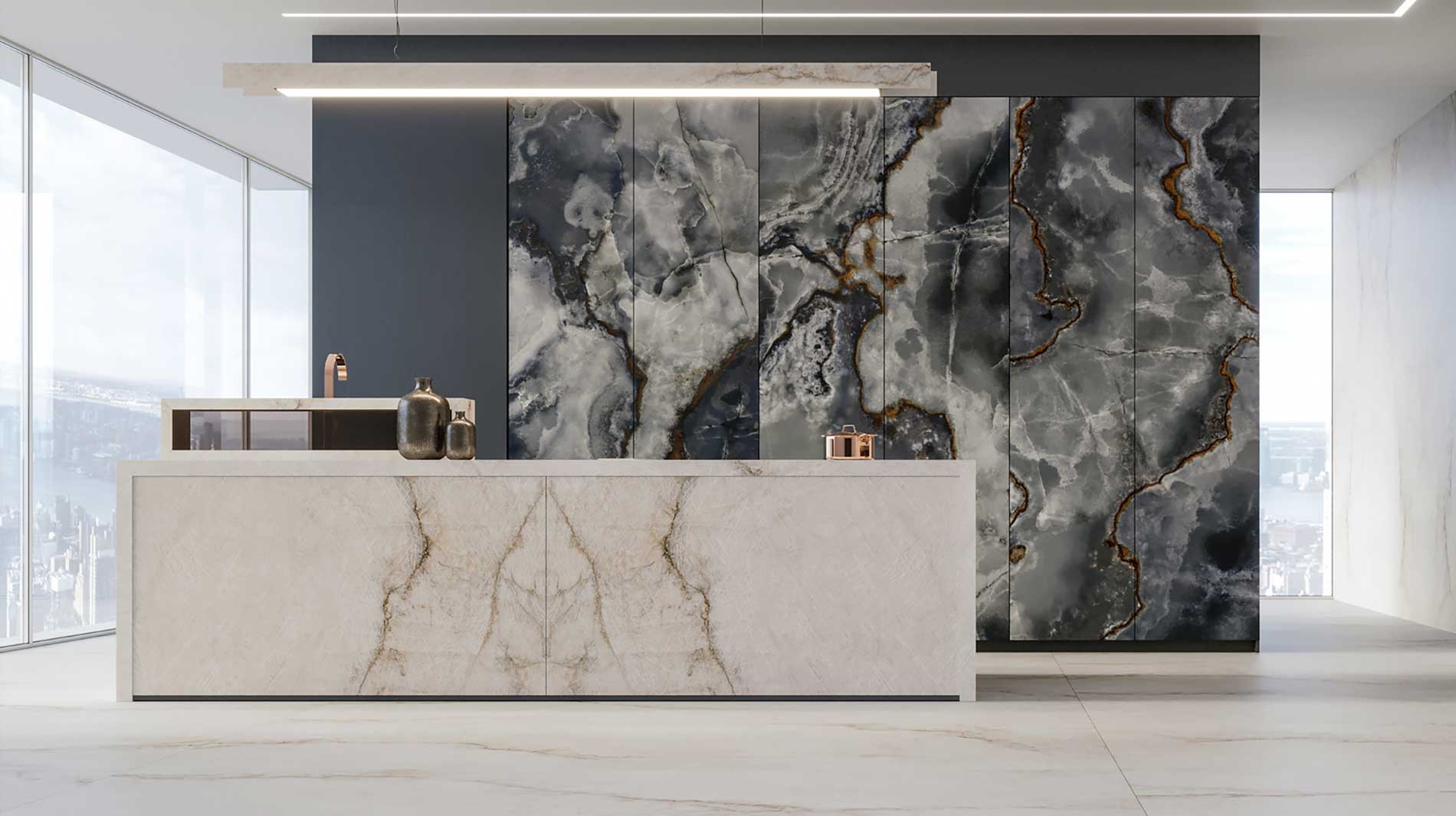
Trend Insight (2024-2025): The industry is seeing a surge in demand for “book-matched” large-format slabs. These are tiles cut from a single digital scan of marble or stone and arranged to create a mirror-image pattern. This technique not only adds artistic value but the continuous veining acts as a guide, drawing the eye—and the light—across the room.
Strategic Installation: Directing the Light Flow
Even the most reflective tile will underperform if installed poorly. The way tiles are laid can significantly impact light dynamics.
Herringbone and Directional Patterns
Herringbone, chevron, or linear brick-bond patterns do more than add visual interest. They create “visual texture” that catches light from different angles throughout the day.
-
The Concept: As the low winter sun tracks across the southern sky, its angle changes. A directional pattern ensures that at any given time, some portion of the floor is oriented to catch and reflect that light. A simple grid pattern, by contrast, reflects light uniformly but with less dynamism.
-
Application: Use a long, rectangular tile in a herringbone pattern in a narrow hallway. The pattern naturally guides the eye and the light from the entrance deeper into the home, combating the tunnel effect of a dark corridor.
The Transition Trap
In many Russian homes, there is a sharp transition from the high-traffic entryway (often tiled) to the living space (often parquet or laminate). This break in the floor surface can visually “stop” the light.
-
Seamless Flow: Consider using the same or a complementary light-colored tile throughout the main living areas. This uninterrupted visual field allows light to travel freely. If you must transition, use a thin, discreet metal or matching profile rather than a bulky wooden threshold that casts a shadow.
Grout as a Design Element
As mentioned, grout lines can disrupt reflection. The color of the grout is as important as the tile itself.
-
The Cardinal Rule: Never use dark grout with light tiles in a low-light environment. The dark grid will create a visual cage, chopping the floor into tiny, dark-framed pieces.
-
The Best Practice: Use a grout color that closely matches the tile (within one or two shades). This creates a monolithic look that maximizes the reflective surface area. For a high-LRV tile, use a matching high-LRV grout.
Practical Considerations: Durability Meets Aesthetics in the Russian Climate
While borrowing light is the goal, it must not come at the expense of durability. The Russian climate presents unique challenges: freeze-thaw cycles, de-icing salts, and dramatic humidity changes.
Porcelain vs. Ceramic Tile
For the Russian context, Porcelain Gres (Klinker) is often the superior choice over standard ceramic tile.
-
Density: Porcelain is incredibly dense and has a very low water absorption rate (below 0.5%). This makes it frost-proof, meaning it won’t crack if used in an unheated dacha or a cold entryway.
-
Strength: It is harder and more resistant to impact and abrasion. This is vital for handling the grit and debris tracked in during winter.
-
Color-Body: Unlike ceramic, where the color is only in the glaze, porcelain’s color often runs through the entire thickness of the tile (full-body). If a chip occurs (unlikely but possible), the color remains consistent, and the chip is less visible.
Underfloor Heating: The Perfect Partnership
There is a symbiotic relationship between ceramic tile and underfloor heating (UFH).
-
Thermal Conductivity: Tile is one of the best floor coverings for conducting heat. It warms up quickly and radiates that heat evenly into the room.
-
Psychological Warmth: Imagine stepping out of bed onto a warm, light-reflecting floor while snow falls outside your window. The combination of physical warmth from the UFH and visual brightness from the tile creates an unparalleled sense of comfort.
-
Efficiency: Because tile conducts heat so well, your UFH system can run at a lower water temperature (if hydronic) or for shorter periods (if electric), saving energy.
Expert Tip (2025): When installing UFH under large-format, high-LRV tiles, ensure the adhesive is fully covered (using a notched trowel) to avoid air pockets, which act as insulators and prevent efficient heat transfer.
Synthetic Lighting Synergy: Completing the Equation
“Borrowed light” is maximized, not replaced, by artificial light. The two systems must work in harmony.
Color Rendering Index (CRI)
Your high-LRV tiles will only look their best if the artificial light hitting them is of high quality. The Color Rendering Index (CRI) measures a light source’s ability to reveal the true colors of an object compared to natural sunlight.
-
The Goal: Use LED bulbs with a CRI of 90 or above. A low-CRI light (common in cheap bulbs) will make your beautiful warm-white tiles look muddy and grey, wasting their light-borrowing potential.
Strategic Placement of Fixtures
Don’t just rely on a central ceiling fixture. To make your tiles work as reflectors, you need to light them.
-
Wall Washers: Position spotlights or LED strips to graze the walls. The light will bounce off the walls and down onto the floor, which then reflects it back up.
-
Floor Washing: Use low-level lighting (e.g., LED strips in a skirting board channel or spotlights angled towards the floor) to directly illuminate the tile surface. This technique makes the floor appear to glow from within.
-
Task Lighting: In a kitchen with dark cabinets and light floors, under-cabinet task lighting illuminates the counter and splashes light onto the floor, turning the backsplash and floor into a dual-reflection system.
Room-by-Room Guide to Winter Tile Selection
The Entryway (Tambour) – The Front Line
This space takes the heaviest beating. You need high LRV for safety (to see where you’re going) and high durability.
-
Tile: Porcelain Gres, PEI 4 or 5 (high abrasion resistance).
-
Finish: Satin or lightly textured matte for slip resistance.
-
Color: Mid-range LVT (50-60%) in warm greige (grey/beige) to hide dirt.
-
Pattern: Small hexagonal or mosaic patterns can help hide the volume of dirt and snow melt.
The Living Room (Gostinaya) – The Light Hub
This is where you need to maximize borrowed light.
-
Tile: Large-format (120x120cm or larger) polished or lappato (semi-polished) porcelain.
-
LRV: High (70%+).
-
Color: Warm white, cream, or light oak-effect.
-
Installation: Minimal grout lines with color-matched grout.
The Kitchen (Kuhnya) – The Functional Heart
A mix of aesthetics and practicality.
-
Tile: Polished or satin-finish porcelain.
-
LRV: High on the floor, but consider a textured or matte tile for the backsplash to reduce glare while prepping food.
-
Trend: Using the same large-format tile on the floor and as a backsplash creates a “monolithic” look that expands the space visually.
The Bathroom (Vannaya) – The Sanctuary
Often small and windowless, this room needs all the help it can get.
-
Tile: High-gloss porcelain or ceramic on the walls and floor (ensure R10 anti-slip rating for the floor).
-
LRV: Ultra-high (80%+). Pure white or light marble-effect is ideal.
-
Strategy: Use large tiles to minimize grout lines, which are difficult to keep clean. Mirror placement should be opposite the light source to double-bounce light off the tiles.
Conclusion: Illuminating Your Winter Sanctuary
Living with the rhythm of the Russian winter is an art of adaptation. It requires a shift in perspective—from fighting the darkness to designing with it. The concept of “borrowed light” through ceramic tile selection is not about pretending you live in a sun-drenched Mediterranean villa. It is about a deep understanding of your unique environment and using material science to enhance it.
By prioritizing Light Reflectance Value, choosing warm undertones over cool ones, opting for large formats that create seamless reflective planes, and intelligently combining glossy zones with safe matte textures, you transform your flooring from a passive surface into an active participant in your daily well-being.
The floor is no longer just something you walk on; it becomes a subtle, silent engine of luminosity. It captures the fleeting rays of the winter sun, nurtures them, and redistributes them throughout your home, creating an interior that feels not only brighter but also warmer, larger, and more welcoming.
As we move forward, the technology in the tile industry continues to evolve. We are seeing the rise of “photo-catalytic” tiles that use light to clean the air, and digital printing techniques that offer unparalleled realism in high-LRV surfaces. The future is bright, even in the depths of winter.
Are you ready to let your floors fight the darkness? Don’t let another dim winter pass you by.
Contact our expert design consultants today for a personalized consultation. We’ll help you select the perfect high-performance ceramic tiles tailored to your space, light conditions, and lifestyle in Russia. Let us bring light to your home.




نظرات ۰