
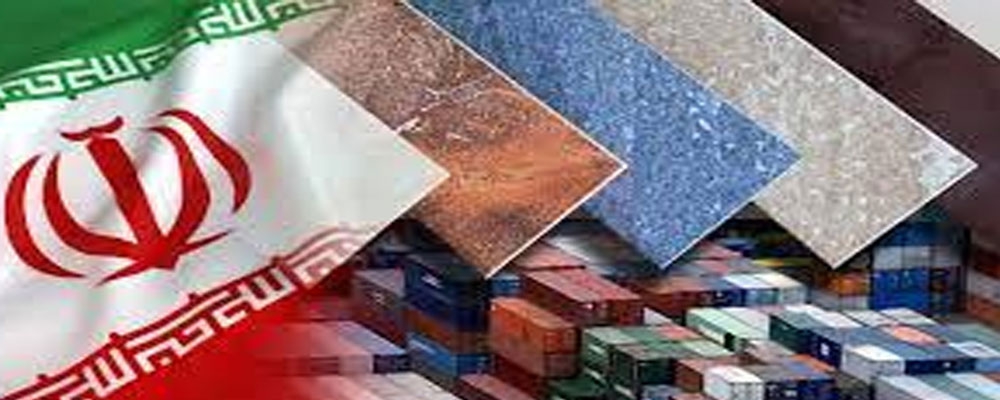
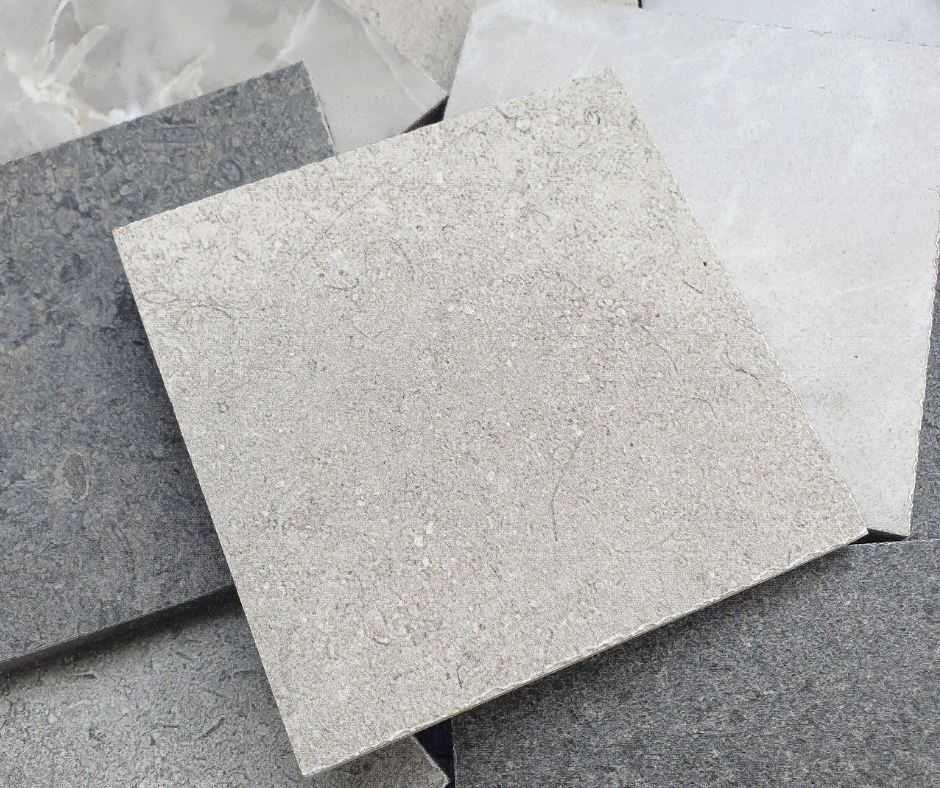
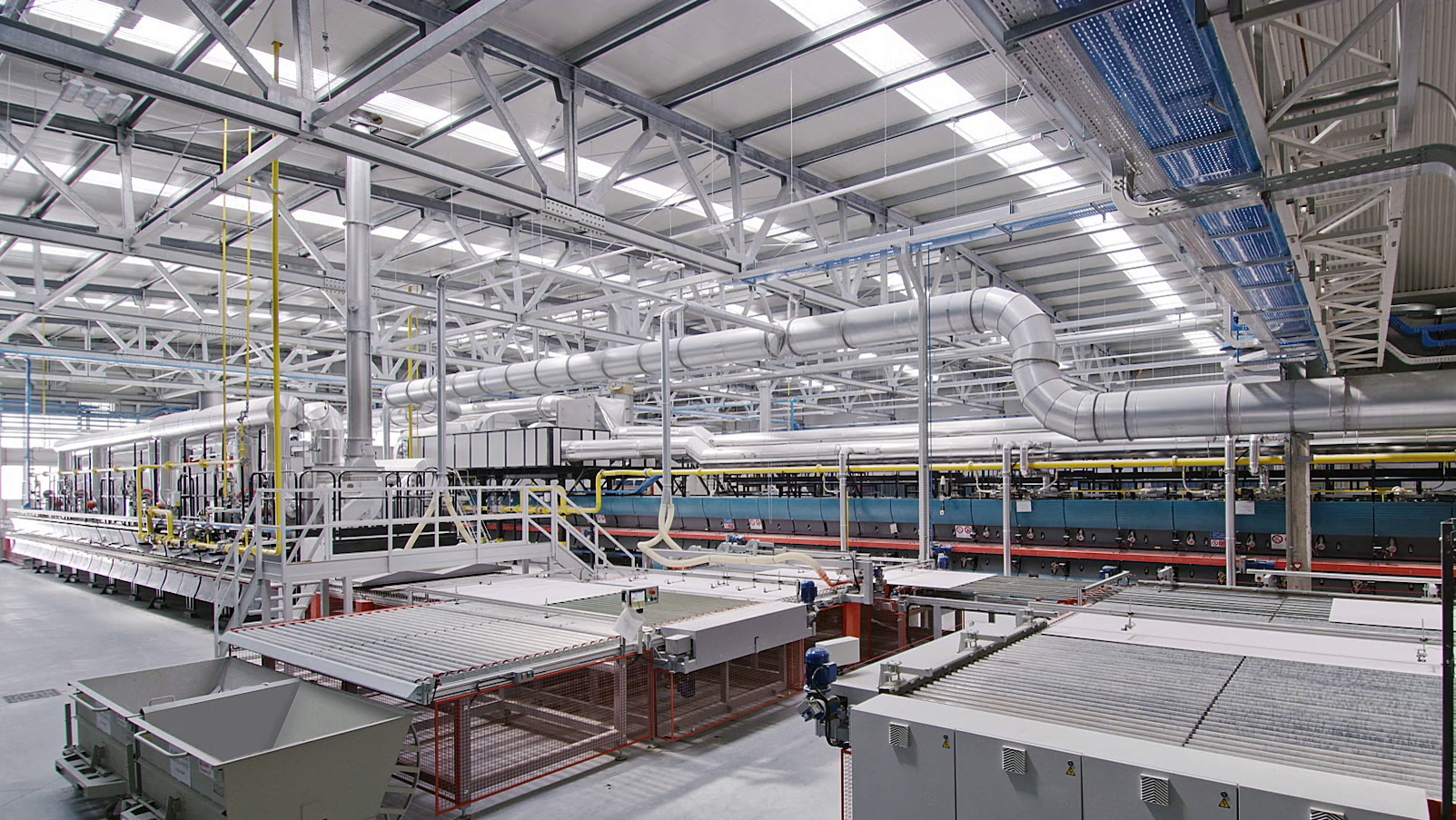

Have you ever wondered why a shipment of premium Iranian tiles, despite having a stunning design, might be rejected at a European port or a high-end construction site in Dubai? The answer usually lies in a single, often overlooked document: the Quality Control (QC) report. In the global ceramic market, beauty is only skin deep; what truly matters to importers and distributors is consistency, durability, and adherence to international standards.
The ceramic industry is one of the most competitive sectors globally. For manufacturers, especially those operating in industrial hubs like Yazd or Isfahan, the transition from local sales to international export requires a radical shift in mindset. Quality control is no longer just a “department” in the factory; it is the backbone of your brand’s reputation. A single batch of tiles with a 1mm deviation in size or a slight shade variation can lead to catastrophic financial losses, legal disputes, and a tarnished national reputation in the export market.
In this comprehensive guide, we will dive deep into the world of Ceramic Tile Quality Control. We will explore the rigorous testing protocols required by ISO standards, analyze how these tests directly impact your ability to export to lucrative markets, and provide a step-by-step operational roadmap for your QC team. Whether you are a factory manager, an export specialist, or a quality engineer, this article is designed to provide you with the actionable insights needed to transform your production line into a world-class export powerhouse.
۱. The Global Standard Framework: ISO 13006 and EN 14411
Before a single tile is pressed, every manufacturer must understand the “language” of international quality. The most recognized standards in the world are ISO 13006 and the European equivalent, EN 14411. These documents define the terms, classifications, and characteristics for ceramic tiles.
Understanding Classifications
Tiles are categorized based on two main factors: the method of manufacture (Extruded or Dry-pressed) and the level of water absorption. This classification is vital because it determines the intended use of the tile (indoor vs. outdoor, wall vs. floor).
Why This Matters for Export
If you are exporting to a country with freezing winters (like Russia or Northern Europe), and your tiles are labeled as BIa but actually test as BIIa, the tiles will crack when water freezes inside the pores. This results in immediate insurance claims.
Actionable Tip: Always perform a “Pre-shipment Random Sample Test” using an independent lab to verify your internal factory results. Never rely solely on the data from the production line’s beginning-of-shift test.
۲. Physical Properties Testing: The ISO 10545 Series
To achieve high-quality exports, your laboratory must be equipped to handle the ISO 10545 series of tests. This is the “Bible” of ceramic testing, consisting of 16 distinct parts. Let’s focus on the most critical ones for export quality.
Water Absorption (ISO 10545-3)
This is the most critical test for distinguishing porcelain from ceramic. The test involves boiling the tiles or using a vacuum chamber to force water into the pores.
-
Export Impact: High water absorption in floor tiles leads to staining and low frost resistance.
Breaking Strength and Modulus of Rupture (ISO 10545-4)
This test measures how much weight a tile can withstand before it snaps.
-
Operational Insight: Ensure your testing machine is calibrated monthly. A slight error in the force sensor can lead you to believe your tiles are stronger than they are, leading to “transit breakage” during long-haul shipping to markets like Iraq or Oman.
Resistance to Surface Abrasion (ISO 10545-7)
Commonly known as the PEI Rating for glazed tiles. It determines how well the glaze stands up to foot traffic.
-
PEI I: Light traffic (bathrooms).
-
PEI V: Heavy commercial (airports, malls).
-
Strategic Advice: If you are targeting the European commercial market, aim for a minimum of PEI IV. Marketing a PEI III tile for a shopping mall project is a recipe for a lawsuit.
۳. Dimensional Consistency: The “Zero-Tolerance” Rule
In the world of modern architecture, large-format tiles and thin grout lines (rectified tiles) are the standard. This means your dimensional quality control must be flawless.
Parameters to Measure:
-
Length and Width: Deviation must be within $\pm 0.5\%$.
-
Thickness: Critical for ensuring a level floor.
-
Straightness of Sides: Ensuring the tile isn’t “bowed” or “banana-shaped.”
-
Rectangularity: Ensuring corners are exactly $۹۰^\circ$.
-
Surface Flatness (Warpage): Checking for center curvature or edge lift.
The Problem of “Caliber”
Many Iranian factories produce tiles in different “calibers” (slightly different sizes from the same mold due to kiln shrinkage).
-
Actionable Step: For export, never mix calibers in one shipment. Clearly mark the caliber on every pallet and box. A contractor in Berlin will stop work immediately if they find a 2mm difference between two tiles in the same box.
۴. Visual Quality and Color Shading (Tonality)
A tile can be physically perfect but visually a failure. Visual inspection is often the most difficult part of QC because it can be subjective.
The 1-Meter Rule
According to ISO standards, visual defects should be assessed at a distance of 1 meter under a light intensity of 300 lx.
-
Common Defects: Pinholes, glaze drops, cooling cracks, and “orange peel” texture.
-
Export Requirement: For “First Grade” (Grade A) tiles, at least 95% of the tiles must be free from visible defects that would impair the appearance of a large area of tiled surface.
Managing Shade Variation (V-Rating)
Tiles are often intentionally designed to have color variation. However, unintentional variation is a major QC failure.
-
V1 (Uniform): Minimal variation.
-
V4 (Substantial): Random color differences.
-
Actionable Tip: Implement a “Master Sample” board in the QC lab. Every hour, the QC inspector must compare current production against the signed-off Master Sample to detect “drift” in the digital printing or glaze application.
۵. Chemical and Stain Resistance: Building Trust
For kitchen and hospital applications, chemical resistance is non-negotiable.
ISO 10545-13 (Chemical Resistance)
Tiles are exposed to household chemicals, swimming pool salts, and high concentrations of acids/alkalis.
-
Class UA: No visible effect (The Gold Standard).
-
Class UC: Visible effects (Not suitable for many export contracts).
ISO 10545-14 (Stain Resistance)
This test uses agents like iodine and olive oil to see if they leave a permanent mark.
-
Pro-Tip for Polished Porcelain: Many polished tiles have microscopic pores opened during the polishing process. Applying a “nano-sealer” in the QC phase can elevate a Grade B tile to a premium Export Grade by significantly increasing stain resistance.
۶. The Impact of Quality Control on Export Logistics
QC doesn’t end when the tile leaves the kiln. Packaging and loading are vital components of the quality chain.
The “Transit Stress” Factor
Iranian tiles often travel thousands of kilometers by truck and ship.
-
Pallet Quality: Use heat-treated (ISPM 15) pallets. Many countries will reject shipments if the wooden pallets are not certified pest-free.
-
Corner Protectors: Use heavy-duty cardboard or plastic corner protectors. The most common export damage is “chipped corners” due to vibration.
-
Shrink Wrapping: Ensure UV-resistant wrap is used. If a shipment sits in a port in Bandar Abbas or Jebel Ali for two weeks, standard plastic can degrade, causing the pallet to collapse.
Documentation as Quality Control
Your “Export Quality Pack” should include:
-
Original Test Reports (not older than 6 months).
-
Certificate of Analysis (CoA) for the specific batch.
-
Compliance certificate with the destination country’s standards (e.g., SASO for Saudi Arabia, CE for Europe).
۷. Implementing a Modern QC Culture in the Factory
To compete with top-tier Italian or Spanish brands, you need more than just tools; you need a culture of quality.
Digital Transformation
Move away from paper-based QC logs. Use an ERP system where QC data is entered via tablets directly on the line.
-
The Power of Data: If you notice that “Warpage” increases every Tuesday at 3 PM, you can trace it back to a specific shift or a change in raw material moisture levels.
The “Stop the Line” Authority
In many high-performing factories, the QC manager has the authority to stop the entire production line if a critical defect is found. In many Iranian factories, the focus is on “production volume.”
-
Actionable Strategy: Reward your QC team for finding defects before they reach the packaging stage. It is much cheaper to recycle a wet, un-fired tile than to ship a defective finished product to Turkey and have it rejected.
۸. Case Study: Avoiding the “Cheap Iranian Tile” Stigma
For years, some markets perceived Iranian tiles as “high volume, low quality.” We can change this through rigorous QC.
Scenario: A Yazd-based factory wants to export large-format porcelain slabs to the UK.
-
The Barrier: The UK buyer requires a Pendulum Test (BS 7976-2) for slip resistance, which is not standard in many Iranian labs.
-
The Solution: The factory invests in a Pendulum Tester and integrates it into their QC protocol. They also implement a 100% automated camera inspection system (like System or SITI B&T) that scans every slab for cracks.
-
The Result: By providing a “Slip Resistance Certificate” and a digital scan report for every slab, the factory secures a contract at a 40% higher price point than their competitors who only provide standard ISO tests.
Conclusion
Quality control in the ceramic tile industry is the bridge between a local workshop and a global brand. It is a rigorous, technical, and continuous process that requires:
-
Deep Knowledge of international standards (ISO 13006, ISO 10545).
-
Precision Testing of physical and chemical properties.
-
Strict Dimensional Control to meet the needs of modern architecture.
-
Flawless Packaging to ensure the product arrives as intended.
-
A Proactive Culture that values quality over raw production numbers.
By mastering these elements, manufacturers in Iran can leverage their access to high-quality raw materials and energy to become dominant players in the global market. Remember, quality is not an expense; it is the best investment you will ever make in your export business.

نظرات ۰