

Can a ceramic tile save the world? Perhaps not on its own, but in an era where the building industry accounts for nearly 40% of global carbon emissions, the shift toward Green Tiles is no longer a niche choice—it is a mandatory evolution. Imagine a scenario where a massive export deal with a European distributor falls through, not because of your price or design, but because your factory’s carbon footprint exceeds the new “Green Deal” limits. This is the reality facing ceramic producers in 2026.
For decades, the ceramic industry has been synonymous with high energy consumption and heavy resource depletion. However, a new paradigm is emerging. Green Tiles are defined by their reduced environmental impact throughout their entire life cycle—from the extraction of raw materials to production, transport, and eventual recycling. But for a factory manager in Yazd or Isfahan, the question isn’t just about the planet; it’s about the bottom line. How does sustainability translate into higher export volumes and lower operational costs?
In this comprehensive guide, we will break down the operational mechanics of sustainable ceramic production. We will move beyond the buzzwords to provide a technical and financial roadmap. We will explore how “Green” certification opens doors to premium markets in the GCC and Europe, and how simple changes in your production line can reduce energy costs by up to 20%. Whether you are an export manager looking to penetrate the Nordic markets or a production engineer tasked with reducing waste, this article provides the actionable strategies you need to stay competitive in a “Green-first” world.
۱. Defining Green Tiles: The Life Cycle Perspective
Before we can produce or export them, we must define what Green Tiles actually are. Sustainability in ceramics is measured through a Life Cycle Assessment (LCA). This scientific method evaluates the environmental “price tag” of a tile from “cradle to grave.”
The Three Pillars of Green Ceramics
-
Resource Efficiency: Using less “virgin” clay and more recycled content. This includes post-consumer glass or recycled ceramic sludge from your own water treatment plant.
-
Low Carbon Firing: Reducing the natural gas required to fire a tile. Traditional kilns are energy hogs; green kilns utilize waste heat recovery and hydrogen-ready burners.
-
Non-Toxic Chemistry: Moving away from glazes containing lead, cadmium, or other heavy metals that can leach into the environment during the tile’s life or after its disposal.
Operational Strategy: Start by calculating your current “Energy per Square Meter.” In most Iranian factories, this fluctuates between $۱.۵$ and $۲.۲$ $Nm^3$ of gas per $m^2$. A “Green” target should be below $۱.۳$ $Nm^3$. Monitoring this metric daily is the first step toward a sustainable transition.
۲. The Regulatory Wave: CBAM and the Future of Exports
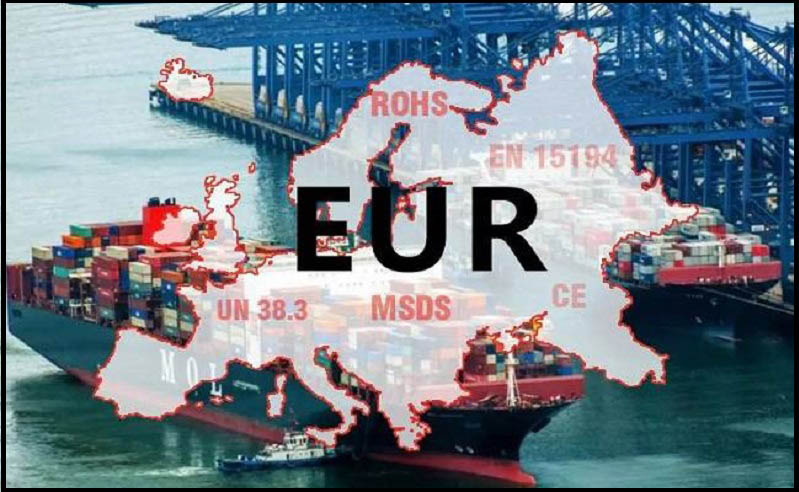
If you are exporting tiles, the most important acronym you need to know is CBAM (Carbon Border Adjustment Mechanism). Introduced by the European Union, this is essentially a “Carbon Tax” on imports. If your tiles are produced in a high-carbon way, they will be taxed at the border, making them too expensive for European buyers.
Why Green Tiles Are Your Export Ticket
-
EU Market Access: Without an EPD (Environmental Product Declaration) proving your tiles are “Green,” you may soon be locked out of the European market entirely.
-
LEED and BREEAM Points: In the UAE and Saudi Arabia (specifically projects like NEOM), architects are required to use materials that contribute to LEED (Leadership in Energy and Environmental Design) certification. Green Tiles earn these points, making them the preferred choice for multi-billion dollar projects.
-
Premium Pricing: Buyers in the luxury segment are willing to pay a $۱۵-۲۰\%$ premium for certified sustainable materials.
Actionable Strategy: Do not wait for a buyer to ask for an EPD. Hire a sustainability consultant now to perform an initial audit. Having a “Preliminary Carbon Report” ready in your export portfolio shows international buyers that you are a forward-thinking, low-risk partner.
۳. Decarbonizing the Kiln: Thermal Efficiency as a Profit Driver
The kiln is where the most energy is consumed and the most $CO_2$ is emitted. Transforming a standard kiln into one capable of producing Green Tiles involves a mix of hardware upgrades and software precision.
Waste Heat Recovery (WHR)
In a traditional ceramic factory, $۶۰\%$ of the heat generated in the kiln is lost through the chimney or cooling stacks.
-
Direct Recovery: Use the hot air from the kiln’s cooling zone to feed the spray dryer. This can reduce the spray dryer’s gas consumption by up to $۳۰\%$.
-
Indirect Recovery: Use heat exchangers to create hot water for factory facilities or to pre-heat the combustion air for the burners.
Digital Combustion Management
Modern green kilns use AI-driven sensors to maintain the “perfect flame.” By adjusting the air-to-gas ratio in real-time, you ensure that no molecule of gas is wasted.
| Feature | Standard Kiln | Green Kiln |
| Heat Recovery | Minimal | Integrated (Kiln-to-Dryer) |
| Insulation | Firebrick | Low-thermal-mass Ceramic Fiber |
| Control System | Manual/Basic PLC | AI-Driven Adaptive Control |
| Gas Consumption | High | $۲۰-۲۵\%$ Lower |
Operational Tip: Check your kiln’s “Exhaust Gas Temperature.” If it is above $۲۵۰^\circ\text{C}$, you are literally blowing money into the atmosphere. Installing a basic heat exchanger here is one of the fastest ROI projects in a tile factory.
۴. Water Stewardship: Converting Scarcity into Advantage
For factories in arid regions like Yazd, water is more than an environmental concern—it’s a survival issue. Producing Green Tiles means moving toward a “Zero Liquid Discharge” (ZLD) model.
The Closed-Loop Water System
-
Collection: Every drop of water used in the polishing and glazing lines must be collected.
-
Treatment: Use centrifugal separators and chemical flocculants to remove ceramic particles (sludge).
-
Reuse: The treated water is sent back to the ball mills or polishing line.
Sludge Valorization
The “mud” or sludge filtered from the water isn’t waste; it’s raw material.
-
Actionable Strategy: Research shows that up to $۵-۱۰\%$ of a porcelain body can consist of recycled sludge without compromising the tile’s mechanical strength. By recycling your sludge, you reduce your “Virgin Material” costs and eliminate the environmental hazard of waste disposal.
Operational Tip: Measure your “Water-to-Tile” ratio. A standard factory uses about $۱۵-۲۰$ liters of water per $m^2$. A green factory should aim for less than $۵$ liters through aggressive recycling.
۵. Sustainable Glazing and Raw Material Sourcing
The chemical composition of a tile determines its “toxicity” score. Moving toward Green Tiles requires a revolution in the glaze laboratory.
Eco-Friendly Glaze Innovations
-
Digital Glazing: Traditional “bell” or “disk” glazing is wasteful. Much of the glaze misses the tile. Digital inkjet glazing applies the exact amount of material needed, reducing glaze waste by $۹۰\%$.
-
Lead-Free Palettes: Ensure all your frit suppliers provide lead-free and cadmium-free certificates. This is a non-negotiable requirement for the US and EU markets.
Local Sourcing and Biodiversity
Sustainability also includes the “Carbon Miles” of your raw materials.
-
Actionable Strategy: Audit your supply chain. If you are importing feldspar or kaolin from $۲,۰۰۰$ km away, your carbon footprint is ballooning. Can you reformulate your body using local Iranian clays? Often, with the right additives, local minerals can perform just as well as expensive imports while drastically reducing your environmental impact.
۶. The Circular Economy: Recycling Fired Waste
One of the biggest challenges in tile production is “fired waste”—tiles that break in the kiln or fail quality control after polishing. In a traditional model, these go to a landfill. In the Green Tiles model, they are a resource.
Crushing and Re-incorporation
Fired ceramic is extremely hard. However, with heavy-duty crushers, this waste can be ground back into a fine powder.
-
The 20% Rule: Most porcelain bodies can absorb up to $۲۰\%$ of crushed fired waste (grog) without losing their $۰.۵\%$ water absorption rating.
-
Benefits: This reduces the need for new raw materials and lowers the firing temperature slightly, as the “grog” has already undergone the chemical changes of firing.
Innovative End-of-Life Uses
If you cannot re-incorporate the waste into your own tiles, seek “Industrial Symbiosis.”
-
Actionable Strategy: Partner with local road construction companies. Crushed ceramic waste makes an excellent, durable sub-base for asphalt roads. Selling your waste for road construction turns a “Disposal Cost” into a “Secondary Revenue Stream.”
۷. Green Marketing: How to Sell Sustainability
Producing Green Tiles is a technical feat; selling them is a marketing feat. To capture the export market, you must communicate your sustainability effectively.
Transparency is Key
International architects and developers are wary of “Greenwashing” (making false environmental claims).
-
Digital Passports: Use QR codes on the back of your tiles that lead to a “Sustainability Scorecard.” Show the percentage of recycled content, the energy saved, and the water recycled.
-
Certifications: Beyond the EPD, look into “Cradle to Cradle” or “Greenguard” certifications. These are globally recognized symbols of trust.
Storytelling for Architects
Architects don’t just buy tiles; they buy “solutions” for their clients.
-
Actionable Strategy: Instead of just listing technical specs, tell a story: “Our ‘Yazd-Eco’ line is produced using $۴۰\%$ recycled desert sun-dried sludge and $۱۰۰\%$ recycled water, saving $۲$ million liters of water annually.” This narrative is exactly what a modern developer needs to sell their green building to investors.
۸. The ROI of Green Tiles: Is it Worth the Investment?
Let’s talk numbers. Is the shift to Green Tiles profitable?
-
Energy Savings: A $۲۰\%$ reduction in gas consumption is a direct boost to your EBITDA. With energy prices rising globally, this is your best hedge against inflation.
-
Waste Reduction: Every ton of sludge or fired waste you recycle is a ton of raw material you don’t have to buy.
-
Market Access: If a “Green” certification allows you to enter a market where prices are $\$۵/m^2$ higher than your current export destination, the ROI is clear.
-
Operational Longevity: As carbon taxes (like CBAM) become more common, being “Green” is the only way to avoid heavy fines that could bankrupt a traditional factory.
Checklist for the CEO:
-
[ ] Does our factory have a water recycling certificate?
-
[ ] What percentage of our body recipe is recycled material?
-
[ ] Are our glazes $۱۰۰\%$ lead-free?
-
[ ] Do we have an EPD for our top 3 export products?
Conclusion: The Green Horizon
The transition to Green Tiles is not a trend that will fade—it is the new baseline for the global ceramic industry. The factories that act now to optimize their thermal efficiency, close their water loops, and certify their products will be the ones that own the export markets of 2030.
Sustainability is not about doing “less”; it is about doing “better.” It is about using intelligence and technology to replace raw resource consumption. For the Iranian ceramic industry, with its rich history and strategic location, the move toward green production is the ultimate competitive advantage. It allows us to preserve our precious water resources while providing the world with the high-quality, sustainable surfaces the future demands.
The path to a profitable, sustainable future is paved with green tiles. Is your factory ready to start laying the foundation?
Would you like me to create a detailed “Step-by-Step Guide to EPD Certification” or perhaps a technical “Sludge Recycling Formula” tailored for porcelain production?

نظرات ۰