

Explore the fierce competition in the African ceramic tile industry. We analyze Iran’s cost-efficiency, China’s local manufacturing, and Turkey’s premium designs to see who wins in 2026. Read the ultimate market breakdown!
The $2 Trillion Infrastructure Race in Africa
The African continent is currently witnessing an unprecedented construction boom, with an estimated $2.5 trillion worth of infrastructure projects planned or underway as of 2026. From the luxury high-rises of Lagos to the massive urban expansions in Cairo and Nairobi, the demand for high-quality building materials has skyrocketed. At the heart of this demand lies the ceramic tile industry, a sector that has become a primary battlefield for three global giants: Iran, China, and Turkey.
For years, developers and importers across the African continent have faced a recurring dilemma: Should they prioritize the low-cost volume of Chinese imports, the high-end aesthetic and brand prestige of Turkish products, or the incredible value-to-quality ratio offered by Iranian manufacturers? The “pain point” for the African buyer is no longer just finding tiles; it is navigating a complex web of logistics, fluctuating exchange rates, and varying quality standards that can make or break a project’s profitability.
This comprehensive analysis dives deep into the strategic positioning of these three nations. We will examine how China is shifting from “Exporter” to “Local Producer,” how Iran is leveraging its massive energy and mineral advantages to offer unbeatable prices, and how Turkey is capturing the burgeoning middle-to-upper class market. By the end of this article, you will have a definitive understanding of which nation is currently winning the African market and why your next procurement strategy might need to change.
The Chinese Strategy: From Global Exporter to Local Manufacturer
For decades, China has been the undisputed heavyweight champion of the global ceramic tile industry. However, the landscape in 2024–۲۰۲۶ has shifted dramatically. While China remains a massive exporter, its primary strategy in Africa has evolved from merely shipping containers to building massive industrial hubs on African soil.
۱. The Rise of “Made in Africa” by China
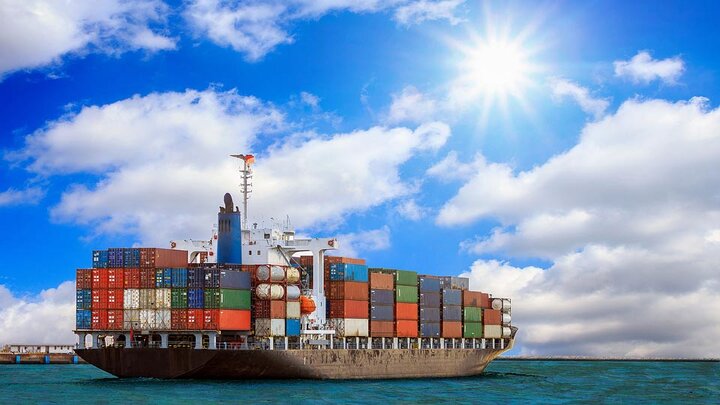
Chinese companies, led by giants like Keda Industrial Group, have established massive manufacturing plants in countries like Nigeria, Ghana, Kenya, and Senegal. This move was a masterstroke in SEO-level strategic planning. By producing locally, China avoids:
-
High maritime freight costs (which have been volatile since 2024).
-
Import duties and protective tariffs.
-
Long lead times that frustrate African developers.
۲. Market Dominance through Volume
In the 2025 fiscal year, Chinese-owned factories within Africa accounted for nearly 40% of the domestic supply in West Africa. Their ability to produce “good enough” quality at a price point that the mass market can afford remains their greatest strength. They have effectively cornered the market for low-income housing and massive government infrastructure projects where budget is the primary constraint.
۳. Challenges to the Chinese Throne
Despite their dominance, China faces growing skepticism regarding environmental standards and labor practices. Furthermore, as the African middle class grows, there is a perceptible shift away from the “generic” Chinese aesthetic toward more unique, high-end designs, opening a massive door for Turkey and Iran.
The Turkish Edge: Design, Brand, and the Premium Segment
If China owns the “Budget” category, Turkey has firmly planted its flag in the “Premium and Aspirational” segment of the African ceramic tile industry. Turkish manufacturers have successfully positioned their products as the affordable alternative to Italian and Spanish tiles, offering European quality at a 30-40% discount.
۱. Branding and Aesthetic Superiority
Turkish brands like Kale, VitrA, and Bien Seramik have invested heavily in marketing across North Africa (the Maghreb) and Southern Africa. They focus on:
-
Large-format porcelain tiles: High-demand items for luxury malls and hotels.
-
Inkjet printing technology: Producing realistic marble and wood textures that outperform Chinese mass-market tiles.
-
Sustainability: Turkey’s alignment with EU green standards makes its tiles preferred for projects funded by international green bonds.
۲. Geographical and Cultural Proximity
Turkey’s “Soft Power” in Africa cannot be understated. With Turkish Airlines flying to more destinations in Africa than any other carrier, and strong cultural ties in North and East Africa, the logistical and business relationships are seamless. In 2026, Turkey’s exports to Egypt and Algeria reached record highs, fueled by trade agreements that reduce barriers for Turkish construction materials.
۳. The Price Trap
The main hurdle for Turkey remains the cost. In a market where 60% of the population is still price-sensitive, Turkish tiles are often viewed as a “luxury” rather than a necessity. This creates a vacuum in the “Value-for-Money” segment—a vacuum that Iran is more than happy to fill.
The Iranian Revolution: The Value-for-Money Champion
Iran is the “dark horse” of the global ceramic tile industry. Despite facing international banking hurdles, the Iranian ceramic sector has seen a 15% year-on-year growth in exports to Africa between 2024 and 2026. Why? Because Iran possesses the three pillars of manufacturing dominance: cheap energy, abundant raw materials, and a skilled, low-cost workforce.
۱. The Cost Advantage (The Energy Factor)
The production of ceramic tiles is incredibly energy-intensive. While European and Turkish manufacturers struggle with rising gas prices, Iran utilizes its domestic natural gas reserves to keep production costs at a fraction of the global average. This allows Iranian exporters to offer porcelain tiles that are 20% cheaper than Turkish equivalents while maintaining similar physical durability.
۲. Superior Raw Materials
Iran is home to some of the world’s best kaolin and feldspar deposits. This means Iranian tiles aren’t just cheap; they are physically superior in terms of breaking strength and water absorption compared to low-end Chinese imports. In markets like Ethiopia and Tanzania, Iranian tiles are increasingly preferred for large-scale commercial projects that require durability without the Turkish price tag.
۳. Logistical Routes: The Bandar Abbas Advantage
Iran has optimized its shipping routes from Bandar Abbas to East African ports like Mombasa and Dar es Salaam. The transit time is significantly shorter than the route from China or Turkey to East Africa, making Iran the go-to partner for the “Build East Africa” initiative.
Comparative Analysis: Who Wins in Each Category?
To help you decide which sourcing partner fits your needs, we have broken down the 2026 market performance into a comparative table:
| Feature | China | Turkey | Iran |
| Primary Strength | Local manufacturing & volume | Design & Brand Prestige | Cost-to-Quality Ratio |
| Price Point | Lowest (Local) / Medium (Import) | High (Premium) | Low to Medium |
| Durability | Variable | High | Very High |
| Lead Time | Short (if local) / Long (import) | Medium | Short (to East Africa) |
| Best For | Mass housing, Government work | Luxury residential, Hotels | Commercial hubs, Warehouses |
People Also Ask (PAA):
-
Which country has the best quality tiles in Africa? While Italy and Spain are the gold standard, Turkey is widely considered the best-quality mass-exporter to Africa, followed closely by premium Iranian porcelain.
-
Why are Iranian tiles becoming popular? Primarily due to the “Value Proposition.” You get a tile that looks and performs like a European product but at a price closer to Chinese imports.
-
Is China losing its grip on the African market? No, but it is changing. China is moving away from exporting finished goods and focusing on controlling the African supply chain through local factories.
Conclusion: The Future of the Ceramic Tile Industry in Africa
The battle for the African ceramic tile industry is no longer a “one-size-fits-all” game. As we look toward the 2027–۲۰۳۰ horizon, the market is fragmenting into specialized niches.
-
China will remain the king of the mass market, particularly in West and Central Africa, by doubling down on local production and infrastructure-for-resource deals.
-
Turkey will dominate the high-end urban landscapes and the tourism sector, capitalizing on the “Luxury Africa” trend.
-
Iran is poised to become the most significant disruptor. If Iran can further simplify its financial transaction hurdles, its ability to provide “Industrial Grade Quality at Budget Prices” will make it the preferred partner for Africa’s massive commercial and industrial expansion.
Ultimately, the “winner” depends on the region. In the Maghreb, Turkey is the champion. In the East, Iran is gaining ground rapidly. In the West, Chinese-funded local factories are the dominant force. For the savvy importer or developer, the key is no longer choosing one country, but building a diverse supply chain that leverages the unique strengths of all three.

نظرات ۰