
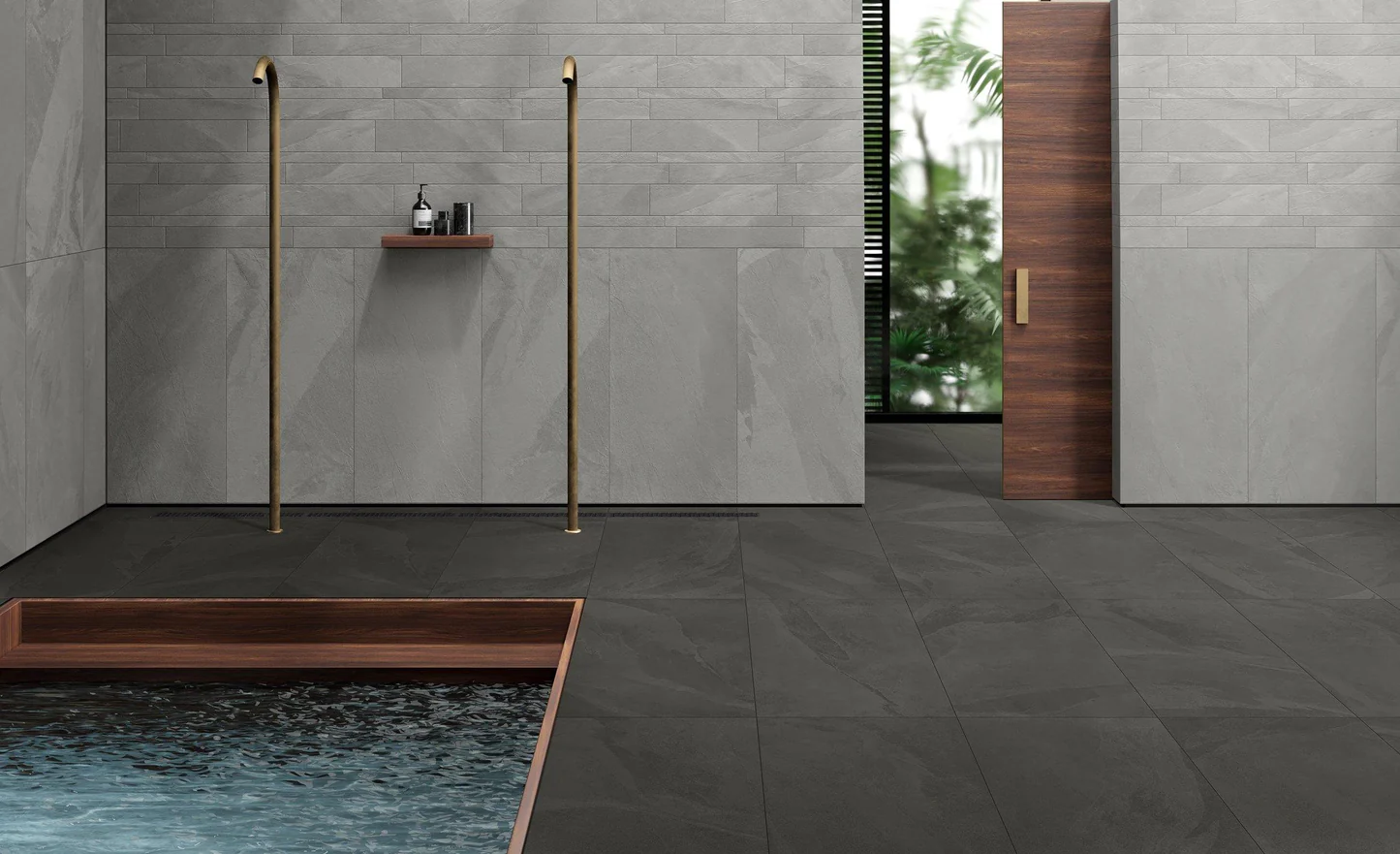
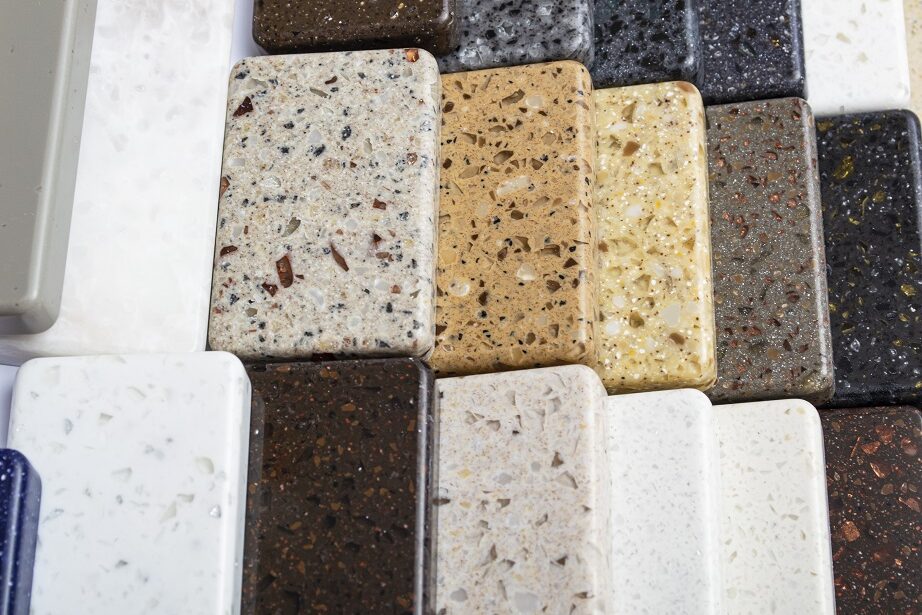

Discover why high-quality porcelain tiles are the superior natural stone alternative for North Russian facades. Explore durability, frost resistance, and aesthetic benefits over traditional granite.
The Cracking Facade of Tradition
Drive through the residential districts of Murmansk, Arkhangelsk, or Petrozavodsk during the spring thaw, and you will witness a common, costly sight. The beautiful granite facades, installed only a few years prior, are betraying their buildings. Dark spots of moisture seep through micro-cracks. Corners are spalling. Entire slabs show signs of “sugaring”—the surface crystalizing and flaking off under the relentless assault of the Arctic climate.
For decades, granite was the undisputed king of exterior cladding in North Russia. It symbolized permanence, luxury, and an unyielding resistance to the elements. But is this reputation deserved? Or have we been blinded by the allure of “natural” at the expense of performance?
The harsh reality of the Northern Russian climate—with its extreme temperature differentials (from -40°C in winter to +30°C in summer), aggressive de-icing chemicals, and over 200 freeze-thaw cycles annually—is rewriting the rules of facade design. The king is dead. Long live the king.
Enter high-quality porcelain stoneware (porcelain gres) . Engineered for extremes, this man-made material is rapidly displacing granite as the preferred choice for building envelopes from St. Petersburg to the Kola Peninsula. This article provides a definitive comparison, arguing that for longevity, consistency, and cost-effectiveness, porcelain is not just an alternative to granite—it is the superior choice for North Russian facades. We will dissect the science, the economics, and the aesthetics to help you make an informed decision for your next project.
The Northern Russian Climate: A Gauntlet for Materials
Before comparing materials, we must understand the adversary. The climate in Northern Russia is uniquely brutal, combining elements that systematically dismantle inferior cladding.
The Freeze-Thaw Assault
This is the primary killer of exterior materials.
-
The Mechanism: Water seeps into microscopic pores in the cladding material. When the temperature drops below freezing, this water expands by roughly 9%. This expansion exerts immense internal pressure.
-
The Cycle: In a Northern Russian winter, this freeze-thaw cycle can occur dozens, if not hundreds, of times. Each cycle widens existing micro-cracks, creating pathways for more water. Over time, this leads to spalling, cracking, and structural failure.
-
The Statistic: According to the Russian Academy of Architecture and Construction Sciences, exterior cladding in the Northwestern Federal District experiences an average of 110 to 150 freeze-thaw cycles per year. This is double the number experienced in Central Europe.
Chemical Warfare
The Russian winter brings more than just cold; it brings chemical aggression.
-
De-Icing Salts: Roads, pavements, and even building facades near ground level are constantly bombarded with chloride-based de-icing salts. These salts can chemically react with certain minerals in natural stone, causing discoloration, pitting, and accelerated deterioration.
-
Industrial Pollution: In urban areas, acid rain and industrial particulates can etch and dull the polished surface of natural stone over time.
Thermal Shock
Imagine a dark granite facade on a sunny, sub-zero winter day. The stone absorbs solar radiation, heating its surface to above freezing, while the core of the material remains frozen. This dramatic temperature gradient creates internal stress. This phenomenon, known as thermal shock, can cause thin layers of the stone surface to detach—a process known as “spalling.”
Granite: The Traditional Heavyweight’s Hidden Flaws
Granite is an igneous rock, formed deep within the earth. Its inherent beauty and strength are undeniable, but so are its vulnerabilities when extracted from its natural environment and placed on a facade in the far north.
Inherent Micro-Fissures
No block of granite is perfect. The quarrying and extraction process, often using explosives or hydraulic splitters, creates micro-fissures within the stone.
-
The Problem: These microscopic cracks are invisible to the naked eye but act as perfect capillaries for water ingress.
-
The Result: Once water penetrates these fissures and freezes, it expands, slowly prying the stone apart from the inside. This is why granite facades often fail not in the slab itself, but along these pre-existing lines of weakness.
Inconsistent Porosity
Granite is a natural product, meaning its physical properties vary wildly.
-
The Spectrum: Some granites are incredibly dense with low water absorption (0.2-0.4%). Others, particularly those with high quartz or mica content, can have hidden porosity.
-
The Gamble: When you specify granite, you are gambling on the consistency of an entire quarry. You cannot guarantee that slab #100 will have the same density and porosity as slab #1. This inconsistency is a significant risk in a freeze-thaw climate.
Weight and Structural Load
Granite is heavy. A typical 30mm thick granite facade slab weighs approximately 80-85 kg per square meter.
-
Structural Implications: This massive dead load requires a robust, expensive substructure of stainless steel anchors and framing. It increases the load on the building’s foundation.
-
Safety Concerns: In the event of an anchor failure, a falling granite slab poses a lethal danger.
High-Quality Porcelain: The Engineered Alternative
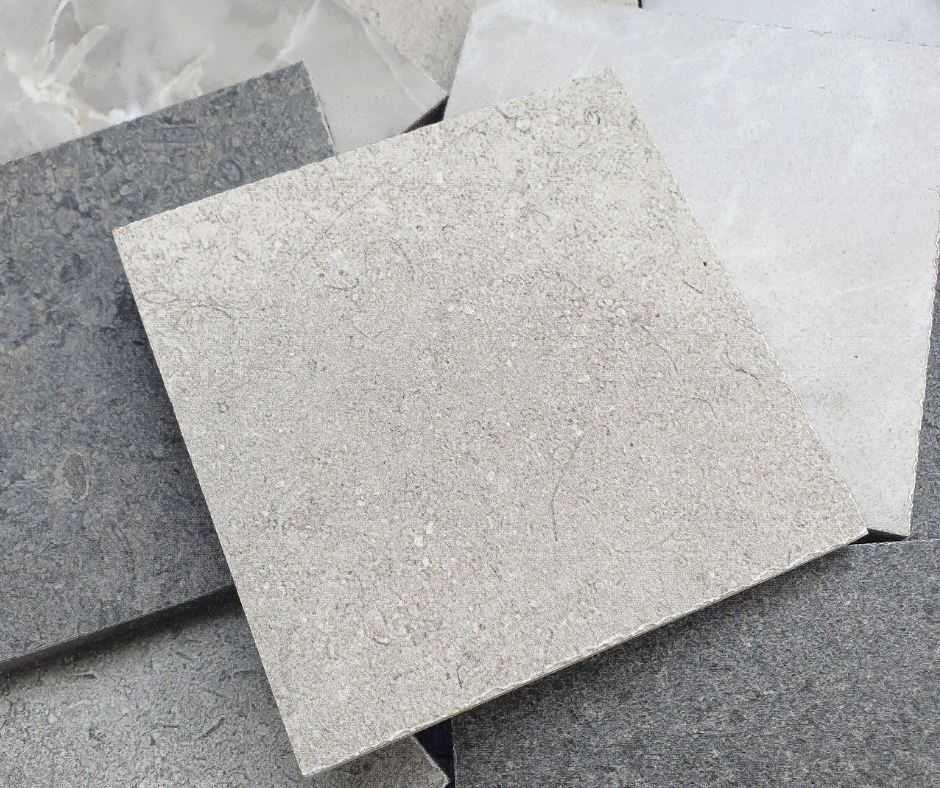
Porcelain stoneware, specifically designed for exterior cladding (often marketed as “porcelain faade panels” or “thin porcelain slabs”), is not a tile; it is a high-tech building material engineered to eliminate the flaws of natural stone.
The Manufacturing Process: Creating Uniformity
Porcelain is created by pressing a mixture of selected clays, feldspars, silica, and natural mineral oxides under immense pressure (often exceeding 15,000 tons) and firing it at temperatures exceeding 1200°C.
-
The Result: This process vitrifies the material, creating an extremely dense, homogenous body with virtually zero porosity.
-
The Advantage: Unlike granite, porcelain is 100% consistent. Slab #1,000 is identical to slab #1 in terms of density, water absorption, and mechanical strength. This predictability is invaluable for large-scale projects.
Near-Zero Water Absorption
This is the single most critical factor for a facade in Northern Russia.
-
The Standard: High-quality porcelain gres boasts a water absorption rate of less than 0.1% (often as low as 0.02%).
-
The Implication: There are no pores for water to enter. With no water ingress, the freeze-thaw cycle is rendered powerless. Porcelain facades simply do not spall or crack from frost. They are, for all intents and purposes, frost-proof.
Superior Strength-to-Weight Ratio
Modern porcelain facade panels are typically much thinner than granite.
-
Thickness: While granite is often 30-40mm thick for facade use, high-quality porcelain panels are commonly 12mm, 20mm, or 30mm thick.
-
Weight: A 12mm porcelain panel weighs approximately 28-30 kg per square meter—less than half the weight of granite.
-
Benefits: This dramatically reduces the load on the building structure, simplifies logistics and installation, and allows for the use of lighter, less expensive substructure systems.
Chemical and UV Resistance
Porcelain is fired at such high temperatures that it becomes chemically inert.
-
Salt Resistance: It is completely unaffected by de-icing salts, road chemicals, or acid rain. The surface will not etch, discolor, or degrade.
-
UV Stability: The color of porcelain is either in the glaze or, in the case of full-body porcelain, runs through the entire thickness of the material. It will not fade or yellow under decades of harsh Arctic sun.
Aesthetics: The Art of Imitation
The most common objection to porcelain is that it is “fake” stone. But in the context of a facade, “fake” translates to “controlled perfection” without sacrificing beauty.
High-Definition Digital Printing
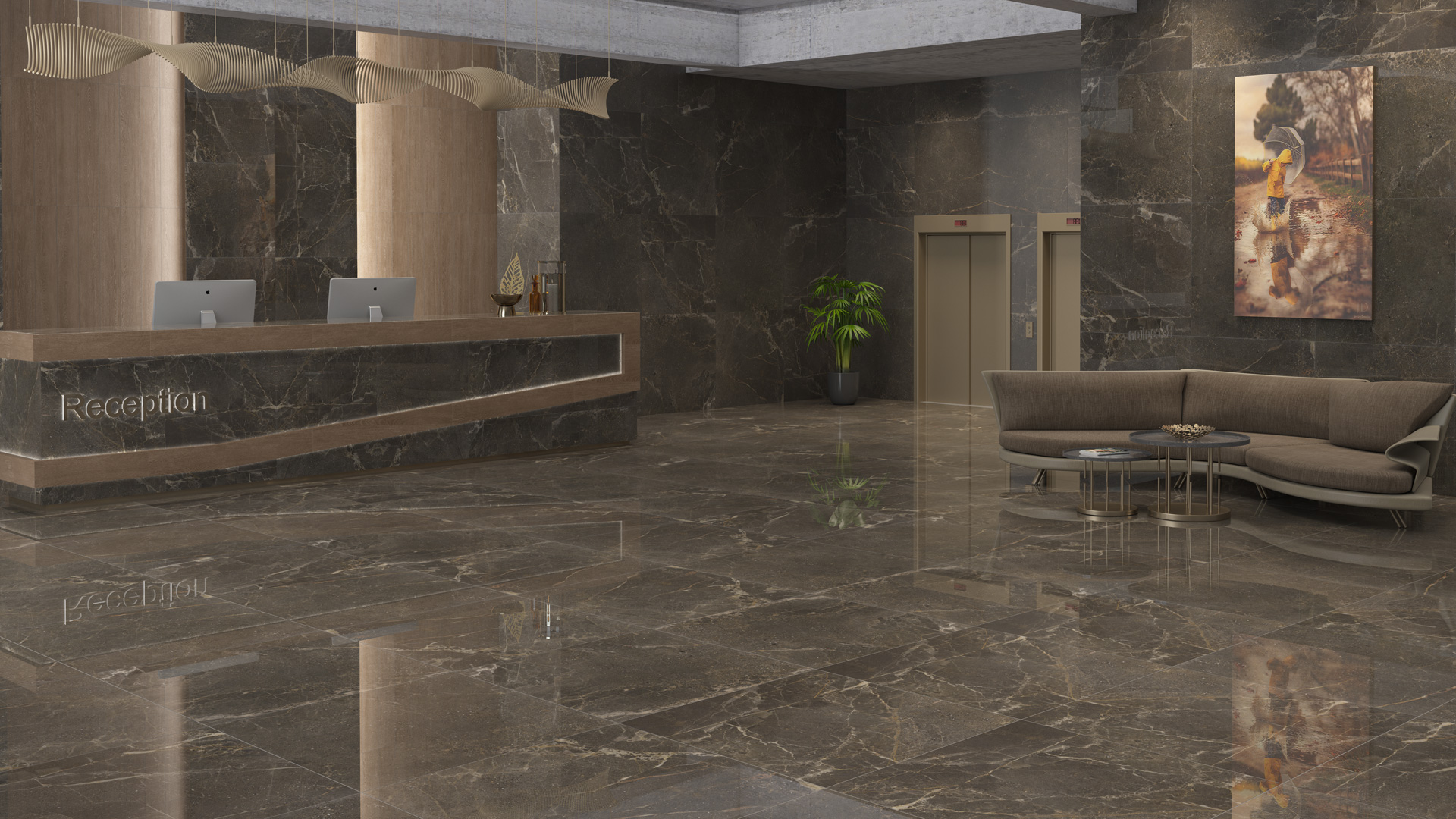
Today’s porcelain slabs are not merely colored; they are photographed.
-
The Technology: Manufacturers use high-resolution scanners to capture every detail of rare and beautiful stones—from the delicate veining of Carrara marble to the crystalline structure of Black Galaxy granite.
-
The Reproduction: These scans are printed onto the porcelain surface using advanced digital inkjet technology. The result is a visual fidelity that is often indistinguishable from natural stone to the untrained eye.
Beyond Stone: New Aesthetic Possibilities
Porcelain is not limited to imitating granite. It opens up a world of design possibilities that natural stone cannot offer.
-
Wood-Effect Facades: Imagine a building clad in planks that look like aged Siberian Larch but are actually frost-proof, non-combustible porcelain. This is a reality.
-
Metal and Concrete Effects: Porcelain can perfectly replicate the look of weathered steel, brushed concrete, or even textile patterns, offering architects a vast new palette for facade design.
Color Consistency
Natural stone batches can vary wildly in color. A granite facade installed over several months may show noticeable color shifts between batches.
-
The Solution: Porcelain offers batch-to-batch color consistency. This ensures that the facade you design on a computer screen is the facade you will see on the completed building, without any unsightly color variations.
Installation Systems: The Ventilated Facade (Hinged Facade)
In modern Russian construction, high-quality porcelain is almost exclusively installed using a ventilated facade system (ventiliruemy fasad) . This method is as important as the material itself.
How It Works
A ventilated facade is a multi-layer system.
-
Subframe: An aluminum or galvanized steel framework is anchored to the building’s structural wall.
-
Insulation: A layer of mineral wool or other insulation is placed between the frame and the wall.
-
Air Gap: An air cavity of 20-50mm is maintained between the insulation and the back of the porcelain panel.
-
Cladding: The porcelain panels are mechanically fixed to the subframe with hidden or visible anchors.
The Benefits of the System
-
Thermal Performance: The continuous insulation and air gap dramatically improve the building’s energy efficiency—a critical factor in the north.
-
Moisture Management: The air gap acts as a chimney. Air flows upwards, carrying away any moisture vapor that escapes from the interior or condensation that forms behind the cladding. The wall stays dry.
-
Weather Shield: The porcelain panels take the full brunt of rain, snow, and wind, protecting the insulation and structural wall behind them.
Mechanical Fixing vs. Adhesive
For facades, mechanical fixing is the standard.
-
Hidden Fixings: Panels can be cut with grooves on the back to accept invisible clips. This creates a seamless, uninterrupted stone-like appearance.
-
Visible Clips: In some designs, visible clips (often powder-coated to match the panel) are used, creating a deliberate grid pattern that adds a modern, technical aesthetic.
Economic Analysis: Cost Over the Lifecycle
The initial cost of high-quality porcelain can be comparable to mid-range granite. However, a true cost analysis must consider the full lifecycle.
Initial Material and Installation Costs
-
Granite: High material cost + high cost for cutting and finishing + high cost for heavy-duty substructure + high logistics cost.
-
Porcelain: Moderate to high material cost + lower substructure cost (lighter) + faster installation (lighter panels) + lower logistics cost.
Verdict: The initial installed cost of a porcelain ventilated facade is often competitive with, and sometimes lower than, a traditional granite facade, especially when considering the lighter structural requirements.
Long-Term Maintenance and Replacement
This is where porcelain wins decisively.
-
Granite Maintenance: Requires periodic sealing to try (and fail) to prevent water ingress. Damaged slabs are expensive to replace. Staining from pollution requires chemical cleaning.
-
Porcelain Maintenance: Requires zero sealing. It is self-cleaning to a degree; rain washes away dirt. It is stain-proof. It does not support biological growth (moss, lichen) as easily as porous stone.
-
Replacement: In the unlikely event of damage, a single porcelain panel can be easily unclipped and replaced without disturbing the rest of the facade.
Lifecycle Cost Analysis (2025): A study by the Moscow State University of Civil Engineering projects that over a 50-year building lifecycle, a high-quality porcelain ventilated facade system costs 30-40% less to own and maintain than a traditional granite facade.
Sustainability and Environmental Impact
In an era of increasing environmental awareness, the choice of cladding material has ethical implications.
The Environmental Cost of Granite
-
Quarrying: Granite quarrying is destructive. It involves removing vast amounts of overburden, blasting, and consumes enormous energy. It scars landscapes permanently.
-
Transportation: Much of the granite used in Russia is quarried in Ukraine, India, China, or Finland, then shipped and trucked thousands of kilometers. The carbon footprint is immense.
-
Waste: The quarrying and fabrication process generates massive amounts of unusable waste material.
The Eco-Profile of Porcelain
-
Raw Materials: Porcelain is made from abundant, widely available natural materials (clay, feldspar, silica).
-
Manufacturing: Modern tile plants are increasingly energy-efficient, often using recycled heat and recycled water in the production process.
-
Recyclability: Porcelain waste (from manufacturing or demolition) can be crushed and recycled as aggregate in new construction materials.
-
Lightweight: The reduced weight means lower transport emissions.
Addressing Common Concerns: FAQs About Porcelain Facades
“Isn’t porcelain just for floors? Will it break on a facade?”
High-quality exterior-grade porcelain (minimum thickness 12mm, often 20mm) is engineered for facade use. It has high flexural strength and impact resistance. It is not the same as a floor tile.
“Can porcelain handle a direct hit from a heavy object?”
While extremely strong, it can chip or crack under extreme point impact (like a sledgehammer). However, granite would also fail under the same conditions. For ground-floor applications in high-traffic urban areas, thicker panels (20mm or 30mm) are recommended.
“Does the color fade over time?”
No. The color is either in a durable glaze fired at over 1200°C or is integral to the full body of the material. It is highly UV resistant and will not fade.
“Is it fire resistant?”
Porcelain stoneware is non-combustible (Euroclass A1). It will not burn, emit smoke, or contribute to the spread of fire, making it one of the safest facade cladding materials available.
The Future of the Northern Facade
The argument for granite in North Russian facades is rooted in tradition, not performance. The climate of the Far North is a relentless testing ground, and granite, for all its natural beauty, has been found wanting. Its inherent inconsistencies and susceptibility to freeze-thaw damage make it a long-term liability.
High-quality porcelain, engineered with precision and fired for strength, offers a way forward. It delivers the aesthetic gravitas of stone without the geological baggage. Its near-zero porosity renders it immune to the freeze-thaw cycle. Its light weight simplifies construction. Its chemical resistance ensures it will look pristine for decades. And its consistency guarantees a predictable, high-quality result.
For architects, developers, and homeowners building on the Kola Peninsula, along the White Sea, or in the historic cities of the Russian North, the choice is becoming clear. The future of the facade is not carved from the earth; it is forged in the kiln.
Ready to specify a facade that will endure the Russian North for generations? Contact our technical team today for a consultation on our range of high-performance porcelain facade systems. We provide samples, technical data, and installer referrals for your next project.

نظرات ۰