Mastering the Mosaic: The Comprehensive Guide to Exporting Tiles and Ceramics to Armenia – From Market Entry to Last-Mile Logistics

In the dynamic landscape of international trade, the Caucasus region has emerged as a critical corridor for commerce, with Armenia standing out as a particularly lucrative market for construction materials. For manufacturers and exporters of tiles and ceramics, Armenia represents more than just a neighboring market; it is a gateway to the Eurasian Economic Union (EAEU) and a nation currently undergoing a significant urbanization and construction boom.
However, the path to success in Yerevan’s competitive market is not paved with good intentions alone. It requires a deep understanding of local architectural preferences, rigorous adherence to customs regulations, and a logistical strategy capable of navigating complex mountainous terrains. Whether you are a high-volume manufacturer looking for new distributors or a boutique exporter aiming for high-end residential projects, understanding the nuances of the Armenian market is non-negotiable.
This guide provides a deep dive into the business of exporting tiles and ceramics to Armenia. We will strip away the generalities and focus on the practical realities: from selecting the right slab sizes and designs that appeal to Armenian buyers, to navigating the Meghri border crossing, and ensuring your financial transactions are secure. This is your roadmap to turning ceramic inventory into profitable international partnerships.

Understanding the Armenian Market Landscape
Before loading the first truck, one must understand the economic and cultural forces driving the demand for ceramics in Armenia. The country’s construction sector has been one of the primary drivers of GDP growth in recent years, fueled by both government infrastructure projects and private residential developments in Yerevan and Gyumri.
The Construction Boom in Yerevan
Yerevan, the capital, is transforming. The city is seeing a shift from Soviet-era housing to modern high-rise condominiums and commercial centers. This shift dictates the demand for specific types of flooring and wall cladding. Unlike the rural areas, which may prioritize cost, the Yerevan market is increasingly quality-conscious. Developers are looking for materials that offer a “European look” at a competitive price point, creating a massive opportunity for exporters who can balance aesthetics with affordability.
Cultural Preferences in Design
Armenian culture places a high value on hospitality and the home environment. The aesthetic preference has historically leaned towards classic, ornate designs—heavy on warm tones, beiges, and travertines. However, a younger generation of architects and interior designers is introducing a demand for:
-
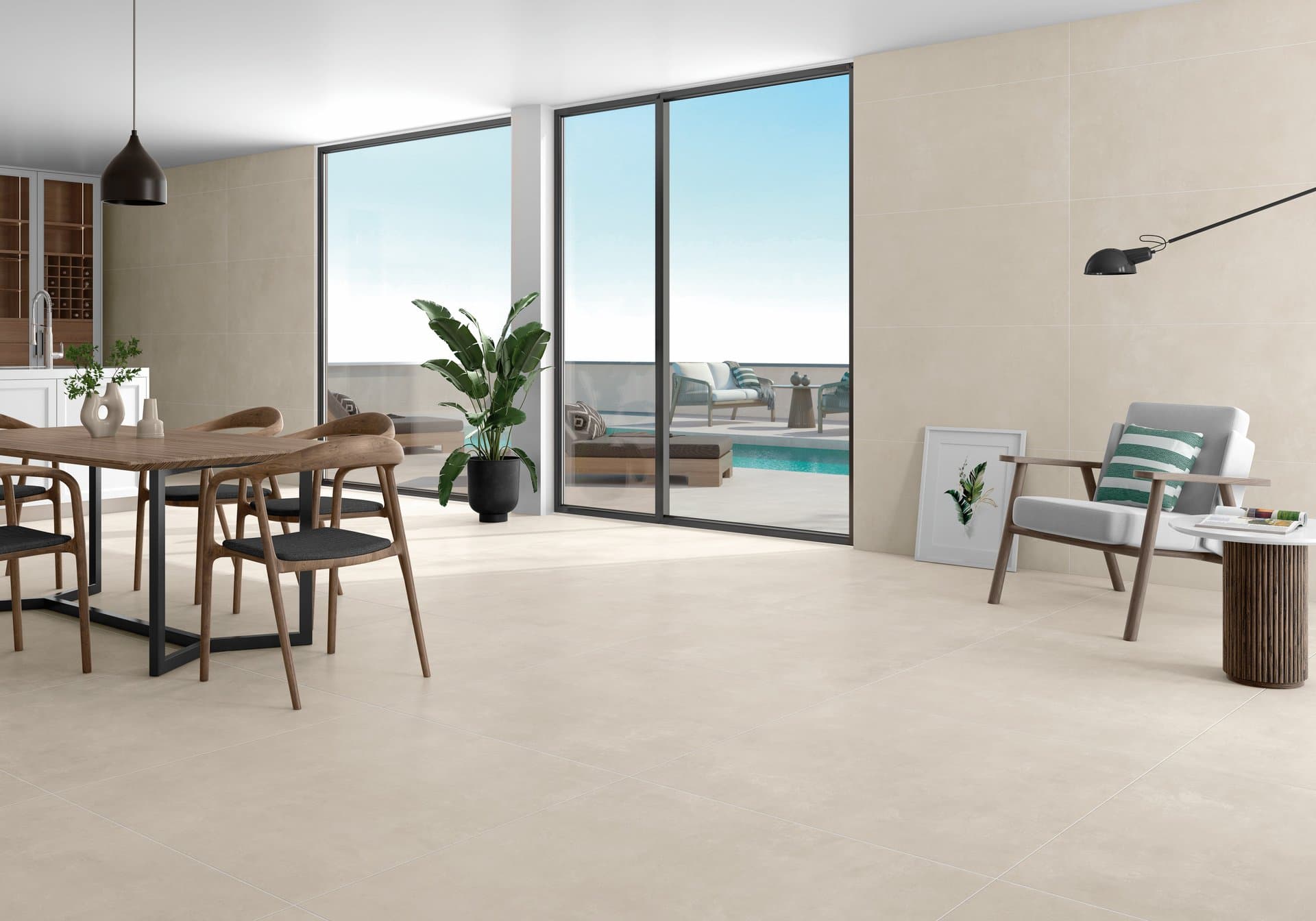
Minimalist Concrete Looks: Large format tiles with cement textures.
-
High-Gloss Nanopolish: For commercial spaces and luxury apartment foyers.
-
Wood-Look Porcelain: A staple for residential bedrooms where real wood is too expensive or maintenance-heavy.
Product Fit and Technical Specifications
Exporting “tiles” is too vague. To succeed, you must export the right tiles. The Armenian market has specific technical and dimensional preferences that differ slightly from European or Middle Eastern markets.
Popular Sizes and Dimensions
While standard 30×30 cm or 40×40 cm tiles still have a market in budget projects, the real margin lies in larger formats.
-
60×60 cm and 80×80 cm: These are currently the standard for living rooms and commercial spaces.
-
60×120 cm Slabs: There is a rapidly growing demand for these rectangular slabs for wall cladding and modern flooring.
-
30×90 cm and 40×120 cm: Popular for bathroom walls, often accompanied by decorative “decor” tiles or mosaic borders.
Quality Grades and Pricing Tiers
The Armenian market is highly price-sensitive but demands durability.
-
Grade A (Premium): Targeted at luxury hotels and high-end condos in central Yerevan (Kentron district). These buyers compete with Spanish and Italian imports.
-
Grade B (Standard): The volume seller. Used in mid-range housing. Here, the exporter must compete with local production and Chinese imports.
-
Grade C (Economy): Often used for government housing or rural projects. The key here is sheer volume and rock-bottom pricing.
Marketing Strategies for Armenian Buyers
Marketing in the Caucasus is less about digital ads and more about relationships and tangible proof of quality.
The Importance of B2B Relationships
Armenian business culture is relationship-based. Trust is not built through emails but through handshakes and face-to-face meetings.
-
Trade Missions: Visiting potential distributors in Yerevan is essential. Bringing physical samples (heavy as they may be) shows commitment.
-
Exhibitions: Participating in the “Caucasus Building & Reconstruction Expo” is a vital step. It allows you to meet developers, architects, and wholesalers in one place.
Providing Showroom Support
A successful exporter treats their Armenian distributor as a partner, not just a customer.
-
Sample Boards: Providing high-quality, pre-made sample boards that distributors can display in their showrooms immediately boosts your brand’s visibility.
-
Catalogues in Local Language: While many business people speak Russian or English, having marketing materials in Armenian (or at least Russian) is a sign of respect and professionalism.
Navigating Customs and Regulations (EAEU Context)
Armenia is a member of the Eurasian Economic Union (EAEU). This membership simplifies trade for other member states (like Russia or Belarus) but creates specific documentation requirements for third-party countries.
HS Codes and Tariffs
The primary Harmonized System (HS) codes for ceramic products usually fall under Chapter 69.
-
6907: Unglazed ceramic flags and paving, hearth or wall tiles.
-
6908: Glazed ceramic flags and paving, hearth or wall tiles.
-
Note: Accurate classification is critical. Misclassifying a porcelain tile as a standard ceramic tile can lead to fines or delays at the border.
Essential Documentation
To clear Armenian customs smoothly, you must provide a perfect “Commercial Set”:
-
Commercial Invoice: Must clearly state the Incoterms (e.g., FCA, CPT, DAP).
-
Packing List: Must detail the net weight, gross weight, number of pallets, and square meters per pallet.
-
Certificate of Origin: Crucial for determining import duties.
-
Certificate of Conformity (EAC): Since Armenia is in the EAEU, products often need to meet technical regulations (GOST standards) regarding radiation safety and durability.
Logistics and Supply Chain: The Road to Yerevan
Logistics is often where the profit margin is made or lost. Transporting heavy, fragile goods like ceramics requires a robust strategy.
Route Selection (Road vs. Rail)
-
Road Transport: This is the most common method for neighboring countries or regional trade. Trucks usually enter via the Nordooz-Agarak border crossing.
-
The Challenge: The road from the Iranian border into Armenia (through the Syunik province) is mountainous and winding.
-
The Solution: Use experienced trucking companies familiar with the Kajaran pass. In winter, this route can be treacherous; factor in weather delays.
-
-
Rail Transport: While less common for direct final delivery due to infrastructure gaps, rail can be used for part of the journey if entering from the North (via Georgia), though this is more complex due to geopolitical borders.
Packaging to Prevent Breakage
Breakage is the enemy of ceramic exports.
-
Palletization: Tiles must be vertically strapped onto Euro-pallets or strong wooden crates.
-
Shrink Wrapping: Heavy-duty plastic wrapping is needed to protect against moisture and dust during transit.
-
Corner Protectors: Essential to prevent chipping during the rough truck ride through the mountains.
-
Load Balancing: Ensure the truck axle weight limits are not exceeded, as Armenian weigh stations are strict.
Financial Transactions and Payment Security
Getting paid is the final and most important step.
Currency and Banking
Armenia’s currency is the Dram (AMD), but international trade is typically conducted in USD or EUR.
-
Banking Channels: Armenia has a stable banking system. However, if the exporter is from a sanctioned country (like Iran), traditional SWIFT transfers may be blocked. In such cases, trade is often settled via exchange houses or through intermediary accounts in third countries.
-
Payment Terms:
-
New Clients: Always aim for 100% advance payment or at least 50% deposit with the balance against the B/L (Bill of Lading) or CMR.
-
Trusted Partners: You might eventually move to Open Account terms, but only after creditworthiness is proven.
-

Common Pitfalls and How to Avoid Them
Even seasoned exporters can make mistakes in this specific market.
-
Ignoring Weight Limits: Ceramics are heavy. Overloading a truck to save on shipping costs often results in fines at the border that exceed the savings.
-
Inconsistent Shadings: Sending a batch of tiles where the “Batch Number” or “Tone” varies is a deal-breaker. Armenian buyers are meticulous; if the floor looks checkered due to shade variation, the goods will be returned.
-
Underestimating Winter: Shipping in January/February without accounting for snow delays in the Zangezur mountains can cause you to miss project deadlines.
Conclusion
Exporting tiles and ceramics to Armenia is a strategic move that offers high rewards for those willing to master the details. It is a market that appreciates quality but demands value. It is a region that rewards personal relationships and long-term commitment.
The key to success lies in a holistic approach: You must offer a product that fits the modernizing aesthetic of Yerevan, package it securely enough to survive the mountain passes of Syunik, and navigate the EAEU customs framework with precision. By following the strategies outlined in this guide—from selecting the right 60×120 slabs to securing your financial channels—you position your brand not just as a supplier, but as a pillar of Armenia’s infrastructure development.
The doors to the Armenian market are open. With the right preparation, your products can become the foundation of the country’s next architectural masterpiece.


قیمت های موجود در سایت تاریخ بروزرسانی آن ها ذکر شده و قیمت نهایی محصولات نمی باشند. لطفا جهت ثبت سفارش و استعلام قیمت بروز با کارشناسان ما در ارتباط باشید.
(035-3357)