


Explore Iran’s porcelain ceramic and slab tile export to Russia in 2026: market data, EAEU trade deal benefits, logistics routes, competitors, and practical growth steps.
Russia imports tiles worth more than $290 billion over recent years, and most of that demand once came from European producers. That door has closed. European suppliers have stepped back from the Russian market, and a gap worth billions of dollars now sits open for anyone who can fill it quickly and reliably.
Iranian manufacturers see this gap. Iran’s porcelain ceramic export sector has grown for three consecutive years, even as overall tile shipment volumes faced pressure from sanctions and rising production costs. Meanwhile, Iran’s non-oil exports to Russia climbed 17% during a recent ten-month period, reaching close to $890 million, according to Iranian trade officials.
If you run a tile factory, work in export logistics, or manage procurement for a construction firm, you likely have questions. Is the Russian market really open to Iranian slab tile export right now? What changed after the Iran-EAEU free trade agreement took effect in May 2025? Which challenges still block growth, and which ones have already eased?
This guide answers those questions in full. It walks through the market forces pulling Iranian porcelain ceramic export toward Russia, the trade agreements reshaping tariffs, and the practical barriers exporters face on the ground. It also outlines what successful exporters are doing differently in 2026.
By the end, you will understand where the real opportunity lies, where the risk sits, and what steps make sense for your business. No further searching required. Let’s start with why Russia became the market everyone in Iran’s tile industry is now watching.
Why Russia Is Becoming Iran’s Key Ceramic Market
The Vacuum Left by European Suppliers
For decades, Italian and Spanish producers dominated Russia’s premium tile segment. Their porcelain slabs set the design standard for luxury residential and commercial projects in Moscow and Saint Petersburg. That supply chain broke down after 2022, when sanctions and voluntary market exits cut off most European shipments.
The scale of that gap is significant. Former Iranian trade official Seyed Mojtabai Mousaviyan noted that Russia’s tile import bill has historically exceeded $290 billion, with European countries supplying the largest share. Even a modest 10% capture of that former European share would substantially increase Iran’s ceramic export revenue.
Iranian exporters are not the only ones eyeing this space. China and India have also expanded their presence. But Iran holds two advantages neither competitor fully matches: geographic proximity and a shared land and sea trade corridor that keeps shipping times and costs lower.
Growing Russian Construction Demand
Russia’s construction sector has kept expanding despite geopolitical pressure. Urban redevelopment projects in Moscow, infrastructure work in Saint Petersburg, and residential construction in secondary cities all require steady volumes of floor and wall coverings.
Iranian porcelain slab tiles fit several segments of this demand:
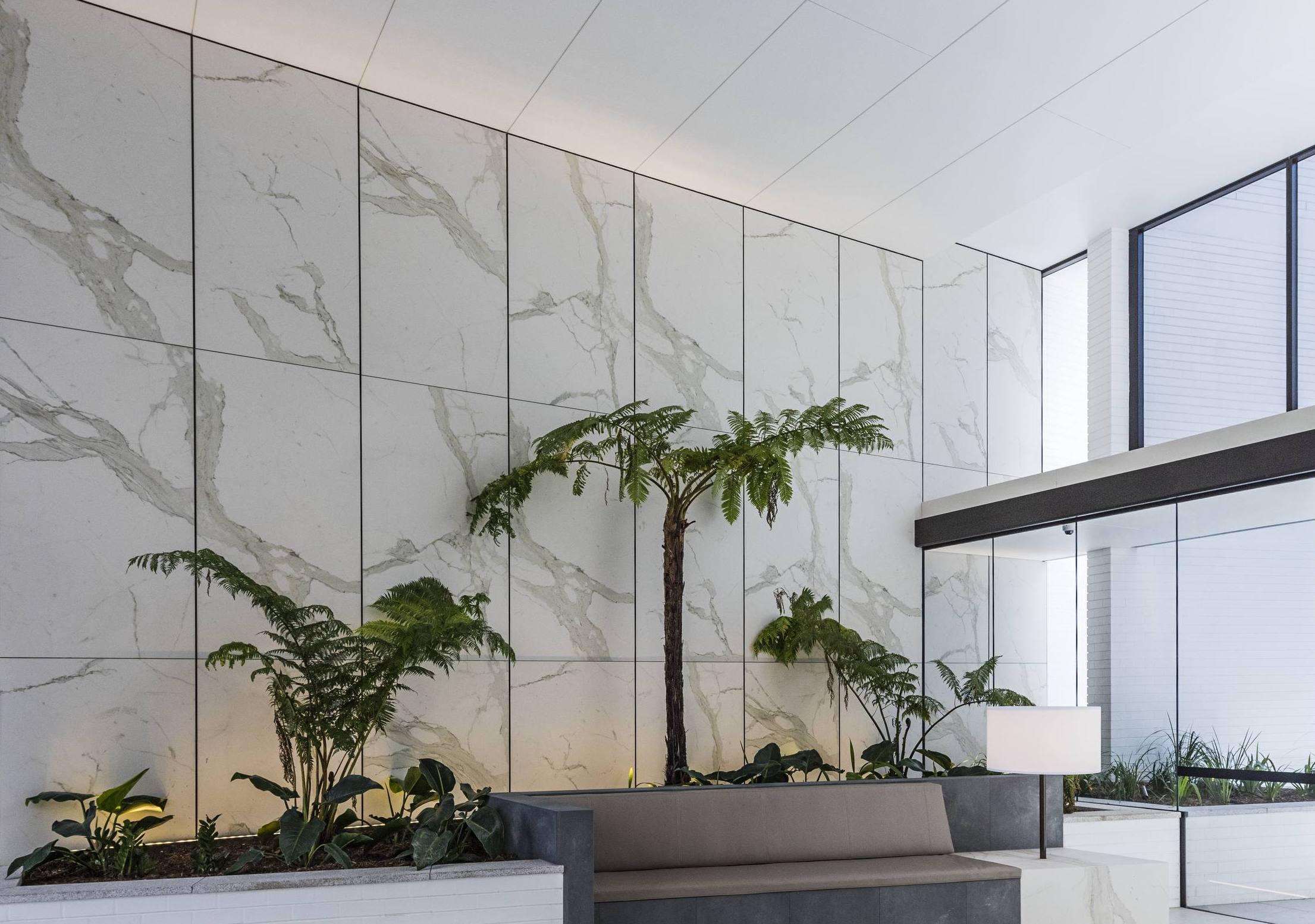
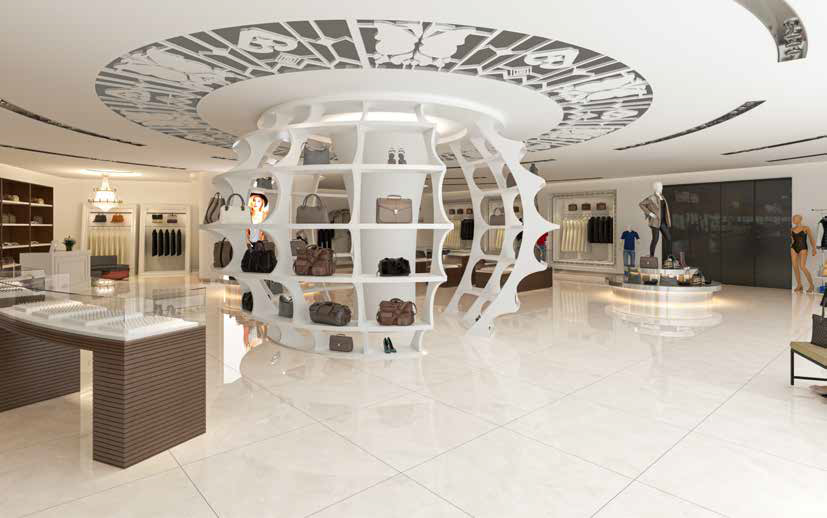
- Large-format porcelain slabs for commercial lobbies and retail interiors
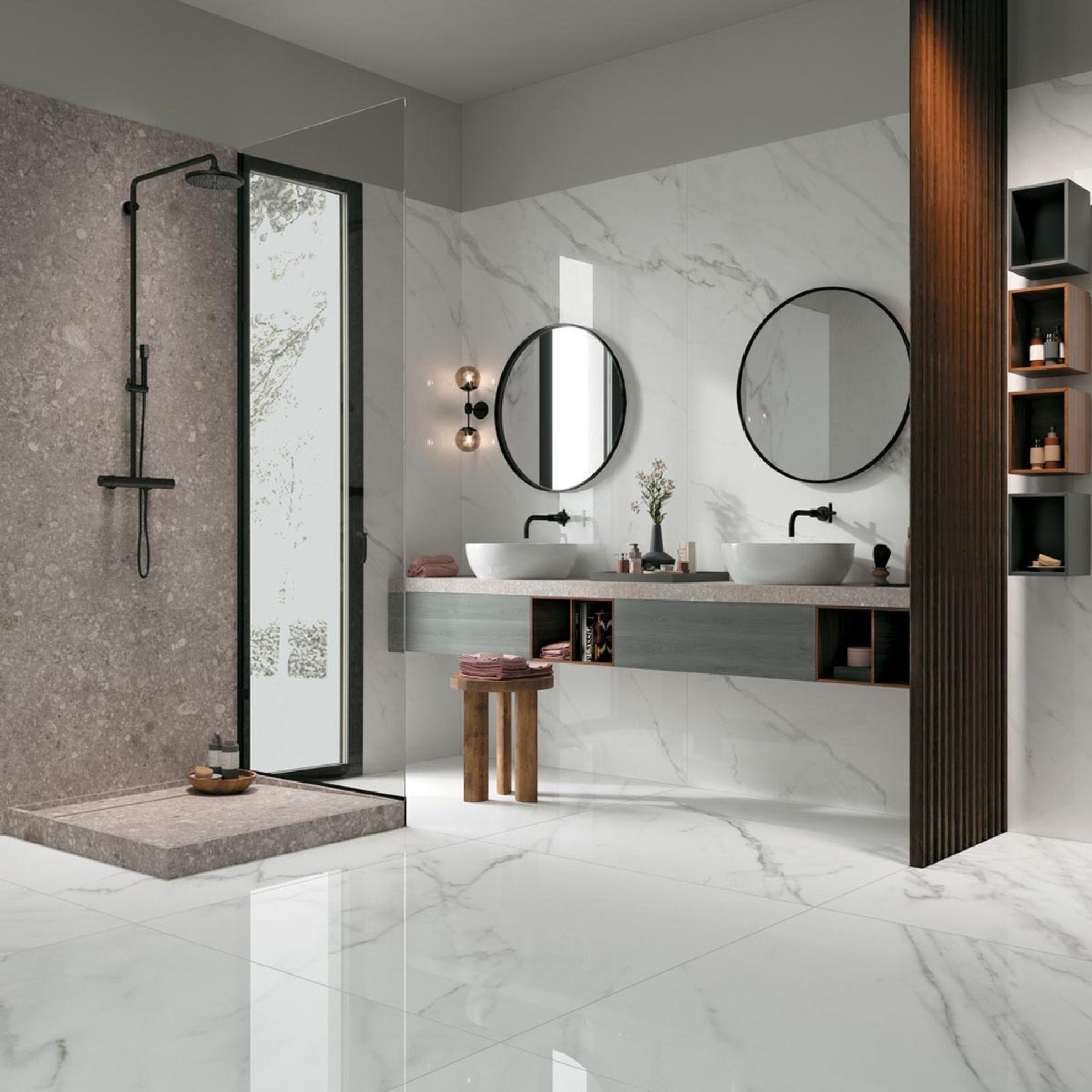
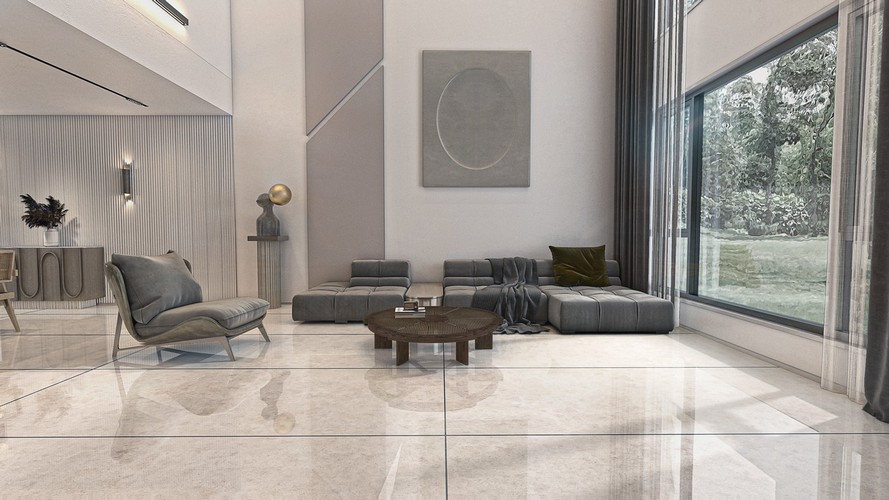
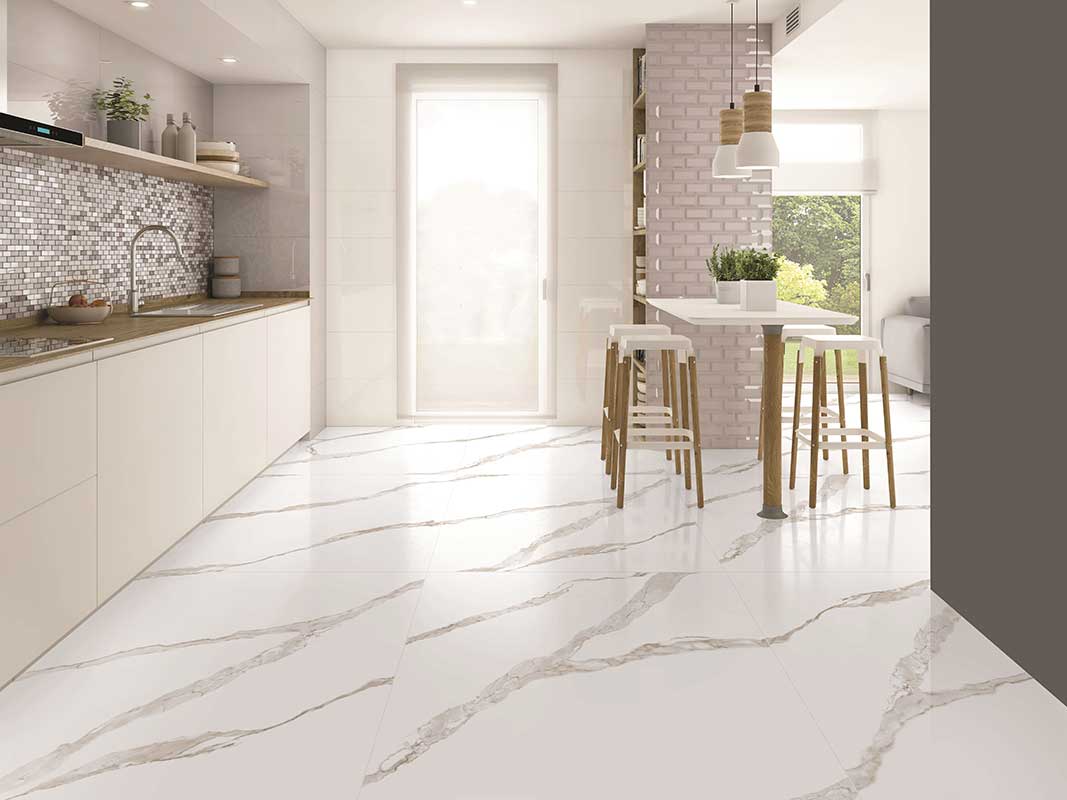
- Marble-look tiles for mid-to-upscale residential developments
- Durable floor ceramics built to withstand temperature swings and moisture, a practical requirement given Russia’s climate
- Wall and facade tiles for both new builds and renovation projects
Russian buyers increasingly favor suppliers who can match European design trends at a lower price point. Iranian manufacturers have invested in digital printing technology over the past several years, closing much of the visual quality gap that once separated them from Italian producers. This combination of design parity and price competitiveness is the core reason Iran’s slab tile export volume to Russia kept climbing through 2025.
Industry reports describe 2025 as a peak year for tile and porcelain slab shipments from Iran to Russia, driven by expanding trade relations and rising demand in Russian urban construction. Exporters who entered this market early built relationships with Russian distributors before competition intensified further, giving them a durable position heading into 2026.
Iran-Russia Trade Relations and the EAEU Factor
What the EAEU-Iran Free Trade Agreement Means for Tile Exporters
The single biggest structural change affecting Iran’s porcelain ceramic export business arrived on May 15, 2025. That is when the full free trade agreement between Iran and the Eurasian Economic Union (EAEU) entered into force, replacing a narrower interim deal that had been active since 2019.
The EAEU includes Russia, Belarus, Kazakhstan, Kyrgyzstan, and Armenia. Under the new agreement, tariffs dropped on roughly 87-90% of traded goods between Iran and EAEU members. For ceramic and porcelain slab tile export specifically, this matters because construction materials had previously carried duty rates that made Iranian products less competitive against Chinese and Indian alternatives.
Officials from the Eurasian Economic Commission projected that the agreement could push total EAEU-Iran trade toward $12 billion in the near term, roughly double prior volumes, with longer-term estimates reaching $18-20 billion within five to seven years. Iranian officials, including Oil Minister Mohsen Paknejad, cited a $6 billion trade target specifically for Iran-Russia commerce following the deal.
Trade Growth Statistics: 2024 Through 2026
The numbers already reflect this shift. Iran’s exports to EAEU member states rose 20% year-on-year in the Iranian calendar year ending March 2025, surpassing $2 billion in total value. Russia alone accounted for $1.121 billion of that figure.
Trade momentum accelerated further after the full agreement took effect:
- Bilateral Iran-Russia trade increased by roughly 35% between May and July 2025, immediately following the agreement’s implementation
- Trade volumes between the two countries rose nearly 12% in the first seven months of 2025 compared with the same period in 2024
- Iran’s non-oil exports overall reached $57.8 billion for the Iranian year ending March 2025, an 11% increase in total trade exchanges
Ceramic and porcelain products sit within this broader non-oil export growth story. While steel and petrochemicals remain the largest categories under the FTA roadmap, construction materials including tile and porcelain slab exports benefit directly from reduced tariff barriers and streamlined customs procedures introduced under the agreement’s 11 chapters, which cover everything from rules of origin to sanitary standards.
For exporters, the practical takeaway is straightforward: paperwork and duty costs that once ate into margins on porcelain ceramic export shipments have eased. This makes 2026 a meaningfully different environment than the one exporters faced even two years earlier.
Opportunities for Iranian Porcelain Ceramic Export to Russia in 2026
Product Advantages: Slab Tiles and Large-Format Porcelain
Iran’s ceramic industry brings genuine manufacturing strengths to this market. The country holds substantial reserves of the raw materials tile production depends on, including feldspar, kaolin, and silica sand, which keeps input costs lower than in countries that import these materials.
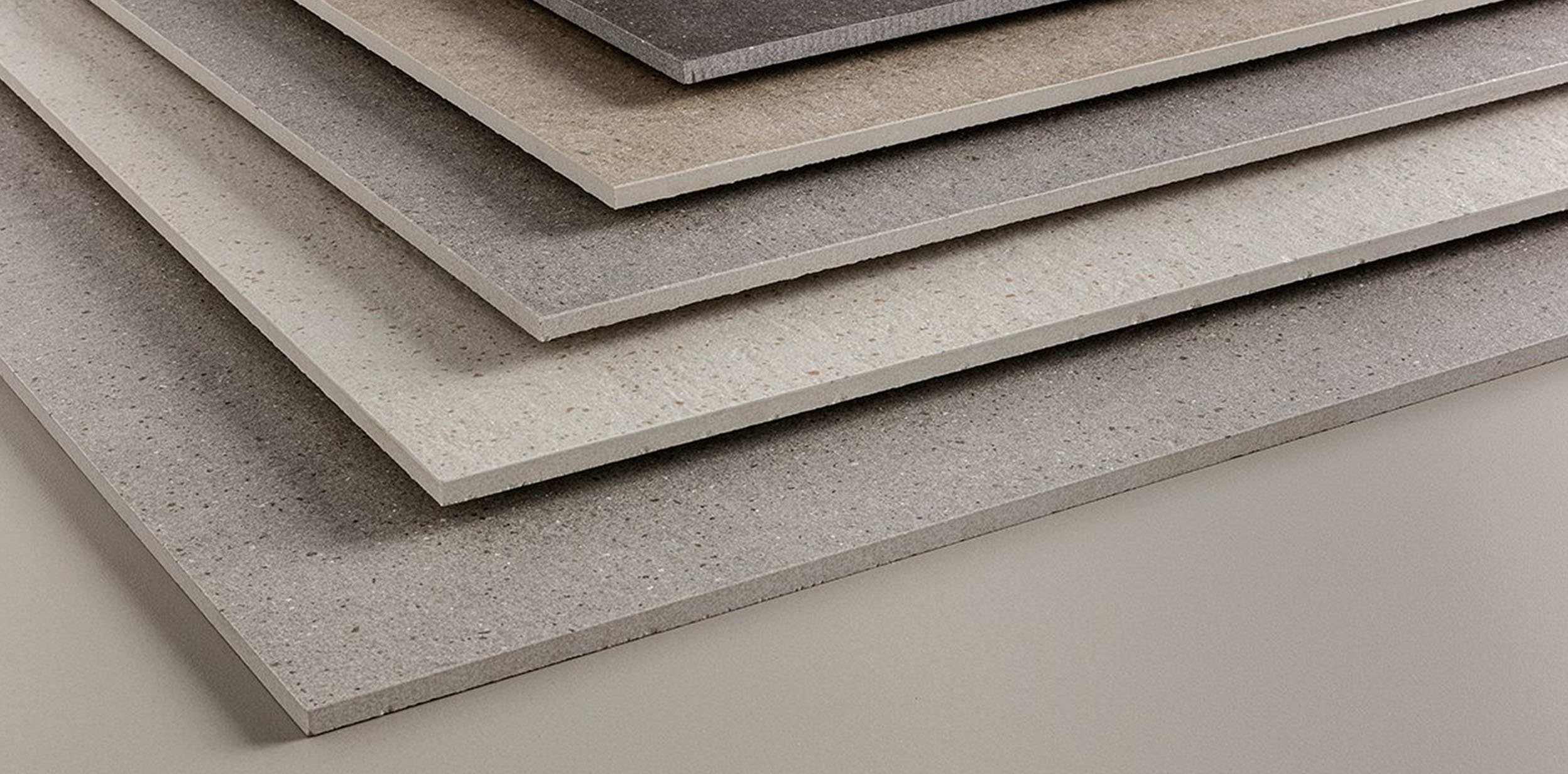
Iranian factories have also modernized their production lines. Large-format porcelain slab tiles, often exceeding 120×260 centimeters, have become a specialty export product. These slabs suit the open, minimalist interiors favored in contemporary Russian commercial design, and they compete directly with the Italian and Spanish products that once dominated this segment.
Price Competitiveness Against Global Rivals
Price remains Iran’s clearest advantage. Average export prices for Iranian ceramic tiles have stayed relatively flat even as global material costs rose, making Iranian slab tile export offers attractive next to alternatives from Italy, Spain, China, and India.
A rough competitive comparison looks like this:
- Italian and Spanish porcelain: highest design prestige, highest price point, limited current market access due to sanctions-related exits
- Chinese ceramic tile: strong price competitiveness, high production volume, longer shipping times to Russia by sea
- Indian ceramic tile: growing market share, competitive pricing, less established brand recognition in Russia than Iranian products
- Iranian porcelain and ceramic tile: mid-range pricing, shorter overland and Caspian Sea shipping routes, improving design quality, tariff advantages under the EAEU agreement
This positioning lets Iranian exporters target the mid-to-premium segment that Russian buyers can no longer easily source from Europe, without competing purely on rock-bottom price against Chinese mass producers.
Regional Demand Beyond Moscow and Saint Petersburg
Most coverage of this trade route focuses on Russia’s two largest cities, but demand extends further. Regional construction hubs across central and southern Russia are expanding, and many secondary markets have less-developed relationships with alternative suppliers, leaving room for Iranian exporters willing to build direct distributor relationships outside the capital.
Exporters who diversify beyond Moscow and Saint Petersburg reduce their dependence on the most competitive, most saturated segment of the Russian tile market. This regional strategy has become a notable trend among Iranian trading companies expanding their porcelain slab export operations in 2026.
Key Challenges Facing Iranian Ceramic Exporters
Sanctions, Banking, and Payment Bottlenecks
Despite the EAEU agreement’s tariff benefits, banking remains the most persistent obstacle to Iran’s ceramic export growth. International sanctions on Iran’s financial system complicate cross-border payments, forcing exporters and Russian buyers to rely on alternative settlement channels, including ruble-rial arrangements and third-country intermediaries.
These workarounds function, but they add cost and delay. Smaller exporters without established banking relationships in Russia often struggle the most, since larger trading companies have more resources to navigate currency conversion and payment verification.
Logistics and Transport Costs
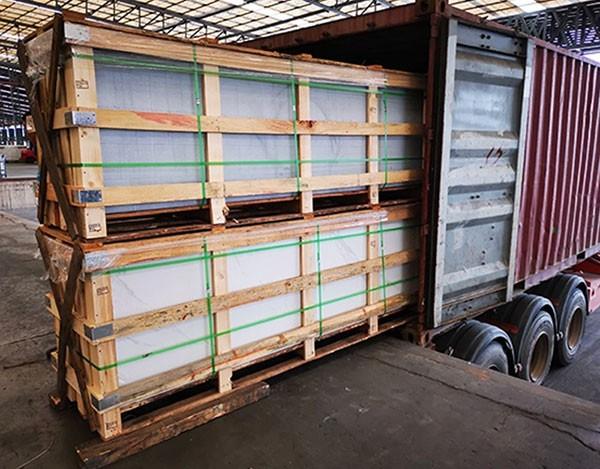
Ceramic and porcelain slab products are heavy and fragile, which makes freight cost and handling quality central to export profitability. Overland routes through Azerbaijan and the Caspian Sea corridor offer shorter transit times than sea freight from China or India, but road and rail capacity along these routes has not always kept pace with rising trade volumes.
Common logistics challenges include:
- Limited specialized packaging and handling capacity for large-format slabs, which are prone to breakage in transit
- Border crossing delays at key checkpoints during peak shipping periods
- Insurance costs that remain elevated due to sanctions-related risk assessments
- Inconsistent rail freight availability along northern export corridors
Competition from China, India, and Turkey
Iranian exporters are not competing in an empty market. Chinese manufacturers ship enormous volumes at low prices, and Indian producers have expanded aggressively into Russia over the past several years, in some cases posting the fastest import growth rates among all foreign suppliers to the Russian ceramic tile market. Turkish producers also maintain a foothold, particularly in mid-range residential tile.
This competitive pressure means Iranian exporters cannot rely on the EAEU tariff advantage alone. Product differentiation, consistent quality, and reliable delivery schedules matter as much as price.
Quality Standardization and Certification
Russian construction standards and import certification requirements differ from Iran’s domestic norms in several technical respects, including slip resistance ratings, water absorption thresholds, and frost resistance testing for exterior applications. Exporters who have not aligned their production with Russian GOST standards face additional customs friction and slower market entry, even under preferential tariff terms.
How Iranian Manufacturers Can Overcome These Barriers
Leveraging the International North-South Transport Corridor
The International North-South Transport Corridor (INSTC) connects Iranian ports to Russia via Azerbaijan and the Caspian Sea, offering a route that is often faster and cheaper than traditional maritime shipping through the Suez Canal. Iranian exporters who route porcelain slab shipments through INSTC infrastructure can cut delivery times meaningfully compared with sea freight competitors from East Asia.
Investment in this corridor has continued, with both Iranian and Russian officials treating it as a strategic priority alongside the EAEU trade agreement. Exporters who build logistics partnerships tied to INSTC routes gain a durable cost advantage that is difficult for Chinese or Indian competitors to replicate given their longer shipping distances.
Building Local Distribution Partnerships
Exporters who succeed in the Russian market rarely rely on one-off shipments. They establish relationships with Russian distributors, showroom operators, and construction procurement firms who can move product consistently across multiple regions.
Practical steps that support this include:
- Attending trade exhibitions such as the Eurasia International Trade Exhibition in Tehran, where Iranian and Russian firms negotiate direct partnerships
- Setting up regional warehousing inside Russia to reduce delivery lead times for repeat buyers
- Offering flexible payment terms that account for the currency conversion challenges Russian buyers face
- Aligning product lines with GOST certification early, rather than treating compliance as an afterthought
Branding and Digital Marketing for Export Growth
Iranian tile brands have historically competed on price rather than brand recognition. That is changing. Exporters investing in professional catalogs, Russian-language marketing materials, and digital showrooms are seeing stronger engagement from architects and interior designers who influence large commercial specification decisions.
Building recognizable branding around Iranian porcelain and ceramic slab products helps exporters move up-market, away from pure price competition with Chinese suppliers and toward the design-conscious segment Italian and Spanish brands once controlled.
Frequently Asked Questions
Is it profitable to export ceramic tiles from Iran to Russia in 2026?
Current data suggests yes, for exporters positioned correctly. Reduced tariffs under the EAEU agreement, a market gap left by European suppliers, and steady Russian construction demand all support continued growth. Profitability depends heavily on managing logistics costs and payment settlement efficiently, since these remain the biggest drags on margin.
What types of Iranian tiles see the strongest demand in Russia?
Large-format porcelain slabs, marble-look floor tiles, and durable exterior ceramics see the strongest demand. Russian buyers particularly value products that combine European-style design with mid-range pricing, a gap Iranian manufacturers are well positioned to fill.
How has the EAEU agreement changed tariffs for Iranian exporters?
The average tariff Iran applies to Russian goods dropped from roughly 16.7% to 5.2%, while Russian import duties on a wide range of Iranian goods, including many construction materials, dropped substantially as well. The agreement covers approximately 87-90% of total traded goods between Iran and EAEU member states.
What documents and certifications does porcelain slab export to Russia require?
Exporters need standard export documentation alongside GOST certification confirming compliance with Russian technical standards for slip resistance, water absorption, and frost resistance. Working with a customs broker familiar with EAEU procedures helps avoid delays, particularly during the transition period as both sides continue implementing the 2025 agreement’s technical chapters.
Conclusion
Iran’s porcelain ceramic export sector stands at a genuine turning point heading into 2026. The withdrawal of European suppliers from the Russian market opened a gap worth hundreds of billions of dollars in historical import value. The EAEU free trade agreement, active since May 2025, cut tariffs sharply and gave Iranian slab tile export businesses a structural advantage that did not exist even three years ago.
The opportunity is real, but it is not automatic. Banking friction, logistics bottlenecks, and intensifying competition from Chinese and Indian manufacturers mean success depends on execution, not just favorable trade terms. Exporters who invest in INSTC-based logistics, GOST certification, and durable distributor relationships will capture disproportionate market share compared with those treating Russia as a one-time opportunistic market.
Looking ahead, expect trade volumes between Iran and Russia’s construction materials sector to keep climbing through 2026 and 2027, particularly as the EAEU-Iran Joint Committee finalizes further implementation details. Regional markets beyond Moscow and Saint Petersburg will likely become the next growth frontier, offering less-saturated entry points for mid-sized Iranian producers.
For manufacturers and trading companies evaluating whether to enter or expand in this market, the underlying fundamentals favor action now, while competition from other Asian suppliers is still consolidating and while tariff advantages remain fresh. Waiting carries its own cost, as early movers are already securing the distributor relationships and brand recognition that will matter most as the market matures.
If your company is evaluating an entry strategy into Iran’s porcelain ceramic export pipeline to Russia, contact our trade specialists for a tailored market assessment and logistics plan.

نظرات ۰