


Discover why Iranian large-format ceramic slabs are reshaping European facade design. Explore durability, porcelain ceramic export standards, costs, and installation — get expert guidance today.
By 2027, the global market for large-format porcelain surfaces is projected to exceed several billion euros, driven largely by architects seeking lightweight, durable cladding alternatives to natural stone. Yet many European contractors still ask the same question: can a single material deliver structural resilience, aesthetic flexibility, and long-term value on a building envelope exposed to freeze-thaw cycles, pollution, and constant weathering?
This question sits at the heart of a growing shift in facade engineering. Traditional cladding materials — brick, natural stone, high-pressure laminate — each carry compromises. Stone is heavy and costly to transport. Laminate panels fade and warp under UV exposure. Brick, while durable, limits design freedom and adds significant dead load to a structure. Architects and developers across Germany, Italy, Poland, and the Netherlands have been searching for a material that solves these problems simultaneously.
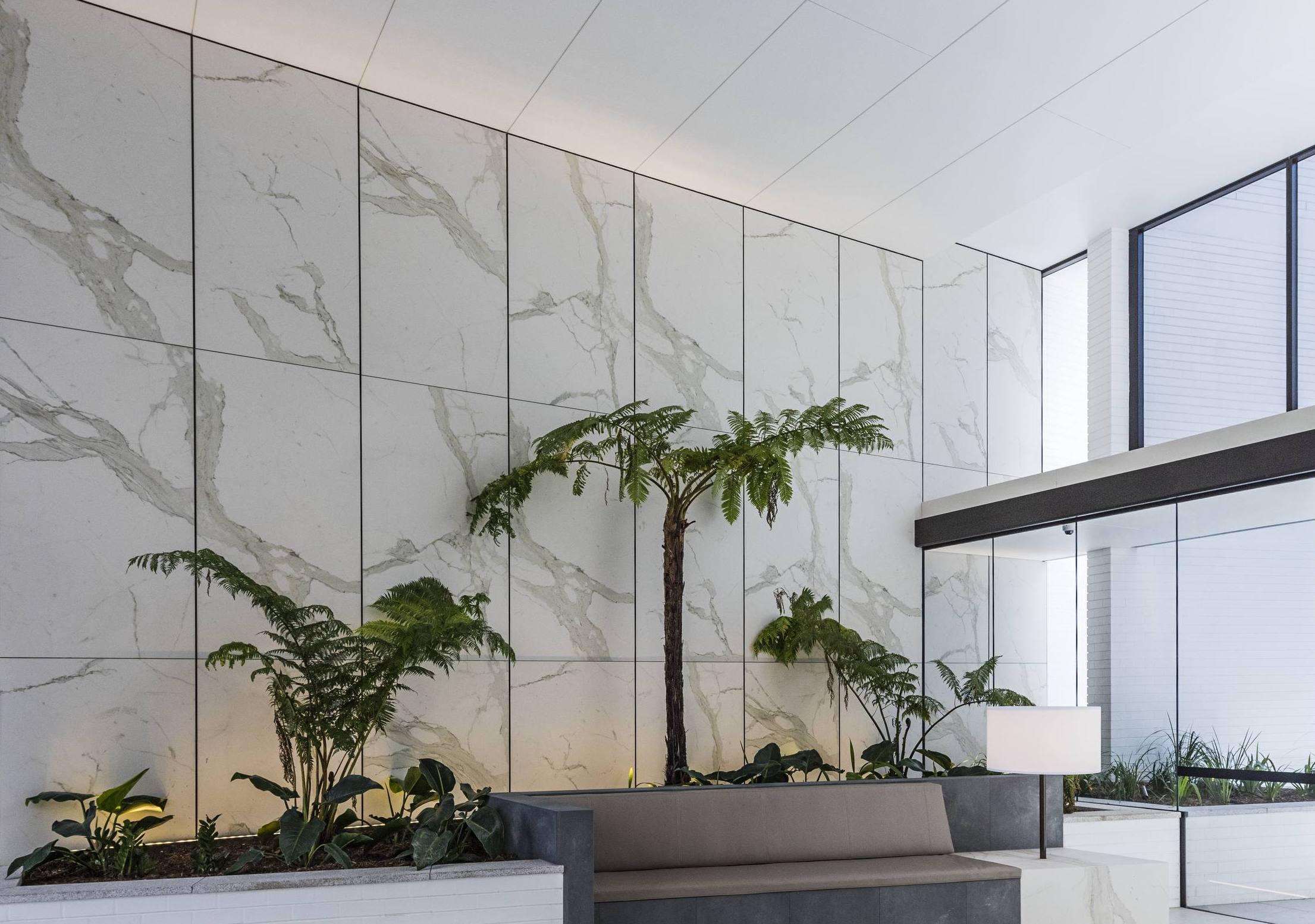
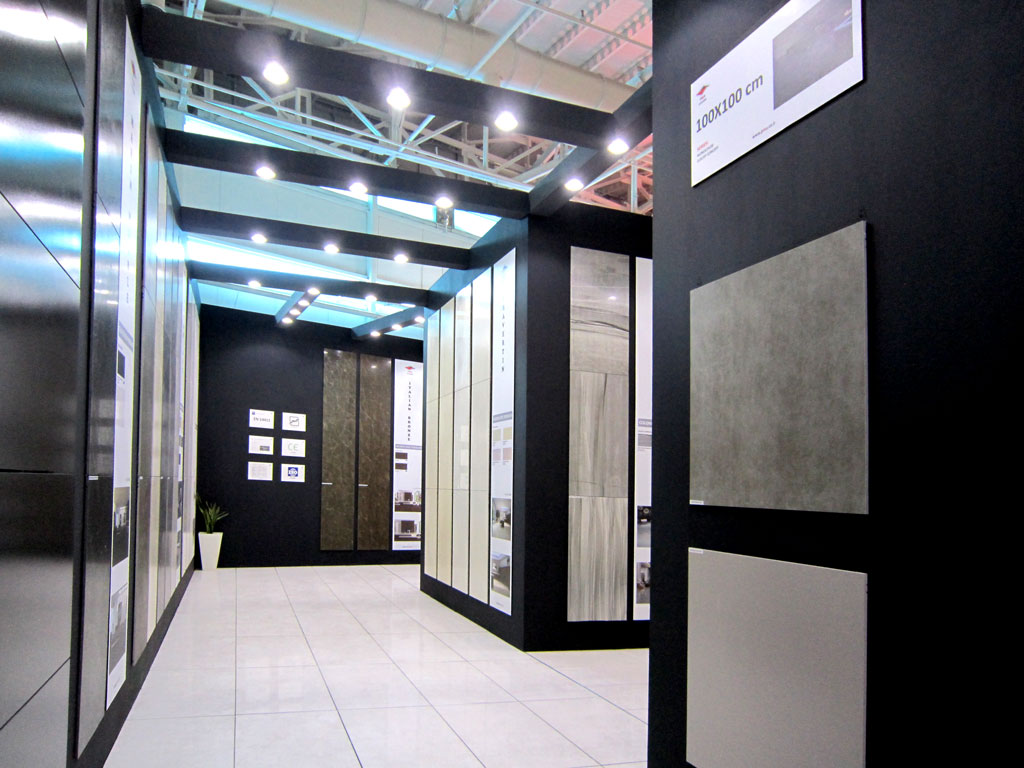
Large-format ceramic slabs, particularly those manufactured through Iran’s expanding porcelain ceramic export industry, have emerged as a credible answer. These slabs combine the visual richness of natural stone with the engineering precision of industrial porcelain, all while remaining significantly lighter and more cost-efficient to install.
This article examines everything a European specifier, contractor, or developer needs to know before choosing Iranian ceramic slab tile for a facade project. We will cover the manufacturing process, technical performance data, installation systems, certification requirements for cross-border trade, cost comparisons, and real-world application scenarios. By the end, you should have a complete, decision-ready understanding of whether this material fits your next building envelope project — without needing to consult five other sources to fill in the gaps.
What Are Large-Format Ceramic Slabs?
Large-format ceramic slabs are thin, high-density porcelain panels manufactured through advanced pressing and firing techniques. Unlike conventional ceramic tiles, which typically measure under one square meter, these slabs can reach dimensions of 3.2 by 1.6 meters, with thicknesses ranging from 3mm to 12mm depending on the application.
Manufacturing Process
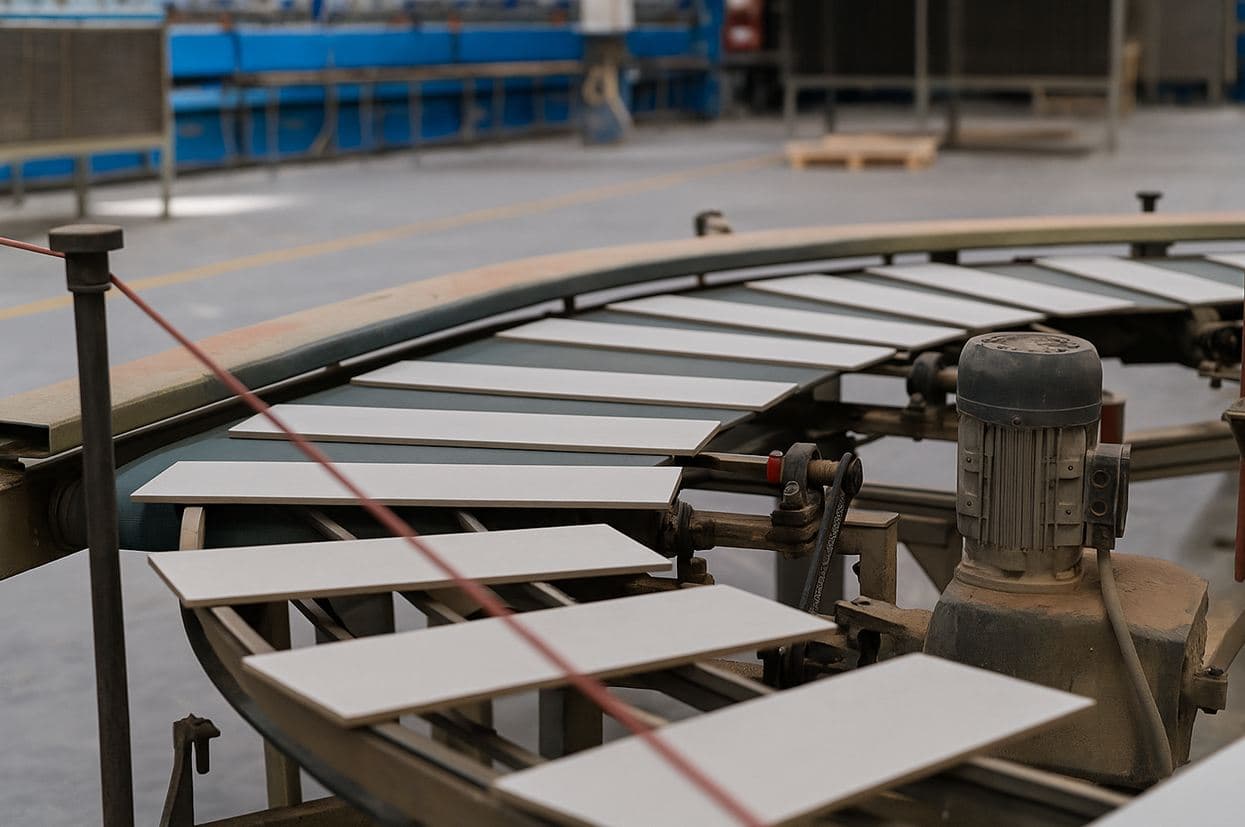
The production of a ceramic slab tile begins with a blend of kaolin clay, feldspar, and quartz sand, milled into a fine powder. This mixture undergoes:
- Wet grinding and spray drying — creating a homogeneous granulate free of air pockets
- Isostatic or continuous pressing — applying pressures exceeding 500 kg/cm² to eliminate porosity
- High-temperature firing — kilns reach 1200–۱۲۵۰°C, vitrifying the material into a dense, glass-like structure
- Surface finishing — polishing, honing, or texturing to achieve the desired aesthetic
This process produces a material with water absorption below 0.05%, a property that directly determines resistance to frost damage — a critical factor for buildings in Central and Northern Europe.
Distinguishing Slabs from Traditional Tiles
The key difference lies not just in size but in structural behavior. Large-format panels reduce the number of joints on a facade, which lowers water infiltration risk and reduces long-term maintenance costs. Fewer joints also mean fewer opportunities for efflorescence, staining, or grout deterioration — issues that plague smaller-tile installations over a decade of exposure.
Iranian manufacturers have invested heavily in this segment over the past five years, upgrading kiln technology and pressing equipment to compete directly with established Italian and Spanish producers, while offering more competitive pricing for bulk European orders.
Why Iranian Ceramic Slabs Are Gaining Ground in Europe
Raw Material Advantage
Iran holds some of the region’s largest reserves of high-purity kaolin and feldspar, the two primary raw materials in porcelain slab production. This geological advantage allows manufacturers to control input costs more tightly than competitors dependent on imported minerals, translating into a pricing edge for buyers.
Competitive Pricing Without Compromising Standards
A recurring theme in facade procurement is the tension between budget and quality. Iranian producers have positioned themselves in a pricing tier roughly 15–۲۵% below comparable Italian slabs, while meeting equivalent technical benchmarks for bending strength and frost resistance. For large-scale European renovation projects — where facade area can exceed 5,000 square meters — this pricing gap translates into substantial project savings.
Growing Export Infrastructure
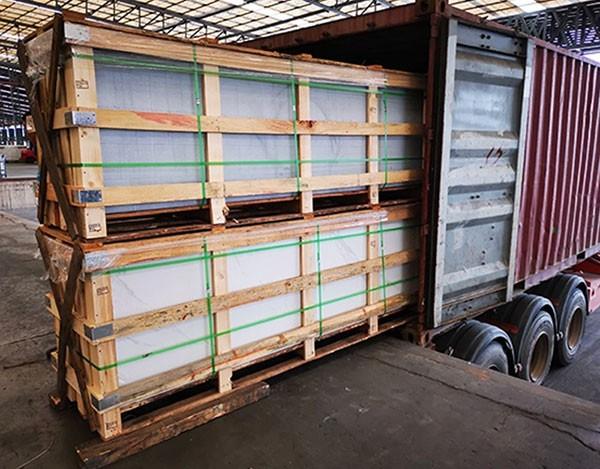
Since 2022, several Iranian ceramic manufacturers have established dedicated export divisions, logistics partnerships, and European distribution warehouses in Turkey and the Balkans to reduce delivery lead times. This infrastructure investment reflects a structural commitment to porcelain ceramic export as a long-term growth market, not a temporary opportunistic move.
Case in Point
A residential renovation project in Poznań, Poland, completed in 2024, replaced a deteriorating brick facade with Iranian ceramic slab cladding across 3,400 square meters. Project documentation cited a 22% cost reduction compared to the originally budgeted Italian porcelain alternative, with no reported performance compromise after eighteen months of exposure to Polish winters.
Technical Performance: What Architects Need to Verify
Mechanical Strength
Large-format ceramic slabs intended for ventilated facade systems must meet minimum bending strength requirements, typically referenced against EN 14411 (the European standard for ceramic tiles) or the broader EN 12150 framework for structural glazing-adjacent materials. Reputable Iranian manufacturers now routinely publish test data showing:
- Modulus of rupture: ۴۵–۵۵ N/mm², comparable to premium European porcelain
- Breaking strength: exceeding 1,300 N on standard 900mm spans
- Water absorption: below 0.05%, classifying the material as fully vitrified porcelain
Thermal and Fire Behavior
Ceramic slabs are classified as A1 (non-combustible) under Euroclass fire rating standards, an important distinction for high-rise facade applications in the EU, where combustible cladding has faced increased regulatory scrutiny following several high-profile fire incidents across the continent.
Thermal expansion coefficients for porcelain slabs remain low, generally under 7 x 10⁻⁶ per °C, meaning the material moves minimally across seasonal temperature swings. This stability reduces the risk of joint failure or panel cracking in climates with wide daily temperature ranges, such as continental Central Europe.
Frost and Freeze-Thaw Resistance
For any facade material destined for Northern or Alpine Europe, freeze-thaw testing is non-negotiable. Because Iranian ceramic slabs achieve water absorption rates near zero, moisture cannot penetrate the material’s internal structure to freeze and expand — the mechanism responsible for spalling in porous stone and lower-grade ceramics.
What to Request From Suppliers
Before finalizing a procurement decision, specifiers should request:
- Independent laboratory test reports (ISO 10545 series)
- CE marking documentation confirming compliance with EU Construction Products Regulation
- Batch consistency data, since color and dimensional variation between production runs can affect large-scale installations
Ventilated Facade Systems: How Installation Works
The Rainscreen Principle
Most European applications of large-format ceramic slabs use a ventilated (rainscreen) facade system. This method separates the cladding panel from the building’s structural wall using a mechanical substructure, creating an air cavity that allows moisture to escape and improves thermal performance.
Core Components
- Substructure — typically aluminum brackets and vertical rails anchored to the load-bearing wall
- Insulation layer — mineral wool or rigid foam installed within the cavity
- Air gap — usually 20–۴۰mm, enabling convective airflow behind the panels
- Fixing system — mechanical anchors, adhesive bonding, or a hybrid approach depending on panel thickness
Fixing Methods Compared
Mechanical (visible) fixing uses drilled holes and metal clips, offering the highest load security and easiest panel replacement if damage occurs. This method suits large public buildings where long-term maintainability outweighs aesthetic seamlessness.
Undercut anchor fixing drills a concealed cavity into the slab’s rear face, allowing for a nearly invisible fastening system. This approach has become popular for premium residential and commercial projects across Germany and Austria.
Adhesive bonding works well for thinner slabs (3–۶mm) in lower-rise applications but requires careful substrate preparation and is less common for buildings above four stories due to long-term adhesive fatigue concerns.
Why Weight Matters
A standard 10mm ceramic slab weighs approximately 24 kg/m², compared to 60–۸۰ kg/m² for natural granite of similar thickness. This weight reduction lowers structural loading requirements on the building’s facade anchoring system, often eliminating the need for reinforced substructure — a meaningful cost and time saving on renovation projects where the existing structure cannot bear additional load.
Common Installation Mistakes to Avoid
- Insufficient expansion joints between panels, leading to thermal stress cracking
- Improper anchor spacing that exceeds manufacturer load tolerances
- Neglecting ventilation cavity sizing, which can trap moisture and reduce insulation performance
- Mixing production batches with visible color variation across a single elevation
Export Standards and Certification: What European Buyers Must Verify
CE Marking and EU Construction Products Regulation
Any ceramic slab tile entering the European market for construction use must carry CE marking under the Construction Products Regulation (CPR). This certification confirms the product has been tested against declared performance characteristics, including fire behavior, mechanical resistance, and dimensional tolerance.
Iranian exporters targeting the EU market have increasingly pursued CE certification through accredited third-party laboratories, often in Italy or Germany, to ensure documentation meets customs and building-code scrutiny upon arrival.
ISO and EN Standard Compliance
Key standards relevant to porcelain ceramic export include:
- EN 14411 — Ceramic tiles: definitions, classification, characteristics, and marking
- ISO 10545 — Series covering water absorption, breaking strength, and chemical resistance testing
- EN 12467 — Relevant for fiber-reinforced facade panels where applicable
Customs and Logistics Considerations
European importers should account for:
- HS code classification — ceramic slabs typically fall under HS code 6907, affecting applicable tariffs
- Anti-dumping regulations — the EU has historically applied scrutiny to ceramic tile imports from various origins; buyers should verify current trade agreements before large orders
- Documentation for customs clearance — including certificates of origin, commercial invoices, and CE declarations of performance
- Lead times — sea freight from Iranian ports typically requires 3–۵ weeks to major European ports, depending on transshipment routing
Working With Verified Suppliers
Given the technical stakes involved in facade cladding, European buyers should prioritize Iranian manufacturers with:
- Established export track records and verifiable European project references
- In-house or third-party quality control labs
- Transparent batch testing documentation
- English or multilingual technical support teams for specification queries
Comparing Ceramic Slabs to Alternative Facade Materials
Ceramic Slabs vs. Natural Stone
Natural stone offers unmatched uniqueness, as no two slabs are identical. However, this comes with significant drawbacks: higher weight, inconsistent porosity, susceptibility to staining, and considerably higher cost per square meter — often 40–۶۰% more than comparable ceramic slabs. Ceramic slabs replicate stone aesthetics through high-definition digital printing while offering superior consistency and lower installed weight.
Ceramic Slabs vs. High-Pressure Laminate (HPL)
HPL panels are lightweight and cost-effective initially but degrade under prolonged UV exposure, with visible fading typically occurring within 8–۱۲ years. Ceramic slabs, being fully mineral-based, do not fade, making them a stronger long-term investment despite a higher upfront cost.
Ceramic Slabs vs. Brick Cladding
Brick remains a traditional favorite across Northern Europe for its texture and thermal mass, but it carries substantial structural weight and limits design flexibility. Ceramic slabs can replicate brick textures through digital printing while reducing facade weight by more than half, easing structural demands on renovation projects.
Summary Comparison Table
| Criteria | Ceramic Slabs | Natural Stone | HPL | Brick |
|---|---|---|---|---|
| Weight (kg/m²) | ۱۸–۳۰ | ۶۰–۹۰ | ۶–۱۲ | ۱۵۰–۲۲۰ |
| UV Fade Resistance | Excellent | Excellent | Moderate | Excellent |
| Design Flexibility | High | Low | High | Low |
| Maintenance Cost | Low | Moderate | Moderate–High | Low |
| Relative Cost | Moderate | High | Low–Moderate | Moderate |
Cost Considerations for European Projects
Material Pricing
Iranian ceramic slab pricing for European export typically ranges between €۲۵ and €۴۵ per square meter for standard thicknesses (6–۱۰mm), depending on surface finish, order volume, and customization requirements such as digital printing patterns.
Installation Costs
Labor costs vary significantly by country. Ventilated facade installation in Germany or the Netherlands may run €۴۰–۶۵ per square meter for labor alone, while Eastern European markets often see rates 20–۳۰% lower. Total installed cost, including substructure and insulation, typically falls between €۹۰ and €۱۶۰ per square meter.
Long-Term Value
While upfront material cost matters, the more relevant metric for developers is lifecycle cost. Because ceramic slabs require minimal maintenance — no repainting, sealing, or staining treatment over their 50+ year service life — total cost of ownership frequently favors ceramic over laminate or coated metal alternatives within a 15-year horizon.
Sustainability and Environmental Considerations
Raw Material Sourcing
Ceramic slabs use naturally abundant minerals — clay, feldspar, quartz — without reliance on petroleum-based inputs, distinguishing them favorably from composite or laminate panels in environmental impact assessments.
Energy Efficiency in Production
Modern Iranian manufacturing facilities have adopted more energy-efficient kiln technology in recent years, reducing firing energy consumption per square meter compared to older production lines. While not yet uniformly matching the most advanced European facilities, the gap has narrowed considerably since 2021.
Contribution to Building Energy Performance
When installed as part of a ventilated facade system, ceramic slabs contribute to improved building thermal performance by allowing continuous insulation without thermal bridging — supporting compliance with EU Energy Performance of Buildings Directive targets for renovated structures.
End-of-Life Recyclability
Ceramic slab waste from cutting and installation can often be crushed and repurposed as aggregate material, reducing landfill contribution compared to composite cladding systems that are more difficult to separate into recyclable components.
Frequently Asked Questions
Are Iranian ceramic slabs suitable for cold European climates?
Yes. Due to near-zero water absorption rates, properly certified Iranian porcelain slabs perform reliably under freeze-thaw cycling common in Central and Northern Europe, provided installation follows correct ventilated facade practices.
How does Iranian ceramic slab quality compare to Italian or Spanish production?
Leading Iranian manufacturers now match core technical benchmarks — bending strength, water absorption, fire rating — established by Italian and Spanish producers, while typically offering lower pricing. Quality consistency does vary by manufacturer, making supplier verification essential.
What thickness is recommended for facade applications versus flooring?
Facade cladding typically uses 6–۱۲mm slabs for mechanical fixing systems, while thinner 3–۶mm panels suit adhesive-bonded lower-rise applications. Flooring applications generally require thicker, more impact-resistant panels starting at 9mm.
How long does an Iranian ceramic slab facade last?
With proper installation, ceramic slab facades typically offer a service life exceeding 50 years, with minimal degradation in color or structural integrity given the material’s vitrified, non-porous composition.
Conclusion
Iranian large-format ceramic slabs have moved from a niche alternative to a genuinely competitive option for European facade projects. The combination of favorable raw material access, improved manufacturing standards, and export infrastructure has positioned this porcelain ceramic export segment as a serious contender against established Italian and Spanish suppliers, particularly for developers balancing performance against budget constraints.
The technical case is strong: near-zero water absorption, A1 fire classification, low thermal expansion, and significant weight reduction compared to natural stone or brick. Combined with ventilated facade installation methods, these slabs address the core engineering demands of modern European building envelopes while offering design teams extensive aesthetic flexibility through digital surface printing.
Looking toward 2027 and beyond, expect continued consolidation among Iranian manufacturers pursuing CE certification and direct European distribution partnerships, likely narrowing the price gap further as logistics networks mature. Buyers who establish early supplier relationships now may secure both pricing advantages and priority access as demand accelerates across renovation-heavy markets like Germany, Poland, and the Benelux region.
Before committing to a large-scale procurement decision, verify certification documentation, request independent test reports, and where possible, review completed European reference projects. The material’s technical merit is well established — the remaining diligence lies in supplier selection.
For a detailed technical consultation on sourcing, certification verification, or facade system compatibility for your specific project, contact our specialist team to discuss your requirements and receive a tailored material specification.

نظرات ۰