

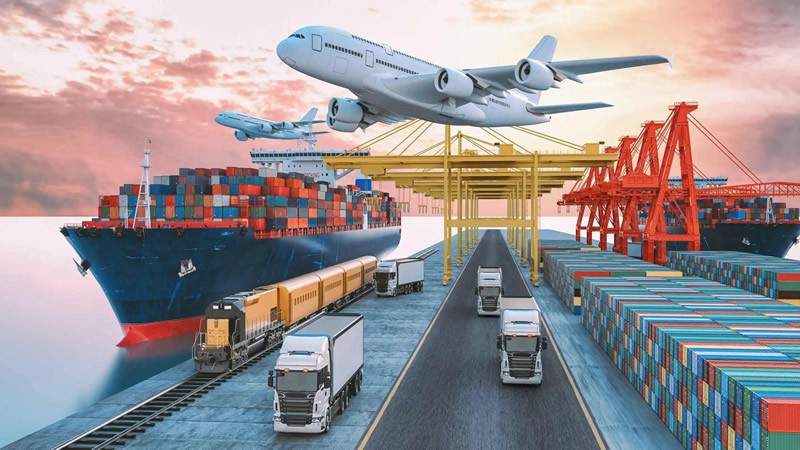
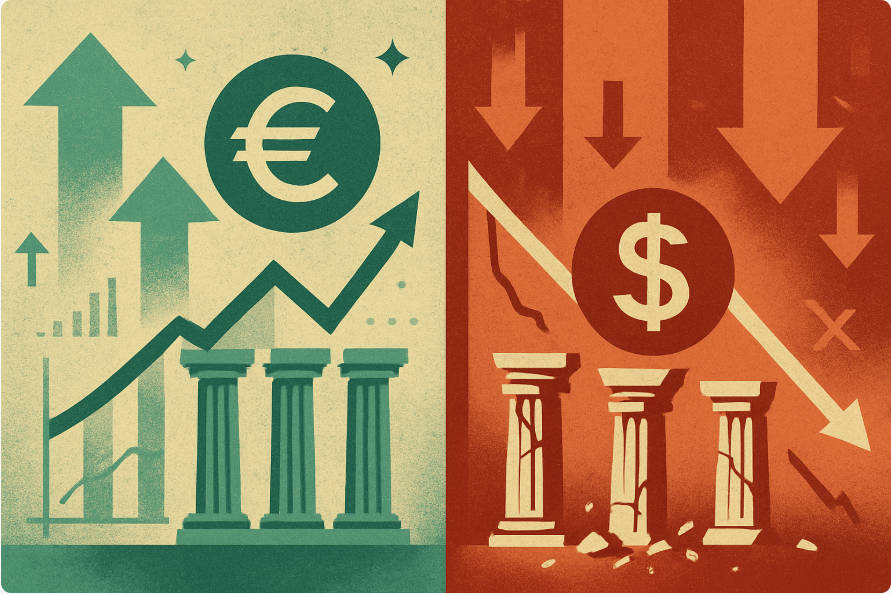



Discover practical solutions to currency transfer challenges under sanctions. Learn how exporters can reduce payment risk, improve compliance, diversify settlement methods, and protect international trade revenue.
When Shipping the Goods Is Easier Than Getting Paid
What happens when an exporter successfully manufactures, loads, and ships a container—but cannot safely receive the money?
For many Iranian exporters, this is no longer a hypothetical question. Currency transfer under sanctions has become one of the most critical operational challenges in international trade, particularly for businesses working with international buyers, distributors, and importers.
The problem becomes even more complicated in sectors such as ceramic tile exports, where transactions can involve large invoices, repeated shipments, multiple intermediaries, foreign banks, freight companies, and buyers operating under strict compliance policies.
A buyer may be willing to purchase the product. The exporter may offer competitive pricing. The logistics provider may be ready to move the cargo. Yet the transaction can still fail because the financial institution involved refuses to process the payment.
The global trade environment also shows why this issue deserves attention. The Asian Development Bank estimated the global trade finance gap at $۲.۵ trillion in 2025, equal to roughly 10% of global trade. The organization also expects demand for trade finance to increase as supply chains diversify and companies reorganize their international sourcing.
For Iranian exporters, sanctions add another layer of complexity.
The purpose of this guide is not to provide a way around sanctions. Instead, it explains how exporters can build legally compliant, transparent, and more resilient payment structures.
The article examines the main challenges, explains why conventional banking channels often fail, and presents practical strategies for improving payment security, documentation, currency planning, buyer screening, and financial risk management.

Why Currency Transfer Has Become a Major Export Challenge
International trade depends on more than products and logistics.
A successful export transaction normally requires several systems to work together:
- Commercial contracts
- Trade documentation
- Shipping and customs procedures
- Foreign-exchange conversion
- Banking or payment infrastructure
- Compliance and sanctions screening
- Reconciliation and accounting
If one of these systems fails, the entire transaction can become difficult.
For exporters operating under sanctions, the financial layer is often the weakest link.
The banking chain is longer than exporters think
A typical international payment may pass through several financial institutions before reaching the beneficiary.
For example:
Buyer → Buyer’s Bank → Correspondent Bank → Intermediary Financial Institution → Settlement Bank → Exporter
Every institution can have its own:
- Sanctions policy
- Country-risk policy
- Customer due-diligence requirements
- Transaction monitoring system
- Internal risk appetite
- Restrictions on Iranian counterparties
Therefore, the fact that a buyer is willing to pay does not necessarily mean that the buyer’s bank is willing to process the payment.
This distinction is crucial for exporters.
Sanctions risk is not limited to Iranian companies
Foreign financial institutions may also be concerned about secondary sanctions exposure, blocked parties, restricted sectors, or transactions involving designated entities.
OFAC guidance demonstrates how complicated these situations can become. In some circumstances, a financial institution may be required to reject or block a transaction, depending on the underlying transaction and the parties involved.
This means that exporters should not treat payment as an issue that can be solved after signing the sales contract.
It should be designed before the contract is finalized.
The situation became more complex after 2025
The regulatory environment surrounding Iran changed significantly in September 2025.
The European Union announced the reimposition of several restrictive measures following the reintroduction of UN sanctions related to Iran’s nuclear program. The measures included financial and economic restrictions and the freezing of assets of the Central Bank of Iran and major Iranian commercial banks.
For exporters targeting European customers, this development is particularly important.
A buyer in Europe may have internal compliance procedures that are stricter than the exporter’s commercial requirements.
Consequently, market access and payment access must be analyzed together.
The Main Currency Transfer Challenges Facing Exporters
The problems exporters encounter are rarely limited to one failed bank transfer.
They usually form a chain of related risks.
۱. Bank rejection or payment interruption
One of the most frustrating scenarios occurs when a payment is initiated but later rejected.
Possible reasons include:
- Sanctions screening
- Compliance concerns
- Incomplete documentation
- Unclear transaction purpose
- High-risk jurisdiction
- Counterparty screening issues
- Inconsistent company information
- Unexpected intermediary-bank restrictions
The exporter may then face delayed cash flow, additional banking costs, and tension with the buyer.
۲. Long settlement periods
A transaction that should take several business days may take considerably longer when additional compliance checks are required.
For a company operating with limited working capital, payment delays can create a serious liquidity problem.
Consider a tile manufacturer shipping several containers every month.
If payment is delayed after shipment, the company may need to finance:
- Raw materials
- Energy costs
- Labor
- Packaging
- Inland transportation
- Port charges
- Freight
- Production for the next order
The exporter may therefore be profitable on paper but experience a cash-flow shortage.
۳. Currency volatility
Currency risk creates another challenge.
Suppose an exporter agrees to sell goods for €۱۰۰,۰۰۰.
If the exporter ultimately receives a different currency or must convert the funds through several stages, changes in exchange rates can reduce the final value.
The longer the settlement period, the greater the potential exposure.
۴. Multiple intermediaries
Using several parties can make a transaction operationally possible, but it can also make compliance more complicated.
Each additional intermediary introduces another point of failure.
This is why exporters should prioritize transparency and documentation rather than simply adding more layers to a payment structure.
۵. Counterparty risk
A buyer may have excellent intentions but still lack a reliable payment mechanism.
Before accepting an order, exporters should ask:
- Who exactly is the buyer?
- Where is the buyer incorporated?
- Which bank will make the payment?
- What currency will be used?
- Is the buyer connected to restricted parties?
- Does the buyer understand the applicable compliance requirements?
- What happens if the payment is rejected?
- What contractual mechanism applies to delayed payment?
These questions belong in the commercial negotiation—not after the cargo has left the factory.
Practical Solutions for Managing Currency Transfer Risk
There is no universal payment method that eliminates sanctions-related risk.
The better strategy is to create a risk-management framework.
Solution 1 — Design the payment structure before shipment
One of the biggest mistakes exporters make is treating payment as an administrative detail.
Instead, payment should be part of the export strategy.
Before production begins, define:
- Contract currency
- Payment schedule
- Payment institution or permitted channel
- Required documentation
- Currency-conversion responsibility
- Payment deadline
- Procedure for rejected payments
- Refund or cancellation mechanism
- Dispute-resolution process
For example, an exporter might negotiate a structure based on an agreed advance payment followed by a balance payment linked to shipment documentation, subject to applicable laws and the parties’ banking arrangements.
The exact structure must be reviewed against the laws applicable to the exporter, buyer, banks, and jurisdictions involved.
Solution 2 — Use documented and legally permissible payment channels
The key principle is simple:
Do not choose a payment method merely because it appears to work. Choose one that can be documented, audited, and legally justified.
This distinction is particularly important under sanctions.
OFAC’s current sanctions framework illustrates why payment channels cannot be evaluated independently from the underlying transaction, counterparties, and applicable authorization or exemption.
For exporters, the practical lesson is to perform a compliance review before committing to a settlement method.
Solution 3 — Diversify markets and currencies
Concentration creates vulnerability.
If an exporter depends entirely on one country, one buyer, one currency, or one payment institution, a regulatory change can disrupt the entire export operation.
A stronger strategy is to diversify across:
- Geographic markets
- Buyer segments
- Contract currencies
- Banking relationships
- Product categories
- Payment schedules
For a ceramic tile exporter, this might mean developing several export markets rather than relying exclusively on one European destination.
Diversification does not remove sanctions risk.
It reduces the probability that a single disruption will stop the entire business.
Currency Risk Management for Ceramic Tile Exporters
The ceramic tile export business has several characteristics that make currency management particularly important.
Orders can involve:
- Large container volumes
- Long production cycles
- International freight
- Multiple currencies
- Significant working-capital requirements
- Price-sensitive buyers
Why ceramic tile exporters need stronger financial planning
Imagine a manufacturer receives an order for 10 containers.
The sales price is fixed today.
However, the exporter may incur costs at different times:
- Raw materials purchased in one currency
- Labor paid in local currency
- Packaging costs influenced by exchange rates
- Freight priced in another currency
- Port charges
- Insurance
- Export-related fees
This creates a mismatch between revenue and costs.
The exporter therefore needs to calculate the true landed and financial cost, not simply the factory price.
Build a currency exposure table
A simple internal table can significantly improve decision-making.
| Item | Currency | Timing | Risk |
|---|---|---|---|
| Customer payment | EUR/USD/other | ۳۰–۶۰ days | Exchange-rate risk |
| Raw materials | Local/foreign | Immediate | Cost inflation |
| Freight | USD/EUR | Shipment date | FX exposure |
| Packaging | Local | Production | Moderate |
| Bank/payment fees | Foreign/local | Settlement | Variable |
| Final conversion | Local | Receipt date | FX exposure |
The goal is to identify where currency gains or losses can occur.
H3: Match currency revenues with currency expenses
A useful principle is natural hedging.
If part of the company’s expenses are denominated in a foreign currency, receiving export revenue in the same currency may reduce the need for immediate conversion.
The strategy must comply with applicable financial regulations and should be reviewed with qualified financial professionals.
The Importance of Compliance and Due Diligence
For exporters, compliance is no longer simply a concern for banks.
It is becoming part of commercial competitiveness.
Banks and international companies increasingly rely on automated screening systems.
Swift notes that financial institutions face challenges including rapidly changing sanctions lists, regulatory complexity, poor-quality data, transaction volumes, and compliance costs.
This means that inconsistent information can create unnecessary problems.
Keep company information consistent
The following details should be consistent across commercial and financial documents:
- Legal company name
- Registered address
- Beneficiary information
- Invoice details
- Product description
- Country of origin
- Shipping information
- Contract number
- Purchase-order number
- HS code where applicable
A mismatch does not automatically mean that a transaction is prohibited.
However, it can trigger additional questions or delays.
Screen counterparties before signing
Exporters should conduct reasonable due diligence on:
- Buyer
- Beneficial owners
- Banks
- Agents
- Distributors
- Freight partners
- Relevant intermediaries
This is especially important when selling to customers in jurisdictions with extensive sanctions-compliance requirements.
Maintain an audit trail
Keep a complete record of:
- Contracts
- Invoices
- Purchase orders
- Shipping documents
- Certificates
- Payment instructions
- Correspondence
- Due-diligence records
- Compliance checks
A well-organized audit trail can become one of an exporter’s most valuable assets.
How Can Exporters Reduce Payment Delays?
Payment delays cannot always be eliminated.
They can, however, be managed.
Create a payment-risk checklist
Before accepting an order, evaluate:
Commercial risk
- Is the buyer financially credible?
- Is the contract clear?
- Are payment terms realistic?
Financial risk
- Which currency will be used?
- What exchange-rate exposure exists?
- Who pays transaction costs?
Compliance risk
- Are all relevant parties screened?
- Does the transaction involve a restricted jurisdiction or entity?
- Does the buyer’s bank accept the transaction?
Operational risk
- What happens if payment is delayed?
- Can shipment be paused before the final payment?
- What documentation will be required?
Use milestone-based payment structures where appropriate
Instead of exposing the exporter to the entire transaction risk, payment can sometimes be divided into commercially negotiated milestones.
For example:
- Contract confirmation
- Production commencement
- Pre-shipment stage
- Shipment documentation
- Final settlement
The exact percentages and structure should be negotiated according to the product, buyer relationship, jurisdiction, and applicable law.
The principle is more important than a fixed formula:
Do not allow 100% of the financial risk to accumulate at the end of the transaction.
What Payment Methods Can Exporters Consider?
There is no single universally safe method.
Different transactions require different structures.
Bank-based settlement
Traditional bank transfers remain the most familiar mechanism for international trade.
Advantages include:
- Formal documentation
- Clear transaction records
- Easier accounting
- Familiarity for corporate buyers
The challenge is that Iranian-related transactions can face restrictions, screening, or rejection depending on the parties and jurisdictions.
Therefore, exporters should confirm bank acceptance before shipment.
Trade finance instruments
Depending on the transaction and jurisdiction, exporters may explore instruments such as:
- Letters of credit
- Documentary collections
- Bank guarantees
- Trade finance facilities
- Export credit arrangements
Availability varies significantly.
For Iranian transactions, the relevant financial institutions must confirm whether a particular structure is permissible.
Digital payment and alternative financial technologies
Digital financial systems can offer operational flexibility, but they should not be treated as a shortcut around sanctions.
A payment technology does not automatically make an underlying transaction legal.
This point is critical.
The correct question is not:
“Which technology can bypass the banking system?”
The correct question is:
“Which legally permissible payment mechanism can be documented and accepted by the relevant parties?”
That distinction protects exporters from turning a payment problem into a larger compliance problem.
Can Cryptocurrency Solve Export Payment Problems?
This is one of the most frequently asked questions.
The short answer is:
Not automatically.
Cryptocurrency may offer certain technical characteristics, such as rapid settlement or reduced dependence on traditional correspondent banking.
However, it introduces other risks:
- Regulatory uncertainty
- Volatility
- Counterparty risk
- Exchange restrictions
- Wallet screening
- AML concerns
- Sanctions exposure
- Accounting complexity
- Tax implications
Most importantly, using a digital asset does not eliminate sanctions obligations.
A transaction can remain restricted regardless of whether settlement occurs through fiat currency, digital assets, offset arrangements, or another mechanism.
This principle is especially important because OFAC has explicitly warned that sanctions risks can arise regardless of payment method in certain Iran-related contexts.
Therefore, cryptocurrency should never be presented as a universal solution for sanctioned trade.
What Should Ceramic Tile Exporters Do Before Accepting an International Order?
A practical pre-shipment process can prevent many problems.
Step 1 — Verify the buyer
Collect:
- Legal company name
- Registration information
- Address
- Website
- Contact information
- Beneficial ownership information where appropriate
- Bank information
- Import history where available
Step 2 — Confirm the destination market
Analyze:
- Import regulations
- Sanctions environment
- Customs requirements
- Product standards
- Payment restrictions
- Banking accessibility
Step 3 — Agree on the commercial terms
The contract should clearly define:
- Product specification
- Quantity
- Price
- Currency
- Incoterms
- Delivery schedule
- Payment terms
- Documentation
- Inspection requirements
- Dispute resolution
Step 4 — Confirm the payment mechanism
Do this before manufacturing at scale.
The exporter should understand:
- Who sends the payment
- Which financial institution is involved
- Which currency is used
- When the payment is expected
- What happens if the transfer fails
Step 5 — Maintain documentation
Create a digital transaction folder containing all relevant documents.
This can improve:
- Internal accounting
- Buyer communication
- Bank inquiries
- Customs processes
- Compliance reviews
- Future audits
People Also Ask: Common Questions About Export Payments Under Sanctions
Can Iranian exporters still conduct international trade under sanctions?
Sanctions do not mean that every international transaction is automatically prohibited.
The legality of a transaction depends on the product, parties, jurisdictions, financial institutions, applicable sanctions programs, exemptions, licenses, and other legal factors.
Exporters should therefore evaluate transactions individually rather than relying on general assumptions.
Why does a foreign buyer sometimes refuse to pay an Iranian exporter?
A buyer may face restrictions from its bank, insurer, compliance department, shareholders, or local regulations.
The buyer may also determine that the transaction creates unacceptable sanctions or reputational risk.
Therefore, payment refusal does not necessarily mean the buyer is unwilling to purchase the product.
It may mean the buyer cannot establish a compliant payment structure.
Is using a third-country intermediary automatically legal?
No.
The involvement of a third-country company does not automatically remove sanctions or compliance obligations.
OFAC guidance demonstrates that third-country transactions can still create sanctions exposure depending on the underlying parties and transaction.
The role of every intermediary should therefore be transparent and legally reviewed.
Is cryptocurrency a guaranteed solution?
No.
Digital assets can change the technical method of settlement, but they do not eliminate sanctions, AML, tax, accounting, or counterparty risks.
What is the biggest mistake exporters make?
The biggest mistake is often shipping first and solving the payment problem later.
A better approach is:
Buyer verification → compliance review → payment confirmation → contract → production → shipment → reconciliation
This sequence reduces operational surprises.
The 2026–۲۰۲۸ Outlook for Exporters
The international trade environment is likely to remain uncertain through 2028.
Several structural trends are important.
Trade finance will become more important
The ADB’s 2025 survey estimated a global trade finance gap of $2.5 trillion and found that demand is expected to rise as supply chains diversify.
For exporters, this means financial access can become as important as production capacity.
Compliance technology will become more sophisticated
Banks are investing heavily in:
- Automated sanctions screening
- Artificial intelligence
- Transaction monitoring
- Beneficial-owner identification
- Data analytics
- Fraud detection
As these systems improve, exporters should expect greater scrutiny of transaction data.
Poor documentation will become more costly.
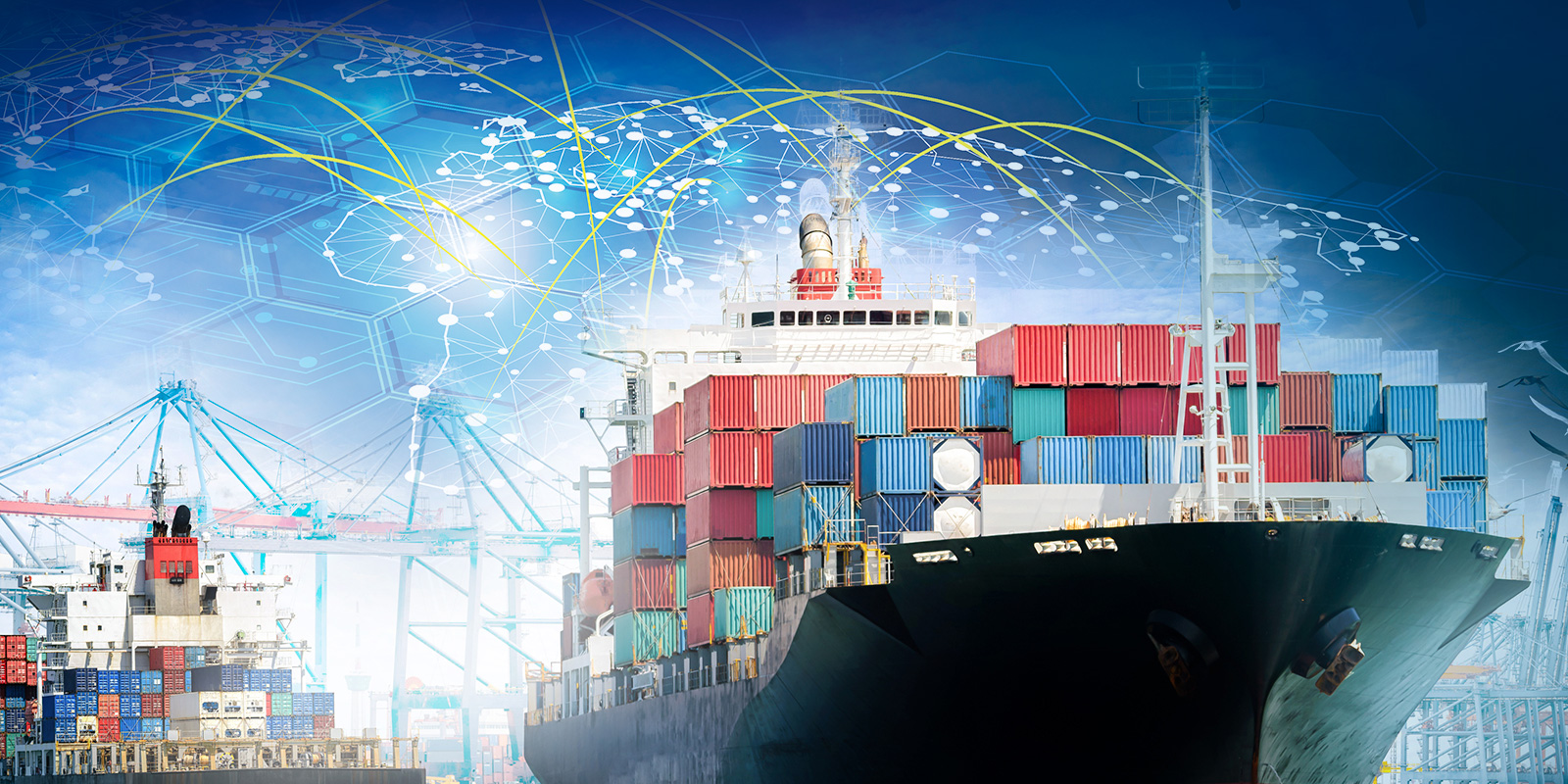
Supply chains will continue to diversify
The WTO reported strong growth in global trade during 2025, while also documenting a significant increase in trade measures and policy uncertainty.
For exporters, this creates two opposing forces:
Opportunity:
Buyers want alternative suppliers.
Risk:
Regulatory fragmentation makes international transactions more complex.
Scenario planning will become essential
For 2026–۲۰۲۸, exporters should prepare at least three scenarios:
Scenario A — Stable access
Payment channels remain available and transaction costs remain manageable.
Scenario B — Increased restrictions
Additional banks, jurisdictions, or counterparties become unavailable.
Scenario C — Market reconfiguration
Buyers shift toward new sourcing countries, currencies, logistics routes, and suppliers.
A resilient exporter should have a response plan for all three.
A Practical Currency-Risk Framework for Exporters
A useful framework is based on five pillars.
۱. Transparency
Every party and transaction detail should be clearly documented.
۲. Diversification
Avoid dependence on one buyer, market, currency, or financial institution.
۳. Compliance
Screen counterparties and understand the applicable sanctions and export-control environment.
۴. Liquidity
Maintain sufficient working capital to survive payment delays.
۵. Contingency planning
Prepare an alternative commercial plan if the originally agreed settlement method becomes unavailable.
This framework is particularly relevant to ceramic tile exports, where a payment delay can affect not only one shipment but the next production cycle.
Conclusion: The Future Belongs to Exporters Who Manage Financial Risk Before Shipping
International trade under sanctions requires a different mindset.
Exporters can no longer focus exclusively on product quality, price, packaging, and logistics.
The financial architecture of the transaction matters just as much.
For Iranian businesses involved in ceramic tile exports, currency-transfer challenges should be addressed before production and shipment. Buyer verification, sanctions screening, transparent documentation, currency planning, payment-risk assessment, and market diversification should become standard parts of the export process.
The objective should not be to find a hidden route around the financial system.
It should be to build a transparent, legally defensible, commercially practical, and resilient export structure.
The global trade environment is already moving in this direction. The ADB’s $2.5 trillion trade-finance gap highlights the growing importance of access to financial infrastructure, while WTO research shows that trade is continuing to adapt despite rising policy uncertainty. (Asian
For exporters, this creates a clear competitive lesson:
The strongest exporter is not necessarily the company with the lowest price. It is the company that can deliver quality, documentation, logistics, and payment certainty together.
From 2026 through 2028, exporters that invest in financial-risk management, compliance processes, diversified markets, and professional buyer relationships will be better positioned to withstand regulatory and currency shocks.
For businesses seeking to expand ceramic tile exports from Iran to international markets, the next step should be a transaction-specific assessment of the target market, buyer, currency, Incoterms, payment structure, and compliance requirements before accepting the order.
This article is for general educational purposes and does not constitute legal, sanctions, tax, banking, or financial advice. Iran-related transactions can involve rapidly changing rules. Exporters and buyers should obtain transaction-specific advice from qualified professionals in the relevant jurisdictions before proceeding.





نظرات ۰