
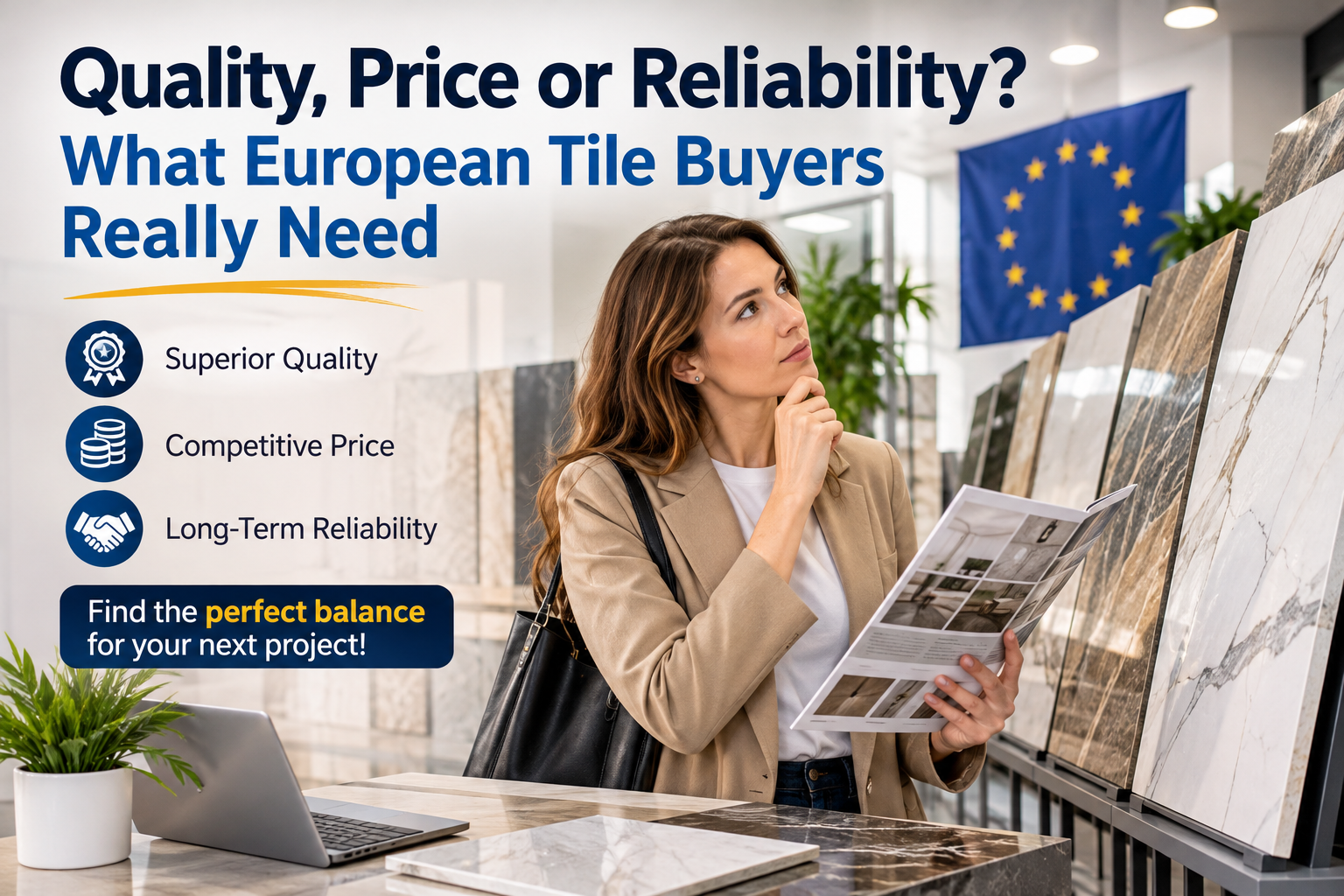
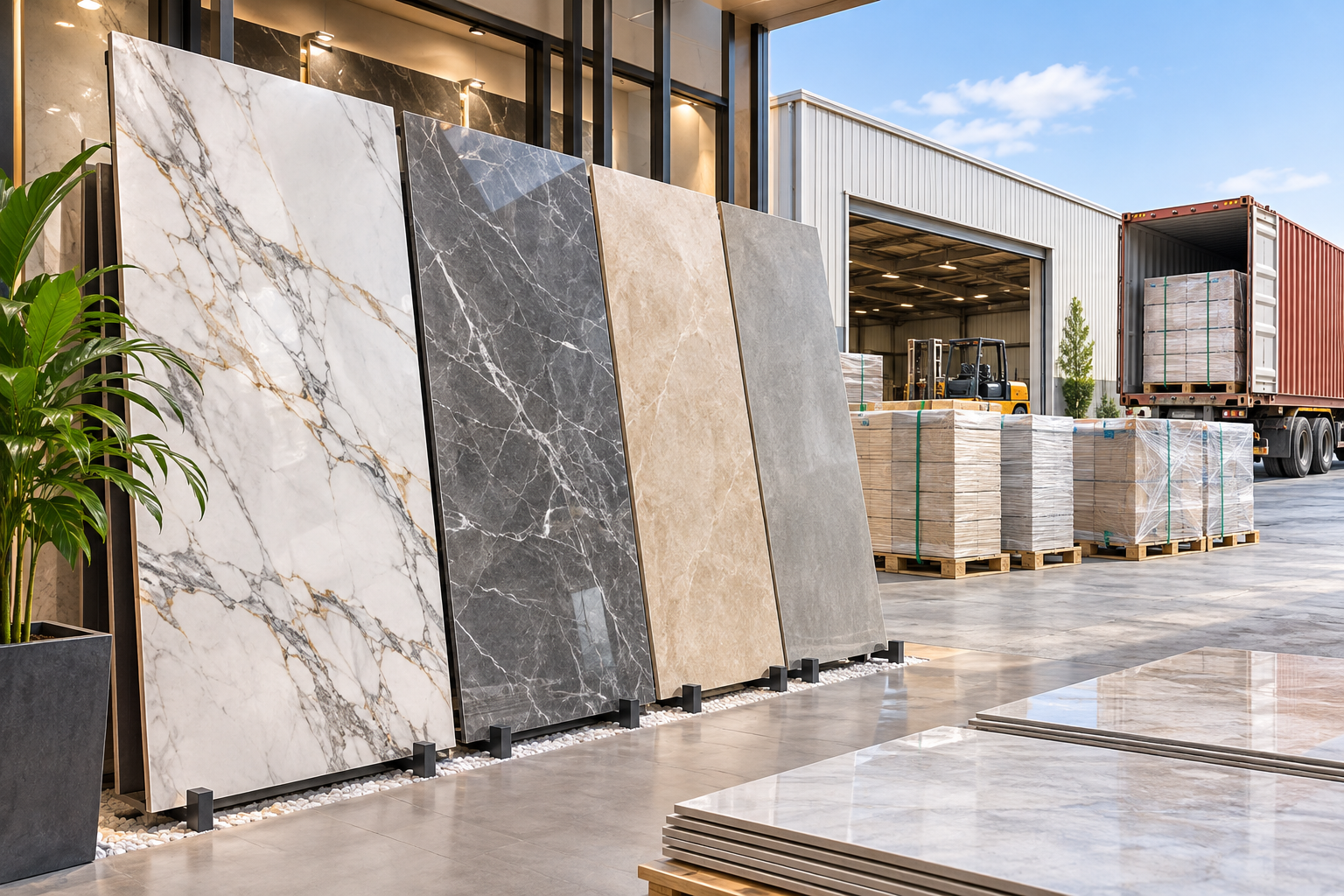
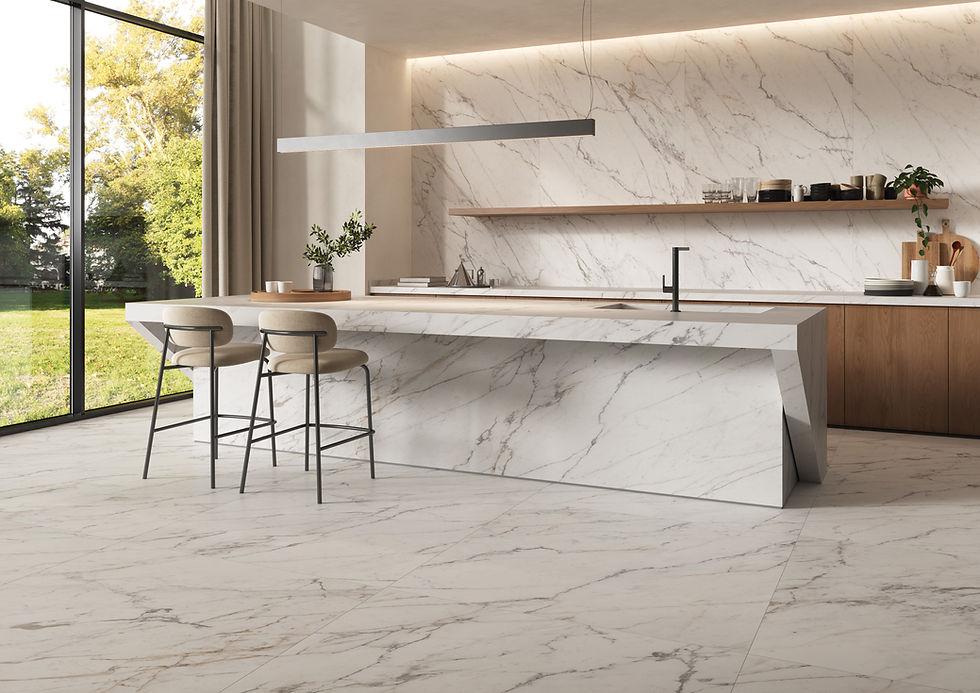
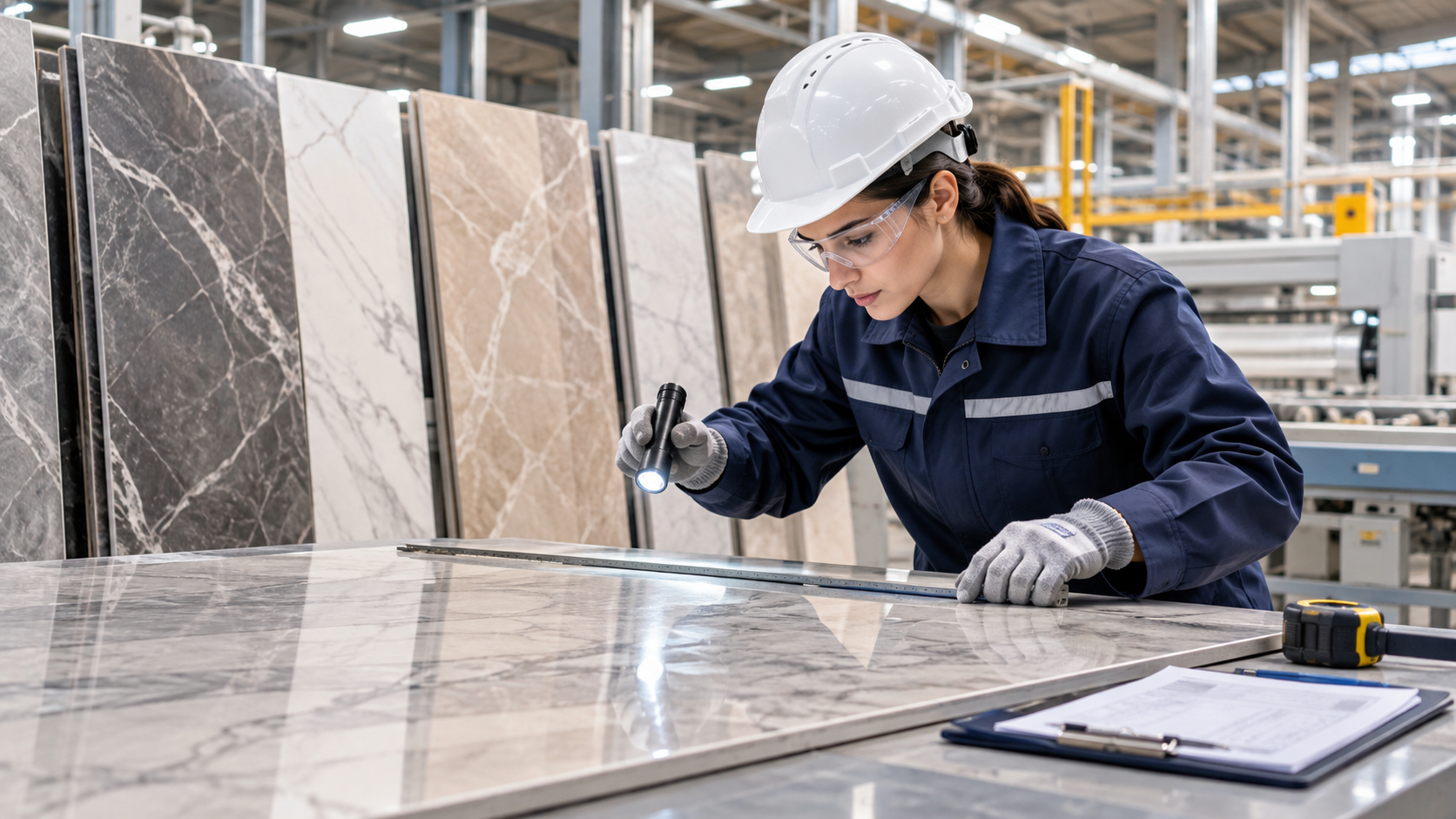

Discover what European tile buyers really value when sourcing porcelain tile and slab tile: product quality, competitive pricing, technical compliance, consistent supply, and reliable partnerships. Learn how to choose the right supplier and reduce purchasing risks.
What Really Influences European Tile Buyers?
Imagine two porcelain tile suppliers competing for the same European construction project. The first offers an attractive price and promises fast delivery. The second provides detailed technical documentation, consistent product quality, transparent communication, and dependable logistics. Its prices are slightly higher.
Which supplier will the European buyer choose?
The answer depends on the project, budget, and purchasing strategy. However, experienced importers increasingly understand that the lowest purchase price does not always deliver the best commercial result. A small difference in product quality, delivery performance, or technical compliance can create significant costs after the order arrives.
For European tile distributors, wholesalers, importers, contractors, and project developers, purchasing decisions involve several interconnected factors. They must consider appearance, durability, dimensional accuracy, safety, documentation, transportation, and the supplier’s ability to maintain consistent standards over multiple shipments.
This is particularly important when purchasing porcelain tile and slab tile for residential developments, commercial buildings, hotels, shopping centres, and large architectural projects. These products must satisfy both aesthetic expectations and technical requirements.
The European market also presents a challenging business environment. Buyers face cost pressures, changing construction activity, sustainability expectations, and increasingly sophisticated customer demands. Consequently, choosing a supplier is no longer simply about comparing prices per square metre.
So, what do European tile buyers really need? Is quality more important than price? Can an affordable supplier also be reliable? And what makes an international tile manufacturer attractive to European importers?
This article examines the most important purchasing factors, explains how European buyers evaluate suppliers, and identifies the opportunities available to international manufacturers, particularly those offering export-ready Iranian ceramic and porcelain products.
The central message is simple: European buyers are not necessarily looking for the cheapest tiles. They are looking for the best overall value with the lowest possible purchasing risk.
۱. Understanding the European Tile Market: A Buyer Who Thinks Beyond Price
The European ceramic tile market is competitive, mature, and highly differentiated. Buyers operate in different segments, from affordable residential products to premium architectural surfaces. Their purchasing priorities vary, but most share one important objective: obtaining products that meet customer expectations without creating unnecessary commercial risks.
Understanding this market is the first step toward becoming a successful tile supplier.
A market shaped by changing construction demand
European tile consumption is closely connected to residential construction, renovation, commercial development, and interior design trends.
Recent industry figures illustrate the challenges facing manufacturers and distributors. According to data presented at the 2025 Ceramic European Tiles (CET) Congress, European ceramic tile sales by volume remained stable in 2024 compared with 2023. However, they were still 24% below their 2021 level. Meanwhile, EU ceramic tile consumption increased by 7.5% in 2024 compared with 2023.
These figures reveal an important market reality: demand can recover without returning to previous production and sales levels. Manufacturers and importers must therefore compete more strategically.
Construction activity also remains an important indicator. Eurostat reported that average construction production in 2025 increased by 0.5% across the EU compared with 2024, while the euro area remained stable. This relatively modest growth reinforces the importance of careful purchasing and inventory management.
For tile exporters, these conditions create both challenges and opportunities.
European importers may become more selective when placing orders. Instead of purchasing large quantities based only on attractive prices, they increasingly need suppliers capable of supporting specific market segments.
Different buyers have different priorities
Not every European tile buyer evaluates products in the same way.
Understanding the buyer’s business model helps manufacturers present the right products and commercial advantages.
| Buyer category | Main purchasing priorities |
|---|---|
| Tile importers | Competitive pricing, documentation, stable supply |
| Wholesalers | Product variety, availability, consistent quality |
| Retailers | Design, packaging, customer satisfaction |
| Construction contractors | Technical performance, delivery schedules |
| Architects and designers | Aesthetics, dimensions, finishes |
| Project developers | Total cost, durability, reliability |
| Premium distributors | Exclusivity, product quality, brand positioning |
For example, a wholesaler importing several containers each month may prioritize production capacity and consistent batch quality.
An architectural studio selecting porcelain slabs for a luxury hotel may focus more heavily on surface appearance, dimensions, technical characteristics, and design flexibility.
A contractor working on a residential development may consider delivery schedules and installation performance just as important as the purchase price.
Why understanding buyer expectations matters
A supplier that offers exactly the same sales presentation to every customer may struggle to differentiate itself.
European buyers want solutions that address their specific commercial needs.
Before approaching a potential importer, manufacturers should identify:
-
The buyer’s target market and customer segment.
-
Preferred tile sizes and thicknesses.
-
Expected quality classifications.
-
Popular colours, textures, and finishes.
-
Required technical documents.
-
Typical order quantities.
-
Packaging and shipping requirements.
-
Expected delivery schedules.
This information allows exporters to prepare more relevant offers and avoid wasting time on unsuitable products.
The first competitive advantage is understanding what the buyer actually wants to sell.
۲. Product Quality: The Foundation of European Buyer Confidence
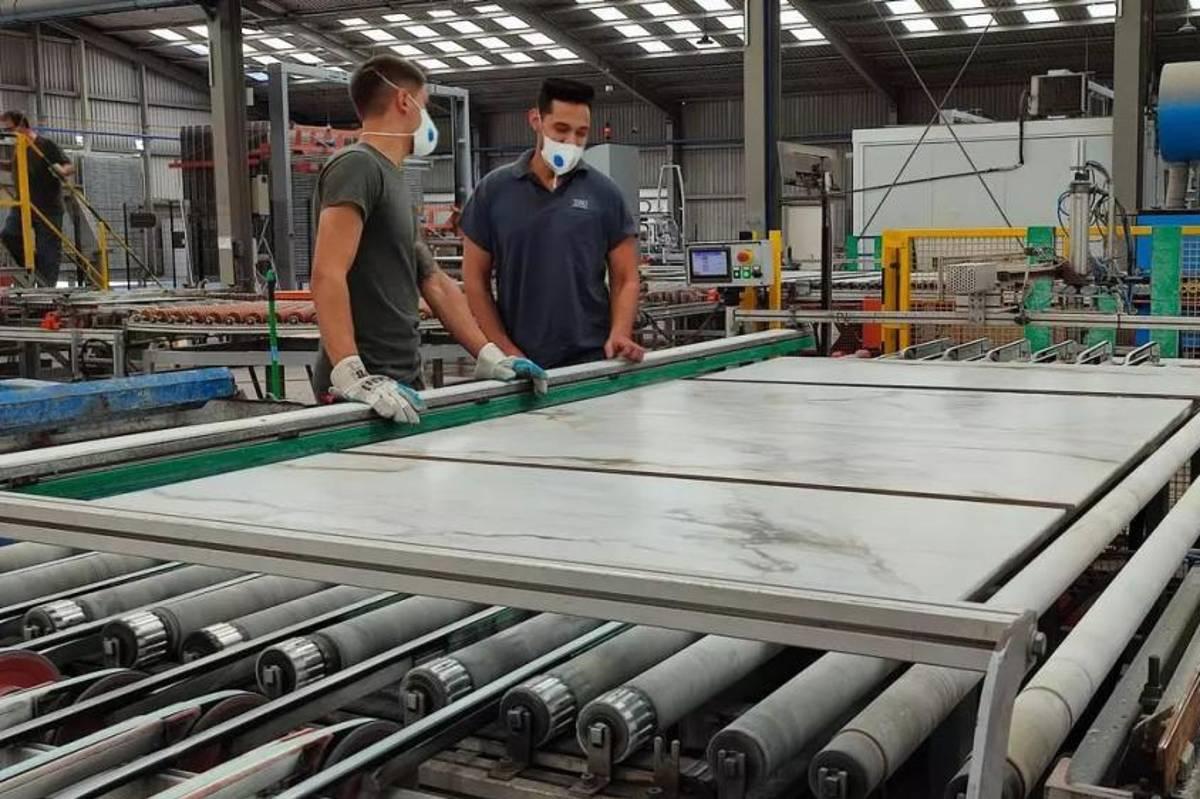
When European buyers evaluate porcelain tile, product quality is usually one of their first considerations.
However, quality means much more than attractive colours or a polished surface. A tile may look impressive in a catalogue but fail to meet the technical requirements of its intended application.
For professional importers, quality must be measurable, repeatable, and supported by appropriate documentation.
What does quality mean in porcelain tile?
Porcelain tile is valued for its technical performance, versatility, and suitability for different architectural applications.
Nevertheless, buyers need to evaluate several characteristics before accepting a product.
۱. Water absorption
Water absorption is an important technical characteristic of ceramic tiles.
According to the ISO 13006 classification system, porcelain tiles generally belong to Group BIa, with water absorption not exceeding 0.5%.
Low water absorption contributes to the material’s suitability for many demanding applications. However, it does not automatically guarantee resistance to every type of damage.
Buyers should request relevant laboratory test results rather than relying solely on product descriptions.
۲. Dimensional accuracy
Tile dimensions must remain consistent within the declared tolerances.
Variations in length, width, thickness, squareness, and flatness can create installation problems, particularly in large commercial projects.
Dimensional accuracy is especially important for:
-
Large-format porcelain tile.
-
Rectified floor tiles.
-
Thin porcelain panels.
-
Continuous wall and floor designs.
-
Projects requiring narrow grout joints.
A manufacturer should maintain reliable production controls and provide appropriate dimensional inspection records.
۳. Surface quality
The surface is one of the first things customers notice.
Buyers generally examine:
-
Colour consistency.
-
Printing accuracy.
-
Surface defects.
-
Glaze uniformity.
-
Edge finishing.
-
Texture consistency.
-
Visual differences between samples and delivered products.
These characteristics become particularly important for marble-effect, cement-effect, wood-effect, and natural-stone-inspired collections.
۴. Mechanical performance
Mechanical performance influences how tiles behave during transportation, handling, installation, and use.
Relevant characteristics include breaking strength, modulus of rupture, and resistance to abrasion where applicable.
For floor applications, buyers should also evaluate slip resistance and suitability for the intended environment.
A beautiful polished tile may be appropriate for certain indoor spaces but unsuitable for a wet outdoor environment.
Why consistency matters more than a perfect sample
One common purchasing problem occurs when the initial sample looks excellent, but the delivered shipment differs in colour, texture, or dimensions.
This creates difficulties for distributors and installers.
Imagine a contractor receiving 2,000 square metres of porcelain tile for a hotel renovation. If several cartons contain noticeably different shades, the installation team may need to separate batches or replace affected materials.
The resulting costs can include:
-
Additional sorting and inspection.
-
Installation delays.
-
Replacement shipments.
-
Customer complaints.
-
Financial disputes.
-
Damage to the distributor’s reputation.
For this reason, professional buyers should request production-batch information, shade identification, calibre classification, and a clear quality-control procedure.
Which technical standards should European buyers examine?
Several standards are particularly relevant when evaluating ceramic tile products.
| Standard | Main purpose |
|---|---|
| EN 14411 | Classification, characteristics and marking of ceramic tiles |
| ISO 13006 | Definitions, classification and characteristics |
| ISO 10545 series | Test methods for ceramic tiles |
| ISO 10545-3 | Water absorption and related properties |
| ISO 10545-4 | Breaking strength and modulus of rupture |
| ISO 10545-7 | Surface abrasion resistance of glazed tiles |
| ISO 10545-12 | Frost resistance |
The appropriate tests depend on the product type and intended application.
European buyers should not assume that every characteristic is relevant to every tile. They should establish performance requirements before placing an order.
Why quality certification is not enough
Certificates and laboratory reports are useful, but they must correspond to the actual product being purchased.
An importer should verify:
-
Whether the report identifies the correct manufacturer.
-
Whether the tested product matches the proposed collection.
-
Whether the test method is appropriate.
-
Whether the report is current and traceable.
-
Whether production quality is controlled consistently.
A reliable porcelain tile manufacturer does not simply claim to produce high-quality products. It can demonstrate that quality through measurable results and repeatable processes.
۳. Price: Why the Cheapest Tile Is Not Always the Most Profitable
Price remains a major purchasing factor in European tile imports. Importers operate with defined margins, inventory budgets, transportation expenses, and competitive retail prices.
However, professional buyers rarely evaluate price in isolation.
They want to understand how much a product will cost when it reaches their warehouse and how much profit it can generate after distribution.
Purchase price versus total landed cost
One of the most important concepts in international tile trading is total landed cost.
This represents the overall cost of obtaining goods at their destination, rather than simply the factory price.
For example, consider two hypothetical suppliers offering porcelain tiles.
Illustrative purchasing comparison
Supplier A
€۸.۰۰
Purchase price per m²
Supplier B
€۸.۶۰
Purchase price per m²
| Cost component | Supplier A | Supplier B |
|---|---|---|
| Purchase price | €۸.۰۰ | €۸.۶۰ |
| Freight and handling | €۱.۵۰ | €۱.۳۰ |
| Inspection and expected losses | €۰.۷۰ | €۰.۲۰ |
| Additional operational costs | €۰.۳۰ | €۰.۱۵ |
| Illustrative total | €۱۰.۵۰ | €۱۰.۲۵ |
These figures are hypothetical and demonstrate the calculation method, not actual market quotations.
Although Supplier A offers a lower factory price, Supplier B delivers a lower estimated total cost.
This example explains why experienced importers look beyond the initial quotation.
A small difference in product quality, packaging, shipment preparation, or delivery performance can change the final economics of a transaction.
The main components of tile purchasing costs
European importers should consider:
-
Factory price per square metre.
-
Packaging and pallet costs.
-
Inland transportation.
-
International freight.
-
Cargo insurance.
-
Customs duties and applicable taxes.
-
Customs clearance charges.
-
Port handling.
-
Quality inspection.
-
Breakage and replacement costs.
-
Warehousing and inventory expenses.
Depending on the country of origin, product classification, and trade arrangements, customs duties can also significantly influence the final price.
For this reason, exporters should provide accurate product descriptions and customs information.
How much does price influence purchasing decisions?
The answer depends on the market segment.
Budget segment: Buyers are highly price-sensitive. They need competitive products that meet minimum technical and commercial requirements.
Mid-range segment: Buyers seek a balance between price, appearance, quality, and availability.
Premium segment: Buyers may accept higher prices for distinctive designs, advanced surface technology, large formats, and reliable technical performance.
For example, a standard 60×۶۰ cm ceramic tile competes in a different commercial environment from a premium 120×۱۲۰ cm porcelain collection.
Similarly, a large-format porcelain slab may offer additional design possibilities for kitchens, bathrooms, countertops, and commercial interiors.
Its commercial value cannot be evaluated through square-metre price alone.
How exporters can offer competitive prices without sacrificing quality
Manufacturers should focus on cost efficiency rather than simply reducing product specifications.
Practical strategies include:
-
Optimising raw material consumption.
-
Improving production-line efficiency.
-
Reducing manufacturing defects.
-
Standardising packaging.
-
Optimising container loading.
-
Offering suitable product combinations.
-
Improving logistics planning.
-
Reducing unnecessary handling and storage costs.
For international exporters, transparent pricing is equally important.
A professional quotation should clearly explain product specifications, quantities, packaging, delivery terms, payment conditions, and quotation validity.
European buyers appreciate competitive prices, but they also need to understand exactly what they are paying for.
۴. Supplier Reliability: The Factor That Builds Long-Term Business Relationships
Quality attracts a buyer. Competitive pricing creates commercial interest. Reliability determines whether the buyer places the next order.
In international tile trading, reliability is not an abstract business advantage. It directly influences inventory management, customer satisfaction, project completion, and profitability.
A supplier may manufacture excellent products and offer attractive prices. However, if it repeatedly misses delivery deadlines or fails to communicate important changes, buyers may eventually search for another manufacturer.
What does reliability mean to European importers?
Supplier reliability includes several interconnected responsibilities.
۱. Consistent product quality
A supplier must maintain the same declared specifications across different production batches.
This is especially important for importers who distribute the same collection throughout the year.
۲. Production capacity
Buyers need confidence that the manufacturer can fulfil the agreed order quantity.
A supplier should be transparent about its production capacity, available stock, manufacturing schedule, and lead times.
۳. On-time delivery
Late shipments can disrupt construction schedules and warehouse operations.
For large projects, even a relatively short delay may affect installation teams, contractors, and other suppliers.
۴. Communication
A reliable supplier communicates clearly before, during, and after an order.
Buyers expect timely updates regarding production, packaging, loading, documentation, and shipment status.
۵. Problem-solving ability
No international supply chain is completely free from unexpected problems.
What matters is how the supplier responds when something goes wrong.
A professional manufacturer should investigate complaints, provide supporting evidence, propose corrective measures, and communicate realistic solutions.
Why supply consistency matters more than a one-time discount
Consider a European distributor that purchases porcelain tile every two months.
During the first transaction, Supplier A offers a 5% discount compared with Supplier B.
However, Supplier A delivers inconsistent shades and repeatedly changes delivery dates. Supplier B maintains consistent specifications and communicates clearly.
After several shipments, the distributor may prefer Supplier B, even if its initial quotation was higher.
Why?
Because the distributor needs predictable operations.
Its business depends on maintaining stock, fulfilling customer orders, and protecting its reputation.
An unreliable supplier introduces uncertainty into every stage of the purchasing process.
Five signs of a reliable tile supplier
European importers can evaluate potential manufacturers using the following criteria:
-
Verified business identity: The manufacturer provides clear company information, production details, and contact channels.
-
Documented quality control: Product specifications and relevant test reports are available.
-
Transparent commercial terms: Prices, payment conditions, delivery schedules, and responsibilities are clearly defined.
-
Demonstrated export experience: The supplier understands international packaging, shipping, and documentation requirements.
-
Professional after-sales support: The manufacturer has a process for handling claims and resolving product-related issues.
The importance of long-term supplier relationships
International buyers often prefer to develop relationships with a limited number of dependable manufacturers.
This approach can simplify purchasing, improve forecasting, reduce administrative costs, and support consistent product positioning.
For exporters, repeat customers also create more predictable demand and opportunities for expanding product portfolios.
A supplier that consistently meets expectations can become a strategic business partner rather than simply another source of products.
Reliability transforms individual transactions into sustainable commercial relationships.
۵. Technical Compliance and Sustainability: New Priorities in European Tile Purchasing
European buyers must consider more than product appearance and commercial conditions. Technical compliance, safety, environmental performance, and product documentation are increasingly important.
These factors are particularly relevant for importers purchasing from manufacturers outside the European Union.
Understanding European construction product regulations
The European Union has introduced an updated Construction Products Regulation through Regulation (EU) 2024/3110.
The regulation entered into force on 7 January 2025, and its main application began on 8 January 2026. However, the transition is product-family-specific. Existing harmonised specifications and transitional arrangements remain relevant until individual product categories move to the new framework.
The updated regulation strengthens the framework for product performance information, environmental characteristics, and digital product information.
Internal Market & SMEs+1
For tile exporters, understanding these changes is important when preparing products for European customers.
Is CE marking mandatory for every porcelain tile?
No. CE marking requirements depend on the applicable harmonised technical specification or European Technical Assessment.
Where a ceramic tile product is covered by an applicable harmonised standard, the manufacturer must follow the relevant requirements, prepare the required Declaration of Performance, and apply CE marking.
Buyers should not accept unsupported claims that a product is automatically CE-compliant simply because its manufacturer operates an export business.
The European Commission explains the relationship between harmonised standards, declarations of performance, and CE marking under the Construction Products Regulation.
Internal Market & SMEs+1
Documentation European buyers should request
Depending on the product and applicable legal requirements, importers may need:
-
Product technical data sheets.
-
Relevant laboratory test reports.
-
Declaration of Performance or applicable updated declaration.
-
CE marking information, where required.
-
Manufacturer identification.
-
Product classification.
-
Packaging and labelling information.
-
Safety and installation instructions where relevant.
-
Environmental documentation, where available or required.
For large-format porcelain slabs, buyers should also request technical information about dimensions, thickness, handling, transportation, cutting, and installation.
Sustainability is becoming a commercial consideration
European construction is increasingly influenced by environmental objectives.
Buyers, architects, developers, and public procurement organisations may request information about the environmental impact of building materials.
An Environmental Product Declaration (EPD) provides standardised information about a product’s environmental impacts throughout defined life-cycle stages.
It is based on life-cycle assessment and follows relevant product category rules and environmental reporting standards.
According to a January 2026 industry overview, 193 currently valid European ceramic tile EPDs from 55 manufacturers were identified across six programme operators. This demonstrates the growing availability of environmental documentation in the sector.
What environmental information matters?
European buyers may examine:
-
Energy consumption during production.
-
Greenhouse gas emissions.
-
Water consumption.
-
Recycled material content.
-
Waste management practices.
-
Packaging materials.
-
Transportation impacts.
-
Product durability and expected service life.
Manufacturers should avoid making vague environmental claims without evidence.
For example, describing a product as environmentally friendly is less convincing than providing a verified EPD or documented information about energy efficiency and resource consumption.
How sustainability can improve export competitiveness
Sustainability documentation can help exporters communicate with environmentally conscious distributors and project developers.
It may also support participation in projects with specific environmental procurement criteria.
For Iranian tile manufacturers and other non-EU suppliers, preparing accurate environmental information can become an important differentiating factor.
However, documentation must be relevant to the actual product, manufacturing facility, and intended market.
European compliance is not simply an administrative requirement. It is part of the trust-building process between manufacturers and professional buyers.
۶. Porcelain Slabs and Large-Format Tiles: What Is Driving Buyer Interest?
The European tile market is not limited to traditional formats. Large-format porcelain tiles and porcelain slabs have become important options for contemporary architecture and interior design.
These products offer new possibilities for residential and commercial projects. They also create opportunities for manufacturers capable of delivering precise dimensions, attractive surfaces, and dependable technical performance.
Why are European buyers interested in porcelain slabs?
Porcelain slabs combine several characteristics that appeal to architects, designers, and project developers.
۱. Contemporary architectural appearance
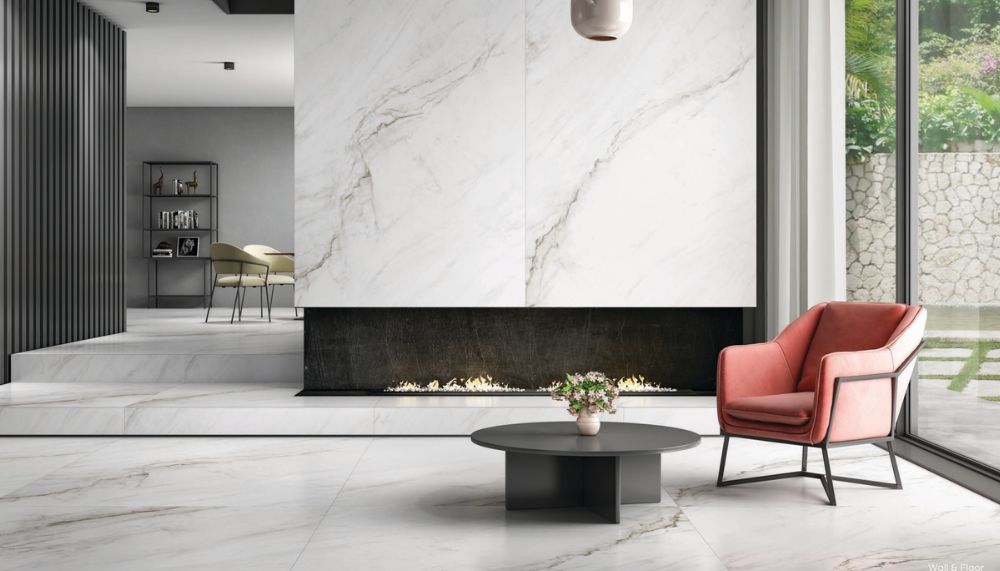
Large surfaces create a more continuous visual effect. Marble-inspired patterns, natural stone textures, and minimalist designs are particularly suitable for contemporary interiors.
۲. Fewer visible joints
Compared with smaller tiles, large-format products can reduce the number of visible joints in a given area, depending on the installation layout.
This can create a cleaner appearance in kitchens, bathrooms, commercial spaces, and feature walls.
۳. Multiple applications
Porcelain slabs can be used in various applications, depending on their thickness, technical specifications, and installation system.
Common applications include:
-
Kitchen countertops.
-
Bathroom walls.
-
Shower areas.
-
Interior wall cladding.
-
Decorative feature walls.
-
Commercial reception areas.
-
Selected flooring applications.
-
Furniture and decorative surfaces.
Not every slab is suitable for every application. Buyers must check the manufacturer’s technical recommendations before specifying a product.
۴. Design flexibility
Digital printing technologies allow manufacturers to develop sophisticated marble, stone, concrete, and other decorative effects.
This creates opportunities for premium collections with distinctive visual identities.
What do buyers expect from slab tile manufacturers?
Large-format products require specialised manufacturing, handling, packaging, and transportation procedures.
European buyers should examine several important characteristics.
| Evaluation factor | Why it matters |
|---|---|
| Dimensional accuracy | Supports precise installation |
| Thickness consistency | Improves specification reliability |
| Surface uniformity | Maintains visual quality |
| Edge quality | Reduces handling and installation issues |
| Mechanical properties | Supports application suitability |
| Packaging strength | Protects slabs during transportation |
| Handling instructions | Reduces breakage risks |
| Technical documentation | Supports project approval |
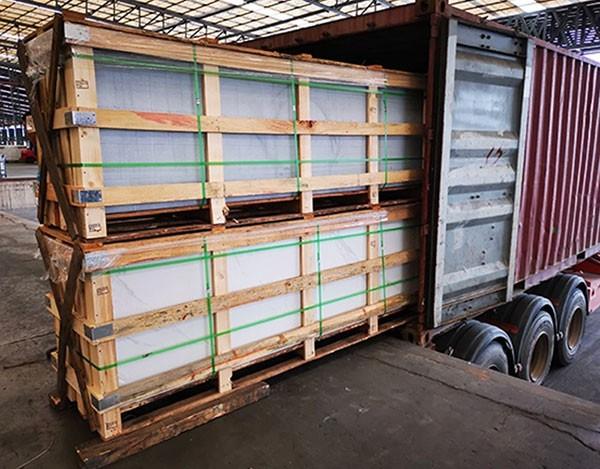
Packaging deserves particular attention.
Large porcelain slabs are more difficult to handle than standard tiles. Their size and weight require appropriate support systems, protective materials, and loading procedures.
An exporter should be able to explain how products are protected during storage and international transportation.
Standard tiles or porcelain slabs: Which should buyers choose?
The answer depends on the project’s purpose.
| Feature | Standard porcelain tile | Large-format porcelain slab |
|---|---|---|
| Typical formats | ۶۰×۶۰, ۶۰×۱۲۰ cm | ۱۲۰×۲۴۰ cm and larger |
| Installation | Generally simpler | Requires specialised handling |
| Visual appearance | More visible joints | More continuous surfaces |
| Transportation | Easier in many cases | Requires additional precautions |
| Applications | Floors and walls | Countertops, walls, selected floors |
| Purchasing considerations | Price and consistency | Dimensions, thickness, handling and technical performance |
These are indicative formats rather than universal market specifications.
Commercial opportunities for exporters
Manufacturers offering both conventional porcelain tile and large-format slabs can address a wider range of European customers.
For example, an importer may purchase standard 60×۱۲۰ cm porcelain tiles for general distribution while sourcing large-format slabs for premium kitchen and bathroom projects.
This combination can create opportunities for cross-selling and portfolio expansion.
However, exporters should avoid promoting slabs simply because they are visually impressive.
Their commercial success depends on production precision, appropriate packaging, technical support, and the manufacturer’s ability to deliver consistent products.
The real competitive advantage is not just producing larger tiles. It is delivering large-format products that European buyers can confidently specify, transport, install, and sell.
۷. Design, Innovation, and Product Variety: What Makes a Tile Collection Attractive?
Price and technical quality may determine whether a buyer considers a product. Design and innovation often determine whether the product stands out in a competitive showroom.
European customers have diverse aesthetic preferences. Their expectations vary according to country, customer segment, architectural style, and project type.
Consequently, manufacturers need to develop collections that combine visual appeal with practical functionality.
Popular design directions in the European tile market
Several design approaches remain commercially relevant in contemporary European interiors.
Natural stone effects
Marble, travertine, limestone, and other natural-stone-inspired surfaces offer an elegant appearance.
These designs are commonly used in bathrooms, kitchens, hotels, and premium residential developments.
Concrete and cement effects
Concrete-inspired porcelain tiles are suitable for minimalist and industrial-style interiors.
They can complement modern furniture, metal details, and neutral colour palettes.
Wood-effect porcelain
Wood-effect tiles combine the appearance of timber with the technical characteristics of ceramic surfaces.
They are attractive for buyers seeking a natural visual style across different interior spaces.
Large-format minimalist surfaces
Large neutral surfaces in beige, grey, white, and earthy tones are relevant to contemporary architectural projects.
Textured and three-dimensional finishes
Structured surfaces introduce visual depth and tactile variation.
Depending on the application, they can create distinctive wall designs and decorative elements.
Why product variety matters
An importer rarely wants to depend on one design or one product size.
A well-organised collection allows distributors to serve different customer groups and respond to changing demand.
A competitive export portfolio might include:
-
Standard glazed porcelain tiles.
-
Rectified floor and wall tiles.
-
Polished and matt surfaces.
-
Structured and anti-slip products.
-
Marble-effect collections.
-
Wood-effect collections.
-
Large-format porcelain panels.
-
Outdoor porcelain products.
However, product variety should not become an excuse for inconsistent manufacturing.
A smaller portfolio with strong technical performance and reliable supply can be more commercially attractive than a large catalogue containing products that are difficult to reproduce consistently.
Digital printing as a competitive advantage
Digital decoration technology has expanded the design possibilities available to ceramic tile manufacturers.
Modern printing systems can reproduce detailed natural patterns, colour variations, and sophisticated surface effects.
But technology alone does not guarantee a successful collection.
Manufacturers must combine printing quality with appropriate glaze development, surface finishing, firing conditions, and quality control.
European buyers are interested in products that look distinctive in samples and maintain the same visual standards in delivered shipments.
How manufacturers should present their collections
An export catalogue should do more than display attractive product photographs.
It should provide the information that professional buyers need to make purchasing decisions.
Each product page should ideally include:
-
Product name and reference number.
-
Dimensions and thickness.
-
Surface finish.
-
Technical specifications.
-
Shade and calibre information.
-
Recommended applications.
-
Available packaging details.
-
High-resolution product photographs.
-
Installation or maintenance guidance where relevant.
Manufacturers should also provide real product images and, where possible, photographs of installed projects.
This makes it easier for distributors and designers to evaluate the product’s commercial potential.
۸. International Sourcing: How European Buyers Evaluate Suppliers Outside the EU
International sourcing offers European importers opportunities to diversify their supplier networks, access different manufacturing capabilities, and improve their product portfolios.
However, buying from an international manufacturer introduces additional considerations.
The buyer must evaluate not only the product but also the manufacturer’s export experience and ability to operate within international supply chains.
What do European importers expect from international manufacturers?
A competitive international supplier should demonstrate five capabilities.
۱. Export-ready production
The manufacturer must understand that products intended for export may require specific quality controls, packaging, labelling, and technical documentation.
Domestic production standards alone may not address every requirement of the destination market.
۲. Professional export documentation
International shipments require accurate commercial and transport documentation.
Depending on the transaction, this may include:
-
Commercial invoice.
-
Packing list.
-
Certificate of origin, where required.
-
Transport documents.
-
Insurance documentation, where applicable.
-
Customs classification information.
-
Product conformity documents, where required.
Incorrect documentation can create customs delays and additional costs.
۳. Familiarity with Incoterms
European buyers and international suppliers should clearly define their commercial responsibilities.
Commonly used Incoterms include FOB, CIF, CFR, and EXW, depending on the agreed transport arrangement.
For example, under FOB, the seller fulfils its delivery obligations when the goods are loaded on board the nominated vessel at the agreed port of shipment. Under CIF, the seller arranges and pays for freight and insurance to the named destination port, subject to the applicable Incoterms rules.
The parties should specify the applicable Incoterms version and named place or port in the contract.
۴. Realistic production and delivery schedules
Manufacturers should provide realistic lead times instead of making promises they cannot maintain.
A professional supplier explains whether products are available in stock or require new production.
۵. Effective communication
Language differences, time zones, and business practices can create misunderstandings.
A supplier with professional English-language communication, organised quotations, and clear order updates can reduce these difficulties.
Why Iranian porcelain tile manufacturers can attract European buyers
Iran has an established ceramic tile manufacturing industry and offers a range of products, including porcelain tiles, glazed tiles, and large-format surfaces.
For European importers, Iranian manufacturers may represent an additional sourcing option, particularly when their products meet the required technical, commercial, and logistical conditions.
Potential competitive advantages include:
-
Diverse product designs.
-
Different size and format options.
-
Manufacturing capabilities.
-
Opportunities for competitive factory pricing.
-
Experience in regional export markets.
-
Marble-effect and stone-inspired collections.
-
Potential access to large-format products.
However, competitive pricing and manufacturing capacity do not automatically guarantee successful entry into European markets.
Iranian exporters must carefully examine the requirements of each destination country.
Important challenges for Iranian tile exporters
Several factors deserve particular attention.
Regulatory compliance: Products must meet the applicable European requirements for their product category.
Banking and payment arrangements: International payment channels and sanctions-related restrictions can create complications. Transactions must be structured lawfully, with appropriate compliance checks.
Logistics: Shipping routes, transit times, freight costs, and insurance availability must be assessed before quotations are finalised.
Documentation: Exporters should prepare accurate technical and commercial documents.
Market positioning: Iranian products should be presented according to the needs of specific European customer segments rather than competing exclusively on price.
How Iranian suppliers can build trust with European buyers
A practical approach includes the following steps:
-
Prepare a professional English export catalogue.
-
Provide product-specific technical data sheets.
-
Maintain relevant laboratory testing records.
-
Establish documented production quality controls.
-
Offer clear packaging and container-loading information.
-
Provide transparent quotations.
-
Communicate realistic lead times.
-
Share references and evidence of export experience where available.
-
Establish a clear procedure for handling complaints.
-
Verify the applicable legal, financial, and logistical requirements before accepting an order.
For Iranian manufacturers, the opportunity is not simply to sell more square metres of porcelain tile.
It is to establish a reputation for dependable quality and professional international trade.
۹. How European Buyers Can Choose the Right Tile Supplier: A Practical Checklist
Choosing a supplier is a commercial decision that can influence an importer’s profitability for months or even years.
A professional purchasing process should therefore include more than comparing quotations.
The following checklist can help European importers evaluate potential manufacturers before placing an order.
Step 1: Evaluate the manufacturer’s background
Start by understanding the supplier’s business structure and manufacturing capabilities.
Ask:
-
Is the company an actual manufacturer or a trading intermediary?
-
How long has it operated in the ceramic industry?
-
What production facilities does it operate?
-
Which countries does it export to?
-
Can it provide references from previous customers?
-
Does it have sufficient production capacity for the proposed order?
A factory visit, independent inspection, or live production video can provide additional confidence.
Step 2: Request product samples
Never base a large purchasing decision exclusively on catalogue photographs.
Request physical samples of the products under consideration.
Examine their:
-
Colour and surface appearance.
-
Dimensional accuracy.
-
Thickness.
-
Edge finishing.
-
Texture.
-
Overall manufacturing quality.
For large orders, samples should represent the actual collection and production specifications.
Step 3: Verify technical specifications
Request relevant technical documentation.
Check whether the product specifications match the intended application and applicable European requirements.
For porcelain tile, water absorption, mechanical properties, abrasion resistance where applicable, and other relevant characteristics should be evaluated.
Step 4: Compare the total purchasing cost
Ask suppliers to provide detailed quotations.
Consider factory prices, packaging, inland transport, international freight, insurance, customs-related expenses, and other applicable costs.
A lower quotation does not necessarily represent a more profitable purchase.
Step 5: Evaluate production and delivery capacity
Confirm the manufacturer’s ability to complete the order within the agreed schedule.
Ask about production lead times, available inventory, quality inspection, container loading, and shipment arrangements.
Step 6: Examine communication and after-sales support
Observe how the supplier responds to questions.
Does it provide accurate information? Does it respond within a reasonable time? Can it explain technical specifications clearly?
These details often reveal the supplier’s approach to long-term business relationships.
The European Tile Supplier Evaluation Scorecard
Importers can use the following weighted model to compare potential suppliers.
Interactive supplier assessment
Rate each supplier from 1 (poor) to 5 (excellent). The score is an illustrative purchasing tool, not an official European industry standard.
Product quality and consistency
۲۵%
Supplier reliability and delivery
۲۵%
Price and total landed cost
۲۰%
Technical compliance and documentation
۱۵%
Design and product variety
۱۰%
Communication and after-sales service
۵%
Overall supplier score
۶۰/۱۰۰
Reset assessment
This scoring system encourages buyers to evaluate suppliers using consistent criteria instead of allowing one attractive price to dominate the decision.
Importantly, certain requirements should be treated as mandatory conditions. A high overall score cannot compensate for missing legally required documentation or unacceptable product performance.
۱۰. What Will European Tile Buyers Prioritise Between 2027 and 2028?
The European ceramic tile market will continue to evolve as construction costs, environmental policies, consumer preferences, and international competition influence purchasing decisions.
Although future demand cannot be predicted with certainty, several developments are likely to shape supplier selection.
۱. Greater emphasis on total value
Importers will continue looking for competitive prices, but purchasing decisions will increasingly consider the complete cost of sourcing.
Manufacturing defects, delayed deliveries, damaged shipments, and inconsistent quality can reduce the financial benefits of a low factory price.
Suppliers that help buyers minimise these risks will have an advantage.
۲. More transparent environmental information
The revised Construction Products Regulation provides a stronger framework for environmental product information.
As relevant product-family requirements are introduced, manufacturers will need to pay closer attention to environmental performance, documentation, and product traceability.
Suppliers who prepare reliable environmental information early can improve their readiness for future market expectations.
۳. Growth in design-led product differentiation
Competition based on standard dimensions and similar designs can place pressure on manufacturers’ margins.
Distinctive surface finishes, realistic natural textures, advanced digital printing, and coordinated collections can help exporters differentiate their products.
۴. Continued interest in large-format surfaces
Porcelain slabs offer opportunities in premium residential and commercial applications.
However, their success will depend on technical performance, installation support, transportation, and competitive pricing.
۵. Stronger expectations for supply-chain transparency
European buyers will increasingly need clear information about product origin, specifications, manufacturing, documentation, and delivery arrangements.
Manufacturers that provide organised and verifiable information will be easier to evaluate and integrate into professional procurement processes.
۶. More strategic international sourcing
Importers may diversify their supplier networks to reduce dependence on individual manufacturing locations.
This creates opportunities for qualified exporters from countries such as Iran, provided they can meet the relevant technical, legal, commercial, and logistical requirements.
The manufacturers most likely to benefit will be those that combine competitive manufacturing costs with consistent quality and professional export services.
Frequently Asked Questions (People Also Ask)
۱. What do European buyers look for when purchasing porcelain tiles?
European buyers generally evaluate product quality, competitive pricing, dimensional accuracy, technical compliance, design, supplier reliability, and delivery performance. Their priorities depend on whether they are purchasing for retail distribution, wholesale, or construction projects.
۲. Is price or quality more important when importing ceramic tiles?
Neither factor should be considered independently. Buyers need products that meet their quality requirements at a commercially competitive price. A cheaper tile that creates installation problems, customer complaints, or replacement costs may become more expensive in the long term.
۳. What makes a porcelain tile supplier reliable?
A reliable supplier offers consistent product quality, transparent pricing, realistic delivery schedules, appropriate technical documentation, professional communication, and effective after-sales support.
Export experience and demonstrated production capacity are additional advantages.
۴. What technical standards should European tile importers check?
Relevant standards include EN 14411, ISO 13006, and the ISO 10545 series.
The required tests depend on the tile classification, intended application, and applicable European regulatory framework.
۵. Are Iranian porcelain tiles suitable for the European market?
Iranian porcelain tiles can be suitable for European customers when they meet the applicable technical specifications, quality expectations, documentation requirements, and commercial conditions.
Importers should assess each manufacturer and product individually rather than assuming that all products from one country have identical performance.
۶. Why are porcelain slabs becoming important in European projects?
Large-format porcelain slabs offer continuous visual surfaces, design flexibility, and applications in kitchens, bathrooms, countertops, and architectural interiors.
Their suitability depends on thickness, technical characteristics, handling requirements, and installation methods.
۷. What documents should a tile exporter provide to European buyers?
Depending on the product and transaction, important documents may include technical data sheets, relevant laboratory test reports, applicable declarations of performance, CE marking information where required, commercial invoices, packing lists, and certificates of origin where applicable.
۸. How can European importers reduce the risks of buying tiles internationally?
They should verify the manufacturer’s identity, examine product samples, check technical documentation, agree on product specifications, inspect packaging, confirm delivery schedules, and establish clear contractual responsibilities.
Independent pre-shipment inspections can also reduce purchasing risks.
۹. Is a large tile manufacturer always a better supplier?
Not necessarily. Production capacity is important, but it should be considered alongside quality consistency, export experience, communication, technical compliance, and the ability to fulfil specific orders.
A smaller manufacturer with strong quality controls may be a better partner for certain importers.
۱۰. What is the most important factor in choosing a long-term tile supplier?
The ability to deliver consistent value over time.
A successful supplier must maintain product standards, meet commercial commitments, communicate professionally, and support the buyer when problems arise.
Conclusion: European Buyers Want Value, Not Just a Low Price
So, what do European tile buyers really need: quality, price, or reliability?
The most accurate answer is a combination of all three.
Quality ensures that porcelain tile and slab tile meet the technical and aesthetic expectations of the market. Competitive pricing helps importers maintain profitable businesses and remain competitive. Reliability ensures that products arrive as promised, meet agreed specifications, and support long-term customer relationships.
However, these factors do not operate independently.
A high-quality product with an unrealistic price may struggle commercially. An inexpensive tile with inconsistent specifications can damage a distributor’s reputation. Even a competitive manufacturer may lose customers if it cannot maintain delivery schedules or communicate effectively.
For international manufacturers, particularly Iranian ceramic and porcelain tile exporters, this creates an important opportunity.
Success in Europe requires more than offering attractive factory prices. Exporters must understand the expectations of European importers, provide appropriate technical documentation, maintain consistent manufacturing standards, develop distinctive product collections, and establish dependable export operations.
The future of international tile trading will increasingly reward manufacturers that understand the difference between selling products and delivering commercial value.
Between 2027 and 2028, environmental transparency, product traceability, large-format surfaces, and supply-chain reliability are likely to become even more important considerations. Manufacturers that prepare for these developments can strengthen their competitive position.
The real question is not whether European buyers prefer quality, price, or reliability. It is whether a supplier can deliver all three at the right level.
For European importers, distributors, and project developers looking for dependable porcelain tile and large-format slab solutions, choosing the right manufacturing partner is the first step toward a successful sourcing strategy.
Looking for a reliable Iranian porcelain tile supplier? Contact our export team to explore our product collections, request technical specifications, and discuss your project requirements.


نظرات ۰