

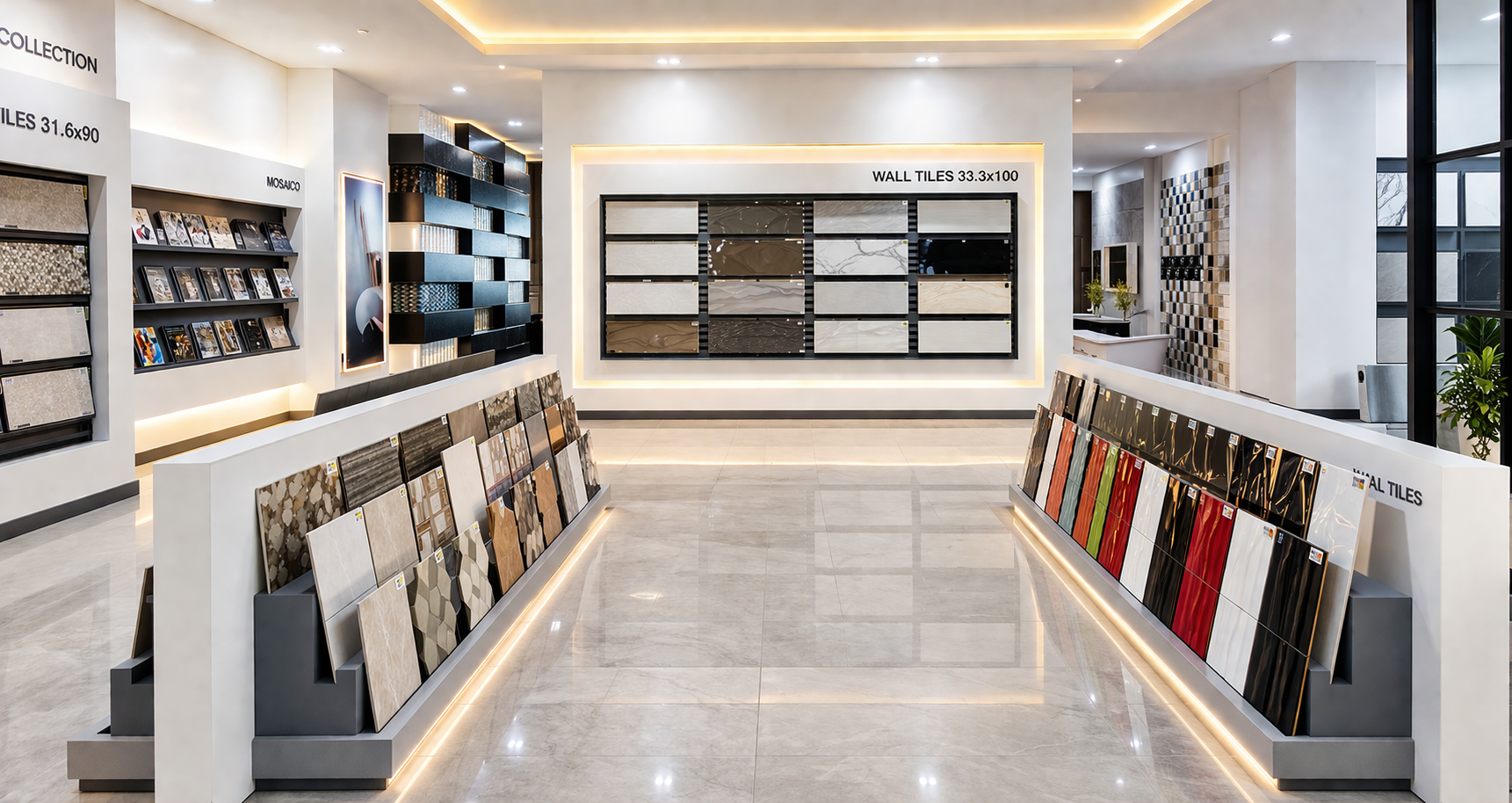

Not every porcelain tile is suitable for international trade. Learn how to evaluate export-ready porcelain tiles, testing, water absorption, dimensions, packaging, certifications, and compliance before you buy.


Introduction: A Good Tile Is Not Always an Export-Ready Tile
Imagine ordering a full container of porcelain tiles for a European project. The samples look attractive, the price is competitive, and the supplier promises consistent quality. Six weeks later, the shipment arrives. Some cartons contain different shades. Several tiles have dimensional variation. A few pieces are chipped, and the technical documents do not match the actual product.
The problem is not necessarily that the tiles are poor.
The problem is that they were not properly prepared for export.
The global ceramic tile market is becoming more competitive and more quality-driven. One 2026 market estimate places the global ceramic tiles market at USD 86.97 billion in 2025, with a projected value of USD 90.8 billion in 2026 and USD 130.13 billion by 2034. Another market analysis estimates the global ceramic tiles market at USD 226.4 billion in 2025, illustrating how different methodologies and market definitions can produce substantially different market-size figures.
For buyers, the important point is not which estimate is perfect. It is that international competition is significant, and technical consistency, documentation, packaging, and regulatory compliance can determine whether a supplier is genuinely export-ready.
This is especially important when sourcing from emerging tile-producing markets. For example, World Bank WITS data show that Iran exported more than USD 332 million of the relevant unglazed ceramic tile category in 2023, with Iraq, Pakistan, Afghanistan, Azerbaijan, and Georgia among major destinations.
So how can an importer distinguish a normal factory product from a reliable export product?
This guide provides a practical framework for evaluating (ceramic tile) and (tile export) readiness before signing a purchase contract.
۱. What Does “Export-Ready Porcelain Tile” Actually Mean?
The phrase export-ready is often misunderstood.
It does not simply mean that a factory can load cartons into a container.
A porcelain tile can leave a factory and still fail to meet the expectations of an international buyer. Export readiness means that the product, production process, documentation, packaging, and logistics have been prepared for a specific destination market.
A reliable export-ready product should normally demonstrate five characteristics:
- Consistent technical performance
- Controlled visual and dimensional quality
- Appropriate packaging and container loading
- Complete and accurate technical documentation
- Compliance with the target country’s requirements
This distinction matters because tile quality is multidimensional.
A tile can have an attractive surface but poor flatness. It can have low water absorption but inconsistent calibration. It can pass factory inspection but arrive damaged because the packaging was inadequate.
Export quality is destination-specific
There is no universal statement that a particular porcelain tile is “good enough for every country.”
The requirements of a residential project in one market may differ from those of a commercial project, hotel, shopping center, outdoor application, or public building.
For example, an importer may need to consider:
- Indoor or outdoor use
- Floor or wall application
- Residential or commercial installation
- Wet or dry environment
- Frost exposure
- Slip resistance
- Chemical resistance
- Abrasion resistance
- Large-format installation
- Local labeling requirements
- Environmental documentation
- Fire or construction-product requirements
The correct question is therefore not:
“Is this a high-quality porcelain tile?”
The better question is:
“Does this porcelain tile consistently meet the technical and regulatory requirements of my target application and destination market?”
That shift in thinking is fundamental to professional tile export.
Why samples can be misleading
Samples are useful, but they are not sufficient.
A supplier can send a carefully selected sample from the best production batch. The buyer may receive something different in the commercial shipment.
Professional buyers should therefore compare:
- Sample versus production batch
- Approved sample versus pre-shipment inspection
- Technical data sheet versus laboratory results
- Declared specifications versus actual measurements
- Packaging sample versus actual export packaging
The goal is batch consistency, not simply sample quality.
۲. Start With Water Absorption — But Do Not Stop There
One of the first technical indicators buyers should examine is water absorption.
Porcelain tiles are generally associated with very low water absorption. Under ISO 13006 classification, porcelain tile belongs to the BIa group, with water absorption of ۰.۵% or less. ISO 13006 also refers to the ISO 10545 series for the relevant testing procedures. (ISO)
This makes water absorption a useful screening criterion.
However, a common purchasing mistake is to assume:
Low water absorption = automatically export-ready.
It does not.
Water absorption tells you something important about the product, but it does not describe every aspect of its performance.
What should buyers request?
Instead of accepting a marketing statement such as “full-body porcelain” or “۰.۵% absorption,” request documented test results.
A technical specification should ideally identify:
- Water absorption
- Breaking strength
- Modulus of rupture
- Dimensions
- Thickness
- Straightness
- Rectangularity
- Surface flatness
- Surface quality
- Abrasion performance where applicable
- Chemical resistance
- Frost resistance where applicable
- Slip resistance where applicable
ISO’s current published reference remains ISO 13006:2018, which was reviewed and confirmed in 2024, while a new ISO/CD 13006 revision is currently under development. (ISO)
That is particularly relevant for buyers preparing long-term sourcing programs.
Why water absorption matters in real projects
Low absorption can be important in applications where moisture exposure is expected.
Consider:
- Exterior terraces
- Cold climates
- Bathrooms
- Commercial kitchens
- Swimming-pool surroundings
- Wet rooms
- High-moisture environments
But the correct specification depends on the application.
For example, frost resistance cannot simply be assumed from a marketing description. If the product is intended for freeze-thaw conditions, the buyer should verify the relevant test result and installation requirements.
A practical buyer rule
Do not evaluate porcelain tile using a single number.
Instead, build a technical profile.
For example:
| Parameter | Buyer Question |
|---|---|
| Water absorption | Does it meet the required classification? |
| Breaking strength | Is it suitable for the intended application? |
| Flatness | Will large-format installation be manageable? |
| Dimensions | Are actual tolerances controlled? |
| Shade | Is batch-to-batch consistency documented? |
| Surface quality | Are defects controlled? |
| Slip resistance | Is it suitable for the intended environment? |
| Chemical resistance | Will cleaning agents affect the surface? |
This approach transforms purchasing from visual selection into technical sourcing.
۳. Check Dimensional Accuracy, Flatness and Calibration
A tile can have excellent visual quality and still create serious installation problems.
Dimensional consistency is one of the most underestimated aspects of international tile purchasing.
This becomes even more important with:
- ۶۰ × ۱۲۰ cm tiles
- ۸۰ × ۱۶۰ cm formats
- Large porcelain slabs
- Rectified products
- Minimal-joint installations
- Premium architectural projects
A difference of a few millimeters can become obvious when hundreds of tiles are installed next to one another.
What is calibration?
Calibration refers to controlling tile dimensions so that products within a production batch remain within specified tolerances.
For export buyers, important dimensional characteristics include:
- Length
- Width
- Thickness
- Straightness of sides
- Rectangularity
- Surface flatness
Rectified does not mean perfectly identical
“Rectified” generally indicates that tile edges have been mechanically processed after firing to improve dimensional consistency.
It does not mean that every tile will be mathematically identical.
This distinction should be explained clearly to buyers.
International projects often require tight dimensional control because designers specify narrow grout joints. Any significant variation becomes visible across large surfaces.
Flatness becomes critical with large formats
Large-format porcelain tiles have expanded significantly in premium architectural applications.
A 60 × ۱۲۰ cm tile behaves differently from a small 30 × ۳۰ cm tile. A large slab magnifies small deviations in flatness.
For this reason, buyers should request actual dimensional inspection data rather than relying only on product photographs.
A useful pre-shipment inspection
A professional inspection can include sampling from different pallets rather than checking only one carton.
The inspector can record:
- Random carton selection
- Random tile selection
- Length and width
- Thickness
- Diagonal measurements
- Edge straightness
- Flatness
- Visual defects
- Shade and calibration
- Packing condition
This is especially useful for involving full-container shipments.
Why production consistency matters
Suppose a buyer receives 10,000 square meters.
If 2% of the material has unacceptable dimensional or visual defects, that may represent hundreds of square meters requiring sorting, replacement, discounting, or disposal.
The real cost is not simply the value of defective tiles.
It can include:
- Additional labor
- Installation delays
- Replacement freight
- Customer complaints
- Project penalties
- Reputation damage
- Lost future orders
This is why professional buyers focus on quality consistency, not just factory claims.
۴. Shade, Surface and Batch Consistency Can Make or Break a Shipment
A tile may meet technical standards and still fail commercially if its appearance changes between cartons.
This is especially important for:
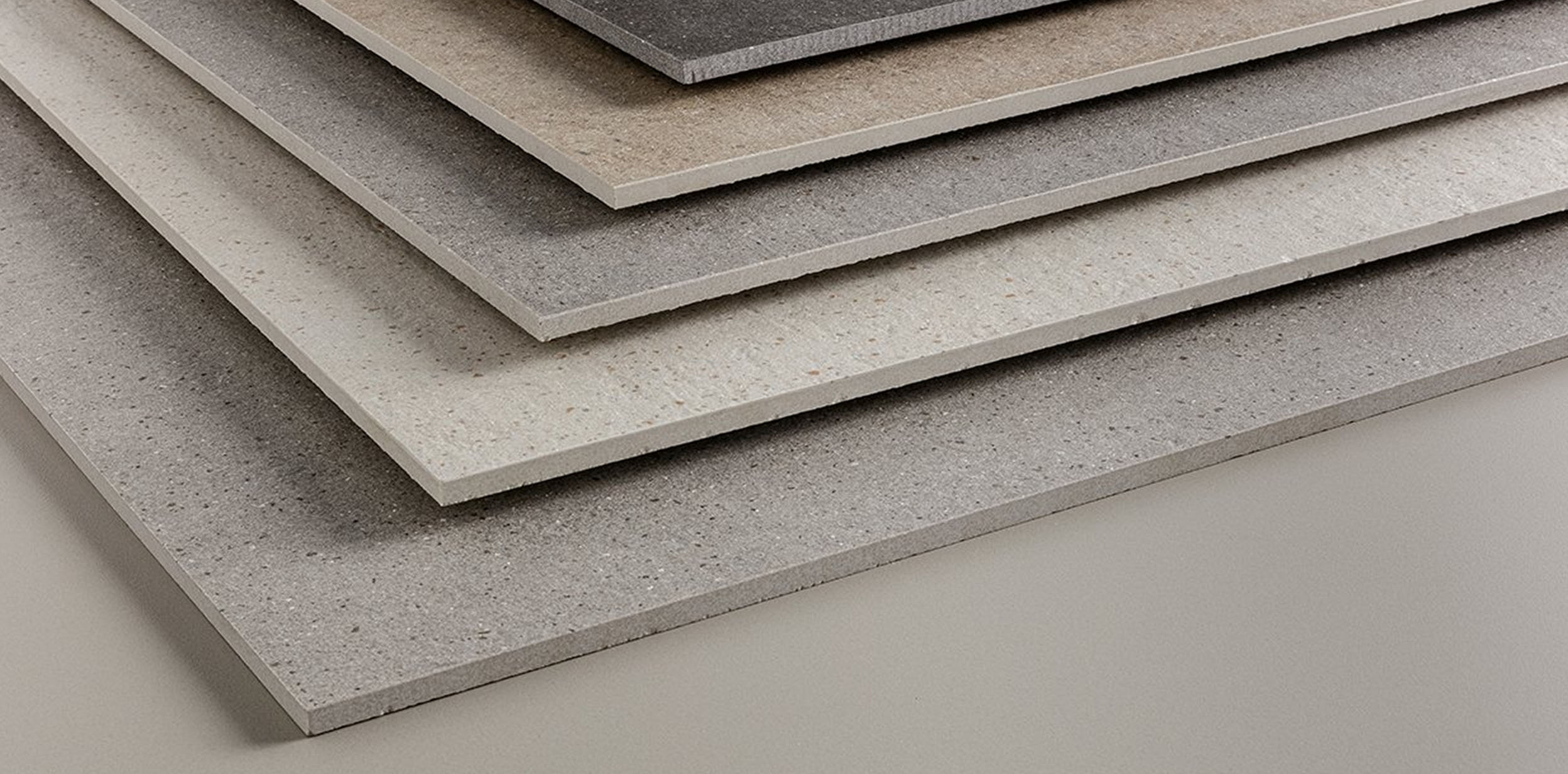
- Marble-look porcelain
- Stone-effect tiles
- Concrete-look tiles
- Wood-effect products
- Large-format slabs
- Digital-printed surfaces
- Premium polished porcelain
Modern digital printing allows manufacturers to create sophisticated visual effects. But the same technology makes batch control more important.
What should be controlled?
At minimum, buyers should examine:
- Shade variation
- Gloss level
- Surface texture
- Print registration
- Edge appearance
- Color density
- Pattern continuity
- Pinholes
- Black spots
- Cracks
- Chipping
- Warpage
- Surface contamination
Shade codes matter
Manufacturers often use shade or batch codes to identify production groups.
A professional buyer should make sure the commercial shipment is clearly identified and that cartons from different production batches are not mixed without approval.
For large projects, the safest approach is often to produce the required quantity within a controlled production window.
Digital images are not enough
One of the most common sourcing mistakes is approving a tile from a digital photograph.
Lighting, camera settings, display screens, and image processing can change perceived color.
Therefore, serious buyers should request:
- Physical samples
- Production samples
- Shade boards where relevant
- Batch references
- High-resolution surface images
- Pre-shipment inspection photographs
The “beautiful sample” trap
A supplier may show an impressive showroom.
That is useful for understanding design capability.
It does not prove that the factory can reproduce the same quality consistently at commercial scale.
For export purchasing, ask:
“Can you produce this exact design, shade, calibration, and surface finish in the quantity I require?”
That question separates product presentation from manufacturing capability.
۵. Export Packaging Is Part of Product Quality
A porcelain tile that arrives broken is not a successful export product.
This sounds obvious, but packaging is sometimes treated as a secondary issue during purchasing negotiations.
It should not be.
International transportation exposes tiles to:
- Vibration
- Impact
- Compression
- Repeated handling
- Humidity
- Temperature changes
- Forklift movement
- Container movement
The longer the logistics route, the greater the need for proper packaging.


A good export package should protect against multiple risks
Depending on product type, packaging may include:
- Strong cartons
- Internal separators
- Corner protection
- Shrink wrapping
- Strapping
- Suitable pallets
- Protective boards
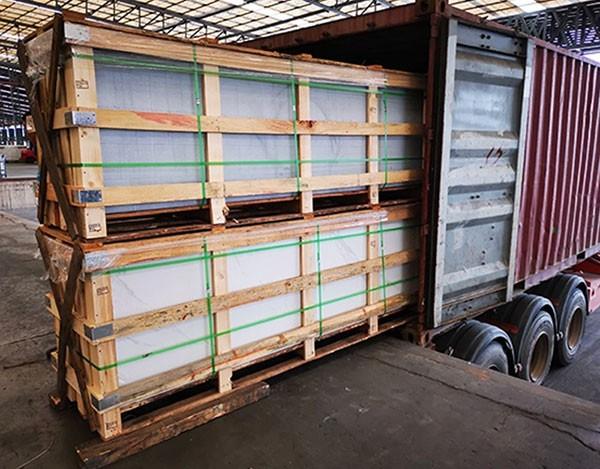
- Reinforced crates for slabs
- Moisture protection where necessary
- Clear carton identification
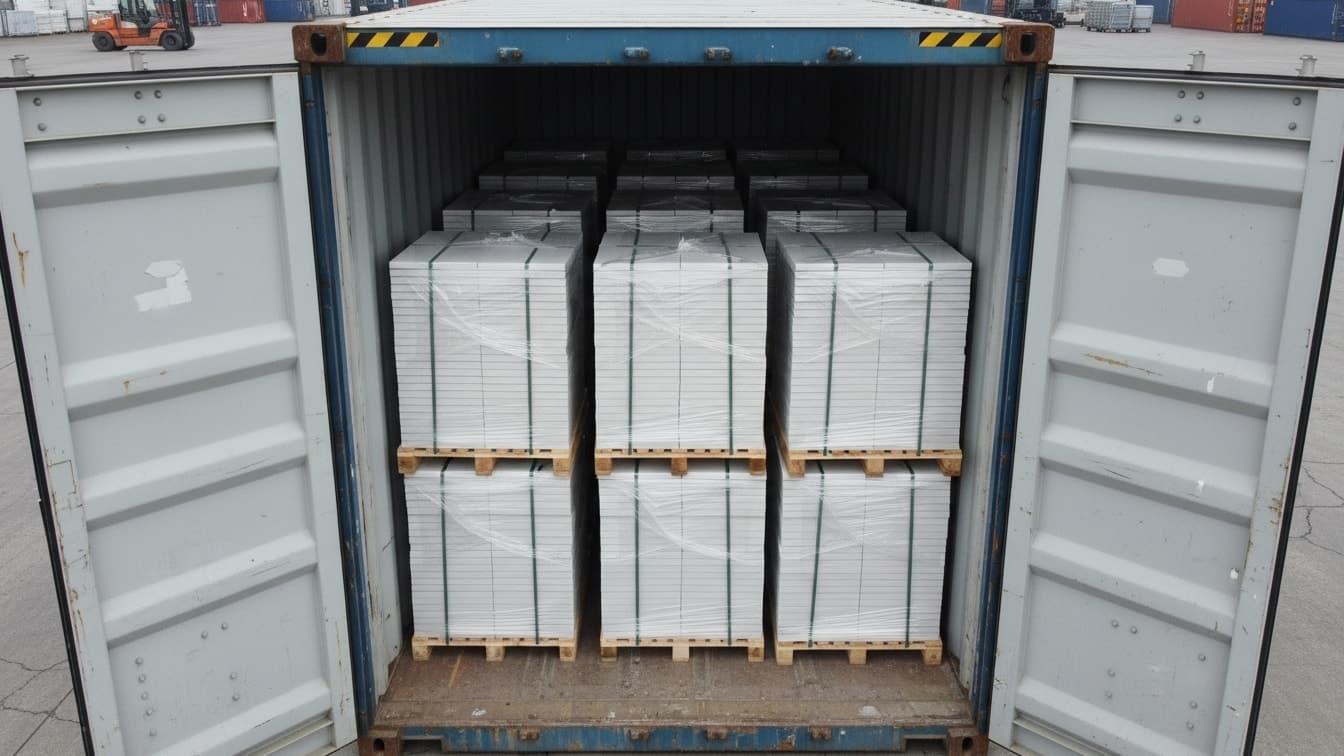
Container loading requires planning
The supplier should be able to provide a loading plan or at least clear information about:
- Boxes per pallet
- Pallets per container
- Square meters per box
- Total square meters
- Gross weight
- Net weight
- Pallet dimensions
- Container utilization
This matters because freight cost is strongly affected by weight and volume.
A supplier who understands tile export should know how to optimize the container without compromising product protection.
Packaging should match the destination
A short road shipment is not identical to a multimodal shipment involving:
Factory → Truck → Port → Vessel → Port → Truck → Warehouse.
Every additional handling point creates another opportunity for damage.
This is why an export-ready supplier should discuss logistics before final production, not after the goods are finished.
۶. Technical Documents Are as Important as the Tiles
A professional international buyer should never evaluate only the physical product.
The documentation package matters almost as much.
Depending on the destination and application, buyers may need:
- Technical data sheet
- Test report
- Declaration of Performance where applicable
- Declaration of Performance and Conformity under the applicable EU framework
- CE-related documentation where required
- Product identification
- Installation instructions
- Safety information
- Packaging specifications
- Country-of-origin information
- Commercial invoice
- Packing list
- Certificate of origin
- Transport documents
Europe deserves special attention
The European Union’s regulatory framework for construction products is evolving.
The revised Construction Products Regulation, Regulation (EU) 2024/3110, entered into force on January 7, 2025, with the main part becoming applicable on January 8, 2026. The European Commission states that the previous CPR and the revised CPR will coexist during a significant transition period.
For products covered by the applicable harmonised framework, manufacturers may need to prepare the required declaration and CE marking procedures.
The European Commission explains that CE marking follows preparation of the relevant declaration and technical documentation, and that the new framework is moving toward more digital product information, including digital product passports for relevant product families as implementation develops.
This means exporters targeting Europe between ۲۰۲۶ and 2028 should not treat compliance as a one-time checkbox.
They should monitor regulatory developments continuously.
Never accept a certificate without checking its scope
A certificate can be genuine and still be irrelevant to the exact product being purchased.
Check:
- Manufacturer name
- Factory address
- Product family
- Product type
- Standard referenced
- Test methods
- Test date
- Laboratory
- Accreditation status where relevant
- Whether the document covers the actual product
This is one of the most important lessons in international sourcing.
۷. Pre-Shipment Inspection: The Step That Protects the Buyer
A supplier’s internal quality-control system is important.
But an importer should also consider independent pre-shipment inspection.
Why?
Because the buyer is responsible for making a purchasing decision based on information supplied by the manufacturer.
A third-party inspection creates an additional verification layer.
What should a pre-shipment inspection cover?
A useful inspection can include:
Quantity inspection
Verify that the actual quantity matches the purchase order.
Visual inspection
Check for:
- Cracks
- Chipped corners
- Surface defects
- Pinholes
- Color inconsistency
- Printing defects
- Glaze problems
Dimensional inspection
Measure:
- Length
- Width
- Thickness
- Flatness
- Straightness
- Rectangularity
Packaging inspection
Verify:
- Carton strength
- Labeling
- Pallet condition
- Strapping
- Protection
- Carton quantity
Documentation inspection
Compare:
- Product code
- Batch number
- Technical specification
- Quantity
- Packaging information
Random inspection is more useful than showroom inspection
The inspection should use statistically meaningful sampling appropriate to the purchase and risk.
For example, an inspector should not simply inspect the first pallet placed near the factory entrance.
Samples should be selected from different parts of the production lot.
This helps reveal whether quality is genuinely consistent.
Inspection before shipment is cheaper than solving problems after arrival
Imagine discovering a problem at the destination port.
The buyer may then face:
- Return freight
- Customs complications
- Storage charges
- Replacement costs
- Installation delays
- Negotiation disputes
By contrast, finding the problem before loading gives the supplier an opportunity to correct it.
For this reason, pre-shipment inspection should be considered a risk-management tool, not an unnecessary cost.
۸. How to Evaluate an Iranian Porcelain Tile Supplier for Export
Iran remains an important regional producer of ceramic and porcelain products.
Available trade data demonstrate significant Iranian tile shipments to regional markets. WITS data for 2023 show more than USD 332 million in Iranian exports under the relevant unglazed ceramic-tile category, while recent shipment databases continue to record Iranian shipments to Iraq, Afghanistan, Armenia, Azerbaijan, Turkmenistan, Russia, and other destinations.
For buyers considering Iranian suppliers, the key question should not be:
“Is Iranian tile cheap?”
Instead:
“Can this Iranian factory supply consistent, documented, export-ready material for my market?”
Ask the supplier for evidence
A serious supplier should be able to provide:
- Factory profile
- Production capacity
- Product catalogue
- Technical data sheets
- Test reports
- Available sizes
- Surface finishes
- Packing specifications
- Container loading details
- Existing export markets
- References where commercially appropriate
- Quality-control procedure
- Sample policy
Check export experience
A factory that regularly exports is more likely to understand:
- International packaging
- Customs documentation
- Product labeling
- Container loading
- Commercial specifications
- Buyer inspection
- International payment procedures
- Logistics coordination
For example, current industry data identify active Iranian tile export routes to markets including Iraq, Russia, Azerbaijan and Georgia, demonstrating the importance of regional logistics knowledge as part of supplier capability.
But export history is not enough
A supplier may have exported for years and still be unsuitable for your specific project.
Always evaluate the specific product line.
The factory might be excellent at standard 60 × ۶۰ cm tiles but less experienced with:
- ۱۲۰ × ۱۲۰ cm
- ۶۰ × ۱۲۰ cm
- Large slabs
- Outdoor porcelain pavers
- Premium polished surfaces
The supplier must match your technical requirements.
۹. Red Flags That Show a Porcelain Tile May Not Be Export-Ready
Experienced importers often recognize warning signs before placing an order.
Here are some of the most important ones.
Red Flag 1: The supplier only talks about price
Price matters.
But a professional export quotation should also explain:
- Specification
- Quantity
- Packaging
- Incoterm
- Lead time
- Payment terms
- Inspection
- Documentation
- Loading capacity
If the conversation is entirely about price, risk is often being transferred to the buyer.
Red Flag 2: No detailed technical data
If a supplier cannot clearly provide technical specifications, pause before ordering.
Red Flag 3: Certificates do not identify the exact product
A generic certificate is not necessarily evidence that your selected tile meets the required specification.
Red Flag 4: Samples are perfect, but production information is vague
Ask how the supplier controls batch consistency.
Red Flag 5: Packaging is described as “standard”
“Standard packaging” means little unless the supplier can explain exactly what it includes.
Red Flag 6: No pre-shipment inspection is accepted
A supplier does not necessarily need to agree to every inspection condition, but refusal to allow reasonable quality verification should increase buyer caution.
Red Flag 7: Technical values are given without test evidence
A number printed in a catalogue is not the same as a verified test result.
Red Flag 8: The factory cannot explain the destination requirements
An experienced export supplier should ask where the tiles will be sold and how they will be used.
۱۰. A Practical Export-Readiness Checklist for Buyers
Before approving an international porcelain tile order, use the following checklist.
Product
- Exact product code confirmed
- Porcelain classification verified
- Water absorption documented
- Breaking strength documented
- Dimensions verified
- Flatness verified
- Surface quality approved
- Shade approved
- Finish approved
- Intended application confirmed
Factory
- Manufacturer identity verified
- Factory location confirmed
- Production capacity understood
- Quality-control system reviewed
- Export history checked
- Product-specific experience confirmed
Documentation
- Technical data sheet received
- Relevant test reports received
- Applicable conformity documents received
- Product identification matches documents
- Labeling requirements checked
- Destination-market requirements reviewed
Packaging
- Carton specification approved
- Pallet specification approved
- Protection against edge damage confirmed
- Container loading plan reviewed
- Gross and net weights confirmed
- Carton markings approved
Shipment
- Incoterm confirmed
- Lead time confirmed
- Production deadline confirmed
- Pre-shipment inspection agreed
- Packing list confirmed
- Commercial invoice requirements confirmed
- Certificate of origin requirements checked
If several boxes remain unchecked, the product should not yet be considered fully export-ready.
۱۱. People Also Ask: Common Questions About Export-Ready Porcelain Tiles
What makes a porcelain tile export-ready?
An export-ready porcelain tile combines consistent technical performance with controlled appearance, accurate dimensions, suitable packaging, reliable documentation, and compliance with the requirements of the destination market.
A factory’s ability to manufacture a good tile is only the first part of the equation.
Is every porcelain tile suitable for international export?
No.
A tile can be technically acceptable for one market or application and unsuitable for another.
Export suitability depends on:
- Product specifications
- Destination regulations
- Intended use
- Climate
- Installation method
- Packaging
- Documentation
Therefore, buyers should evaluate the complete supply chain rather than the tile alone.
What water absorption should porcelain tile have?
Under ISO 13006 classification, porcelain tiles are associated with the BIa group and water absorption of ۰.۵% or less. However, buyers should verify the actual test result and ensure that the complete specification meets the intended application. (ISO)
Do porcelain tiles need CE marking for Europe?
CE marking requirements depend on the applicable European construction-product framework and whether the specific product is covered by the relevant harmonised technical specification or another applicable route.
The EU’s regulatory framework is currently transitioning following the adoption of CPR 2024, with important implementation changes beginning in 2026.
Therefore, exporters should verify the current requirements for the specific product and market rather than relying on an old certificate.
Should I order a full container after approving a sample?
Not automatically.
For a significant commercial order, buyers should verify production consistency, technical documentation, packaging, and—where appropriate—conduct a pre-shipment inspection.
A sample proves that the supplier can produce a sample.
It does not automatically prove that the supplier can reproduce the same quality across an entire shipment.
How can I compare two porcelain tile suppliers?
Use a weighted evaluation system rather than comparing only price.
For example:
| Evaluation Factor | Suggested Weight |
|---|---|
| Technical performance | ۲۵% |
| Product consistency | ۲۰% |
| Documentation & compliance | ۱۵% |
| Price | ۱۵% |
| Packaging & logistics | ۱۰% |
| Production capacity | ۱۰% |
| Communication & reliability | ۵% |
The exact weights should change according to the project.
This method prevents a low initial price from hiding higher downstream risk.
۱۲. What Will Define Tile Export Competitiveness in 2026–۲۰۲۸?
The next phase of international ceramic tile competition is unlikely to be based on price alone.
The global ceramic tile market is forecast to continue expanding through the end of the decade. One current 2026 analysis forecasts growth from USD 90.8 billion in 2026 to USD 130.13 billion by 2034, while another forecasts a 6.6% CAGR for 2026–۲۰۳۳.
This growth creates opportunities for producers.
But it also raises buyer expectations.
Three trends are particularly important.
۱. Documentation will become part of the product
Buyers increasingly want proof.
Technical data, test reports, environmental information, conformity documents, and digital product information will become more important.
The EU’s revised CPR already points toward increased digital product information and future digital product passports for relevant product families.
۲. Consistency will become more valuable than one-time quality
A supplier who produces one excellent batch is not necessarily a reliable international partner.
Export buyers need repeatability.
That means:
Same specification → same production control → same packaging → same expected performance.
۳. Value-added porcelain products will gain strategic importance
Competition will increasingly move toward:
- Large formats
- Premium surfaces
- Advanced digital printing
- Realistic stone and marble effects
- Outdoor porcelain
- Technical porcelain
- High-performance surfaces
- Project-specific solutions
For producers in countries such as Iran, this creates an opportunity.
Instead of competing exclusively through lower prices, manufacturers can compete through quality consistency, design, technical performance, reliable documentation, and professional export service.
Conclusion: Export-Ready Means More Than “Good Quality”
A porcelain tile does not become export-ready simply because it looks attractive, has a low water-absorption rate, or comes from a modern factory.
True export readiness is a system.
The product must be technically consistent. Dimensions must be controlled. Shade and surface quality must remain stable across production batches. Packaging must protect the material during international transportation. Documentation must correspond to the actual product. Finally, the supplier must understand the regulatory and commercial requirements of the destination market.
For buyers sourcing , the safest approach is therefore to move from supplier claims to documented evidence.
Before placing an international order, verify:
- Technical performance
- Dimensional accuracy
- Visual consistency
- Packaging
- Testing
- Compliance
- Production capacity
- Pre-shipment inspection
- Export documentation
- Destination-market requirements
The market outlook for 2026–۲۰۲۸ suggests continued demand, but competition will become increasingly sophisticated. Market growth alone will not guarantee success for manufacturers. Suppliers that can combine competitive pricing with measurable quality, reliable documentation, modern production, and professional logistics will have a stronger position in international markets.
For Iranian manufacturers and exporters, this is particularly important. Regional demand and established trade routes provide a foundation, but long-term growth will depend on moving from “we can produce tiles” to “we can consistently deliver a documented, compliant, project-ready product.”
That is the real difference between an ordinary tile shipment and professional tile export.
If you are sourcing porcelain or ceramic tiles from Iran, request the technical specification, test documentation, packaging details, and production samples before approving your order. For specialist sourcing, quality verification, and export consultation, contact an experienced tile export team before committing to a full shipment.



نظرات ۰