

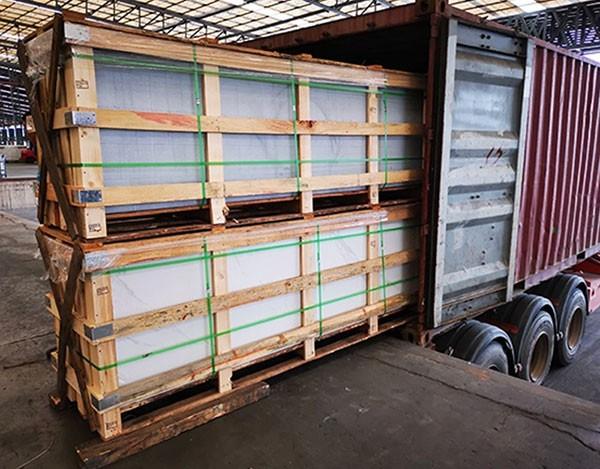
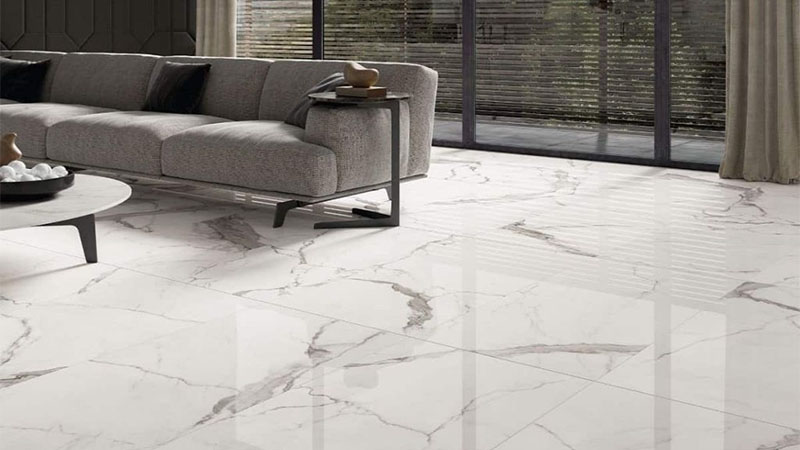

Iran claims 40% of its ceramic tile output is exported, yet customs data tells another story. A five-year analysis of tile and ceramic exports reveals why.
Iran is officially ranked as the world’s fifth-largest producer and exporter of tiles and ceramics. Industry officials claim the country ships around 200 million square meters abroad every year, reaching more than 50 destinations. Yet when analysts cross-check these figures against customs records, trade databases, and international market reports, the numbers rarely line up.
In one recent regional trade report, Iran’s ceramic tile export volume was recorded at just 16 million square meters for a single year — a fraction of the 200-million figure repeated in domestic press releases. This is not a rounding error. It is a structural gap that has defined Iran’s tile and ceramic export sector for the better part of a decade.
Why does this gap exist? Anyone trying to understand Iran’s real position in the global ceramic tile trade runs into the same wall: which number do you trust — the trade union’s press statement, the customs ledger, or the international market research firm’s estimate? Each tells a different story, and each has a different incentive to tell it.
This article walks through five years of available data on Iran’s tile and ceramic exports, compares official claims against third-party trade statistics, and explains the structural, monetary, and political reasons the two rarely match. Readers will come away with a realistic picture of export volumes, the countries actually buying Iranian tiles, the forces distorting the data, and what the next few years are likely to bring for producers, exporters, and buyers alike.
By the end, you will understand not just what the numbers say, but why they say different things depending on where you look — and how to read Iranian trade statistics with the right amount of caution.
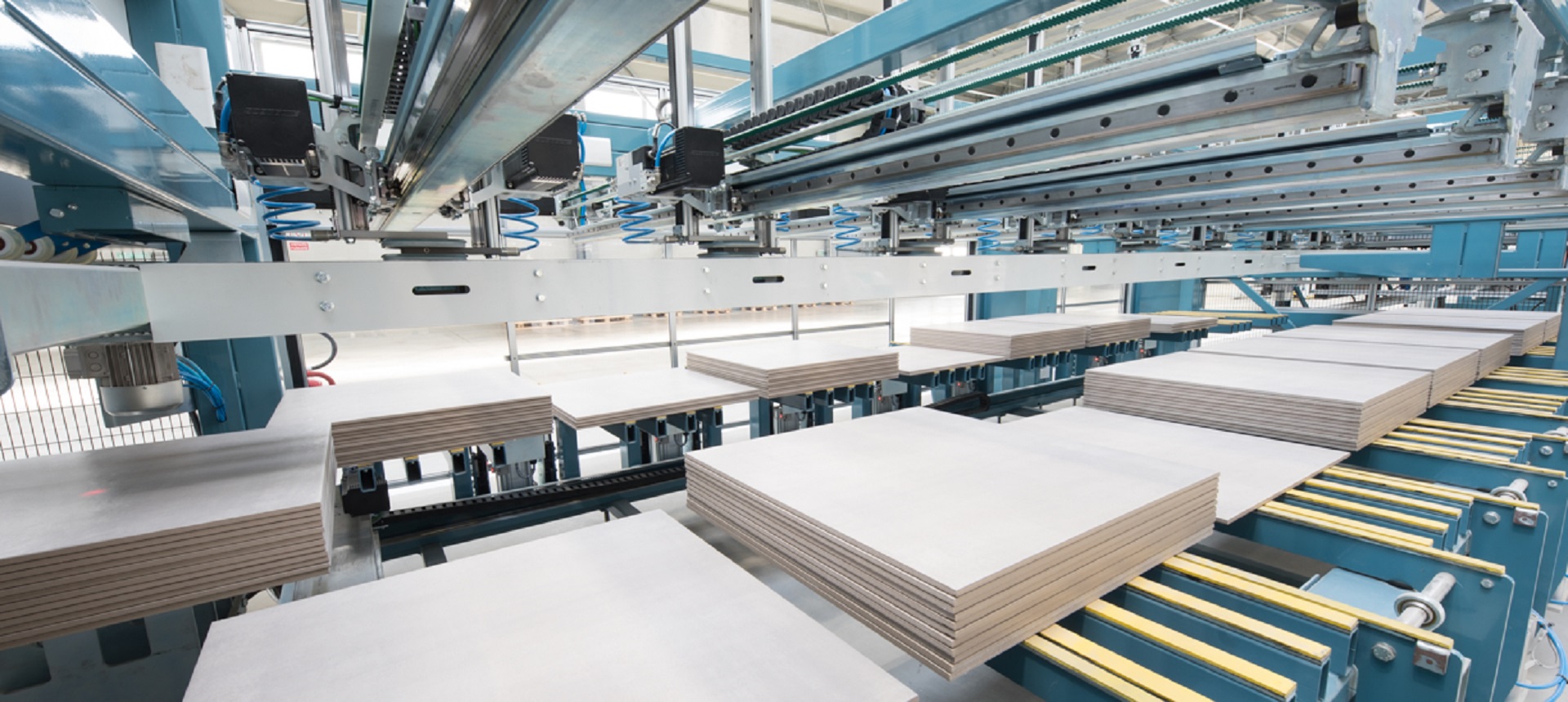
۱. Iran’s Position in the Global Ceramic Tile Industry
Before examining the export figures themselves, it helps to understand the scale of the industry generating them. Iran has built one of the largest ceramic tile manufacturing bases in the Middle East, with production capacity that regional reports place at roughly 440–۷۰۰ million square meters per year, depending on the source and year measured.
Production Capacity and Global Ranking
Officials from the Iranian Tile and Ceramic Manufacturers and Exporters Association have repeatedly stated that Iran holds fifth place globally in tile and ceramic production and export volume, behind manufacturing giants such as China, India, Brazil, and Spain. Regional market data supports part of this claim: Iran is consistently identified as the largest single producer of ceramic tiles within the Middle East, ahead of Turkey and Saudi Arabia, accounting for close to 40% of the region’s total production.
This scale matters for the export conversation. A country producing several hundred million square meters annually, with domestic consumption estimated at a similar order of magnitude, naturally generates a large surplus available for export — at least on paper. The question is how much of that surplus actually leaves the country through channels that show up in trade statistics.
Why Production Numbers and Export Numbers Diverge
Three structural factors explain part of the divergence between headline production capacity and recorded ceramic tile exports:
- Idle capacity. Energy shortages, sanctions-related input constraints, and fluctuating demand mean installed capacity is rarely used in full. Analysts estimate factories often run well below nameplate capacity.
- Domestic absorption. A large share of output is consumed internally, particularly during years of active residential construction.
- Informal trade routes. A portion of tiles crossing land borders into Iraq, Afghanistan, and Central Asia moves through channels that are not fully captured in formal export declarations.
That last point is where the real controversy — and the real gap between official statistics and market reality — begins.
۲. The Five-Year Export Trend: What the Official Statistics Show
Export Volume Trajectory (2020–۲۰۲۵)
Industry associations have publicly stated that tile and ceramic exports grew steadily across the past five years, driven by rising regional construction activity and currency devaluation that made Iranian tiles cheaper for foreign buyers in hard-currency terms. According to trade union statements, roughly 200 million square meters of tiles and ceramics were exported in the most recent reported year, representing around 40% of total national output.
Independent trade-data platforms, however, tell a more modest story. Regional market analyses that track Middle Eastern ceramic tile shipments by customs declaration place Iran’s recorded export volume far lower — in the range of 15–۲۰ million square meters for comparable periods, even while identifying Iran as one of the fastest-growing exporters in the region by compound annual growth rate.
This creates two parallel narratives:
- The union narrative: Iran exports close to half its tile production, cementing its status as a top-five global exporter.
- The customs-data narrative: Iran’s recorded tile and ceramic exports are a small share of regional trade, even if their growth rate is among the fastest.
Both can be technically accurate depending on definitions, measurement windows, and what counts as a formally recorded export versus informal cross-border trade.
Export Value Trends
Value figures show a similarly uneven pattern. Iran’s domestic ceramic tile market was valued at approximately $1.43 billion in 2024 and was projected to reach $1.51 billion in 2025, with a forecast compound annual growth rate near 5% through 2030. Separately, some market reports describe total sector sales value climbing to around $2.2 billion in 2024, an 8.4% increase year-on-year — though it remains unclear how much of that figure reflects export revenue versus domestic sales, since Iran’s rial-denominated pricing and multiple exchange-rate regimes complicate any dollar conversion.
This is a critical point for anyone using these numbers for business decisions: value figures for Iranian tile and ceramic exports are especially unreliable because of currency distortions, which we cover in detail in Section 3.
Key Destination Markets
Despite the volume disputes, there is broad agreement across sources on where Iranian tiles go, even if not on how much arrives there. The consistent top destinations for Iran’s ceramic tile exports include:
- Iraq — widely cited as the single largest export market for Iranian tiles and ceramics, driven by geographic proximity, land-border access, and post-conflict reconstruction demand.
- Azerbaijan and Georgia — significant Caucasus markets benefiting from established trade corridors and cultural-commercial ties.
- Afghanistan and Pakistan — land-connected markets where informal and semi-formal trade plays an outsized role.
- Turkey — both a competitor and, in certain product categories, a trading partner.
- UAE, Saudi Arabia, and other GCC states — smaller but growing markets tied to regional construction booms.
Iraq alone is frequently described as accounting for the largest single share of Iran’s tile and ceramic export volume, a pattern that has held steady across the five-year window under review.
۳. The Data Gap: Why Official Figures Don’t Match Market Reality
This is the central question behind any serious analysis of Iran’s tile and ceramic export trends. The gap between what officials announce and what trade databases record is not random noise — it stems from four identifiable structural causes.
۳.۱ Currency and Pricing Distortions
Iran operates with multiple, frequently shifting exchange rates: an official rate, a NIMA (secondary) rate for exporters, and a free-market rate that often diverges sharply from both. When export revenues are converted into dollars for reporting purposes, the choice of exchange rate can change a reported figure by a factor of two or more.
Exporters also have financial incentives to under-declare invoice values to reduce currency-conversion obligations and tax exposure, or in some cases to over-declare in order to access preferential subsidies or import rights tied to export performance. Both practices distort the dollar-value figures that eventually appear in “official” export statistics — meaning the true market value of tile and ceramic exports is almost certainly different from any single published number.
۳.۲ Informal and Unregistered Border Trade
A substantial share of Iran’s ceramic tile trade with Iraq, Afghanistan, and parts of Central Asia moves through land borders using informal or semi-formal arrangements — small-scale traders, cash transactions, and shipments that are not always processed through standard customs declarations. This trade is real, economically significant for border regions, and largely invisible to the trade databases that international analysts rely on.
This explains why union officials, who have visibility into actual factory shipments and informal trade networks, can credibly report far higher export volumes than what shows up in formal customs-based datasets used by international market research firms.
۳.۳ Sanctions-Related Data Opacity
International sanctions have pushed a portion of Iran’s trade — across many sectors, not just tiles — through intermediaries, re-labeled shipments, and third-country transshipment points. Academic research using Iranian customs microdata has documented how exporters historically diverted trade toward new destinations and adjusted reporting practices in response to sanctions pressure. While ceramic tiles are not a sanctioned category in the same way as oil or dual-use goods, the broader trade infrastructure — banking channels, shipping documentation, and currency clearance — is shaped by sanctions-era workarounds that reduce the transparency of all Iranian export data, tiles included.
۳.۴ Divergent Methodologies Across Sources
Finally, part of the gap is simply methodological. Trade union statements often describe installed export capacity or estimated shipments based on factory-level reporting. International market research platforms typically rely on customs mirror data — what importing countries report receiving from Iran, which can itself be incomplete or misclassified under different HS codes. Neither method is inherently wrong, but they answer different questions, and conflating them produces the appearance of a “conflicting” trade record when the real issue is a mismatch in definitions.
The practical takeaway: anyone using Iranian tile and ceramic export statistics for business planning should treat any single figure as a range estimate, not a precise number, and should cross-reference at least two independent sources before making decisions.
۴. Key Export Destinations and Market Dynamics in Detail
Iraq: The Anchor Market
Iraq’s role in absorbing Iranian ceramic tile exports cannot be overstated. Shared borders, established trucking routes, and ongoing reconstruction and housing demand have made Iraq the most consistent buyer of Iranian tiles across the past five years. Price competitiveness relative to Turkish and Gulf alternatives has helped Iranian producers maintain market share even as broader macroeconomic conditions shifted.
The Caucasus Corridor: Azerbaijan and Georgia
Trade through the Caucasus benefits from relatively stable logistics and growing construction activity in both countries. Azerbaijan and Georgia have shown some of the more consistent import patterns for Iranian tiles among non-neighboring markets, aided by rail and road connections that bypass some of the friction affecting maritime trade routes.
Afghanistan and Pakistan: High Volume, Low Visibility
These markets illustrate the data-gap problem most clearly. Trade with Afghanistan in particular involves extensive informal cross-border commerce that is economically substantial but statistically underrepresented. Analysts studying this corridor generally agree that recorded export figures understate actual trade volume by a meaningful margin.
Competitive Pressure from Turkey, Spain, and India
Iran’s tile and ceramic exporters do not operate in isolation. Turkey remains the dominant ceramic tile exporter in the broader Middle East and North Africa region by both volume and value, with a well-developed export infrastructure and stronger international brand recognition. Spanish and Italian producers continue to dominate the premium design segment globally, while Indian manufacturers have rapidly scaled low-cost production for price-sensitive markets. Iranian exporters largely compete on price and proximity rather than design leadership or established international brand equity — a positioning that works well in neighboring markets but limits expansion into higher-margin, farther-flung markets.
۵. Challenges Facing Iran’s Tile and Ceramic Export Sector
Rising Input and Energy Costs
Natural gas is a core input for ceramic firing, and Iran’s periodic domestic energy shortages — particularly during peak winter demand — have forced some tile factories to reduce production or shut down temporarily. This directly affects export reliability, since foreign buyers need consistent supply timelines that intermittent energy access can disrupt.
Banking and Currency Transfer Difficulties
Even when a foreign buyer wants to purchase Iranian tiles, completing the transaction is often more complicated than with competitors. Sanctions-related banking restrictions limit access to standard international payment systems, forcing exporters and buyers toward slower, costlier, or less secure payment arrangements. This friction pushes some potential buyers toward Turkish, Indian, or Gulf-based suppliers simply because payment is easier.
Currency Volatility and Pricing Unpredictability
The rial’s volatility against major currencies makes it difficult for Iranian exporters to offer stable dollar-denominated pricing over multi-month contracts, which large construction buyers typically require. This unpredictability is a recurring complaint among Iran’s tile and ceramic export partners in Iraq and the Gulf.
Underinvestment in Branding and Design Innovation
While digital printing technology has reached parts of the Iranian ceramic tile industry, investment in design innovation, sustainability certification, and international brand-building lags behind competitors like Spain, Italy, and increasingly the UAE. This limits Iran’s ability to move up the value chain into premium export segments where margins — and reported export values — would be considerably higher.
۶. Opportunities and Growth Drivers
Despite the challenges, several factors support continued growth in Iran’s tile and ceramic export sector over the coming years:
- Regional reconstruction demand. Ongoing rebuilding needs in Iraq and infrastructure development across Central Asia sustain steady baseline demand for cost-competitive building materials.
- Currency-driven price competitiveness. Despite its downsides, rial depreciation has made Iranian tiles cheaper in dollar terms for many foreign buyers, supporting export volume even when domestic economic conditions are difficult.
- Growing GCC construction activity. Expanding urban development in Gulf states creates new demand pockets, particularly for mid-range product segments where Iranian tiles are price-competitive.
- Diversified export networks. Producers have increasingly worked with trading companies and intermediaries to reach markets beyond immediate neighbors, gradually expanding the number of destination countries.
- Eco-friendly and digital-design trends. A subset of Iranian manufacturers has begun adopting sustainable production methods and digital printing customization, opening access to buyers who prioritize these features.
Regional market forecasts for the broader Middle East ceramic tile sector point to steady, if modest, long-term recovery and growth through the next decade, with Iran expected to remain the region’s largest single producer throughout that period.
۷. Frequently Asked Questions
Is Iran really the world’s fifth-largest tile exporter?
Iranian trade officials consistently make this claim, and Iran is genuinely the largest ceramic tile producer in the Middle East. Whether it holds a true global fifth-place export ranking is harder to verify independently, since much of the underlying export data comes from domestic industry associations rather than fully reconciled international customs records.
Which countries import the most Iranian tiles and ceramics?
Iraq is consistently identified as the top destination, followed by Azerbaijan, Georgia, Afghanistan, Pakistan, and a growing share of GCC markets including the UAE and Saudi Arabia.
Why do different sources report such different export figures for Iran?
The gap comes down to methodology and visibility. Trade associations report factory-level shipment estimates that include informal border trade; international customs-mirror databases only capture formally declared transactions. Currency conversion practices, sanctions-related trade rerouting, and inconsistent HS-code classification widen the gap further.
Is Iran’s ceramic tile export sector growing or shrinking?
Most sources agree the underlying trend is growth, even if the absolute figures disagree. Several regional analyses identify Iran as having one of the fastest compound annual growth rates in ceramic tile exports among Middle Eastern producers over the past decade, even while its recorded volume share remains smaller than Turkey’s.
Can foreign buyers trust published Iranian export statistics?
Buyers and analysts should treat any single published figure as directional rather than precise, and should verify pricing, volume, and delivery terms directly with exporters or through independent trade-verification services rather than relying solely on aggregate national statistics.
Conclusion
Five years of data on Iran’s tile and ceramic exports point to one consistent conclusion: the industry is real, growing, and regionally significant — but the statistics describing it are inconsistent enough that no single number should be taken at face value. Iran’s status as the Middle East’s largest ceramic tile producer is well supported. Its claimed export volumes and its claimed global ranking are plausible but not fully verifiable against independent customs data, which consistently shows smaller recorded shipment volumes than official statements suggest.
The reasons for this gap are structural, not accidental: multiple competing exchange rates, extensive informal border trade with Iraq and Afghanistan, sanctions-driven opacity in banking and trade documentation, and simple methodological differences between association-reported figures and customs-mirror datasets. Together, these factors mean that Iran’s true tile and ceramic export volume likely sits somewhere between the two extremes reported by different sources — closer to the official narrative in terms of real economic activity, but closer to the customs-data narrative in terms of what is formally documented and verifiable.
Looking ahead, Iran’s tile and ceramic export sector is likely to keep growing in absolute terms, supported by reconstruction demand in Iraq, currency-driven price competitiveness, and expanding GCC construction activity. But closing the data gap — through more transparent customs reporting, unified currency conversion standards, and formalization of border trade — will matter as much for the industry’s international credibility as production growth itself.
For businesses evaluating Iranian tile and ceramic suppliers, sourcing partners, or market-entry opportunities, the safest approach is to verify figures directly with exporters and independent trade-data providers rather than relying on any single official source. If you need a clearer, verified picture of current export volumes, pricing, and reliable trade partners in this sector, consult with specialized trade and market analysts before finalizing sourcing or investment decisions.


نظرات ۰