

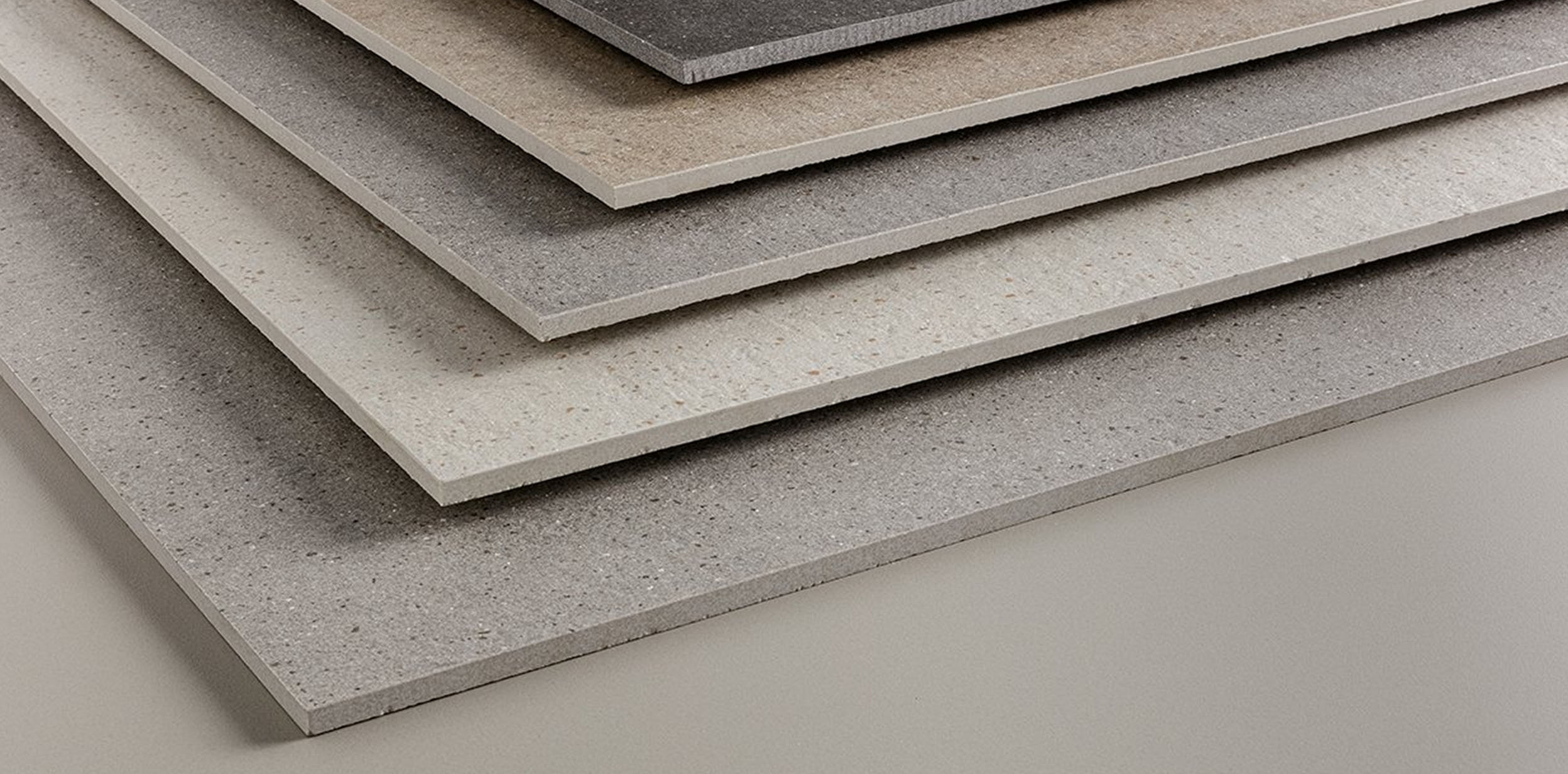
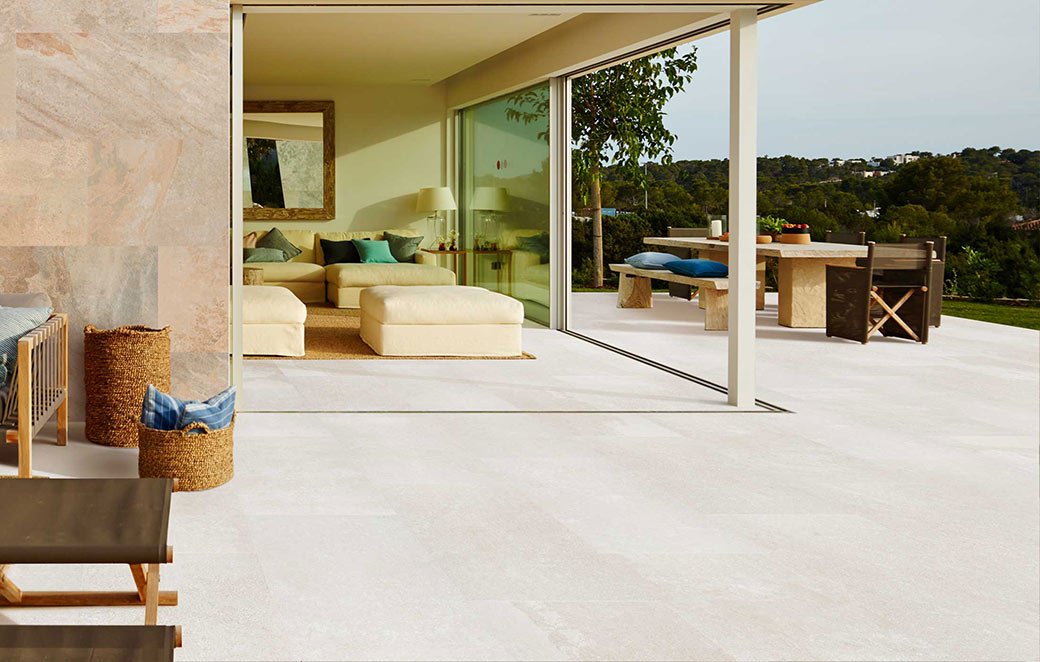

Discover how Iranian porcelain tile and slab manufacturers meet global ceramic standards. A complete guide to quality, technology, and buying smart.
Nearly 70% of buyers who purchase porcelain ceramic tile for their homes admit they cannot explain why one tile costs three times more than another that looks identical on the showroom floor. That confusion is not their fault. Porcelain tile and slab tile markets have grown so fast, and so technically complex, that even seasoned contractors struggle to compare products fairly.
Iran has quietly become one of the more interesting stories in this global picture. For decades, the country’s ceramic industry was seen mainly as a domestic supplier, competing on price rather than performance. That perception is now shifting. A new generation of manufacturers has adopted international production benchmarks, invested in digital printing lines, and started exporting slab tile to markets that once dismissed Iranian ceramics as a budget alternative.
This shift raises a real question for architects, designers, and homeowners: does Iranian porcelain tile actually meet the technical standards set by Italian, Spanish, and Chinese producers, or is the marketing ahead of the manufacturing? That is the exact gap this article closes.
You will learn what separates true porcelain ceramic from ordinary ceramic tile, which certifications and testing protocols matter, how Iranian factories have restructured their processes around large-format slab tile, and what to look for before signing a purchase order. We will also compare Iranian production against established global players and look at where the industry is headed through 2028.
By the end, you should be able to walk into a showroom, read a technical data sheet, and know exactly what you are paying for — without needing to search for a second opinion afterward.

What Makes Porcelain Tile Different From Ordinary Ceramic Tile
The terms “ceramic” and “porcelain” get used interchangeably in casual conversation, but the manufacturing difference is significant, and it directly affects performance.
Ordinary ceramic tile is made from a mixture of red or white clay, fired at moderate temperatures, usually between 1,000°C and 1,150°C. Porcelain ceramic, by contrast, uses a denser body composed of fine kaolin clay, feldspar, and quartz, fired at higher temperatures, often above 1,200°C. This higher firing point vitrifies the material, meaning the particles fuse together almost completely, leaving very little open porosity.
That single difference cascades into several practical advantages:
- Water absorption: True porcelain tile absorbs less than 0.5% water by weight, according to international classification systems, while standard ceramic can absorb 3% to 10% or more.
- Density and weight: Porcelain bodies are noticeably heavier per square meter due to their compact structure.
- Surface hardness: Porcelain typically scores higher on the Mohs scale, resisting scratches and abrasion better over time.
- Frost resistance: Because porcelain absorbs almost no water, it rarely cracks in freeze-thaw cycles, making it suitable for exterior use in colder climates.
- Color consistency through the body: Full-body (or “through-body”) porcelain carries the same color and pattern deep into the tile, so minor chips are far less visible than on glazed ceramic.
For buyers, this matters most in high-traffic commercial floors, outdoor terraces, and facades — environments where ordinary ceramic tile would fail within a few years. Understanding this distinction is the first step before evaluating any manufacturer’s claims, including those coming out of Iran’s growing production hubs.
Glazed vs. Full-Body Porcelain: A Quick Distinction
Glazed porcelain applies a decorative surface layer over the dense body, offering more design flexibility but slightly less resistance to deep scratches. Full-body porcelain, sometimes called technical porcelain, carries pigment throughout the entire thickness. Iranian manufacturers increasingly offer both, allowing designers to choose based on aesthetic needs versus wear tolerance.
The Rise of Iran’s Porcelain Tile Industry
Iran’s ceramic tradition stretches back centuries, rooted in Persian architectural tilework seen in mosques and palaces across Isfahan and Yazd. Industrial-scale production, however, is a more recent development, expanding rapidly from the 1990s onward as domestic construction demand surged.
A Brief History of Ceramic Manufacturing in Iran
Early Iranian factories focused almost entirely on wall and floor ceramic for local housing projects. Equipment was often imported second-hand, and quality control was inconsistent across producers. As sanctions periodically restricted access to certain foreign machinery, some manufacturers were forced to develop local engineering capacity — a constraint that, over time, built genuine domestic expertise in kiln design, glazing chemistry, and press technology.
By the 2010s, a handful of larger producers began investing directly in modern Italian and Spanish production lines, particularly continuous ball mills, high-tonnage hydraulic presses, and roller kilns capable of firing porcelain bodies consistently.
Key Manufacturing Hubs
Several regions now anchor Iran’s porcelain and ceramic tile output:
- Yazd Province — widely regarded as the historical and technical center of Iranian ceramics, home to some of the country’s largest and most technologically advanced factories.
- Meybod — a city within Yazd province specifically known for dense clusters of tile and ceramic plants, some tracing their roots back generations.
- Ardakan — another Yazd-region hub with growing investment in slab tile and large-format production lines.
- Tehran and Alborz industrial belts — home to several newer factories focused on export-oriented porcelain lines.
This geographic concentration has created something similar to Italy’s Sassuolo district: a dense local supply chain of raw material processors, mold makers, and glaze chemists that lowers costs and speeds up innovation cycles for every factory nearby.
Global Standards Applied in Iranian Porcelain Manufacturing
Meeting international expectations requires more than modern machinery. It requires adherence to recognized testing protocols that buyers and architects can verify independently.
ISO and International Certification Frameworks
The reference standard for ceramic tile worldwide is ISO 13006, which classifies tiles by water absorption, method of forming, and intended use. Porcelain tile typically falls under classification BIa, reserved for extruded or pressed tiles with water absorption below 0.5%.
Leading Iranian manufacturers now routinely test against this standard, alongside:
- ISO 10545 series — covering dimensions, surface quality, breaking strength, abrasion resistance, and chemical resistance testing.
- CE marking — required for tiles entering European markets, confirming compliance with EU construction product regulations.
- ANSI A137.1 — the American standard some exporters pursue when targeting US distributors.
Factories seeking export contracts, particularly to Gulf states, the Caucasus, and parts of Europe, have had to formalize lab testing procedures that were once handled informally or skipped entirely.
PEI Rating: Measuring Real-World Durability
The Porcelain Enamel Institute (PEI) rating measures surface abrasion resistance on a scale of 1 to 5:
- PEI 1–۲: Suitable for walls or very light residential foot traffic.
- PEI 3: Standard residential flooring.
- PEI 4: Medium to heavy residential and light commercial traffic.
- PEI 5: Heavy commercial and industrial flooring.
Reputable Iranian porcelain lines now publish PEI ratings on technical data sheets, a practice that was far less consistent a decade ago. This transparency lets buyers match a product to its actual use case instead of relying on showroom assurances.
Water Absorption and Porosity Benchmarks
As noted, porcelain classification hinges on water absorption below 0.5%. Independent lab testing — sometimes conducted by third-party institutions rather than the factory itself — has become a selling point for premium Iranian brands seeking to differentiate from lower-cost domestic competitors still producing semi-vitrified tile under the porcelain label.
Why Certification Gaps Still Exist
Not every Iranian producer has pursued full certification. Smaller regional factories, often serving local markets exclusively, may skip costly third-party testing since domestic building codes historically enforced fewer requirements than export markets demand. This creates a two-tier industry: certified exporters competing globally, and local producers serving price-sensitive domestic demand. Buyers should always request a current test report rather than assuming certification based on brand reputation alone.
The Rise of Slab Tile: Large-Format Porcelain Production
One of the clearest signs of technical maturity in Iran’s ceramic sector is the shift toward slab tile — large-format porcelain panels that can exceed 1.6 meters by 3.2 meters in a single piece.
Why Slab Tile Has Become the Industry’s Growth Segment
Large slabs solve problems that smaller tiles cannot:
- Fewer grout lines, creating a seamless, continuous surface popular in modern minimalist interiors.
- Faster installation on large areas such as building facades, reducing labor time significantly.
- Versatility, since slabs can be cut down for countertops, wall cladding, furniture surfaces, and flooring from the same production batch.
- Structural efficiency, as thin slabs (sometimes 3mm to 6mm) reduce dead load on buildings compared to traditional stone.
Technical Challenges Iranian Manufacturers Have Had to Solve
Producing slab tile at this scale is not simply a matter of scaling up existing equipment. It requires:
- New pressing technology — hydraulic presses generating far higher tonnage to compact larger clay sheets evenly.
- Precision drying chambers — uneven moisture loss across a large sheet causes warping or cracking during firing.
- Extended kilns — slab firing cycles demand longer, more precisely controlled thermal curves than standard tile.
- Reinforcement layers — some manufacturers laminate a fiberglass mesh backing to thin slabs, improving handling safety during transport and installation.
Several Yazd-based factories have imported specialized slab-forming presses over the past five years specifically to compete in this segment, targeting both domestic luxury developments and export orders from neighboring countries.
Slab Tile vs. Natural Stone: A Practical Comparison
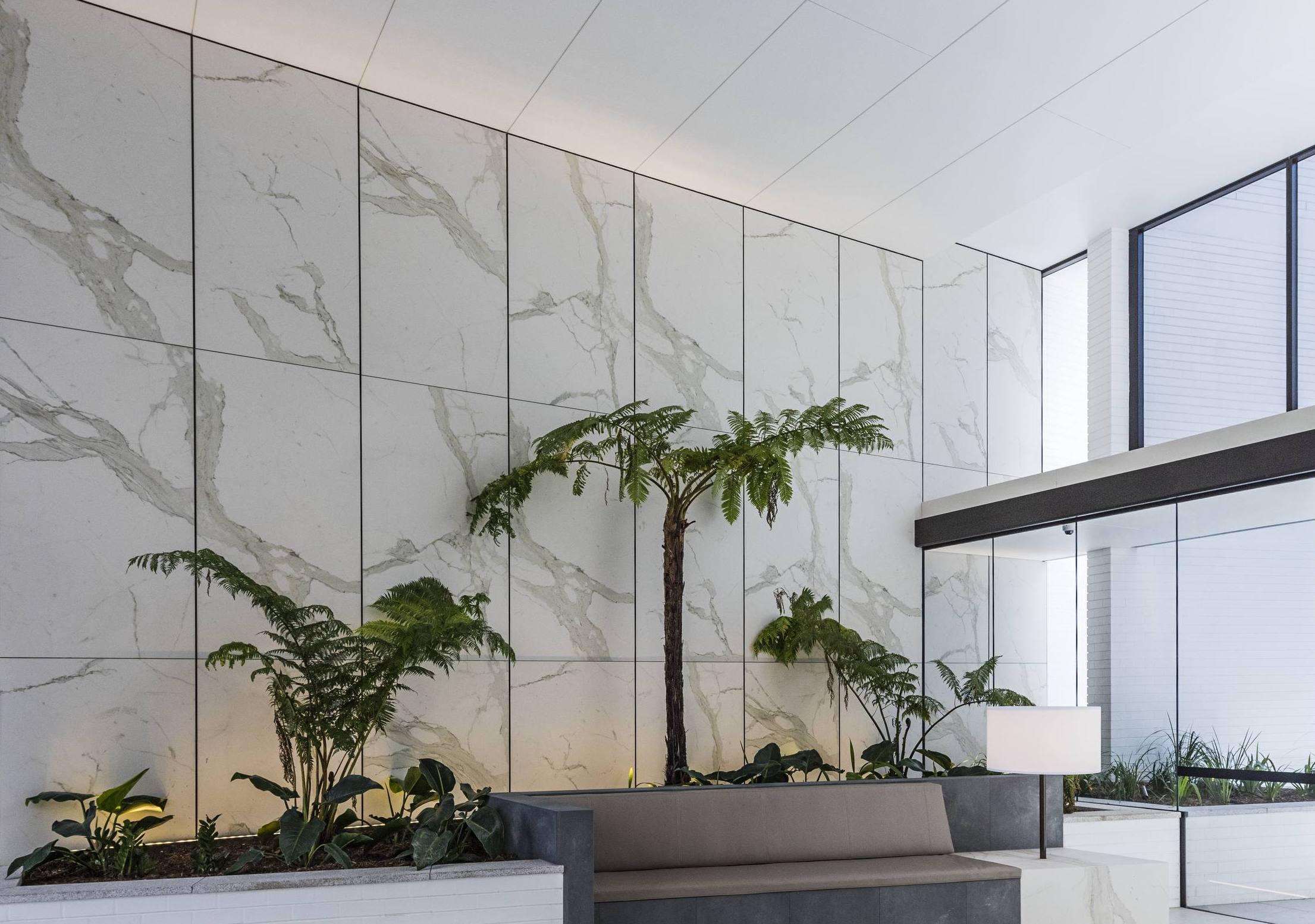
Architects increasingly specify porcelain slab as a stone alternative because it avoids the porosity, staining risk, and maintenance demands of marble or granite, while offering comparable visual depth through advanced digital printing. Slab tile also ships in more predictable, uniform batches — a persistent challenge with natural stone quarrying.
Technology Behind Modern Iranian Porcelain Production
Digital Printing and Design Innovation
High-definition inkjet printing has transformed what porcelain ceramic can visually replicate. Modern printers apply ceramic ink in layers with resolution fine enough to mimic the veining of marble, the grain of wood, or the texture of raw concrete — often indistinguishable from the natural material at normal viewing distance.
Iranian factories have adopted this technology broadly over the past decade, moving away from repetitive rotary-printed patterns toward randomized, high-resolution designs where no two tiles in a batch look identical, mirroring the irregularity found in natural stone.
Automation and Quality Control Systems
Automated optical sorting systems now scan finished tiles for surface defects, dimensional inconsistency, and color variation before packaging. This reduces the rate of defective product reaching distributors and allows factories to sort tile into quality grades more reliably.
Key automation upgrades adopted across leading Iranian plants include:
- Robotic palletizing and packaging lines
- Laser-guided dimensional scanning
- Automated glaze application with consistent thickness control
- Real-time kiln temperature monitoring across firing zones
Raw Material Sourcing and Consistency
Consistent porcelain quality depends heavily on raw material uniformity. Iran’s central plateau provides accessible deposits of feldspar and kaolin, though the finest kaolin grades are sometimes imported to achieve the whiteness and translucency premium porcelain buyers expect. This blending of local and imported raw material has become standard practice among export-focused manufacturers.
Comparing Iranian Porcelain Tile to Global Competitors
Buyers naturally want to know how Iranian production stacks up against the established leaders: Italy, Spain, China, and Turkey.
| Factor | Italy/Spain | China | Turkey | Iran |
|---|---|---|---|---|
| Design innovation | Very high, trend-setting | High, fast replication | Moderate to high | Growing rapidly |
| Price competitiveness | Lower (premium pricing) | High | Moderate to high | High |
| Certification consistency | Very high | Variable by factory | High | Mixed, improving |
| Slab tile capacity | Extensive, mature | Extensive, mature | Growing | Emerging |
| Export infrastructure | Mature global logistics | Mature global logistics | Strong regional logistics | Developing, sanctions-affected |
Iranian producers generally cannot yet match Italian or Spanish design leadership, where new collections set global trends each year. What Iranian manufacturers offer instead is a strong price-to-quality ratio, particularly appealing to regional markets in Central Asia, the Caucasus, Iraq, and parts of Africa, where certified European porcelain often carries prohibitive import costs.
Export logistics remain the industry’s most persistent constraint. Banking restrictions and shipping complications tied to broader sanctions have slowed Iran’s ability to scale export volume as quickly as its production capacity has grown, even when product quality is competitive.
Applications: Where Iranian Porcelain Slab Tile Performs Best
Residential Use
Inside homes, porcelain slab has become a preferred choice for open-plan kitchens and bathrooms, where large, seamless surfaces reduce visual clutter. Full-body porcelain floors in living areas offer durability well suited to families and pets, resisting scratches from furniture and daily wear far better than standard ceramic.
Commercial and Facade Applications
Ventilated facade systems using thin porcelain slab panels have grown in popularity across Iranian commercial construction, offering:
- Reduced building weight compared to stone cladding
- Better thermal insulation when installed with an air gap
- Resistance to UV fading and pollution staining
- Lower long-term maintenance costs than painted or rendered facades
Shopping centers, hotels, and office towers in Tehran and other major cities increasingly specify locally produced slab tile for both cost and lead-time advantages over imported alternatives.
Outdoor and High-Traffic Environments
Because porcelain’s low water absorption resists frost damage, it performs reliably on exterior terraces, pool decks, and public walkways — provided the correct slip-resistance (R-rating) is specified for wet areas.
Sustainability and Environmental Considerations
Ceramic production is energy-intensive, and firing temperatures above 1,200°C require significant fuel input. Several Iranian manufacturers have begun addressing this through:
- Waste clay recycling, reintroducing production offcuts back into the raw material mix
- Water recirculation systems in glazing and cutting processes
- Kiln heat recovery, using exhaust heat to pre-warm incoming material or drying chambers
- Thinner slab formats, which require less raw material and generate lower transport emissions per square meter due to reduced weight
These practices remain uneven across the industry, with larger, export-oriented factories generally further along than smaller domestic producers. As environmental compliance becomes a competitive factor in international tenders, expect broader adoption over the next several years.
How to Choose Quality Porcelain Tile: A Buyer’s Guide
What to Check Before You Purchase
- Request the technical data sheet. It should list water absorption percentage, PEI rating, breaking strength, and slip resistance.
- Ask for third-party lab reports, not just factory-issued certificates.
- Check batch consistency. Ask to see multiple boxes from the same production lot, since color variation between batches is common.
- Inspect edges and corners for chipping, warping, or uneven rectification.
- Confirm the tile classification (BIa for porcelain) rather than trusting marketing language alone.
- For slabs, ask about handling requirements — thin large-format slabs require specialized suction-lifting equipment during installation.
Common Mistakes Buyers Make
- Assuming “porcelain” on the label guarantees BIa water absorption without checking the data sheet
- Choosing tile based on showroom lighting alone, without viewing samples in natural light
- Overlooking PEI rating when selecting flooring for high-traffic commercial spaces
- Ignoring slip resistance requirements for wet or outdoor areas
- Ordering exact quantities without accounting for cutting waste, especially with large-format slabs
Working with a supplier willing to share full technical documentation, rather than general marketing claims, is usually the clearest signal of a manufacturer confident in its own quality control.
Future Outlook: Iran’s Porcelain Tile Industry Through 2028
Industry trends point toward continued investment in large-format slab capacity, as domestic developers increasingly favor seamless, stone-alternative surfaces for both interiors and facades. Expect further adoption of digital printing precision, allowing Iranian producers to narrow the design gap with Italian and Spanish collections.
Export growth will likely remain closely tied to broader trade and banking conditions rather than production capacity alone, since several factories already operate at output levels exceeding current export volumes. Should logistics constraints ease, regional markets in Central Asia, the Caucasus, and parts of the Middle East are positioned to absorb significant additional volume, given existing trade relationships and lower shipping distances compared to European suppliers.
Domestically, continued urban construction and renovation demand should sustain steady growth in porcelain and slab tile consumption, particularly as full-body porcelain gradually displaces older ceramic tile formats in mid-to-upper market residential projects.
Conclusion
Iranian porcelain tile has moved well past its earlier reputation as a purely budget product. Manufacturers across Yazd, Meybod, and Ardakan have adopted ISO testing protocols, PEI classification, and modern slab tile production technology that place their better factories on genuine technical footing with international competitors.
The key takeaways are straightforward. True porcelain ceramic must meet strict water absorption and durability benchmarks, not just carry the word “porcelain” on packaging. Large-format slab tile has become the industry’s most important growth segment, solving practical problems that smaller tiles cannot. And while Iranian producers still trail Italian and Spanish design leadership, they offer a strong price-to-performance profile increasingly recognized across regional export markets.
Looking ahead, the factories that invest in third-party certification, sustainable production practices, and continued slab technology upgrades will be best positioned to compete as global demand for large-format porcelain continues rising through 2028.
If you are planning a project and want to confirm which porcelain or slab tile specification genuinely fits your needs, speak with a qualified technical consultant before placing an order. The right guidance now prevents costly mismatches later — contact our specialists for a tailored consultation before you buy.

نظرات ۰