



Choosing between 60×۱۲۰ porcelain tile, 100×۱۰۰ porcelain tile, and large-format slab tile? Compare design, cost, installation, durability, and applications to find the right format for your project. Explore the key differences before you buy.
۱. Introduction: Why Tile Size Matters More Than You Think
Imagine walking into two apartments with the same floor area, similar furniture, and identical wall colors. One feels open, sophisticated, and visually continuous. The other appears crowded, with numerous grout lines interrupting the floor. The difference may not be the quality of the materials. It may be the size and layout of the tiles.
Choosing the right porcelain tile format is an important decision in residential, commercial, and hospitality projects. The dimensions of a tile influence visual proportions, installation time, material waste, grout maintenance, transportation, and the overall project budget. They also affect how architectural features, furniture, and lighting work together.
Three formats deserve particular attention: 60×۱۲۰ cm porcelain tile, 100×۱۰۰ cm porcelain tile, and large-format porcelain slabs. Each offers distinct advantages. The 60×۱۲۰ format provides flexibility and an elongated appearance. The 100×۱۰۰ format creates a balanced, contemporary grid. Slabs can produce expansive surfaces with fewer visible joints, making them attractive for premium interiors.
However, bigger does not automatically mean better.
A large slab may be ideal for a luxury hotel lobby but impractical for a small renovation with restricted access. A 60×۱۲۰ tile may offer the best balance between appearance and installation costs. A 100×۱۰۰ tile may suit a spacious living room while requiring careful planning around narrow corridors and doorways.
The right decision depends on more than personal taste. You must consider room dimensions, intended use, surface finish, technical specifications, installation expertise, and total installed cost.
This guide explains how to compare these three formats, where each works best, and which questions to ask before ordering. Whether you are an architect, property developer, contractor, homeowner, or international porcelain tile buyer, you will learn how to select a format that meets both aesthetic and practical requirements.
۲. Understanding the Three Porcelain Tile Formats
Before comparing prices or applications, it is important to understand what distinguishes these products. Although all three can be manufactured from porcelain, their dimensions influence how they look, how they are installed, and where they deliver the greatest value.

۶۰×۱۲۰ cm Porcelain Tile
۶۰۰ × ۱,۲۰۰ mm · ۰.۷۲ m² per tile
This rectangular format is popular for floors, walls, bathrooms, kitchens, and commercial interiors. Its elongated shape can visually extend a room, while the manageable dimensions offer flexibility for different layouts.

۱۰۰×۱۰۰ cm Porcelain Tile
۱,۰۰۰ × ۱,۰۰۰ mm · ۱ m² per tile
Square tiles create a balanced, geometric appearance. They work particularly well in open-plan living rooms, offices, hotel corridors, and spacious retail interiors where a regular grid complements the architecture.

Large-Format Porcelain Slab
Examples: 120×۲۴۰, ۱۲۰×۲۸۰, ۱۶۰×۳۲۰ cm
Slabs create expansive surfaces with fewer joints. They are frequently selected for feature walls, kitchen islands, vanity tops, premium flooring, and architectural applications. Exact dimensions and thicknesses depend on the manufacturer and intended use.
۲.۱ What Makes Porcelain Different from Ordinary Ceramic Tile?
The term porcelain tile describes a material category, not a particular dimension. According to ISO 13006, porcelain tiles are classified by a water absorption coefficient of no more than 0.5% by mass.
This low absorption makes porcelain suitable for many demanding interior and exterior applications, provided the product’s technical specifications match the intended use.
However, porcelain quality cannot be judged by size alone. A 60×۱۲۰ tile and a large porcelain slab may have similar surface designs but different thicknesses, strength characteristics, manufacturing tolerances, and installation requirements.
Before choosing a product, examine:
-
Water absorption: Confirm that the tile meets the required porcelain classification.
-
Breaking strength: Check the manufacturer’s declared performance for the intended application.
-
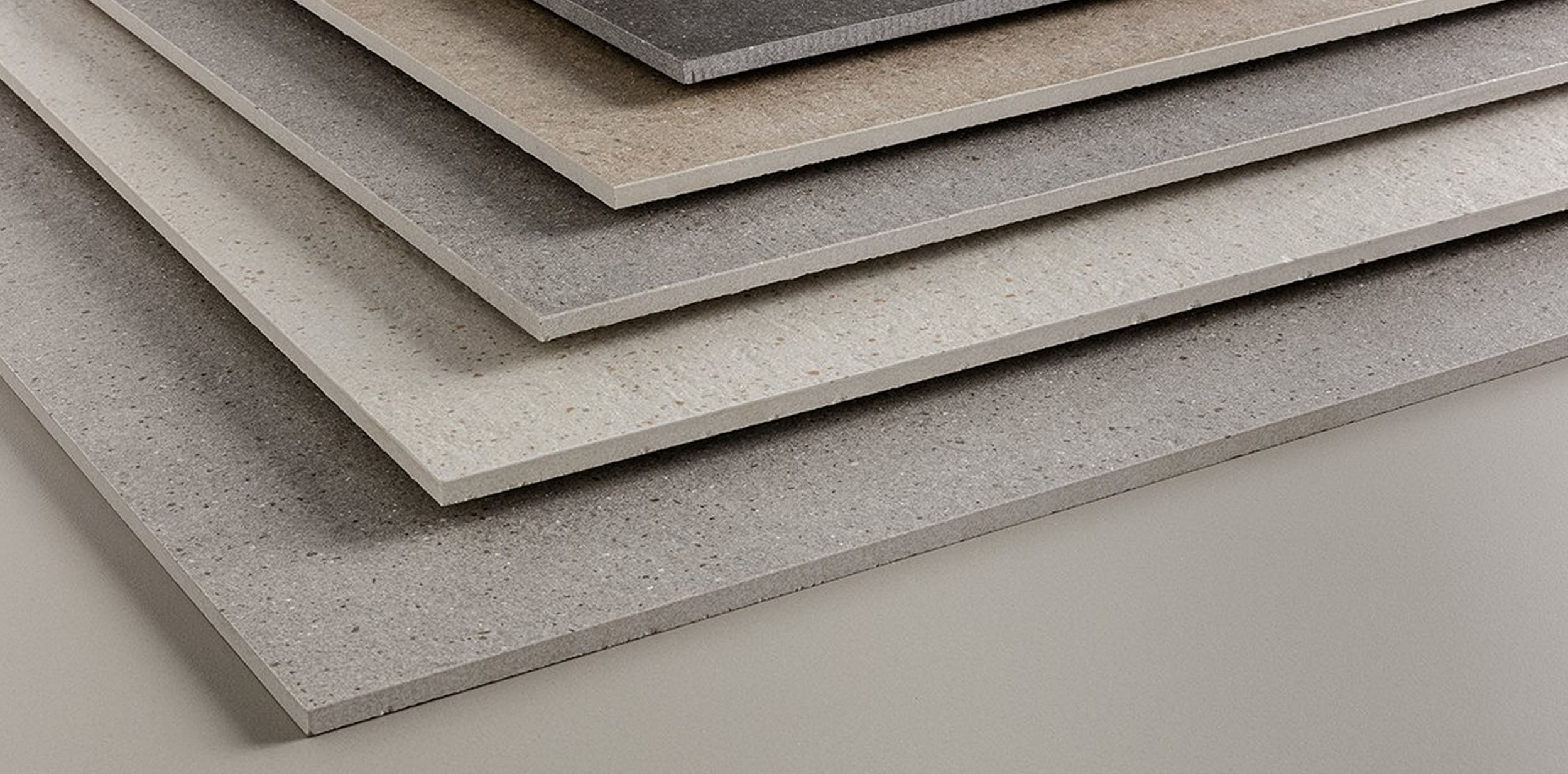
Surface finish: Choose polished, matt, structured, or textured finishes according to the environment.
-
Slip resistance: For wet areas and commercial floors, verify appropriate test results and local requirements.
-
Dimensional consistency: Check size tolerances, flatness, squareness, and compatibility with the planned grout joints.
-
Thickness and reinforcement: Particularly important for thin slabs, countertops, and demanding installations.
A premium finish does not automatically make a tile suitable for every application. Product selection should combine appearance with documented performance.
۲.۲ What Is Considered a Large-Format Slab?
There is no single universal retail size that defines every product marketed as a slab. Terminology varies between manufacturers and markets.
In the ANSI A137.3 framework, gauged porcelain tile panels and slabs are identified as products with a facial area of at least one square metre, alongside specific requirements related to thickness and performance.
This means that a 100×۱۰۰ cm tile may meet that area threshold, but buyers should not assume that every square metre-sized tile is technically equivalent to a thin porcelain panel.
For procurement purposes, ask the supplier to confirm:
-
Exact nominal dimensions and actual manufacturing dimensions.
-
Product thickness and permitted applications.
-
Whether the product is classified and tested as a gauged porcelain panel or slab.
-
Recommended installation systems and handling requirements.
-
Whether the material is approved for floors, walls, countertops, or exterior use.
These details prevent confusion when comparing catalogues from different manufacturers.
۳. Comparing 60×۱۲۰, ۱۰۰×۱۰۰, and Slab Tile
The best format depends on how each product performs within the project, not simply on its dimensions.
| Factor | ۶۰×۱۲۰ cm | ۱۰۰×۱۰۰ cm | Large-format slab |
|---|---|---|---|
| Visual effect | Elongated and versatile | Balanced and geometric | Expansive and continuous |
| Approximate coverage per piece | ۰.۷۲ m² | ۱ m² | Depends on dimensions |
| Number of pieces per 10 m², before waste | ۱۴ (approximately) | ۱۰ | Fewer, depending on size |
| Grout-line frequency | Moderate | Lower than 60×۱۲۰ in many layouts | Usually lowest |
| Cutting flexibility | Relatively high | Moderate | Requires careful planning |
| Handling requirements | Manageable with suitable equipment | Heavier and larger | Often specialist equipment |
| Installation complexity | Moderate | Moderate to high | High in many applications |
| Typical project positioning | Residential and commercial | Contemporary residential and commercial | Premium and architectural |
| Relative installed cost | Often more accessible | Project-dependent | Often higher for specialist work |
This is a general comparison, not a universal price or performance ranking. Thickness, finish, product quality, site conditions, local labor rates, and installation methods can change the outcome.
۳.۱ Visual Impact and Room Proportions
The dimensions of a tile influence the rhythm of the floor and the way people perceive a room.
A 60×۱۲۰ porcelain tile creates a directional effect. When its longer side follows the main sightline, it can make a narrow hallway or rectangular living room feel more elongated. The same format can also be installed in different patterns to suit the architectural design.
A 100×۱۰۰ tile creates a more symmetrical grid. This can complement square rooms, open-plan spaces, and minimalist interiors. Its regular geometry can make furniture placement and floor layouts easier to coordinate, although the final result depends on the room’s dimensions.
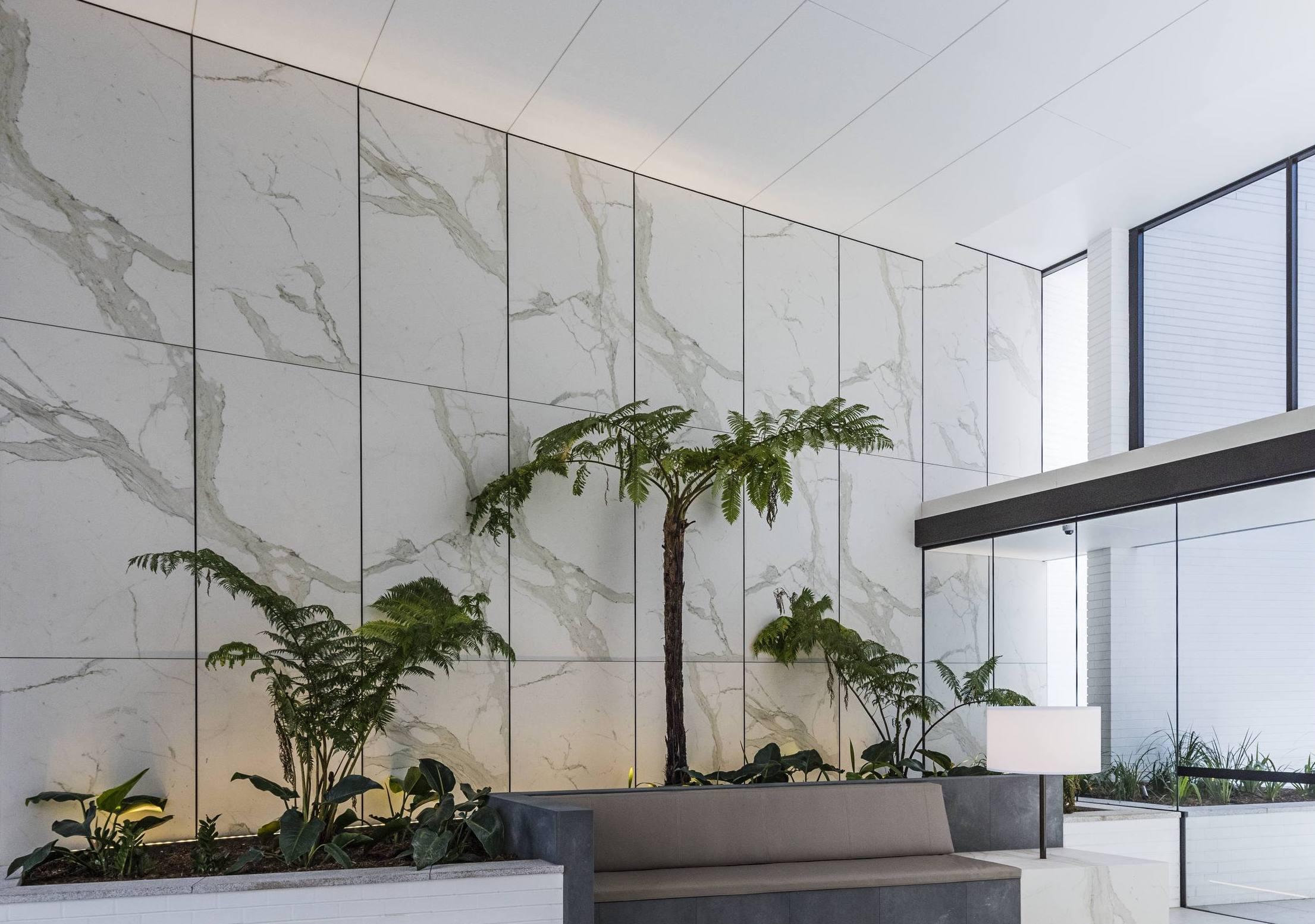
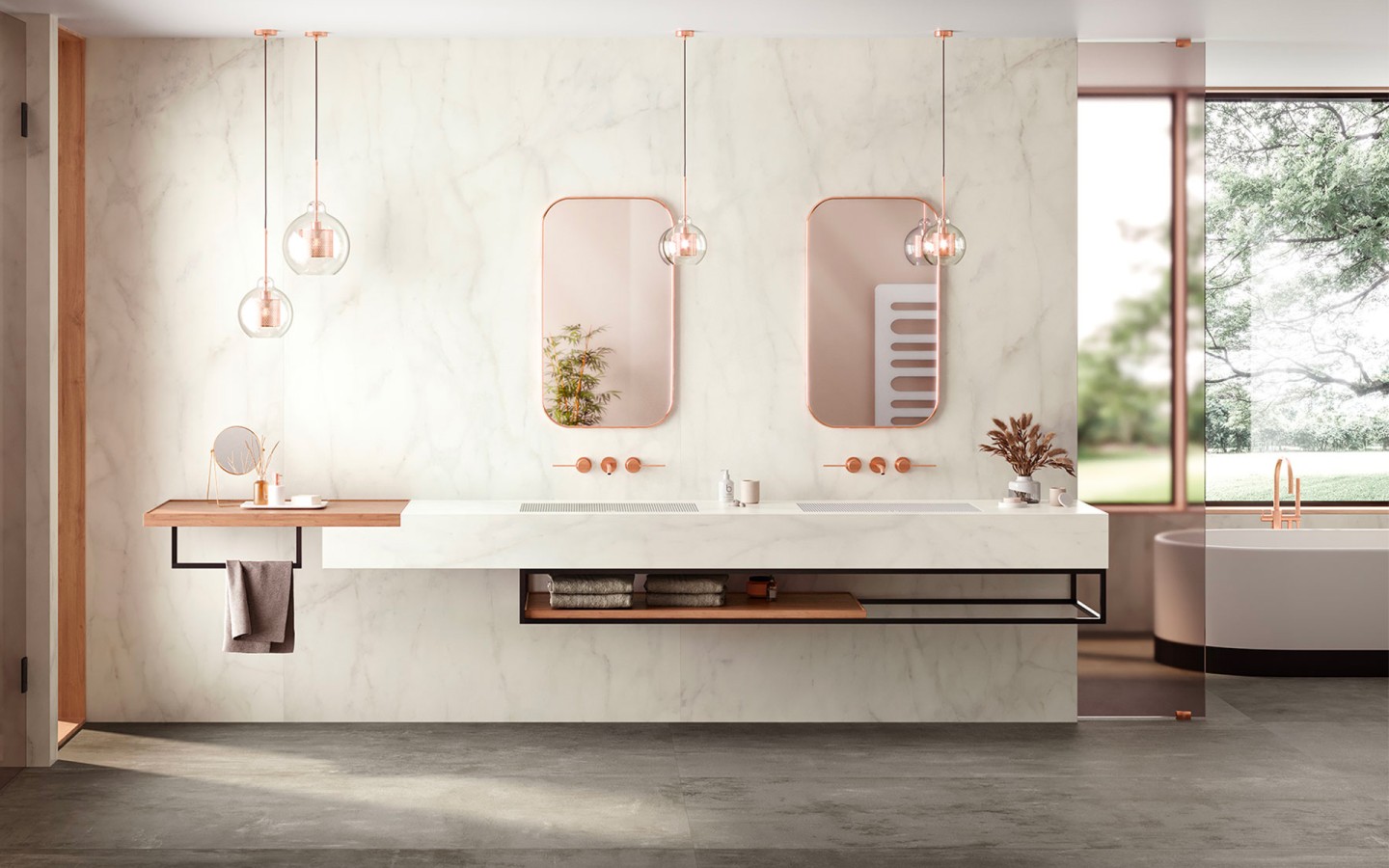
Large-format slabs offer a different visual advantage: fewer interruptions across the surface. This is particularly effective with marble-look designs, where continuous veining can create a sophisticated appearance.
However, large dimensions do not automatically make a small room look larger. A poorly planned slab layout may produce awkward cuts around doorways, cabinets, or corners. A carefully selected 60×۱۲۰ format can look more harmonious in the same space.
Design recommendation: Match the tile’s proportions to the room’s geometry, then plan the layout around doorways, focal points, natural light, and furniture.
۳.۲ Grout Lines and Surface Continuity
Grout joints are necessary for most tile installations. Their width depends on the product, dimensional tolerances, installation method, and applicable standards.
Larger tiles generally reduce the number of joints across a given floor area. Fewer joints can create a cleaner appearance and reduce the amount of grout that requires routine cleaning.
Consider a simplified comparison of a 10 m² floor:
-
A 60×۱۲۰ tile covers 0.72 m², requiring approximately 14 full-tile equivalents before waste.
-
A 100×۱۰۰ tile covers 1 m², requiring 10 full-tile equivalents before waste.
-
A 120×۲۴۰ cm slab covers 2.88 m², requiring approximately four full-slab equivalents before waste.
These are area-based estimates. They do not represent the exact number of pieces needed for a real installation because perimeter cuts, grout joints, layout orientation, and breakage affect the final quantity.
The slab offers the fewest potential joints in this example, but it also introduces more demanding handling and cutting requirements. A single damaged slab can create a greater material loss than a damaged standard-format tile.
۳.۳ Durability and Technical Performance
A common misconception is that a larger porcelain tile is inherently stronger than a smaller one. This is not a reliable way to select a product.
Durability depends on the tile body, thickness, manufacturing quality, surface characteristics, support conditions, and intended use. Large, thin panels may require specific installation methods and careful handling, even when they are manufactured from high-quality porcelain.
For floor applications, verify the manufacturer’s performance declarations and confirm that the product is approved for the expected traffic and loading. For countertops, check whether the exact slab construction and thickness are approved for that application.
The installation also matters. Uneven substrates, inadequate adhesive coverage, unsupported edges, or improper handling can increase the risk of cracking and other failures.
For large-format porcelain panels, specialist installation guidance addresses issues such as substrate preparation, coverage, lippage, and handling. The Tile Council of North America publishes dedicated installation standards for gauged porcelain panels and slabs.
The practical lesson is simple: compare technical data and installation requirements, not just dimensions or visual appearance.
۴. Which Tile Size Is Best for Each Application?
A tile format should be selected according to the function of the space. A bathroom, a busy hotel lobby, a kitchen countertop, and a residential living room have different technical and visual requirements.


۴.۱ Living Rooms and Open-Plan Spaces
For living rooms, the choice often comes down to the desired appearance, room proportions, and budget.
۶۰×۱۲۰ porcelain tile is a versatile choice for medium-sized living rooms. Its elongated shape works well with rectangular furniture, long windows, and linear architectural features. It is also practical when the design needs to continue into a hallway or adjoining room.
۱۰۰×۱۰۰ porcelain tile suits open-plan interiors where a balanced grid creates visual order. It can work particularly well in large square or near-square rooms. Neutral colors, such as warm beige, ivory, and light gray, can complement a wide range of furniture styles.
Large-format slabs are attractive for premium interiors where uninterrupted surfaces are a design priority. They can create a seamless-looking floor and coordinate with slab feature walls or fireplace surrounds.
Before choosing, consider the following:
-
Measure the room and identify its main sightlines.
-
Check how tile joints will align with doorways and adjoining spaces.
-
Decide whether the floor should visually recede or become a design feature.
-
Evaluate the room’s natural light before selecting polished or matt surfaces.
-
Request a full-size sample or a realistic installation mock-up where possible.
For a typical apartment, 60×۱۲۰ often provides a practical balance. For a spacious contemporary home, 100×۱۰۰ or slabs may deliver the intended visual effect. Neither is universally superior.
۴.۲ Bathrooms and Wet Areas
Bathrooms require special attention because water, cleaning products, soap residue, and limited floor space affect material selection.
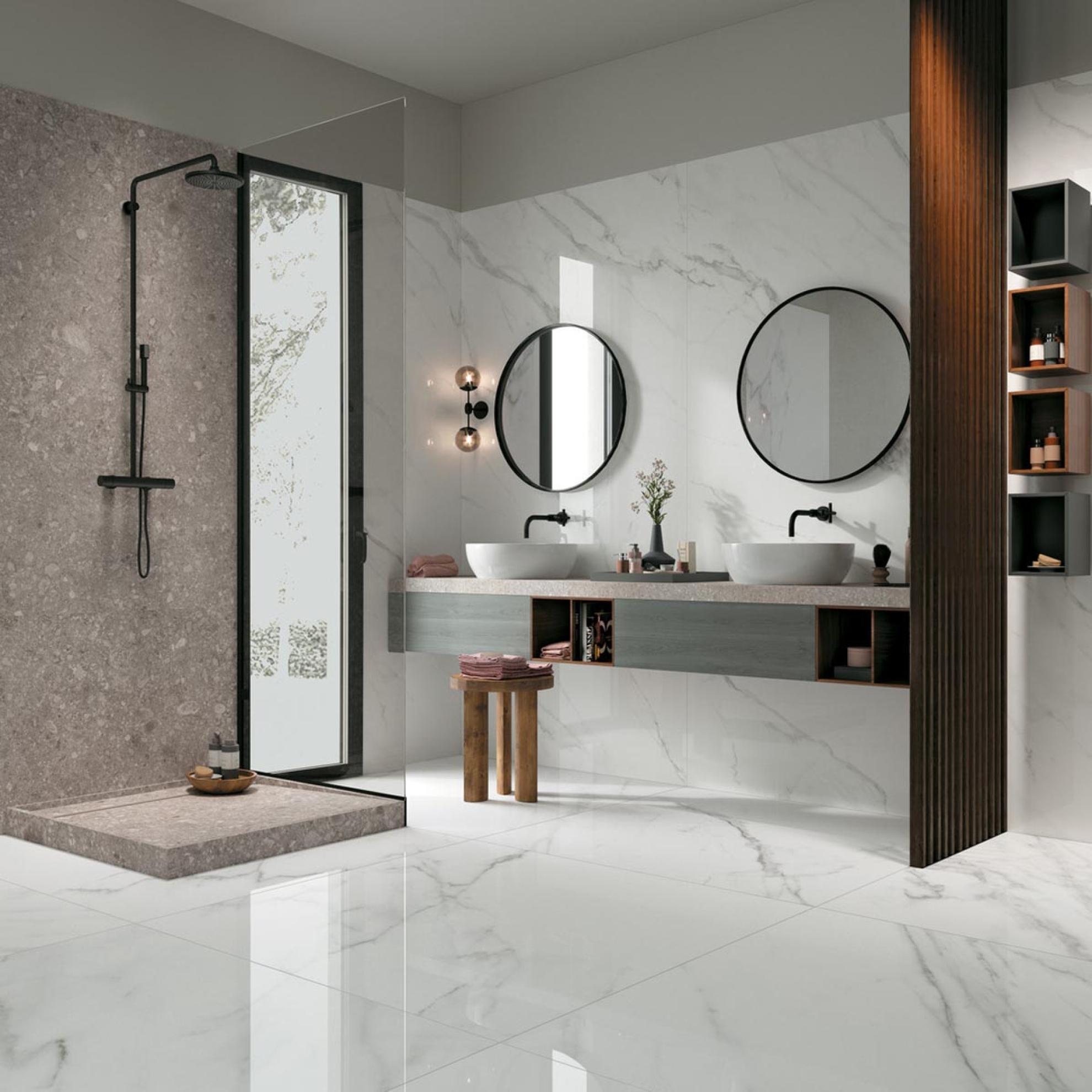
On bathroom walls, 60×۱۲۰ porcelain tile is often an effective option. It can create a modern, vertically or horizontally oriented design without the handling challenges associated with the largest panels.
Large slabs are particularly useful for shower walls, vanity backsplashes, and feature surfaces. Fewer joints can reduce the number of grout lines that need maintenance. However, they do not eliminate waterproofing requirements or guarantee a leak-free installation.
For bathroom floors, prioritize:
-
Suitable slip resistance under the expected wet conditions.
-
Appropriate surface texture and ease of cleaning.
-
Correct waterproofing and drainage.
-
Compatibility with floor gradients and drain locations.
-
Proper installation around niches, corners, and plumbing penetrations.
A polished porcelain tile may look elegant on a bathroom wall but may be unsuitable for a frequently wet floor if its slip performance does not meet the project’s requirements.
Large slabs also require careful planning around shower fixtures, niches, and drainage. A design that looks seamless in a showroom may need precise cutting and professional installation on site.
Best general approach: Use 60×۱۲۰ for versatile wall and floor designs, consider slabs for expansive walls, and select the floor surface according to verified slip performance.
۴.۳ Kitchens and Countertops
Kitchen design frequently combines multiple tile formats and applications. The floor, backsplash, wall cladding, and countertop may need different technical specifications.
For kitchen floors, 60×۱۲۰ and 100×۱۰۰ porcelain tiles can both work well. The better option depends on the room’s dimensions, cabinet layout, and desired grout pattern.
For backsplashes, large-format porcelain panels can reduce visible joints behind work surfaces. They can also create a coordinated appearance when the same design is used for the island or other vertical features.
Porcelain slabs can be suitable for countertops, but not every porcelain slab is approved for countertop use. Buyers must confirm the manufacturer’s recommended thickness, support system, edge treatment, and application-specific performance.
Pay particular attention to:
-
Resistance to stains and household chemicals.
-
Heat-related recommendations and limitations.
-
Impact resistance, particularly at exposed edges.
-
Support beneath the countertop and around cutouts.
-
Fabrication requirements for sinks, taps, and cooktops.
A thin decorative panel designed for vertical cladding should not automatically be specified for a kitchen island.
If the project involves extensive veining, matching a countertop with a backsplash can create an integrated design. However, matching patterns across multiple surfaces may require additional material and careful slab selection.
۴.۴ Hotels, Offices, and Retail Projects
Commercial projects introduce additional considerations: pedestrian traffic, maintenance schedules, replacement stock, delivery logistics, and installation deadlines.
For hotel guest rooms and offices, 60×۱۲۰ porcelain tile can balance appearance with practical handling and installation. It also offers flexibility when rooms have irregular dimensions.
For large hotel lobbies, 100×۱۰۰ tiles may create a formal, structured appearance. They can be coordinated with reception desks, furniture zones, and architectural grids.
Large slabs are especially effective for reception walls, lift surrounds, feature columns, and premium retail displays. They can make a strong visual impression without relying on decorative elements.
However, large commercial floors should be evaluated according to expected loads, slip resistance, substrate conditions, and maintenance requirements. A visually impressive product is not necessarily the most suitable one for a heavily trafficked public area.
For large projects, procurement teams should also consider batch consistency, shade variation, calibration, packaging, replacement availability, and delivery schedules.
Ordering a visually consistent tile from a single production batch may be particularly important when the same finish must continue through multiple interconnected spaces.
۴.۵ Exterior Floors, Terraces, and Facades
Outdoor applications require a different assessment from interior spaces.
For terraces, balconies, and external walkways, buyers must consider weather exposure, water drainage, slip resistance, thermal movement, and the approved installation system.
Not every indoor porcelain tile is suitable for outdoor use. Check the manufacturer’s declared applications and the relevant local requirements before specifying a product.
Large porcelain panels used on building facades may require mechanical fixing systems. ISO/TS 17870-3:2023 addresses the installation of large-format porcelain tiles and panels by mechanical means onto supporting structures.
For these applications, the designer must evaluate wind loads, fixing systems, structural support, panel dimensions, and local building regulations.
A 60×۱۲۰ format may be easier to accommodate on smaller balconies or in areas with frequent changes of direction. Larger formats can be appropriate for expansive terraces, but only when the product, thickness, substrate, drainage, and installation method are suitable.
The correct decision should therefore begin with the intended environment rather than the desired dimensions.
۵. Understanding the True Cost: Tile Price vs. Installed Cost
One of the most common purchasing mistakes is comparing only the price per square metre.
A slab may cost more per square metre than a standard tile, but the actual project cost depends on several additional factors. Conversely, a less expensive tile may require more cutting, additional labor, or more complicated layout adjustments.
The correct comparison includes material, waste, installation, handling, delivery, and maintenance.
۵.۱ Material Quantity and Waste
Start by measuring the net tiled area, then calculate the required material quantity.
A simplified example illustrates the difference:
| Format | Coverage per piece | Pieces for 20 m² before waste |
|---|---|---|
| ۶۰×۱۲۰ cm | ۰.۷۲ m² | ۲۸ pieces (approximately) |
| ۱۰۰×۱۰۰ cm | ۱ m² | ۲۰ pieces |
| ۱۲۰×۲۴۰ cm slab | ۲.۸۸ m² | ۷ slabs (approximately) |
These calculations are based on nominal face dimensions and do not account for grout joints, actual room geometry, or unusable offcuts.
For a straightforward room, a preliminary allowance of 5–۱۰% for waste may be a useful planning assumption. Complex layouts, diagonal patterns, numerous openings, or large panels with directional veining may require a different allowance.
Do not apply the same waste percentage automatically to every format. Ask the installer to prepare a cutting layout before finalizing the order.
۵.۲ Labor and Installation Expenses
Installation costs depend on more than the number of pieces.
Large panels may reduce the number of pieces to position, but they can require more workers, specialized suction equipment, transport frames, careful lifting, and highly accurate substrate preparation.
The TCNA’s installation guidance for gauged porcelain panels identifies specific requirements for substrates, workmanship, and installation procedures.
A realistic quotation should separate:
-
Tile material and any applicable taxes.
-
Adhesive, grout, leveling systems, and other installation materials.
-
Surface preparation and leveling.
-
Labor and specialist handling.
-
Cutting, drilling, and edge finishing.
-
Transportation, unloading, and internal site movement.
-
Waste, breakage allowance, and contingency.
The relative cost varies by region and project. A contractor experienced with slabs may price the work differently from one who primarily installs conventional tiles.
۵.۳ A Practical Cost Comparison
Consider a hypothetical project covering 20 m². The following figures are illustrative only, not market quotations.
| Cost component | ۶۰×۱۲۰ tile | ۱۰۰×۱۰۰ tile | ۱۲۰×۲۴۰ slab |
|---|---|---|---|
| Material rate per m² | €۳۰ | €۳۴ | €۵۵ |
| Material quantity including assumed waste | ۲۱ m² | ۲۱ m² | ۲۲ m² |
| Material subtotal | €۶۳۰ | €۷۱۴ | €۱,۲۱۰ |
| Installation labor | €۵۰۰ | €۵۶۰ | €۱,۰۰۰ |
| Additional materials and handling | €۲۰۰ | €۲۲۰ | €۳۵۰ |
| Illustrative total | €۱,۳۳۰ | €۱,۴۹۴ | €۲,۵۶۰ |
The model assumes different material rates, waste allowances, and labor charges for each format. It does not establish actual prices or prove that one format will always be cheaper.
Its purpose is to show why a fair comparison must use the total installed cost rather than the catalogue price alone.
For a real quotation, obtain local rates, confirm the applicable waste allowance, and calculate each option using the same floor area and specification.
۵.۴ Maintenance and Long-Term Value
Maintenance can also influence the decision.
Fewer grout joints may reduce the time spent cleaning grout lines, particularly in bathrooms, kitchens, and high-use commercial areas. However, the actual maintenance requirements depend on the grout type, sealants where applicable, cleaning products, and the installed system.
Porcelain itself is generally easy to maintain when the correct product and cleaning method are used. Surface finish still matters: textured surfaces and some polished finishes may require different care routines.
Long-term value should therefore consider:
-
Expected service life under the intended use.
-
Routine cleaning and maintenance.
-
The availability of replacement tiles.
-
Repair difficulty and potential breakage.
-
The consequences of closing an area for repairs.
-
The visual value delivered by the finished design.
For a budget-conscious renovation, 60×۱۲۰ may be the most balanced choice. For a premium reception area, the visual impact of slabs may justify the additional cost. The best decision is the one that meets the design brief without creating unnecessary installation or maintenance expenses.
۶. Installation, Handling, and Technical Requirements
Selecting the right dimensions is only half the job. Even a high-quality porcelain tile can perform poorly if the substrate, adhesive, layout, or installation process is unsuitable.
The larger the tile, the more important accurate planning becomes. This does not mean that standard formats require no technical expertise. It means that the risks and handling requirements change with the product.
۶.۱ Preparing the Substrate
The substrate is the surface onto which the tile is installed. It must be suitable for the selected product and installation system.
Large tiles can be particularly sensitive to uneven support. Differences in floor level may create lippage, which occurs when the edge of one tile sits higher than the adjacent tile. Inadequate support can also contribute to cracking.
Before installation, the contractor should:
-
Check the substrate’s structural soundness.
-
Measure flatness and identify high or low areas.
-
Correct defects using appropriate preparation materials.
-
Confirm that the substrate is clean and compatible with the adhesive.
-
Verify that movement joints and perimeter joints are correctly planned.
-
Follow the tile manufacturer’s installation instructions.
The required tolerances depend on the applicable standard, tile dimensions, and installation method. Large-format work should not rely on visual inspection alone.
۶.۲ Adhesive Selection and Coverage
The correct adhesive depends on the tile, substrate, location, and environmental conditions.
A product intended for ordinary ceramic tile may not be suitable for every large-format porcelain panel. Porcelain’s low water absorption also makes adhesive compatibility important.
For large panels, the installation team must follow the specified adhesive application, coverage, and embedding procedures. Voids behind a tile or unsupported areas can increase the risk of failure, especially under concentrated loads or at exposed edges.
Ask the supplier and installer to confirm:
-
The recommended adhesive classification.
-
Whether back-buttering is required.
-
The required adhesive coverage.
-
The permitted working time and curing conditions.
-
Any limitations on substrate type or application.
For projects following North American standards, the applicable TCNA and ANSI requirements should be consulted. Other markets may use different national or regional standards.
۶.۳ Cutting and Handling Large Slabs
Large slabs require more than a conventional tile cutter in many cases.
Depending on their dimensions and thickness, they may need dedicated cutting equipment, reinforced transport frames, suction lifting systems, and carefully coordinated handling.
Their size also creates practical site constraints. Before delivery, confirm that the material can pass through:
-
Building entrances and corridors.
-
Stairwells and lift doors.
-
Tight corners and narrow access routes.
-
Temporary construction openings.
-
The final installation area.
A slab that fits the finished wall may still be impossible to move safely through the building without a planned access route.
Handling procedures should be appropriate to the panel dimensions, weight, and manufacturer’s instructions. Specialist guidance recommends equipment designed for moving large panels and methods that limit twisting during transport.
۶.۴ Can You Install Large Slabs Without Specialist Help?
In most demanding applications, specialist experience is strongly recommended.
Slab installation involves accurate lifting, precise cutting, careful adhesive application, and controlled positioning. Mistakes can damage the material or compromise the finished surface.
For large-format work, ask prospective installers to demonstrate experience with the specific product category. Previous experience with 60×۱۲۰ tiles does not automatically establish competence with thin porcelain panels.
۷. Design Trends and Market Considerations for 2025–۲۰۲۸
Large-format surfaces have become an important option in contemporary architecture, particularly where designers want fewer visible joints and coordinated floor-to-wall finishes.
Market research published in 2025 also highlighted growing demand for porcelain in the US countertop market. A May 2025 investor presentation citing a Freedonia study projected 19.9% compound annual growth for porcelain countertop volume between 2024 and 2028. This figure concerns that particular market segment, not the entire global porcelain tile industry.
The distinction matters. A forecast for porcelain countertops should not be presented as proof that every tile format will grow at the same rate worldwide.
For architects, distributors, and tile exporters, several practical developments deserve attention.
۷.۱ Continuous Marble-Look Designs
Large-format porcelain can display expansive veining patterns inspired by natural marble. This makes slabs attractive for feature walls, reception areas, and coordinated kitchen surfaces.
However, the visual result depends on the printed design, glaze, surface texture, and availability of coordinated patterns. Buyers should review full-slab images and confirm whether bookmatching or vein matching is available.
۷.۲ Coordinated Indoor Spaces
Designers increasingly specify complementary finishes across floors, walls, bathrooms, and kitchen features.
A manufacturer offering 60×۱۲۰ tiles, 100×۱۰۰ tiles, and matching slab designs can help create a consistent visual language across different spaces.
For developers and distributors, coordinated collections can simplify product selection and support cross-selling. Technical suitability must still be checked separately for each application.
۷.۳ Matt Finishes and Natural Textures
Matt stone-look, concrete-look, and textured surfaces offer alternatives to high-gloss finishes. They can suit residential projects, hospitality environments, and contemporary commercial interiors.
Nevertheless, surface trends should never replace performance testing. Slip resistance, cleanability, stain resistance, and application suitability remain essential selection criteria.
۷.۴ What Should Buyers Expect Through 2028?
A reasonable planning assumption is that large-format products will remain an important option for premium interiors, countertops, and architectural surfaces. Yet future demand will vary by country, construction activity, consumer spending, and manufacturing capacity.
For international buyers, the most useful strategy is to monitor actual sales, regional project specifications, freight costs, and customer preferences rather than relying on a single global trend forecast.
The commercial opportunity is not simply to sell larger tiles. It is to match the right format, finish, price, and technical specification to a clearly defined market.
۸. Choosing the Right Format for Export and Wholesale Projects
For international tile buyers, format selection affects more than interior design. It also influences packaging, container loading, transportation, breakage risk, installation support, and the ability to supply repeat orders.
An exporter should understand the destination market’s preferences before finalizing a product range.
۸.۱ Which Format Should an Exporter Prioritize?
A balanced product portfolio may include all three formats.
-
۶۰×۱۲۰ porcelain tile: A versatile option for residential developments, bathrooms, living spaces, and general commercial projects.
-
۱۰۰×۱۰۰ porcelain tile: A contemporary option for buyers seeking square formats and coordinated designs for larger spaces.
-
Large-format porcelain slabs: A premium option for architectural projects, kitchen surfaces, feature walls, and specialist distributors.
The appropriate mix depends on the target market, the buyer’s distribution network, local design preferences, and technical requirements.
For example, a distributor supplying mid-range residential developments may prioritize 60×۱۲۰ products because of their versatility. A specialist showroom serving luxury architects may require more slabs and coordinated surface collections.
Neither portfolio should be selected solely on the basis of perceived prestige.
۸.۲ What Should Importers Verify Before Ordering?
Before placing a wholesale order, request:
-
Technical datasheets for the exact product and format.
-
Test reports and conformity documentation relevant to the destination market.
-
Actual dimensions, thickness, weight, and dimensional tolerances.
-
Surface finish, shade variation, and available design faces.
-
Packaging specifications and handling instructions.
-
Pallet dimensions, net and gross weights, and loading plans.
-
Production lead times and repeat-order availability.
-
Sample pieces or representative production samples.
-
Written confirmation of intended applications.
-
Commercial terms, delivery responsibilities, and breakage procedures.
If you are purchasing from an overseas supplier, also verify that the declared product specifications match the goods being manufactured and shipped.
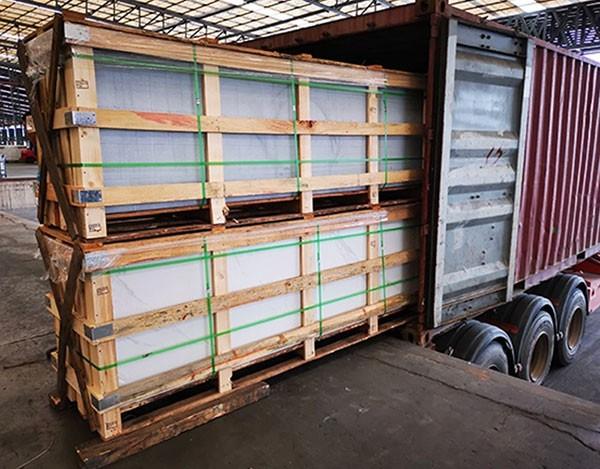
For slabs, discuss lifting equipment, crate design, transport orientation, and unloading requirements before the order is dispatched. A product may be technically suitable but commercially impractical if the destination site cannot receive or handle it.
۸.۳ How Can Buyers Reduce Procurement Risk?
The most reliable approach is to approve the complete specification before mass production or shipment.
This includes the exact format, thickness, finish, quality grade, packaging, technical requirements, and intended application. For projects requiring visual continuity, the buyer should also confirm the shade and design variation policy.
Where possible, obtain samples from the relevant production range and establish an inspection procedure. Agree on how damaged goods, quality disputes, and short deliveries will be handled.
For exporters, clear documentation reduces misunderstandings and helps buyers compare offers fairly. A supplier who explains installation requirements and packaging limitations may provide more long-term value than one who offers only a low unit price.
۹. Frequently Asked Questions About Porcelain Tile Sizes
These answers address common questions raised by homeowners, architects, contractors, and tile buyers.
Are 100×۱۰۰ tiles better than 60×۱۲۰ tiles?
Are large-format porcelain slabs more expensive?
Can 120×۲۴۰ cm porcelain slabs be installed on floors?
Which format is easiest to install?
Do larger tiles need special adhesive?
Do larger tiles make a room look bigger?
How much extra tile should I order?
Is porcelain slab suitable for a kitchen countertop?
What is the difference between a porcelain tile and a porcelain slab?
۱۰. Conclusion: Make the Right Choice for Your Project
Choosing between 60×۱۲۰ porcelain tile, 100×۱۰۰ porcelain tile, and large-format slab tile is ultimately a decision about balance. The ideal format should support the project’s architectural vision while meeting its practical, technical, and financial requirements.
The 60×۱۲۰ cm format is a versatile option for residential interiors, bathrooms, kitchens, and many commercial spaces. It offers flexibility in layout and can create an elegant, elongated appearance without introducing all the handling challenges associated with larger panels.
The 100×۱۰۰ cm format is particularly attractive for contemporary interiors that benefit from balanced proportions and a consistent geometric pattern. It can be an effective choice for open-plan living areas, offices, hotels, and retail environments.
Large-format porcelain slabs provide a different advantage. They create expansive surfaces with fewer visible joints and can transform countertops, feature walls, and premium architectural spaces. However, their selection requires careful consideration of thickness, technical performance, transport, fabrication, and specialist installation.
Looking toward 2028, continued interest in coordinated architectural surfaces and large-format designs offers opportunities for manufacturers, exporters, distributors, and designers. Commercial success will depend on more than following design trends. Buyers will need to evaluate technical specifications, installed costs, logistics, and the needs of their target markets.
Before making a final decision, measure the space, compare complete installation quotations, review product datasheets, and consult an experienced installer. For international projects, confirm packaging, delivery conditions, conformity documentation, and repeat-order availability before committing to a large purchase.
Need help selecting the right format? Contact a porcelain tile supplier or technical specialist to compare available designs, dimensions, finishes, and specifications for your project. A well-informed decision today can improve the finished appearance, simplify maintenance, and deliver better long-term value.



نظرات ۰