

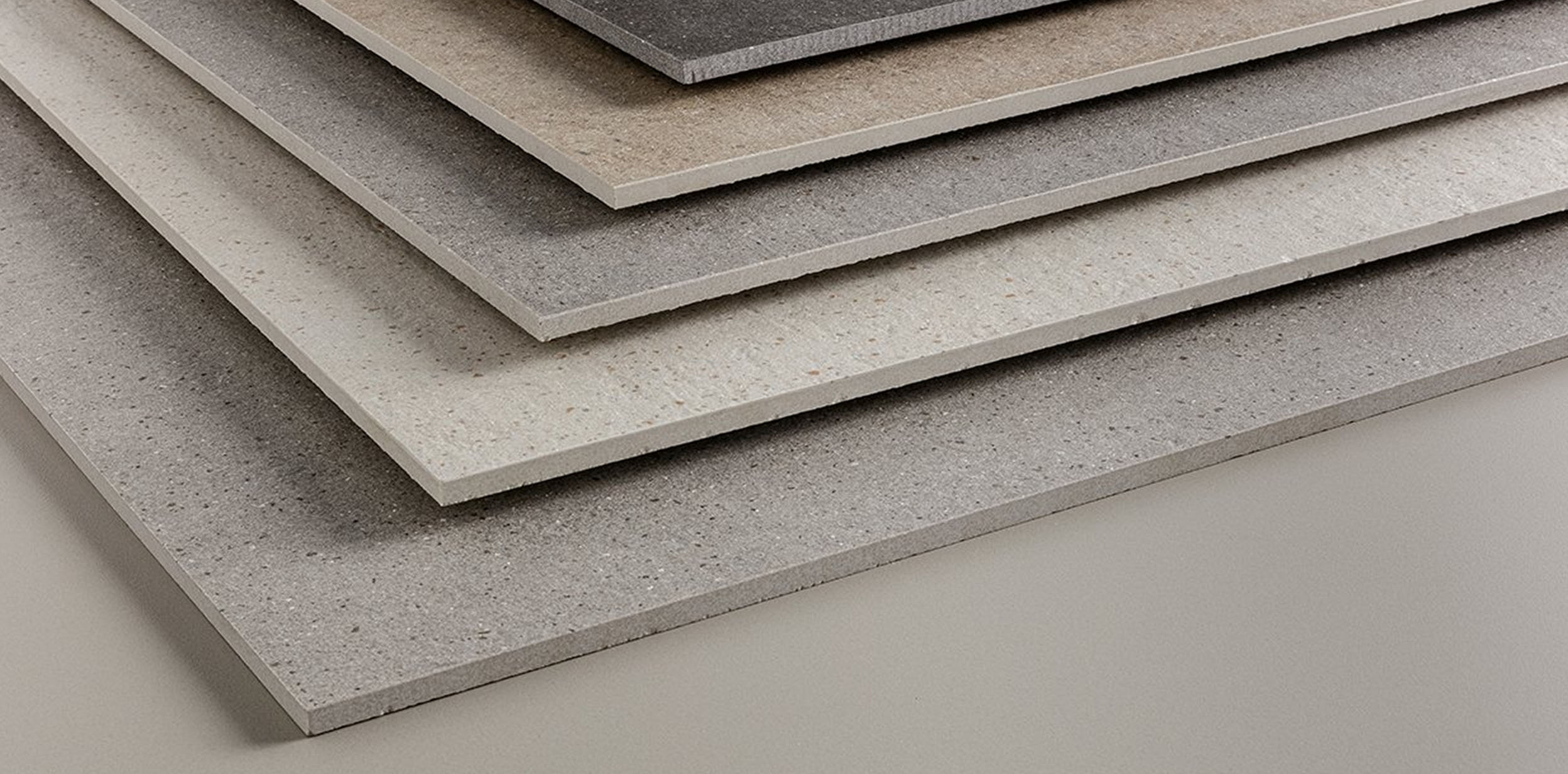

Discover whether Iranian Porcelain Tile and slab Tile are better for countertops, walls, or floors. Compare strength, heat, stains, installation, design, cost, and export quality before choosing the right slab.


Introduction: One Porcelain Slab, Three Different Applications
Imagine choosing a large-format porcelain slab for a luxury kitchen. The surface looks like natural marble, the size creates almost seamless visual continuity, and the quotation is attractive. But is the same slab equally suitable for a kitchen countertop, a bathroom wall, and a high-traffic floor?
Not necessarily.
This is one of the most important questions buyers, architects, interior designers, contractors, and tile distributors should ask before selecting an Iranian Porcelain Tile or slab Tile.
Large-format porcelain has changed the way designers approach interior surfaces. Instead of covering a room with numerous small tiles and visible grout lines, architects can create larger continuous surfaces that resemble marble, granite, concrete, or natural stone. This has made porcelain slabs increasingly relevant to kitchens, bathrooms, commercial interiors, hospitality projects, feature walls, furniture, and flooring.
Market forecasts also indicate continued growth in ceramic and porcelain surfaces through the second half of the decade. Fortune Business Insights estimates the global ceramic tiles market at USD 86.97 billion in 2025, with the market projected to reach USD 90.8 billion in 2026 and USD 130.13 billion by 2034.
But market growth does not answer the practical question:
Where should an Iranian porcelain slab actually be used?
The answer depends on thickness, technical properties, surface finish, reinforcement, dimensions, installation method, project conditions, and expected mechanical or thermal stress.
This article compares three major applications—countertops, walls, and floors—and explains where Iranian porcelain slab Tile can provide the greatest value.
۱. What Makes Porcelain Slab Different From Ordinary Tile?
Before comparing applications, it is important to understand what a porcelain slab actually is.
A conventional porcelain tile is generally produced in relatively standard dimensions such as 60 × ۶۰ cm, 60 × ۱۲۰ cm, or similar formats.
A porcelain slab uses a much larger surface format.
Depending on the manufacturer and production technology, large porcelain panels can reach dimensions well beyond traditional tile formats.
The exact terminology varies by manufacturer and market. Products may be marketed as:
- Porcelain slabs
- Porcelain panels
- Large-format porcelain
- Sintered porcelain panels
- XXL porcelain tiles
- Ceramic slabs
- Large-format slab Tile
The important issue is not the marketing term.
It is the technical specification.
Why large format changes the application
When the surface becomes larger, installation conditions become more demanding.
A large panel has:
- Greater surface area
- Greater handling requirements
- Higher transportation risk
- Greater sensitivity to substrate flatness
- More demanding cutting
- More complex lifting
- Greater consequences if the panel breaks
At the same time, it offers important design advantages.
Main advantages of porcelain slabs
A large-format porcelain slab can provide:
- Fewer grout joints
- Strong visual continuity
- Marble and stone aesthetics
- Easy-to-clean surfaces
- Low water absorption
- High design flexibility
- Resistance to many stains and chemicals
- Potential suitability for indoor and outdoor applications
- Large-scale architectural surfaces
The technical classification of porcelain tiles is closely associated with low water absorption. Under ISO 13006, porcelain tiles fall within the BIa classification, with water absorption of no more than 0.5%.
However, this does not mean every porcelain slab should automatically be used as a countertop or floor.
Application determines specification
Consider three environments:
Kitchen countertop
The material faces:
- Heat
- Food stains
- Knives
- Heavy objects
- Cleaning chemicals
- Point loads
Wall
The primary concerns may be:
- Appearance
- Weight
- Adhesion
- Flatness
- Moisture
- Impact
Floor
The surface must handle:
- Foot traffic
- Abrasion
- Impact
- Point loads
- Dirt
- Cleaning
- Furniture movement
Therefore, the right question is not:
“Is this a porcelain slab?”
It is:
“Is this specific porcelain slab technically appropriate for the intended application?”
That distinction should guide every professional purchase.
۲. Iranian Porcelain Slab for Kitchen Countertops: Is It a Good Choice?
Among the three applications, countertops are one of the most demanding.
A kitchen countertop may look like a decorative surface, but it functions as a working platform.
It can experience:
- Hot cookware
- Water
- Oil
- Coffee
- Wine
- Acidic foods
- Sharp objects
- Heavy appliances
- Impact from cookware
- Cleaning products
This makes technical performance particularly important.


Why porcelain can work well for countertops
A properly specified porcelain slab can offer several attractive properties.
۱. Low water absorption
Porcelain’s low water absorption can make it attractive for kitchen environments where spills are common.
۲. Stain resistance
Many porcelain surfaces resist common household stains effectively when properly manufactured and maintained.
۳. Heat resistance
Porcelain is an inorganic fired ceramic material, giving it strong heat resistance compared with many polymer-based countertop materials.
However, buyers should still follow the manufacturer’s installation and use recommendations.
Extreme thermal shock should not be ignored.
۴. Design flexibility
Digital decoration technology allows manufacturers to reproduce visual patterns inspired by:
- Carrara marble
- Calacatta marble
- Travertine
- Onyx
- Granite
- Concrete
- Limestone
This is particularly useful for modern kitchens where designers want a natural-stone appearance without using natural stone.
The weak point: fabrication
The biggest challenge may not be the slab itself.
It can be the fabrication process.
Cutting a large slab for:
- Sink openings
- Cooktops
- Electrical outlets
- Taps
- Corners
- Waterfall edges
requires appropriate tools and professional handling.
A technically strong slab can still fail if it is incorrectly cut.
What should buyers ask?
For countertop use, request:
- Slab thickness
- Maximum recommended unsupported span
- Flexural strength
- Edge fabrication recommendations
- Sink-cutout requirements
- Minimum corner radius
- Recommended substrate
- Heat-resistance information
- Installation adhesive
- Reinforcement requirements
Is every Iranian porcelain slab suitable for countertops?
No.
This is crucial.
A slab designed primarily for wall cladding may not have the same recommended installation conditions as a countertop product.
Therefore, Iranian manufacturers targeting the export market should clearly identify the approved applications for each slab specification.
Best countertop applications
Iranian porcelain slab can be particularly attractive for:
- Kitchen islands
- Bathroom vanity tops
- Reception desks
- Hospitality counters
- Retail counters
- Dining tables
- Side tables
- Wall-to-countertop design continuity
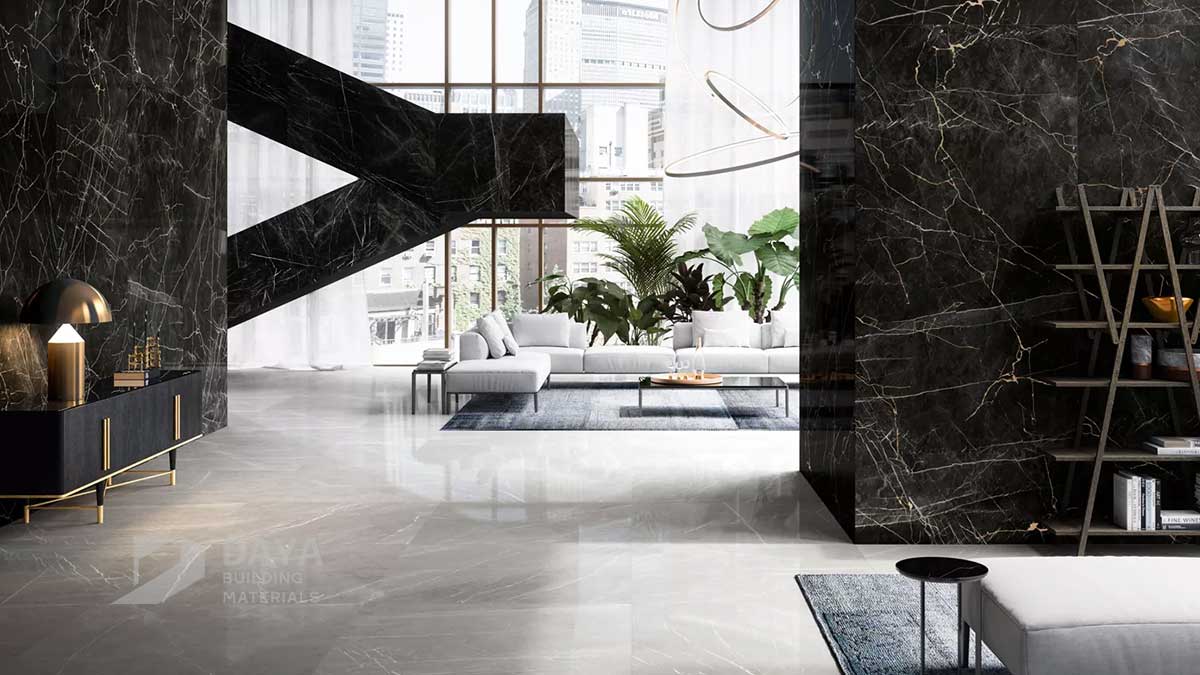
The strongest visual opportunity is often the combination of countertop and backsplash using the same slab.
This creates a continuous stone-like appearance with minimal joints.
۳. Iranian Porcelain Slab for Walls: Often the Easiest Application
If the question is:
“Which application generally requires the least mechanical stress?”
Wall applications are often the simplest of the three.
A wall does not normally experience the same concentrated loads as a countertop or the repeated traffic of a floor.
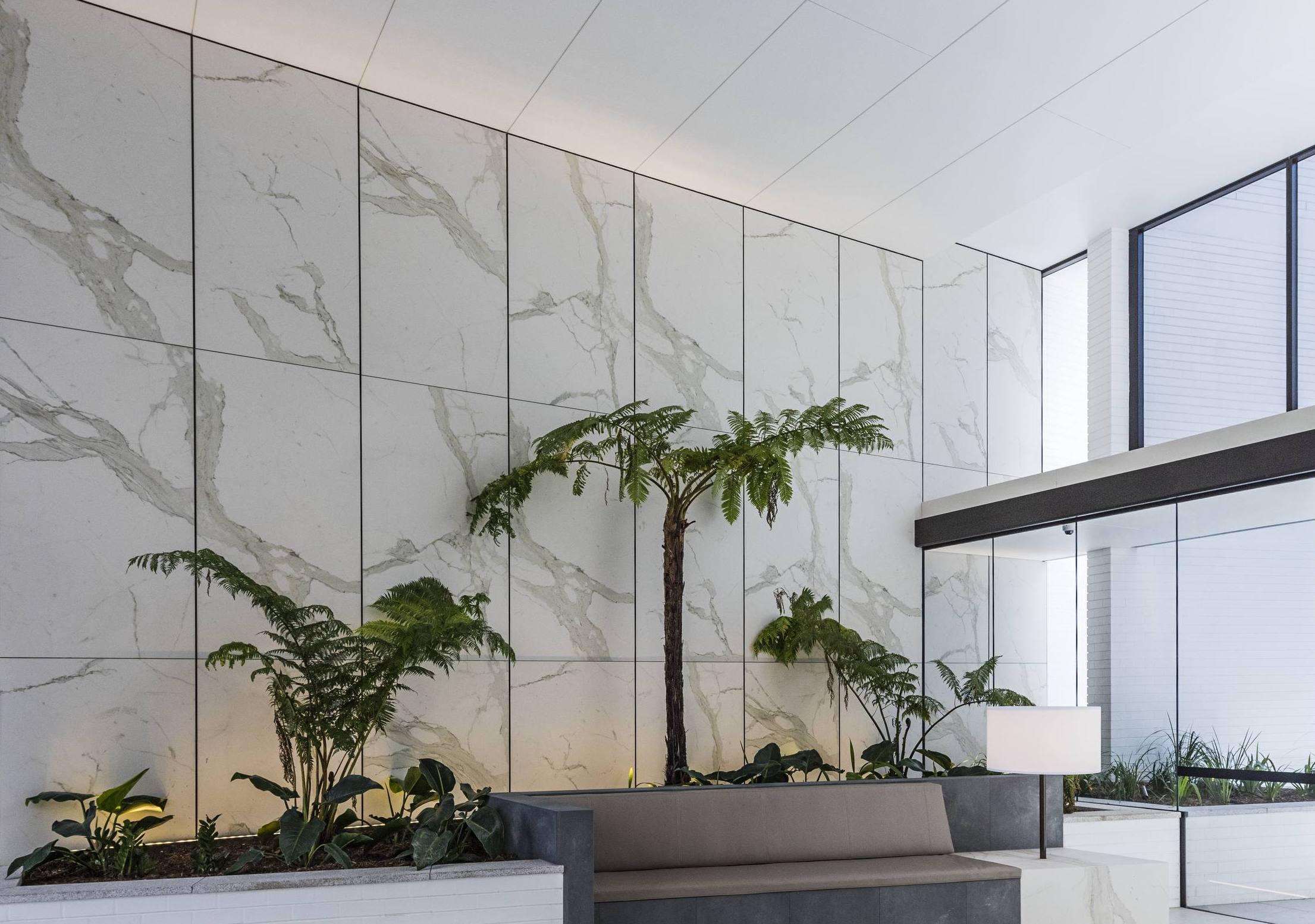
That makes large-format porcelain particularly attractive for:
- Living-room feature walls
- Hotel lobbies
- Bathroom walls
- Shower walls
- Kitchen backsplashes
- Retail interiors
- Office reception areas
- Commercial spaces
- Elevator surrounds


Why walls are ideal for large slabs
The primary advantage is visual.
Traditional tile installations contain many grout lines.
A large porcelain slab can dramatically reduce the number of joints.
Imagine a marble-look bathroom wall.
With small tiles, the visual effect is interrupted by multiple grout lines.
With a large slab, the printed veining can continue across a much larger surface.
This produces a more continuous architectural appearance.
Bathrooms are particularly attractive
Porcelain slabs are frequently considered for bathroom walls because their low water absorption and low-joint design can simplify surface maintenance.
Potential applications include:
- Shower walls
- Vanity walls
- Full-height bathroom walls
- Wet-area feature walls
But waterproofing should never be confused with the tile itself.
The underlying wall assembly still requires an appropriate waterproofing system.
Large slabs can reduce visual clutter
Interior designers increasingly prefer surfaces with fewer visual interruptions.
This is especially relevant to:
- Minimalist interiors
- Luxury hotels
- Contemporary villas
- High-end apartments
- Commercial showrooms
The larger the format, the more the design can resemble a continuous natural-stone panel.
Installation remains critical
Wall installation of large porcelain slabs requires:
- Flat substrate
- Correct adhesive
- Appropriate troweling technique
- Proper back-buttering where required
- Suction lifting equipment
- Adequate support during installation
- Correct joint design
The weight of the slab must also be considered.
A key distinction for Iranian exporters
A manufacturer selling large-format slab Tile internationally should provide clear installation instructions.
The buyer should know:
- Recommended adhesive class
- Substrate requirements
- Slab handling procedure
- Cutting recommendations
- Joint recommendations
- Maximum panel dimensions
- Approved wall applications
This information can be a competitive advantage.
The product is no longer simply a tile.
It becomes an architectural surface system.
۴. Porcelain Slab for Flooring: Attractive, But Specification Matters More
Flooring is perhaps the application where buyers need to be most careful.
Why?
Because floors receive direct mechanical loading.
A residential floor might experience:
- Walking
- Furniture
- Chairs
- Tables
- Children playing
- Dropped objects
A commercial floor can experience much more:
- Shopping carts
- High foot traffic
- Luggage
- Office chairs
- Heavy furniture
- Cleaning machines
Outdoor floors introduce additional factors.
What should be considered?
For floor applications, evaluate:
- Breaking strength
- Modulus of rupture
- Surface hardness
- Abrasion resistance
- Slip resistance
- Frost resistance where applicable
- Thickness
- Flatness
- Surface finish
- Intended traffic level
ISO 10545 testing includes methods for several ceramic-tile characteristics, including dimensions, water absorption and mechanical properties.
Residential flooring
For homes, porcelain slabs or large-format porcelain can create a clean architectural appearance.
Potential applications include:
- Living rooms
- Kitchens
- Dining areas
- Hallways
- Bedrooms
- Luxury villas
The main advantage is fewer joints.
But installation becomes more demanding as the format increases.
Commercial flooring
For hotels, shopping centers, offices and retail environments, technical selection becomes even more important.
A beautiful surface is not enough.
The buyer must match the product to expected traffic.
A polished surface may provide a luxury appearance but may not be appropriate for every high-traffic or wet environment.
Outdoor flooring
Outdoor applications require additional analysis.
The buyer may need to consider:
- Frost
- Thermal cycling
- Rain
- Surface drainage
- Slip resistance
- Installation system
- Pedestal installation
- Adhesive installation
- Thickness
A product intended for indoor flooring should not automatically be specified for an exterior terrace.
The importance of slip resistance
This is often overlooked.
A polished surface can look sophisticated but may behave differently from a structured or matte surface under wet conditions.
Therefore, outdoor and wet-area projects should specify the appropriate slip-performance requirements rather than simply selecting a finish based on appearance.
۵. Countertop vs Wall vs Floor: Which Application Is Best?
There is no single winner.
Each application rewards a different set of characteristics.
| Factor | Countertop | Wall | Floor |
|---|---|---|---|
| Visual impact | High | Very high | High |
| Mechanical loading | High | Low–medium | High |
| Water exposure | High | High | Medium–high |
| Heat exposure | High | Low | Low–medium |
| Abrasion | Medium | Low | High |
| Installation complexity | High | High | Medium–high |
| Cutting complexity | Very high | High | Medium |
| Substrate flatness | Critical | Critical | Critical |
| Slip resistance | Usually secondary | Usually secondary | Important |
| Large-format advantage | Excellent | Excellent | Excellent |
| Fabrication skill | Very important | Important | Important |
If your priority is visual design
Wall applications often provide the simplest route to maximum visual impact.
If your priority is functionality
Countertops can deliver exceptional performance, provided the slab and fabrication method are correctly specified.
If your priority is high traffic
Flooring requires the most careful technical evaluation.
Therefore, the right application depends on the product’s specifications rather than the word “porcelain” alone.
۶. How to Evaluate an Iranian Porcelain Slab Before Buying
If you are considering Iranian porcelain slabs for a project or export order, create a technical checklist before negotiating price.
Step 1: Identify the application
Start with:
- Countertop?
- Wall?
- Floor?
- Outdoor?
- Bathroom?
- Commercial project?
- Hospitality project?
The application determines the performance criteria.
Step 2: Define the dimensions
Confirm:
- Length
- Width
- Thickness
- Nominal versus actual dimensions
- Tolerance
- Available sizes
Large-format products require greater attention to handling and installation.
Step 3: Request test documentation
Ask for test results relevant to the intended application.
Do not accept a generic product brochure as the complete technical file.
Step 4: Examine the surface
Check the physical sample under different lighting conditions.
Look for:
- Pinholes
- Surface scratches
- Printing defects
- Gloss variation
- Color variation
- Edge quality
- Pattern continuity
Step 5: Check the backside
The back surface matters for installation.
Ask about:
- Back texture
- Reinforcement
- Mesh
- Compatibility with adhesives
- Recommended installation method
Step 6: Ask about fabrication
For countertops and furniture, ask:
- Which tools are recommended?
- What blade type is required?
- How should corners be cut?
- Is reinforcement necessary?
- What is the minimum corner radius?
- How should sink openings be treated?
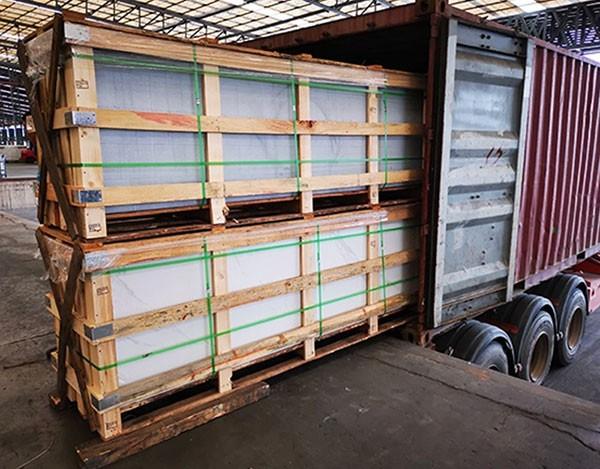
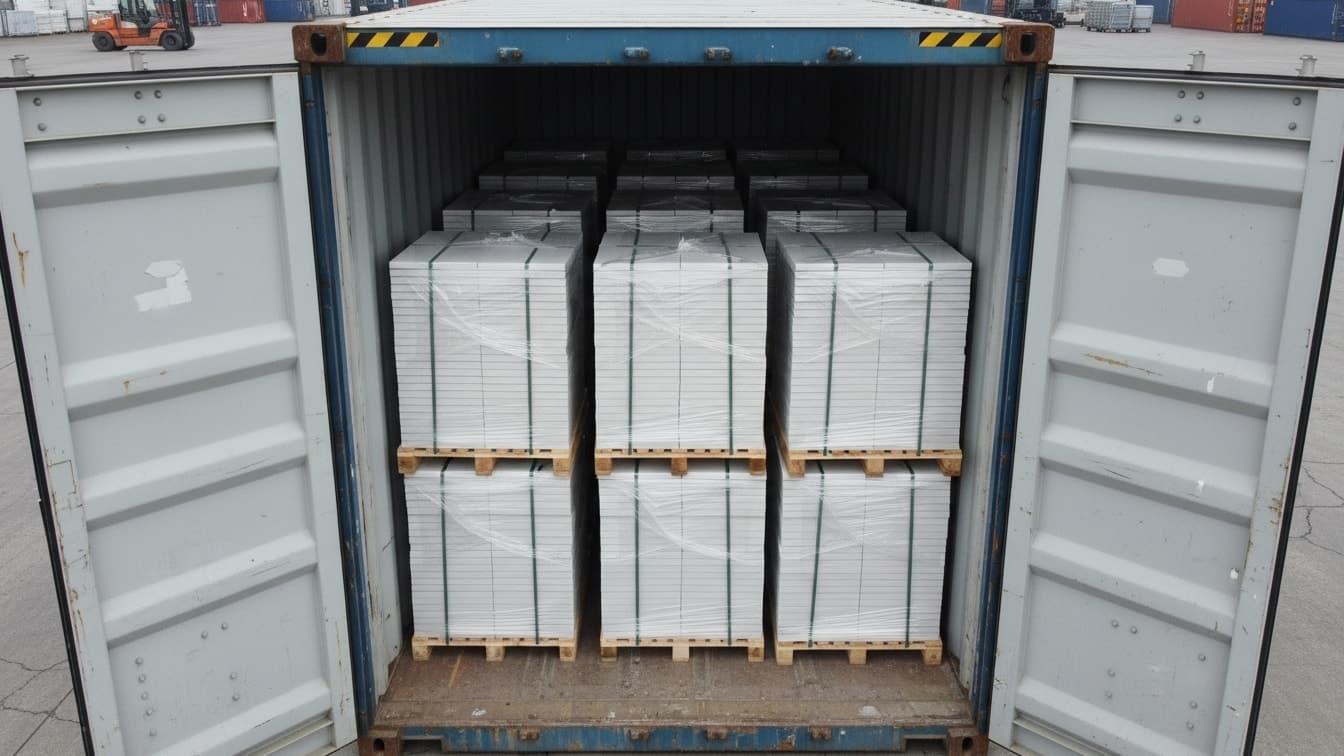
Step 7: Ask about packaging
For export purchases, request:
- Crate specifications
- Edge protection
- Corner protection
- Internal separators
- Loading method
- Maximum number of slabs per crate
Large slabs require different logistics from standard cartons of tile.
۷. Why Iranian Porcelain Slabs Can Be Competitive in International Projects
Iran has an established ceramic manufacturing base and significant regional export activity.
World Bank WITS trade data, for example, recorded more than USD 332 million in Iranian exports under the relevant unglazed ceramic tile category in 2023. Major destinations included Iraq, Pakistan, Afghanistan, Azerbaijan and Georgia.
But large-format slabs represent a different competitive opportunity.
The value proposition is not simply:
“Iranian product = lower price.”
A stronger export proposition is:
Competitive cost + large-format production + design variety + technical performance + customization + regional logistics.
Design is becoming a major differentiator
Modern buyers are increasingly interested in surfaces that replicate:
- Marble
- Travertine
- Onyx
- Granite
- Limestone
- Concrete
- Wood
- Natural stone
Digital decoration allows manufacturers to produce sophisticated patterns.
For Iranian producers, this creates an opportunity to compete on design value, not only manufacturing cost.
Regional markets can be strategically important
Iranian producers have geographic advantages for nearby markets in:
- Central Asia
- Caucasus
- Iraq
- Persian Gulf
- Pakistan
- Afghanistan
Large-format products can also become attractive in hospitality and residential developments where designers want premium visual effects.
Export readiness remains essential
A technically good slab is not enough.
International buyers also expect:
- Reliable packaging
- Consistent dimensions
- Technical documentation
- Stable shade
- Predictable lead times
- Professional communication
- Inspection procedures
- Clear commercial terms
That is where an Iranian slab Tile supplier can distinguish itself.
۸. People Also Ask: Iranian Porcelain Slab Questions
Is porcelain slab good for kitchen countertops?
Yes, a properly specified porcelain slab can be suitable for kitchen countertops because porcelain can offer low water absorption, stain resistance, heat resistance and strong surface performance.
However, not every slab is designed for countertop fabrication. Thickness, reinforcement, edge design, cutting and installation must be checked.
Is porcelain slab better than natural marble?
“Better” depends on the project.
Porcelain can offer consistent manufacturing, low water absorption, design flexibility and easier maintenance. Natural marble offers genuine geological variation and a unique natural material character.
The correct choice depends on design, performance, maintenance and budget.
Can porcelain slabs be used on walls?
Yes. Large-format porcelain slabs are particularly suitable for feature walls, bathrooms, kitchens, hotel interiors and commercial spaces when the wall structure and installation system are appropriate.
Can porcelain slab be used outdoors?
Some porcelain products are suitable for outdoor applications, but buyers should verify frost resistance, slip performance, thickness and the approved installation system.
An indoor slab should not automatically be assumed to be an outdoor product.
Is a thicker slab always better?
Not necessarily.
Thickness should correspond to the application, support conditions, fabrication method and manufacturer’s recommendations.
A thicker slab may provide different mechanical performance, but increasing thickness does not automatically solve every design or installation issue.
Which is better for floors: polished or matte porcelain?
For many residential interiors, polished surfaces offer a luxurious appearance.
For wet, commercial or outdoor environments, a suitable matte or structured finish may provide more appropriate slip performance.
The decision should be based on the actual application rather than appearance alone.
۹. The Most Common Mistakes When Buying Porcelain Slabs
Even experienced buyers can make mistakes when moving from conventional tile to large-format slabs.
Mistake 1: Choosing based only on appearance
A beautiful marble-look surface does not automatically mean the product is suitable for a countertop or floor.
Mistake 2: Ignoring fabrication requirements
Large slabs require specialist cutting and handling.
Mistake 3: Assuming all porcelain has the same performance
Different products have different specifications.
Mistake 4: Ignoring thickness
The same design may be available in multiple thicknesses for different applications.
Mistake 5: Treating installation as an afterthought
Large-format installation requires a properly prepared substrate and appropriate equipment.
Mistake 6: Comparing only price per square meter
For export projects, compare:
- Product
- Packaging
- Freight
- Breakage risk
- Installation
- Fabrication
- Waste
Mistake 7: Buying without technical documentation
A product catalogue is not a substitute for application-specific technical information.
۱۰. Where Should You Use Iranian Porcelain Slab? A Practical Decision Guide
Use this simple framework.
Choose porcelain slab for a countertop when:
- You need a stone-like premium appearance.
- Low water absorption is important.
- Heat and stain resistance are priorities.
- The supplier provides countertop-specific technical guidance.
- Professional fabrication is available.
- The thickness and reinforcement are appropriate.
Choose porcelain slab for a wall when:
- You want fewer grout lines.
- You want a continuous marble or stone appearance.
- You are designing a luxury bathroom.
- You need a durable decorative surface.
- Large-format installation is available.
Choose porcelain slab for a floor when:
- The product is specifically rated for flooring.
- Mechanical performance is appropriate.
- Abrasion requirements are satisfied.
- Slip resistance matches the application.
- The installation substrate is properly prepared.
- The format is manageable for the installation team.
If you are exporting the product
Ask the manufacturer to identify the recommended applications directly in the technical documentation.
A clear application matrix can be extremely useful:
| Application | Recommended? | Key Technical Considerations |
|---|---|---|
| Kitchen countertop | Depending on specification | Strength, thickness, fabrication |
| Bathroom wall | Yes, if specified | Adhesion, moisture, handling |
| Interior wall | Yes | Weight, substrate, installation |
| Residential floor | Depending on specification | Strength, abrasion, finish |
| Commercial floor | Product-specific | Traffic, abrasion, slip |
| Outdoor floor | Product-specific | Frost, slip, thickness |
| Furniture | Product-specific | Fabrication, edge strength |
This is particularly useful when purchasing Iranian products for international projects.
Conclusion: The Best Application Depends on the Slab, Not Just the Design
Iranian Porcelain Tile and large-format slab Tile products can provide an attractive alternative to natural stone for modern architectural projects. Their combination of design flexibility, low water absorption, large dimensions and relatively low joint visibility makes them valuable for many interior applications.
But the question is not simply whether porcelain slab is “good.”
The more useful question is:
Where does a particular slab perform best?
For walls, large porcelain panels can deliver exceptional visual continuity with fewer joints. They are particularly attractive for bathrooms, hotel lobbies, feature walls and luxury residential interiors.
For countertops, porcelain can provide an effective combination of aesthetics and functional performance. However, fabrication becomes critical. Sink openings, corners, unsupported spans and installation methods must be professionally managed.
For floors, technical specifications become even more important. Strength, abrasion, slip resistance, thickness and intended traffic must all match the project.
The next stage of the Iranian porcelain industry is likely to move beyond conventional tile exports toward higher-value architectural surfaces. Global demand for ceramic and porcelain surfaces is projected to continue growing through the decade, while architects increasingly seek large-format materials that combine stone-inspired aesthetics with predictable technical performance.
For Iranian manufacturers and exporters, this creates a significant opportunity.
Instead of selling only by square meter and price, suppliers can compete through:
- Advanced large-format production
- Consistent technical quality
- Sophisticated digital designs
- Application-specific specifications
- Professional packaging
- Export documentation
- Technical installation support
For buyers, the recommendation is equally clear: do not select a porcelain slab only because it looks like the stone you want.
First define the application. Then verify the technical performance, thickness, surface finish, fabrication requirements and installation system.
If you are sourcing Iranian porcelain slabs for a kitchen, bathroom, commercial project, villa, hotel or export program, request application-specific technical data and compare suppliers based on both design and performance before placing your order. For professional sourcing and export consultation, contact an experienced Iranian porcelain slab supplier or export specialist.


نظرات ۰