

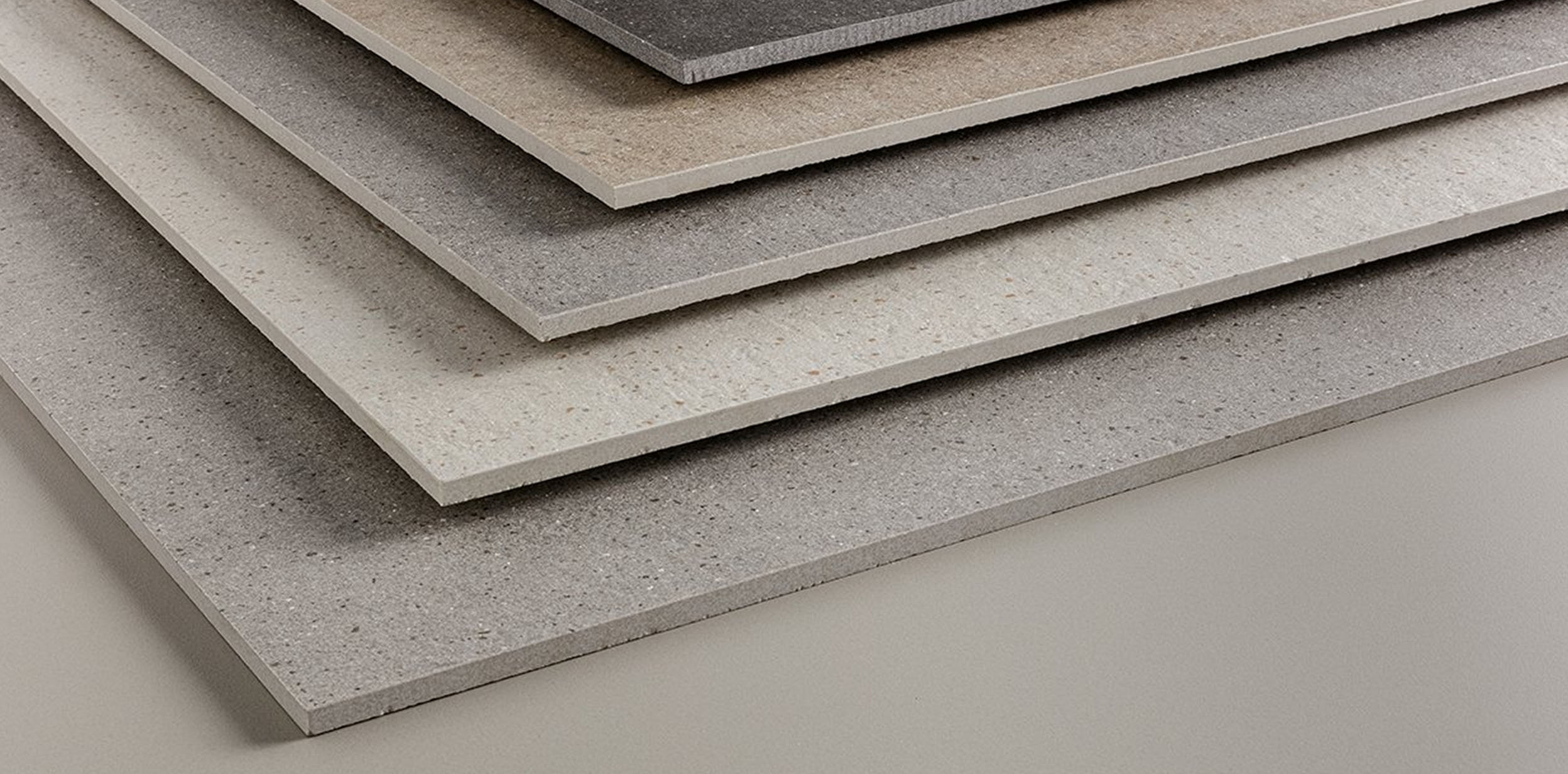

Buying Iranian porcelain tile in bulk? Learn the exact tests, certifications, and inspection steps to verify Iranian porcelain tile quality before you place an order.
Iran ships roughly 200 million square meters of ceramic and porcelain tile to more than 50 countries every year, and industry officials describe the country as the world’s fifth-largest tile producer and exporter. That scale is reassuring on paper. It also means buyers face a crowded field of factories, trading houses, and re-sellers, and not all of them ship the same grade of material.
If you have ever opened a container of imported tile and found chipped edges, uneven color lots, or boxes marked “Grade A” that clearly were not, you already know the problem. A cheap price on a proforma invoice can hide a costly mistake: reordering, reworking a job site, or losing a client’s trust. For importers, distributors, and construction buyers, the real question is not “is Iranian tile good?” It is “how do I confirm this specific shipment is good, before I wire the deposit?”
This guide answers that question in practical terms. You will learn the physical and technical tests that separate export-grade porcelain from filler stock, the certifications and standards worth asking for, how to read a factory’s own test reports, and the red flags experienced buyers watch for during a factory visit or sample review. We will also cover the market context — production capacity, export destinations, and pricing trends — so you can judge whether an offer is realistic or too good to be true.
By the end, you should be able to walk into a showroom, request the right documents, run a handful of on-the-spot checks, and negotiate from a position of technical knowledge rather than guesswork. That is the difference between a supplier relationship that lasts for years and a container you regret ordering.
۱. Understanding Iranian Porcelain Tile: What Sets It Apart from Standard Ceramic
Before judging quality, it helps to know what porcelain tile actually is and why Iran has become a serious player in this category.
Porcelain vs. Ceramic: The Core Difference
Porcelain tile is a denser, more refined member of the ceramic tile family. It is pressed from finer clay, kaolin, feldspar, and quartz, then fired at higher temperatures — typically above 1,200°C, compared to roughly 1,000°C for standard ceramic. The result is a body with lower porosity, higher mechanical strength, and better resistance to moisture and wear.
Standard ceramic tile is usually glazed on top of a red or buff clay body. Porcelain, especially “full-body” or “technical” porcelain, carries the same color and pattern through the entire thickness of the tile, so a chip is far less visible.
Why Iranian Manufacturers Have Scaled Up Porcelain Production
Iran’s tile industry runs on roughly 147 factories with a combined annual output near 700 million square meters, according to industry association data. Within that capacity, glazed and porcelain tiles now lead product-type segmentation in the domestic market, and the Iran Ceramic Tiles Market is estimated at approximately $1.51 billion in 2025, with continued growth projected through 2030.
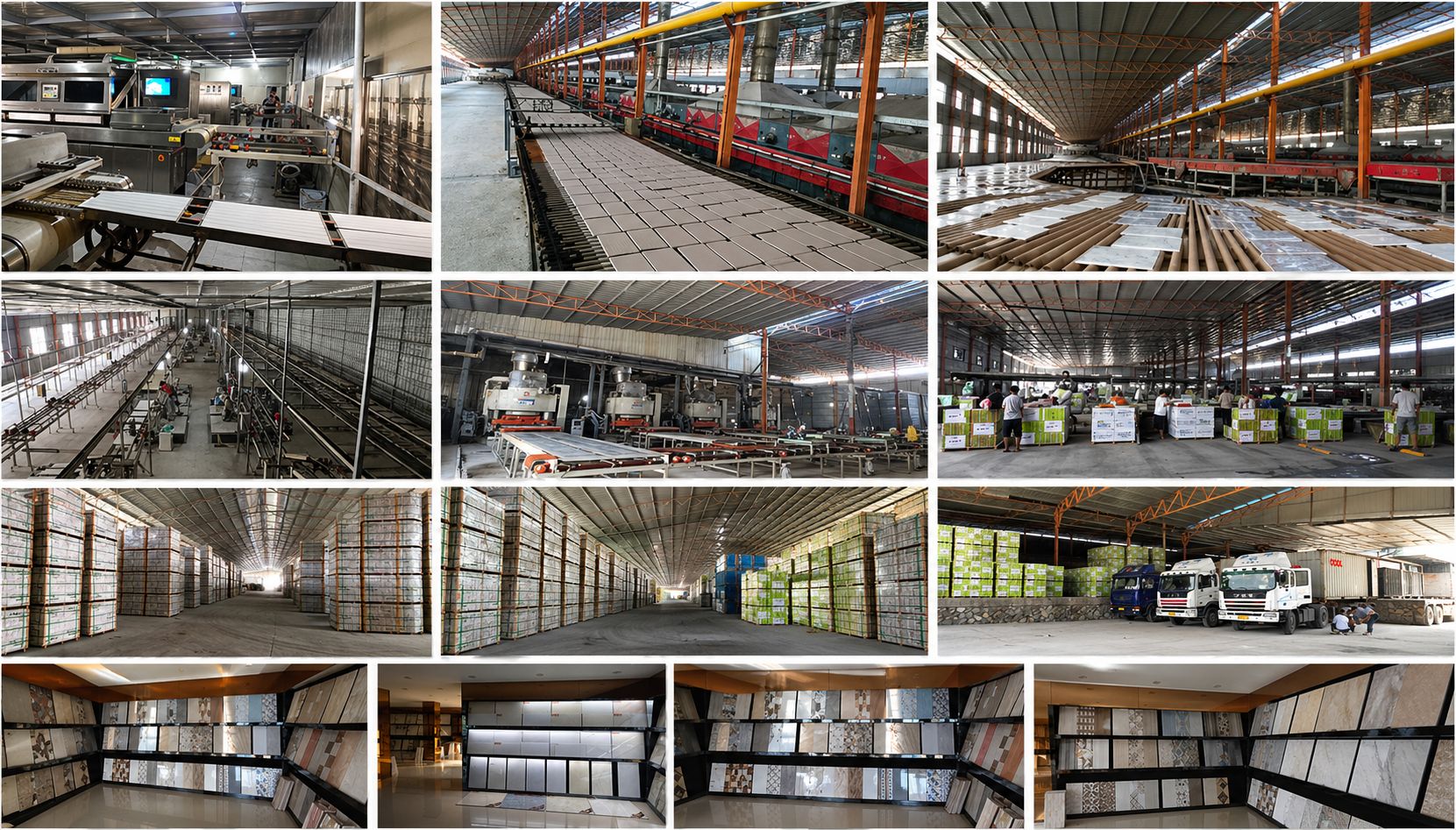
That scale gives buyers real choice, but it also means quality varies widely between factories that invest in modern kilns and digital printing lines versus smaller operations still running older presses. Knowing the difference is the first quality filter, before you ever test a single tile.
Common Porcelain Tile Categories You Will Encounter
- Glazed porcelain (GVT): A glaze layer sits on a porcelain body, offering sharper printed designs.
- Full-body porcelain: Color runs through the entire tile, ideal for high-traffic commercial floors.
- Polished porcelain: Mechanically polished for a glossy finish, common in lobbies and retail spaces.
- Rectified porcelain: Edges are precision-cut after firing for tighter, near-invisible grout lines.
Each category has its own quality benchmarks, which we will apply in the sections below.
۲. Iran’s Position in the Global Tile Export Market
Understanding market context helps you sanity-check a supplier’s claims and pricing.
Export Volume and Key Destinations
Iranian tile and ceramic producers export around 40 percent of their output to more than 50 countries. Iraq is consistently the largest single destination, absorbing a significant share of shipments, followed by other regional markets such as the UAE, Saudi Arabia, Pakistan, Afghanistan, and neighboring Central Asian and Caucasus states including Georgia and Armenia.
This regional concentration matters for buyers outside those corridors. If you are importing into Europe, North America, or East Asia, ask suppliers directly about their experience meeting the packaging, labeling, and certification requirements for your specific market, since most of their export logistics experience may be built around closer, less regulated destinations.
Market Size and Growth Trajectory (2024–۲۰۲۸)
The Iran Ceramic Tiles Market is valued near $1.51 billion in 2025 and is forecast to grow at a compound annual rate of roughly 4.97 percent through 2030, pushing the market toward $1.93 billion. Annual production capacity across the industry sits close to 700 million square meters, though actual output has fluctuated with domestic construction demand and currency conditions.
That growth is not uniform across quality tiers. Analysts have also noted that a recession in domestic construction has, at times, produced excess inventory and intensified price competition among factories, a combination that can pressure some producers to cut costs in ways that show up in material quality. This is precisely why buyer-side verification matters more in a growing, price-competitive export market — high production volume does not automatically mean high and consistent quality.
What This Means for Your Sourcing Strategy
A large, competitive export base is good news for pricing and selection. It also means:
- Reputation and factory-level track record matter more than country-level reputation.
- Price gaps between suppliers often reflect real differences in raw material grade, firing consistency, or sorting rigor — not just margin.
- Established exporters with experience shipping to regulated markets (EU, GCC, North America) are generally a safer starting point for first-time buyers.
۳. The Core Quality Indicators You Must Check Before Buying
This is the technical heart of the buying decision. Each of the following properties can be requested as a lab test report, and several can be spot-checked yourself with simple tools.
۳.۱ Water Absorption Rate
Water absorption is the single most predictive indicator of porcelain tile quality. It measures how much water a fired tile body absorbs, expressed as a percentage of dry weight.
- True porcelain: Water absorption below 0.5%, per international standards such as ISO 13006 and ANSI A137.1.
- Semi-vitreous ceramic: Between 3% and 7%.
- Non-vitreous tile: Above 7%, unsuitable for wet areas or exterior use.
Low absorption directly correlates with frost resistance, staining resistance, and long-term durability, which is why it is the headline spec on any credible technical data sheet.
How to verify it yourself: Place a few drops of water on the unglazed back of a sample tile. Genuine low-absorption porcelain will bead or absorb very slowly. Ceramic with higher porosity will darken quickly as water soaks in, a simple field test that experienced buyers use during factory visits.
۳.۲ PEI Rating (Surface Abrasion Resistance)
The Porcelain Enamel Institute (PEI) rating measures how well the glazed surface resists foot-traffic wear, on a scale from PEI 0 to PEI 5.
| PEI Rating | Recommended Use |
|---|---|
| PEI 0–۱ | Wall tile only, no foot traffic |
| PEI 2 | Light residential foot traffic |
| PEI 3 | Standard residential floors |
| PEI 4 | Medium commercial traffic |
| PEI 5 | Heavy commercial and industrial traffic |
Always match the PEI rating to the actual application. A supplier quoting a low price on a “commercial-grade” tile without a PEI 4 or 5 certificate should raise questions, especially for hospitality, retail, or public-sector projects.
۳.۳ Breaking Strength and Modulus of Rupture
Breaking strength measures the force a tile can withstand before fracturing, tested under standards like ISO 10545-4. For porcelain tile, a modulus of rupture above 35 MPa is generally considered strong, with premium products exceeding 40 MPa.
This property matters most for large-format tiles, tiles used on uneven substrates, and export shipments that undergo repeated handling and long transit times. A tile that tests well in a showroom but has a low modulus of rupture can arrive cracked after a multi-week sea voyage.
۳.۴ Dimensional Accuracy and Rectification
Dimensional consistency affects installation speed, grout-line uniformity, and final appearance. Check for:
- Size tolerance: Variance should typically stay within ±۰.۵mm per meter for rectified tile.
- Squareness: Corners should form true 90-degree angles; out-of-square tiles create visible gaps.
- Warpage: Lay several tiles face-down on a flat surface and check for bowing or curling at the edges.
Rectified tiles, cut precisely after firing, allow for grout joints as narrow as 1–۲mm. If a supplier claims “rectified” but you can see visible size variance across a sample box, that claim does not hold up.
۳.۵ Surface Finish and Visual Inspection
Even before lab data, a careful visual and tactile inspection reveals a great deal:
- Check for pinholes, glaze crawling, or bubbling on the surface under strong light.
- Run your hand across the surface to feel for texture inconsistency between tiles from the same lot.
- Compare shade variation (V-rating) across at least 10 tiles from different boxes; excessive, unlabeled shade variation signals poor batch control.
- Inspect edges for chipping, which often indicates rough handling during cutting or packing rather than a manufacturing defect, but still affects usable yield.
۳.۶ Chemical and Stain Resistance
For kitchens, commercial kitchens, and high-traffic public spaces, chemical resistance matters as much as physical strength. Ask for test data against household acids, alkalis, and common staining agents such as coffee, oil, and ink, typically reported under ISO 10545-13 and ISO 10545-14. Quality porcelain should show no visible surface change after standard staining-agent exposure and cleaning.
۴. International Standards and Certifications to Request
Technical claims mean little without documentation. When evaluating an Iranian porcelain tile export quality package, request the following:
ISO 13006 Compliance
This is the primary international standard classifying ceramic tiles by water absorption and forming method (pressed, extruded, etc.). A supplier’s technical data sheet should reference which ISO 13006 group the product falls under — porcelain tile typically falls into Group BIa, the lowest water-absorption category.
ISIRI Standards (Iran’s National Standard)
The Institute of Standards and Industrial Research of Iran (ISIRI) sets domestic manufacturing benchmarks. Reputable Iranian factories will hold ISIRI certification for their production lines, and this certificate is a reasonable baseline, though it should not replace independent, buyer-side testing for export orders.
CE Marking (for European Markets)
If you are importing into the European Economic Area, CE marking under the Construction Products Regulation confirms the tile meets declared performance criteria for fire behavior, mechanical resistance, and other essential characteristics. Ask specifically whether the factory has CE documentation, not just a general export license.
Third-Party Lab Reports
The strongest verification comes from an independent, accredited lab report — not the factory’s internal QC sheet. Reports from recognized international testing bodies carry more weight in customs clearance and in disputes over shipment quality. For large orders, commissioning a pre-shipment inspection through a third-party agency is a relatively small cost against the risk of receiving a full container of substandard product.
۵. A Practical Pre-Purchase Inspection Checklist
Combine the technical checks above into a repeatable process you can use for every new supplier or every new production lot.
Before You Order: Documentation Review
- Request the full technical data sheet (water absorption, PEI, breaking strength, size tolerance).
- Ask for ISIRI certification and, if relevant, CE documentation.
- Request recent third-party lab test results, not just factory-issued certificates.
- Ask for photos or video of the actual production batch, not stock catalog images.
During Sample Evaluation
- Order physical samples, not just digital renders — color and texture rarely translate accurately on screen.
- Run the water-drop absorption test on the unglazed back.
- Check dimensional consistency across multiple boxes, not a single hand-picked tile.
- Inspect for shade variation and grade consistently marked packaging.
- Tap-test a few tiles: a clear, ringing sound generally indicates a denser, well-fired body, while a dull thud can suggest internal cracking or higher porosity.
Before Container Loading
- Commission a pre-shipment inspection for orders above a meaningful volume threshold.
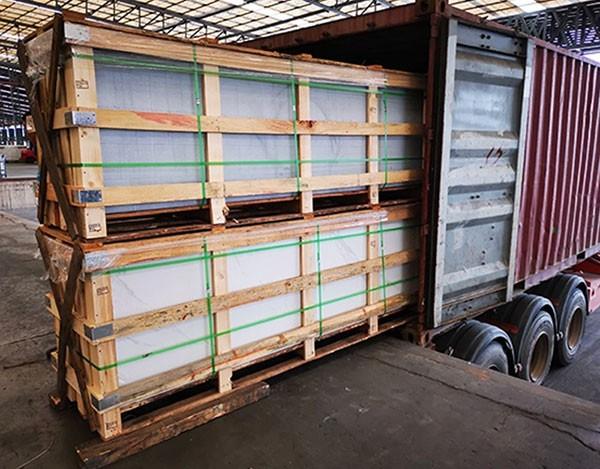
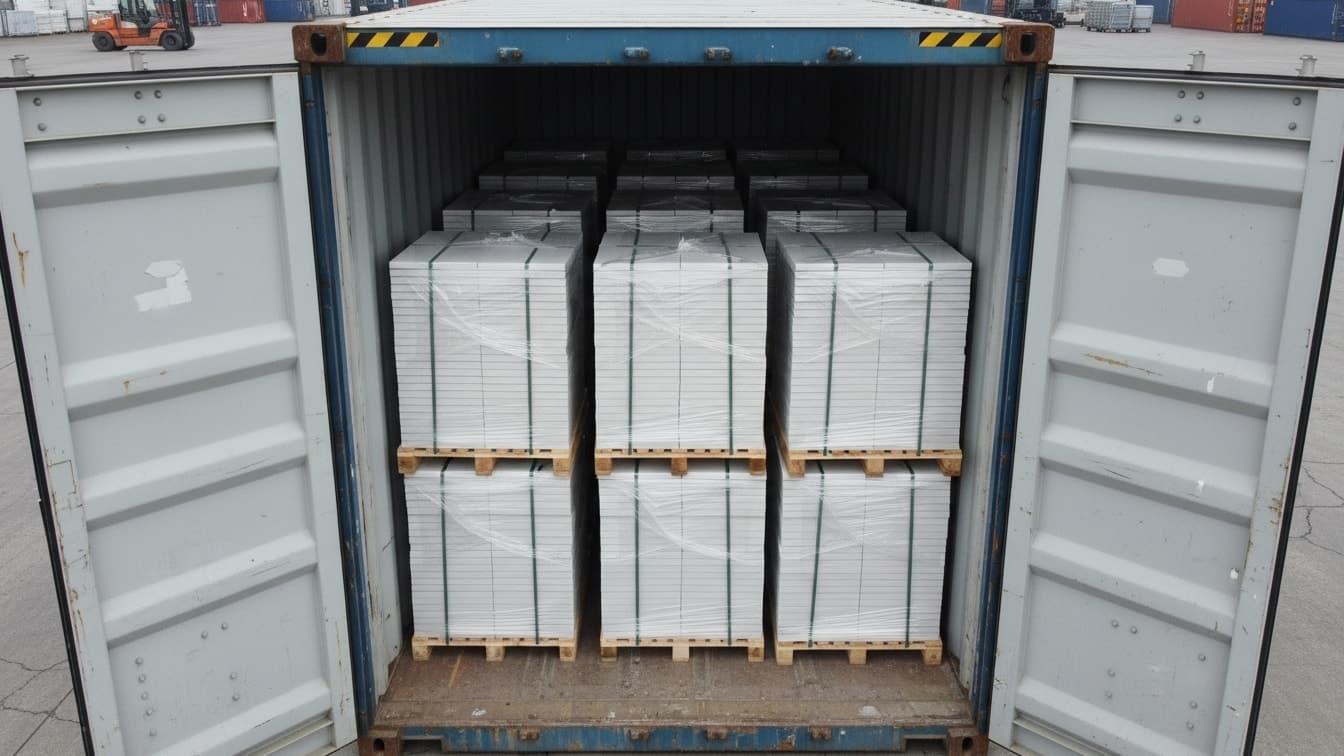
- Confirm the packaging grade matches export standards, including corner protection and moisture barriers for sea freight.
- Verify that box labeling matches the agreed grade, size, and shade batch — mismatched labeling is a common source of post-arrival disputes.
- Cross-check the shipment quantity and grade split (Grade A, B, C) against the commercial invoice before final payment.
۶. Common Red Flags That Signal Lower-Grade Product
Experienced importers learn to recognize warning signs early, often before a single test result comes back.
- Prices significantly below the regional market average with no clear explanation (excess inventory, direct-factory pricing, or promotional clearance are legitimate reasons; vague pricing is not).
- Reluctance to share third-party lab reports, offering only internal or outdated certificates.
- Inconsistent grading language — terms like “commercial grade A” used loosely without matching PEI or water-absorption data.
- No willingness to allow a pre-shipment inspection by a buyer-appointed agency.
- Sample tiles that differ visibly from bulk production photos or video call footage.
- Vague answers about export experience to your specific target market, especially regarding customs documentation and certification history.
None of these signs alone proves a supplier is unreliable, but two or more together warrant closer scrutiny or a different sourcing partner.
۷. Frequently Asked Questions
What is the difference between Grade A and Grade B Iranian porcelain tile?
Grade A tiles pass full dimensional, surface, and structural inspection with minimal defects and consistent shade. Grade B (sometimes called commercial or export-B) tiles come from the same production line but carry minor surface imperfections, slight shade variance, or small dimensional deviations. Grade B is not inherently unsafe, but pricing should reflect the lower grade, and mixing grades within a single shipment without clear labeling is a common dispute trigger.
Can I test porcelain tile quality without lab equipment?
Yes, to a meaningful extent. The water-drop absorption test, tap-sound test, visual shade comparison across boxes, and a flat-surface warpage check require no special equipment and can be done on-site during a factory visit or sample review. These field tests will not replace a formal lab report for a large commercial order, but they quickly filter out obviously substandard batches.
Are Iranian porcelain tiles suitable for large export orders and international construction projects?
Many Iranian manufacturers do supply export-grade porcelain tile meeting ISO 13006 and holding ISIRI or CE documentation, and the country’s scale — close to 700 million square meters of annual production capacity — supports large-volume orders. Suitability depends on selecting an established factory with verifiable export history to your target market, not on the country of origin alone.
How much does third-party inspection typically add to total order cost?
Pre-shipment inspection costs vary by order size and destination, but for container-scale orders, the inspection fee is typically a small fraction of total shipment value. Given the cost of reworking or rejecting a full container after arrival, most experienced importers treat this as a standard line item rather than an optional expense.
Conclusion
Iranian porcelain tile has earned a real place in global construction supply chains, backed by a production base of roughly 700 million square meters annually and export relationships spanning more than 50 countries. That scale offers genuine opportunity for buyers seeking competitive pricing without sacrificing performance. But scale is not a quality guarantee on its own, and the same market conditions that create attractive pricing — high competition and, at times, excess domestic inventory — can also pressure some producers to cut corners.
The path through that uncertainty is straightforward, if not always fast: request documented water absorption and PEI ratings, verify breaking strength and dimensional tolerance against ISO 13006 benchmarks, insist on ISIRI or CE certification where relevant, and never skip a physical sample review or, for larger orders, a third-party pre-shipment inspection. Each of these checks takes time before an order, but far less time than resolving a rejected container or a construction project delayed by defective material.
Looking ahead, expect continued consolidation among Iranian exporters as buyers in regulated markets raise their documentation expectations, and expect digital sample review and remote factory audits to become standard practice rather than the exception. Suppliers who invest early in transparent testing and certification will increasingly separate themselves from lower-cost, lower-accountability competitors.
If you are evaluating an Iranian porcelain tile supplier for an upcoming order, do not rely on a proforma invoice and a product photo alone. Request the technical data sheet, ask pointed questions about certification, and if the order size justifies it, bring in an independent inspector before the container is sealed. For buyers who want a second opinion on a specific supplier, sample report, or shipment, our sourcing specialists are available to review your documentation and walk through the inspection checklist with you before you commit to payment.



نظرات ۰