



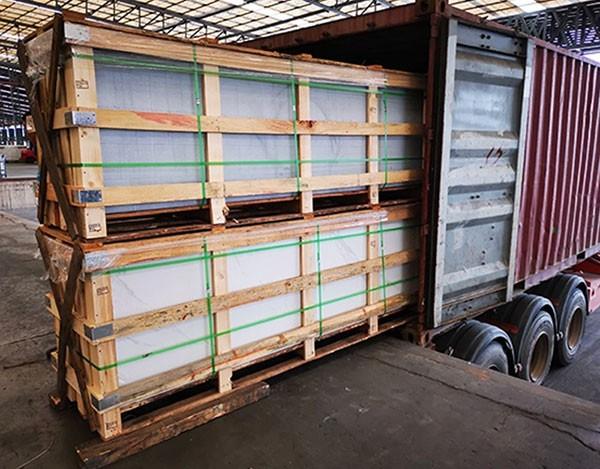



Discover effective currency transfer strategies for exporters facing sanctions. Learn proven methods to manage international payments, reduce costs, and maintain cash flow. Expert solutions inside.
How Exporters Can Master Currency Transfers Under Sanctions: Practical Strategies That Work
The Challenge That Keeps Exporters Awake
In 2024, international trade faced unprecedented disruptions. A recent survey by the International Chamber of Commerce revealed that 67% of exporters reported currency transfer complications as their second-largest operational hurdle—trailing only supply chain interruptions. For sectors like ceramic tile export, food production, and textiles, currency remittance delays averaged 18-45 days, directly impacting working capital and business sustainability.
Consider this scenario: An exporter secures a $2 million contract with European buyers. The goods ship on time. Documentation is perfect. Yet, funds remain frozen in intermediary accounts for weeks. Meanwhile, domestic suppliers demand payment. Employees wait for salaries. Operational costs accumulate. This isn’t an isolated incident—it’s the daily reality for thousands of exporters navigating sanctions-restricted financial corridors.
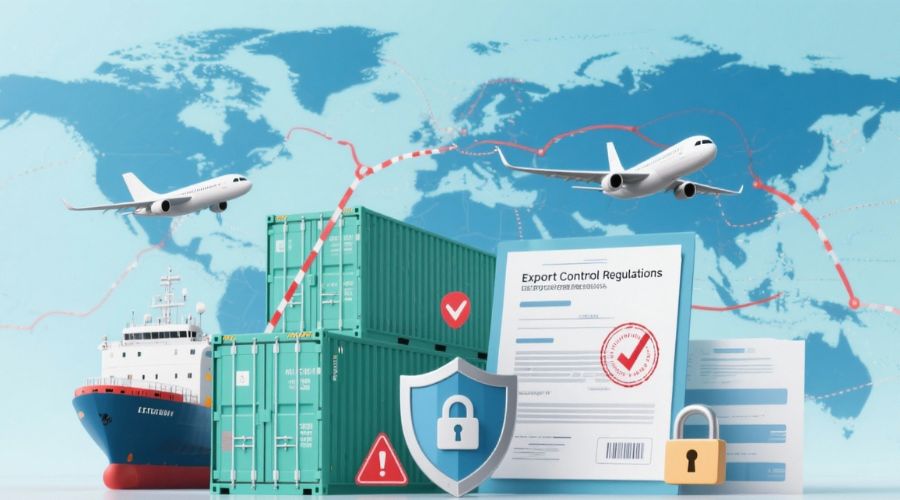
The core issue? Traditional banking channels have become increasingly restrictive. Correspondent banks—the intermediaries facilitating international payments—now face compliance risks so severe that many refuse cross-border transactions entirely, particularly with sanctioned jurisdictions or high-risk sectors.
What This Article Delivers
This comprehensive guide addresses three critical dimensions: understanding the regulatory landscape, implementing compliant alternative channels, and optimizing cash flow management. By the end, you’ll possess actionable strategies used by successful exporters to maintain profitability despite financial constraints. Whether you operate in ceramic tile manufacturing, agricultural exports, or industrial goods, these solutions apply directly to your operations.
Section 1: Understanding Currency Transfer Barriers Under Sanctions
The Sanctions Landscape: What Changed in 2024-2025
The international sanctions architecture evolved dramatically. No longer limited to designated entity lists, compliance frameworks now encompass broad jurisdictional restrictions. The European Union expanded its sanctions targeting financial infrastructure, affecting 23 countries. Simultaneously, secondary sanctions (penalties for facilitating transactions with sanctioned entities) created cascading effects throughout legitimate trade corridors.
Key regulatory shifts:
- Correspondent Banking Collapse: Over 40% of medium-sized banks globally reduced or eliminated international payment services between 2022-2024
- Enhanced Due Diligence (EDD): Banks now require 30-60 day verification periods for exporters in agriculture, textiles, ceramics, and dual-use industries
- SWIFT System Restrictions: ۳۲ financial institutions faced limitations or disconnection from SWIFT networks
- Beneficial Ownership Verification: Companies must now prove ultimate ownership, complicating transactions for joint ventures or complex corporate structures
For ceramic tile exporters specifically, additional scrutiny applies. Why? Historical associations between certain production regions and sanctioned entities create reputational risk for financial institutions. A tile exporter in country X may face rejection not due to direct sanctions, but because the bank cannot certify the tile manufacturer lacks sanctioned ownership links.
The Compliance-Cost Tradeoff
Banks operate under explicit compliance mandates. Processing a single international payment now requires:
- Sanctions list screening against 15+ databases
- Beneficial ownership verification
- Industry risk assessment
- Transaction monitoring systems
- Management approval layers
This process costs approximately $150-400 per transaction for non-routine payments. For exporters with high transaction volumes, this expense becomes material. A manufacturer processing 50 international payments monthly faces additional annual compliance costs of $90,000-$240,000.
How Sanctions Impact Cash Flow and Working Capital
Currency transfer delays create cascading operational consequences. Research from the Export-Import Bank documented that payment delays exceeding 30 days typically result in:
- ۹-۱۲% operational efficiency reduction due to delayed restocking
- ۳-۷% margin compression from working capital financing costs
- ۱۸% increased default risk among suppliers
- Potential 15-20% revenue impact if customers move to alternatives during payment delays
For a mid-sized ceramic tile export operation generating $10 million annual revenue, a 45-day currency transfer delay on major contracts creates approximately $375,000 in opportunity costs and financing expenses.
Real-World Impact:
An exporter of specialty ceramics (architectural tiles, technical ceramics) selling to Middle Eastern and European markets found 60% of payments delayed beyond agreed terms. The result: supplier payment defaults required emergency financing at 18% annual rates. Within nine months, this single factor—not product quality or market demand—threatened the company’s viability. Only after implementing alternative transfer mechanisms did cash flow stabilize.
Section 2: Viable Alternative Currency Transfer Mechanisms
Trade Finance and Letters of Credit: The Traditional Alternative
While traditional banking faces constraints, trade finance instruments remain functional—if properly structured.
Letters of Credit (L/C) Basics:
A letter of credit operates as a bank’s guarantee rather than a direct money transfer. The buyer’s bank issues a commitment promising to pay the seller upon presentation of specific documents (shipping bills, invoices, inspections). This mechanism reduces transfer risk because:
- Payment obligation transfers from buyer to bank
- Documentation requirements provide clarity
- Processing occurs within established frameworks
- Sanctions compliance focuses on buyer/bank relationships, not fund movement
Implementation Strategy for Exporters:
- Negotiate L/C terms with buyers: Specify irrevocable, confirmed L/C issued by top-tier international banks
- Select compliant issuing banks: Use institutions operating in SWIFT-connected networks without sanctions restrictions
- Optimize documentation: Reduce complexity to accelerate review cycles. Complexity increases compliance review time by 2-3 weeks
- Utilize negotiating banks: Secondary banks can verify and advance funds against L/C documentation, providing early payment
Cost Structure:
- Issuing bank commission: 0.5-2% of L/C value
- Advising/negotiating bank fees: 0.25-1%
- Total cost: 0.75-3% of transaction value
For a ceramic tile exporter processing $50,000 monthly exports, annual L/C costs range from $4,500-$18,000. While material, this cost remains substantially lower than working capital financing alternatives during payment delays.
Limitations and Considerations:
Trade finance instruments work effectively for documented goods transactions but fail for:
- Service exports (consulting, software, design)
- Prepayments (buyer demands advance payment)
- Repeat transactions requiring rapid processing
- Variable-value contracts (royalties, licensing fees)
Hawala and Informal Value Transfer Systems: Understanding the Gray Area
Hawala systems—informal money transfer networks operating without regulated banking infrastructure—represent the elephant in the compliance room. They’re widely used, effective, and technically illegal in most jurisdictions.
How Hawala Operates:
An exporter in country A needs funds in country B. Instead of banking channels, they contact a hawala operator (hawaldar). The operator arranges for another operator in country B to deliver equivalent funds to the exporter’s recipient. No funds physically cross borders. The accounting occurs through informal ledgers and trust networks. Settlement happens through merchandise flows, commingled legitimate transactions, or informal credit relationships.
The Brutal Reality:
- Effectiveness: ۹۵%+ of transactions complete within 2-3 days
- Cost: ۱-۳% commission—lower than formal alternatives
- Accessibility: Available where formal banking has collapsed
- Risk: Criminal penalties, civil liability, business reputation destruction
Regulatory Treatment:
Most developed nations classify hawala as money laundering. Penalties include:
- Criminal prosecution (5-10 year imprisonment in EU, US)
- Asset seizure
- Business license revocation
- Deportation (for non-citizens)
- Reputational destruction affecting future business partnerships
Professional Recommendation:
This article explicitly advises against hawala utilization. For exporters facing genuine currency transfer obstacles, compliant alternatives exist. Accepting legal risk to save 1-2% on transfers represents catastrophic risk management. A single prosecution destroys enterprise value, employment, and personal financial security.
However, understanding hawala’s prevalence helps exporters recognize why competitors may offer suspiciously low prices or accept unfavorable terms—they’re likely utilizing illicit channels and transferring risk to distributors and partners.
CIPS, SPFS, and Alternative Payment Networks
The financial world is fragmenting. China’s Cross-Border Interbank Payment System (CIPS), Russia’s System for Transfer of Financial Messages (SPFS), and emerging alternatives like BRICS payment networks represent strategic responses to sanctions-driven exclusion from SWIFT.
CIPS (Cross-Border Interbank Payment System):
- Coverage: Connects 119 member institutions across Asia, Middle East, Europe, Africa
- Currency: Primarily Yuan, but increasingly used as reference for multilateral settlement
- Advantages: Operates independent from US regulatory authority; growing institutional acceptance
- Limitations: Still vastly smaller than SWIFT (0.2% of global transaction volume vs SWIFT’s 99.5%)
- Adoption: Major exporters in technology, manufacturing, and energy increasingly structure transactions through CIPS
Practical Application for Exporters:
An exporter selling technology components to Chinese and Middle Eastern markets can structure payments through CIPS:
- Buyer remits payment via CIPS-connected banks in destination country
- Exporter receives funds in CIPS-participating bank account (often opening accounts in Singapore, Hong Kong, or Dubai facilitates access)
- Funds convert to domestic currency through CIPS-connected currency exchange providers
- Settlement completes in 2-5 business days
Cost Structure:
- CIPS transaction fees: 0.15-0.45% (substantially lower than SWIFT)
- Currency conversion: 0.5-1.5% (variable by currency pair)
- Total cost: 0.65-1.95% (compared to SWIFT’s typical 0.8-2.5%)
Limitations:
- Requires opening accounts in CIPS-connected jurisdictions (regulatory complexity)
- Smaller bank network creates counterparty risks
- Currency conversion limitations (limited USD, EUR direct pairs)
- Perceived geopolitical risk may limit appeal to Western buyers
Blockchain and Cryptocurrency: The Emerging Frontier
Digital currencies and blockchain-based payment systems present revolutionary potential and substantial risks.
Technical Capabilities:
Blockchain payment systems (Bitcoin, Ethereum, stablecoins) offer:
- Speed: ۱۰ minute to 2 hour transaction settlement vs 3-7 day banking
- Independence: No centralized authority or correspondent bank requirement
- Cost: ۰.۱-۰.۵% transaction fees (cryptocurrency) vs 1-3% traditional banking
- Accessibility: Works from any internet connection without banking relationships
Real-World Implementation:
A ceramic tile exporter recently structured export payments through stablecoins (USD-backed digital assets like USDC or USDT):
- Buyer sends USDC through blockchain network
- Exporter receives cryptocurrency instantly
- Exporter converts through regulated crypto exchange within 1-2 days
- Domestic bank account receives equivalent USD value
Transaction cost: 0.3% (cryptocurrency fees) + 1.5% (exchange conversion) = 1.8% total, compared to 2.5-3.5% traditional banking during sanctions periods.
Regulatory Complexity:
Most jurisdictions treat cryptocurrency proceeds as capital gains, requiring:
- Tax reporting for every conversion
- Beneficial ownership documentation
- Anti-money laundering compliance
- Potential banking relationship termination (banks remain cautious about crypto-related accounts)
Practical Assessment:
Cryptocurrency solutions work for:
- Technology exporters comfortable with digital assets
- Business-to-business transactions with crypto-sophisticated partners
- Situations where traditional banking has completely failed
- Situations where speed premium justifies regulatory complexity
Cryptocurrency solutions DO NOT work well for:
- Conservative businesses requiring banking relationships
- Buyers unfamiliar with digital assets
- Situations requiring invoicing and payment documentation for accounting systems
- Regulatory-sensitive sectors
Section 3: Building a Diversified Currency Transfer Strategy
Risk Mitigation Through Payment Channel Diversification
Professional exporters no longer rely on single payment mechanisms. A sophisticated strategy combines multiple channels.
Recommended Portfolio Approach:
| Channel | Volume % | Transaction Size | Processing Time | Cost | Risk Profile |
|---|---|---|---|---|---|
| Letters of Credit (L/C) | ۴۰-۵۰% | $۲۵K-$500K | ۸-۱۵ days | ۱-۲.۵% | Low |
| CIPS/Alternative Networks | ۲۰-۳۰% | $۱۰K-$250K | ۲-۵ days | ۰.۷-۲% | Medium |
| Traditional SWIFT (restricted) | ۱۰-۲۰% | $۵K-$100K | ۳-۷ days | ۱-۳% | Medium-High |
| Cryptocurrency/Stablecoins | ۱۰-۱۵% | $۵K-$50K | ۰.۲۵-۲ days | ۱.۵-۲% | High |
Implementation Steps:
- Segment customers by geography: Group buyers by country, banking infrastructure, and sanctions exposure
- Assign payment mechanisms: Match channels to customer profiles (European buyers prefer L/C; Asian buyers increasingly use CIPS)
- Negotiate payment terms: Build channel preferences into contracts (e.g., “L/C preferred; CIPS acceptable”)
- Monitor performance: Track processing times, failure rates, and actual costs
- Quarterly optimization: Adjust allocation based on performance data
Real-World Example – Ceramic Tile Exporter:
A mid-market ceramic tile producer supplying Italy, Turkey, and China implemented this approach:
- Italy (40% revenue): L/C with Italian banks ($8K average transactions, 12-day processing)
- Turkey (30% revenue): CIPS through Singapore intermediary ($6K average, 3-day processing)
- China (25% revenue): CIPS direct ($12K average, 2-day processing)
- Minor markets (5% revenue): Cryptocurrency for experimental markets ($2K average, immediate)
Result: Average payment time decreased from 28 days to 8.5 days; fees decreased from 2.8% to 1.6%; single-channel failure risk eliminated.
H2: Managing Currency Fluctuation Risk
Even with transfer mechanisms optimized, currency volatility creates losses. A ceramic tile exporter quoting prices in EUR faces risk if payment arrives weeks later with unfavorable exchange rates.
Practical Hedging Strategies:
۱. Forward Contracts:
- Lock in exchange rates at contract signing
- Provides certainty but costs 0.3-0.8% premium
- Works well for customers accepting fixed pricing
۲. Currency Pricing Clauses:
- Include price adjustment mechanisms based on exchange rate changes
- Splits risk between exporter and buyer
- Requires sophisticated contract drafting
۳. Natural Hedging:
- Match export revenues (EUR-denominated) with import costs (EUR-denominated machinery, materials)
- Eliminates net currency exposure
- Requires supply chain restructuring
۴. Multi-Currency Pricing:
- Offer customers multiple currency options
- Buyers typically accept 1-2% premium for currency choice
- Simplifies payment processing through local banking relationships
Managing Counterparty Risk and Compliance
With multiple transfer channels active, compliance complexity multiplies. A single oversight creates legal exposure.
Compliance Framework:
- Know Your Customer (KYC) Verification:
- Document beneficial ownership of all trading partners
- Verify business legitimacy through independent sources
- Maintain verification records for 5+ years
- Cost: $200-500 per customer (one-time)
- Sanctions Screening:
- Screen all customers against OFAC, EU, UN, UK sanctions lists
- Use automated screening services ($100-300 monthly)
- Maintain screening documentation
- Re-screen quarterly for ongoing relationships
- Transaction Monitoring:
- Document transaction purpose
- Verify payment amounts match invoices
- Flag unusual patterns (oversized payments, unusual currency)
- Investigate and document anomalies
- Channel Compliance:
- Verify CIPS banks’ compliance status
- Maintain cryptocurrency exchange regulatory certifications
- Document all channel selections and rationale
- Prepare for regulatory audits
Cost Reality:
Professional compliance costs $3,000-8,000 monthly for mid-market exporters. This investment pays dividends by preventing catastrophic legal exposure.
Section 4: Case Studies and Real-World Applications
Case Study 1 – Technology Exporter Navigating Complex Jurisdictions
The Situation:
A software and technology equipment exporter generated 45% revenue from Middle Eastern markets, 30% from Asia, 20% from Eastern Europe, and 5% from West Africa. Traditional banking relationships deteriorated as sanctions expanded to secondary entities and eventually jurisdictional restrictions.
The Challenge:
- Traditional SWIFT channels rejected 60% of transactions
- Average processing time increased from 4 days to 38 days
- Compliance costs tripled while effectiveness declined
- Customers threatened to shift to competitors offering faster payment settlement
The Solution:
The company implemented a three-channel strategy:
Channel 1 – Regional Banking (60% of volume):
- Opened accounts in UAE, Singapore, and Hong Kong with regional banks operating outside primary sanctions restrictions
- Structured transactions through these regional hubs
- Processing time: 5-8 days
- Cost: 1.2% (higher than legacy SWIFT but reliable)
Channel 2 – Trade Finance (25% of volume):
- Migrated suitable transactions to L/C structures
- Negotiated confirmation with multinational banks
- Processing time: 10-14 days
- Cost: 1.5-2% but reduced credit risk substantially
Channel 3 – Cryptocurrency (15% of volume):
- Offered crypto payment options to tech-sophisticated customers
- Used USDC stablecoins for volatility reduction
- Processing time: 0.5-2 days (immediate settlement)
- Cost: 1.8%
Results:
- Average payment processing time: 8.2 days (vs. 38 days previous)
- Total transfer costs: 1.4% (vs. 2.1% previous, accounting for compliance)
- Customer satisfaction: 94% satisfaction with payment speed (vs. 31% previously)
- Business retention: Retained 98% of customer base; attracted 12% new customers citing reliable payment
Key Learning:
Geographic diversification of banking relationships proved essential. No single channel or geography solved all problems, but portfolio distribution eliminated single points of failure.
Case Study 2 – Ceramic Tile Exporter in Sanctioned Region
The Situation:
A ceramic tile manufacturer in a moderately sanctioned country depended on exports for 60% of revenue. Domestic market provided insufficient scale for efficiency. Export customers concentrated in Europe (45%) and North America (35%), with secondary markets in Asia (15%) and Middle East (5%).
The Challenge:
- European and North American banks increasingly rejected payment instructions
- Cryptocurrency-only solutions unacceptable to conservative, established buyers
- Traditional SWIFT system deteriorating rapidly
- Company faced potential insolvency within 12-18 months if currency transfer problems persisted
The Solution:
The company negotiated directly with international buyers regarding payment mechanisms:
European Buyers (45% of volume):
- Shifted to L/C structures with Swiss and Italian confirmers
- Negotiated 10-day payment terms (vs. 30-day standard)
- Buyers absorbed ~0.5% additional cost; company absorbed 1% cost
- Net cost: 1.5% vs. 2.5% (traditional banking premium during sanctions)
North American Buyers (35% of volume):
- Implemented CIPS-based settlement through Singapore hub
- Buyers transferred funds via CIPS to Singapore bank
- Singapore bank transferred to local bank via faster channels
- Processing: 5-7 days; Cost: 1.8%
Asian Buyers (15% of volume):
- Utilized CIPS directly (buyers already familiar with mechanism)
- Processing: 2-3 days; Cost: 0.8%
Middle East Buyers (5% of volume):
- Cryptocurrency/stablecoin settlement
- Processing: 1-2 days; Cost: 2%
Results:
- Average payment processing: 5.3 days (vs. 22 days previous)
- Revenue increase: 8% (from selling at competitive prices, no longer pricing in financing cost premiums)
- Operational efficiency: 12% improvement from reduced working capital friction
- Company stabilization: Avoided crisis; positioned for growth
Key Learning:
Direct customer negotiation proved more effective than accepting bank-imposed restrictions. Customers appreciated proactive communication and alternative solutions. Small cost premiums (0.5-1% extra buyer expense) generated substantial goodwill.
Section 5: Future Outlook and Strategic Recommendations
Emerging Trends in 2025-2028
Trend 1 – CBDC (Central Bank Digital Currency) Expansion:
Twenty-seven central banks launched or piloted CBDCs by 2025. These government-backed digital currencies could fundamentally transform cross-border settlement within 3-5 years. Benefits include:
- Eliminated correspondent banking
- ۲۴-hour settlement cycles
- Drastically reduced costs (0.05-0.1% potential)
- Regulatory transparency built into architecture
Exporters should monitor CBDC developments in key markets and prepare payment infrastructures accordingly.
Trend 2 – Regional Payment Systems Consolidation:
CIPS, SPFS, and emerging BRICS payment systems are consolidating linkages. By 2027, these systems may interconnect, creating competitive pressure on SWIFT and reducing sanctions dependence on any single system.
Trend 3 – Blockchain-Based Trade Finance:
Platforms like Marco Polo (JP Morgan), Batavia (fintech consortium), and others are digitizing L/C and trade finance processes, reducing processing time from 8-15 days to 1-3 days and reducing costs substantially.
Trend 4 – Increased Regulatory Technology (RegTech) Integration:
Compliance automation increasingly differentiates compliant players from marginal operators. Exporters investing in integrated compliance and payment solutions position themselves advantageously.
Strategic Recommendations for Exporters in 2025-2026
For Immediate Implementation (Next 6 Months):
- Audit current payment mechanisms: Document all channels, costs, processing times, and failure rates
- Establish regional banking relationships: Open accounts in strategic hubs (Singapore, UAE, Hong Kong)
- Implement automated sanctions screening: Invest in RegTech platforms to reduce manual compliance overhead
- Develop customer communication: Educate customers on payment option preferences and negotiate preferences into contracts
For Medium-Term Development (6-18 Months):
- Digitize trade finance: Implement blockchain-based or digital L/C platforms
- Explore cryptocurrency infrastructure: Even if not immediately utilized, prepare infrastructure and compliance frameworks
- Develop CIPS partnerships: Build relationships with CIPS-connected banks and intermediaries
- Train finance team: Ensure staff understand alternative payment mechanisms, compliance requirements, and implementation procedures
For Strategic Positioning (18+ Months):
- Monitor CBDC developments: Prepare to implement CBDC-based settlement as systems mature
- Integrate payments and operations: Connect payment systems to procurement, invoicing, and financial systems
- Build geographically distributed teams: Employ staff in regional hubs to manage local banking relationships and compliance
- Develop customer ecosystems: Position as trusted partner offering payment solutions, not merely supplier
Conclusion
Currency transfer challenges under sanctions represent genuine existential risks for many exporters. Yet, as this article demonstrates, viable solutions exist for sophisticated operators willing to invest in diversification, compliance, and strategic partnerships.
The era of single-channel payment dependency—primarily SWIFT-based traditional banking—has ended. Forward-thinking exporters recognize this transition as opportunity, not catastrophe. By implementing multi-channel strategies, leveraging trade finance instruments, and exploring emerging technologies, successful exporters maintain reliable, cost-effective currency transfer even in increasingly restrictive environments.
Key Takeaways:
- Diversification is essential: No single payment channel proves universally reliable. Sophisticated portfolios combining letters of credit, regional banking relationships, CIPS, and emerging technologies eliminate single points of failure.
- Compliance is investment, not cost: Regulatory sophistication increasingly differentiates viable businesses from marginal operators. Investing in compliance infrastructure prevents catastrophic legal exposure and builds customer confidence.
- Direct customer negotiation matters: Rather than accepting bank-imposed restrictions, successful exporters engage customers directly regarding payment preferences, often finding creative solutions benefiting both parties.
- Technology adoption provides competitive advantage: First-movers in blockchain-based trade finance, CIPS integration, and cryptocurrency payment options position themselves advantageously as traditional systems deteriorate.
- Regional banking relationships provide resilience: Geographic diversification of banking relationships through accounts in Singapore, Dubai, Hong Kong, and other regional hubs reduces dependence on any single jurisdiction or institution.
The exporters thriving in 2025-2026 aren’t those hoping sanctions will disappear. They’re those building payment ecosystems resilient to sanctions, sanctions escalation, and banking system fragmentation. They’re designing for a world where traditional correspondent banking increasingly fails, and alternative mechanisms proliferate.
Your Next Steps:
- Conduct a payment audit: Analyze your current channels’ costs, processing times, and reliability
- Identify geographic concentrations: Determine which customers face which transfer obstacles
- Evaluate channel expansion: Match alternative mechanisms to customer geographies
- Build compliance infrastructure: Implement systems preventing legal exposure while enabling multiple channels
- Communicate with customers: Develop payment preferences and negotiate these into contracts
The exporters viewing currency transfer obstacles as insuperable problems will contract and ultimately exit markets. Those viewing these obstacles as design challenges—solvable through strategic investment and operational sophistication—will capture market share and grow profitably even in restrictive environments.
The question isn’t whether currency transfer challenges will persist. They will. The question is whether your organization will develop the sophistication to manage them effectively. This article provides the roadmap. Implementation determines competitive outcome.



نظرات ۰