





Choosing the Right Porcelain Tile Supplier Is More Than Comparing Prices
Imagine that you are preparing to import a container of porcelain tiles for a residential development, commercial building, or distribution business. You have received several quotations from different manufacturers. Their product images look attractive, their prices seem competitive, and each supplier promises excellent quality.
However, an important question remains: how can you know which supplier will actually deliver what they promise?
Choosing a reliable porcelain tile supplier is one of the most important decisions in international tile sourcing. A purchasing mistake can result in inconsistent product quality, damaged shipments, unexpected expenses, delayed deliveries, or serious problems during installation.
These risks become even more important when purchasing large-format porcelain tiles and porcelain slabs. Such products require precise manufacturing, careful handling, appropriate packaging, and specialized transportation.
The international ceramic tile market also makes supplier selection increasingly important. According to the 2026 edition of the MECS and ACIMAC world industry report, global ceramic tile production reached approximately 14.4 billion square meters in 2025, representing a 3.9% decline compared with 2024. Meanwhile, international tile exports increased by 2.5%, reaching approximately 2.75 billion square meters. These figures demonstrate how competitive and interconnected the global tile trade has become.
For importers, distributors, contractors, architects, and construction companies, finding the right manufacturing partner requires more than reviewing a product catalogue.
You need to evaluate technical specifications, production capacity, quality control systems, certifications, export experience, communication, and after-sales support.
In this guide, we explain ten essential factors to consider before selecting a porcelain tile supplier. You will also learn how to evaluate porcelain slabs, identify potential warning signs, compare quotations, and avoid common sourcing mistakes.
Whether you are purchasing your first container or managing an established international distribution network, these practical considerations will help you make a more informed purchasing decision.
۱. Verify the Manufacturer’s Experience and Business Credibility
The first step in finding a reliable porcelain tile supplier is understanding who you are dealing with.
The tile industry includes manufacturers, trading companies, wholesalers, distributors, and export intermediaries. Although all these businesses can participate in international trade, their responsibilities and capabilities are different.
A manufacturer controls or directly manages production. A trading company may source products from several factories and offer a wider selection. A distributor typically focuses on supplying products to retailers, contractors, or regional markets.
Neither business model is automatically better. What matters is whether the company can meet your purchasing requirements and provide transparent information about its supply chain.
How to Check a Supplier’s Business Background
Before requesting a quotation or transferring a deposit, investigate the company’s professional background.
Consider the following factors:
-
Years of experience: Find out how long the company has operated in the ceramic and porcelain tile industry.
-
Business registration: Request the company’s legal name, registration details, and official business address.
-
Production facilities: If the company claims to be a manufacturer, ask for information about its factory, production lines, and manufacturing equipment.
-
Product portfolio: Review whether its available collections match your requirements, including sizes, thicknesses, finishes, and technical characteristics.
-
International customers: Ask whether the company has experience supplying customers in your destination market.
-
Business references: Request references from previous buyers, distributors, or commercial partners when possible.
A professional supplier should be comfortable explaining its business structure and providing verifiable documentation.
Why Manufacturing Experience Matters
Experience is particularly important when purchasing specialized products.
For example, producing conventional ceramic wall tiles is not identical to manufacturing large-format porcelain slabs. Slab production involves different technical requirements, including raw material preparation, pressing technology, firing conditions, dimensional control, and handling procedures.
An experienced supplier should understand these differences and explain how its production processes address them.
It should also be able to discuss product consistency across different production batches.
Imagine that you purchase 2,000 square meters of porcelain tiles for a hotel project. Three months later, you need another 500 square meters to complete additional rooms.
If the manufacturer cannot maintain consistent colors, surface finishes, and product specifications, the new shipment may not match the original installation.
This is why production experience and batch management are important considerations.
Manufacturer or Trading Company: Which Should You Choose?
| Factor | Manufacturer | Trading company |
|---|---|---|
| Production control | Direct or factory-managed | Depends on factory partners |
| Product variety | Usually focused on its own production | Often offers multiple brands |
| Customization | Potentially greater | Depends on suppliers |
| Factory inspection | Direct access may be possible | Requires coordination |
| Communication | Production-oriented | Often export-oriented |
| Minimum order quantity | Factory-dependent | May offer flexible sourcing |
Practical recommendation: Do not automatically reject trading companies. A professional exporter with reliable factory partnerships, strong quality control, and international logistics experience may provide more value than an inexperienced manufacturer.
The objective is to identify a supplier with a transparent, dependable, and verifiable business model.
۲. Evaluate Porcelain Tile Quality and Technical Specifications
Product quality should be one of your highest priorities when selecting a porcelain tile supplier.
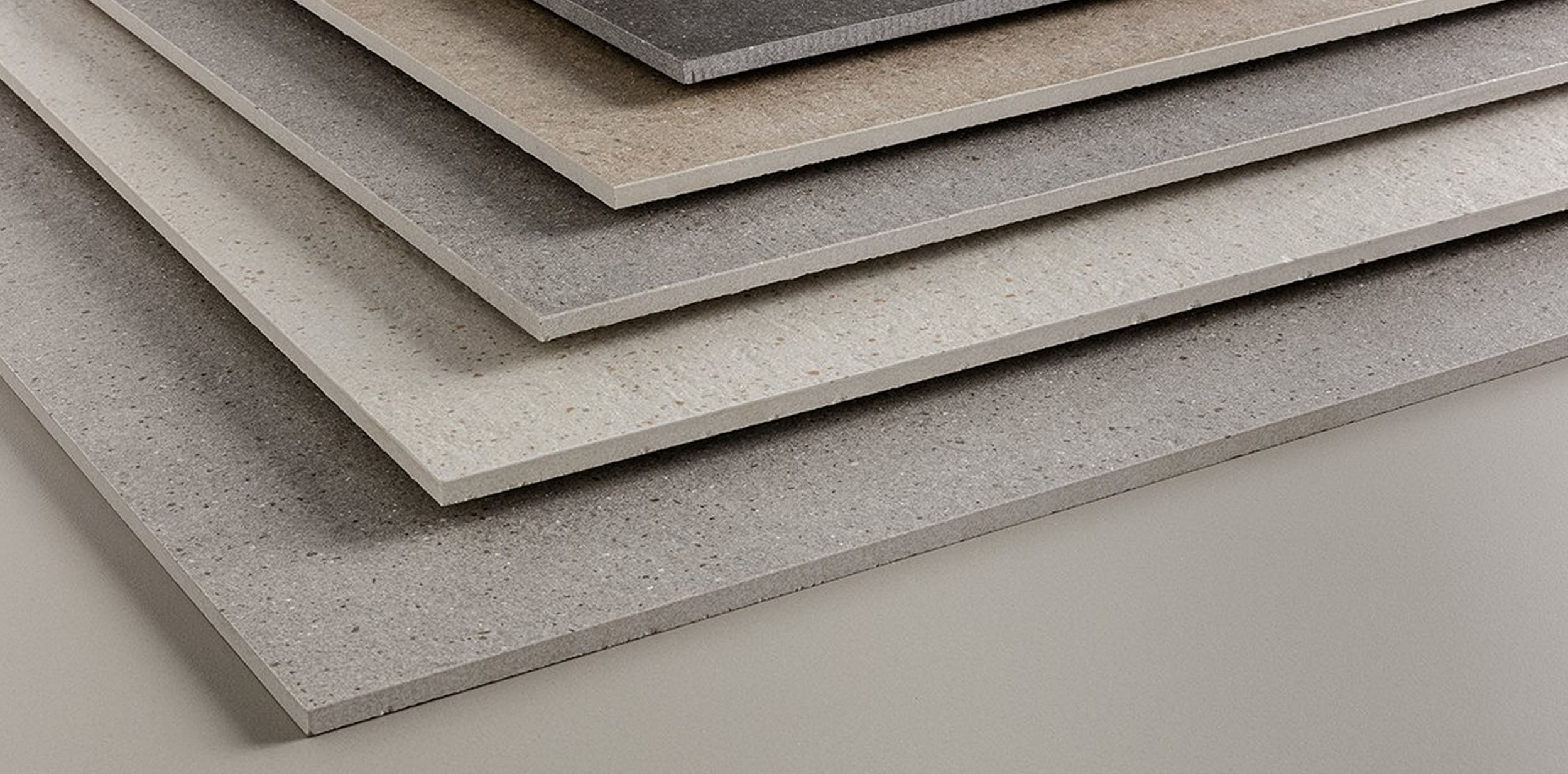
An attractive surface does not necessarily indicate a technically reliable product. Two tiles can look almost identical while having different water absorption rates, breaking strength, dimensional accuracy, and resistance to wear.
For this reason, importers should evaluate measurable technical characteristics rather than relying exclusively on photographs or product descriptions.
Understand the Difference Between Porcelain and Ordinary Ceramic Tiles
Porcelain tiles are generally manufactured from carefully selected raw materials and fired under controlled high-temperature conditions.
Their dense body and low water absorption make them suitable for numerous residential and commercial applications.
According to ISO 13006, porcelain tiles are classified within the BIa group, which specifies water absorption of no more than 0.5%.
However, low water absorption alone does not establish whether a tile is suitable for every application.
Other characteristics must also be evaluated.
Important Technical Properties to Check
۱. Water Absorption
Water absorption indicates how much water a tile absorbs under specified testing conditions.
It is particularly relevant for applications involving moisture, bathrooms, kitchens, swimming pool surroundings, and exterior installations.
ISO 10545-3 specifies the test method used to determine water absorption and related physical properties of ceramic tiles.
۲. Breaking Strength
Breaking strength measures the force a tile can withstand before breaking under a specified test.
This property matters when selecting tiles for floors, commercial environments, and areas exposed to mechanical loads.
For large-format products, the relationship between thickness, dimensions, support conditions, and installation method is also important.
۳. Abrasion Resistance
Abrasion resistance indicates how well a glazed tile withstands surface wear.
For glazed floor tiles, the PEI classification is commonly used to describe resistance to surface abrasion.
A supplier should recommend the appropriate product according to expected foot traffic and intended application.
۴. Slip Resistance
Slip resistance is a major safety consideration, especially in bathrooms, commercial kitchens, entrance areas, swimming pool surroundings, and outdoor spaces.
Ask for the applicable slip-resistance test results for your destination market.
Depending on the project, specifications may refer to standards such as DIN 51130, DIN 51097, or the relevant regional testing method.
Do not assume that every matte or textured tile provides adequate slip resistance.
۵. Dimensional Accuracy
A high-quality tile should have dimensions and flatness within the applicable product tolerances.
Poor dimensional control can create installation difficulties, uneven joints, and additional cutting waste.
۶. Surface and Glaze Quality
Inspect products for:
-
Pinholes and visible imperfections.
-
Glaze irregularities.
-
Surface scratches.
-
Color differences.
-
Uneven polishing.
-
Printing inconsistencies.
-
Edge defects and chipping.
Ask for Independent Laboratory Test Reports
A professional porcelain tile supplier should be able to provide technical documentation supporting its product specifications.
Request test reports covering the properties relevant to your project.
Where possible, use independent laboratories with appropriate accreditation.
The ISO 10545 series includes separate test methods for dimensions, water absorption, breaking strength, abrasion, thermal shock, frost resistance, chemical resistance, and other ceramic tile characteristics.
Ceramic tiles+1
Important: A technical data sheet is useful, but it is not a substitute for an actual test report.
Before placing a large order, verify that the documents refer to the exact product, manufacturing specification, and relevant product classification.
۳. Check Product Certifications and Compliance with International Standards
When importing porcelain tiles, product certification and regulatory compliance should never be treated as optional administrative details.
Different countries and markets may require specific technical documentation, declarations, testing procedures, or conformity assessments. A product that is acceptable in one market may require additional documentation before it can be sold or installed in another.
A reliable porcelain tile supplier should understand the requirements of its target export markets and help buyers identify the relevant documents before shipment.
Which Standards Should You Look For?
Several international standards are particularly important in ceramic tile manufacturing.
ISO 13006 – Ceramic Tiles: Definitions, Classification, Characteristics and Marking
ISO 13006 establishes the classification and technical requirements for ceramic tiles. It provides a common framework for identifying different product groups and their characteristics.
EN 14411 is an important reference for ceramic tiles marketed in European markets. It establishes product classifications, characteristics, and requirements for different categories of tiles.
ISO 10545 – Ceramic Tile Testing Methods
The ISO 10545 series covers various testing procedures, including:
-
ISO 10545-2: Determination of dimensions and surface quality.
-
ISO 10545-3: Determination of water absorption.
-
ISO 10545-4: Determination of modulus of rupture and breaking strength.
-
ISO 10545-6: Determination of deep abrasion resistance for unglazed tiles.
-
ISO 10545-7: Determination of surface abrasion resistance for glazed tiles.
-
ISO 10545-12: Determination of frost resistance.
-
ISO 10545-13: Determination of chemical resistance.
-
ISO 10545-14: Determination of stain resistance.
These standards provide measurable methods for assessing product performance.
What About CE Marking for European Markets?
If you intend to import porcelain tiles into the European Economic Area, you should carefully investigate the applicable construction product requirements.
For products covered by the relevant harmonised technical specifications, the manufacturer may need to prepare a Declaration of Performance (DoP) and apply CE marking.
The precise requirements depend on the product, its intended use, and the applicable legislation and technical specifications.
Ask your supplier to clarify:
-
Whether the product falls within the scope of the relevant harmonised specification.
-
Whether the required Declaration of Performance is available.
-
Whether the technical documentation identifies the product correctly.
-
Whether the manufacturer can provide traceable supporting test results.
-
Whether the product labelling and accompanying information meet the destination market’s requirements.
Remember that an ISO certificate for a company’s management system is not the same as certification of a particular tile product.
For example, ISO 9001 indicates that an organization operates a quality management system. It does not independently prove that every porcelain tile it produces meets all technical performance requirements.
Environmental and Sustainability Documentation
Environmental considerations are becoming increasingly relevant in international construction projects.
Architects, developers, and commercial buyers may request documentation concerning:
-
Environmental Product Declarations (EPDs).
-
Recycled material content.
-
Manufacturing energy consumption.
-
Water management.
-
Waste reduction.
-
Carbon emissions.
-
Environmental management systems.
An EPD provides environmental information based on a defined life-cycle assessment methodology. It should not be confused with a general sustainability certificate or a claim that a product is environmentally superior.
A Practical Certification Checklist
Before selecting your supplier, request:
| Document | Why it matters |
|---|---|
| Product technical data sheet | Identifies product specifications |
| Laboratory test reports | Demonstrates measured performance |
| Declaration of Performance, where applicable | Supports European compliance |
| ISO 9001 certificate | Indicates quality management practices |
| ISO 14001 certificate, if available | Indicates environmental management practices |
| Product identification and batch records | Supports traceability |
| Environmental documentation, if required | Supports project sustainability assessments |
The key principle: Always verify that certificates and reports are genuine, current where applicable, and relevant to the exact product being purchased.
A supplier that understands international compliance can help reduce documentation problems, customs delays, and costly misunderstandings.
۴. Examine the Product Range, Sizes, Designs, and Surface Finishes
A reliable porcelain tile supplier should offer products that match the technical and aesthetic requirements of your target market.
The international tile market is no longer limited to conventional square and rectangular tiles. Buyers increasingly evaluate products according to architectural applications, design trends, installation requirements, and project specifications.
A supplier with a well-organized portfolio can help importers serve different customer segments without depending on multiple manufacturers.
Evaluate the Available Tile Sizes
Different markets and construction projects require different dimensions.
Common porcelain tile sizes include:
-
۳۰ × ۶۰ cm.
-
۶۰ × ۶۰ cm.
-
۶۰ × ۱۲۰ cm.
-
۸۰ × ۸۰ cm.
-
۹۰ × ۹۰ cm.
-
۱۰۰ × ۱۰۰ cm.
-
۱۲۰ × ۱۲۰ cm.
Large-format porcelain tiles are also gaining attention in contemporary architecture.
They are frequently used in residential interiors, hotels, shopping centers, offices, and commercial developments.
However, selecting a size should involve more than following design trends.
Consider:
-
Room dimensions.
-
Installation method.
-
Available cutting equipment.
-
Transportation limitations.
-
Installation labor costs.
-
Expected breakage.
-
Customer preferences.
For example, 60 × ۱۲۰ cm porcelain tiles can create a modern appearance in living rooms and commercial interiors while reducing the number of visible grout joints compared with smaller formats.
Why Porcelain Slabs Deserve Special Attention
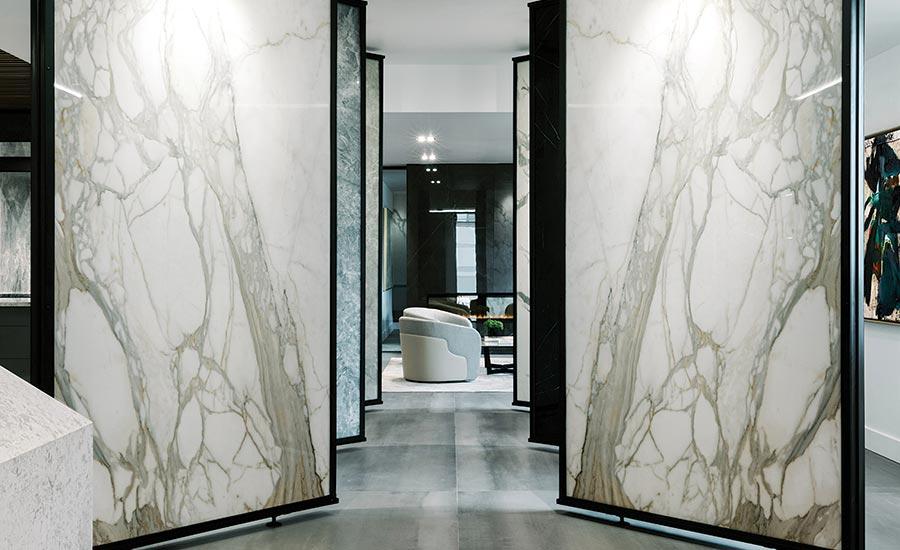
Porcelain slabs represent an important segment of the premium tile market.
Unlike conventional tile formats, slabs are manufactured in larger dimensions and are frequently used for applications such as:
-
Kitchen countertops.
-
Bathroom wall coverings.
-
Reception desks.
-
Decorative feature walls.
-
Furniture surfaces.
-
Commercial interior installations.
-
Selected flooring applications.
Their large dimensions create opportunities for continuous visual patterns and fewer visible joints.
However, a porcelain slab supplier must demonstrate capabilities beyond conventional tile manufacturing.
Ask about:
Slab dimensions: What are the maximum available length and width?
Thickness: Are products available in 6 mm, 9 mm, 12 mm, or other thicknesses?
Surface finishes: Does the factory offer polished, matte, honed, or textured surfaces?
Edge processing: Can the products be cut, polished, and fabricated according to project requirements?
Veining consistency: Are the printed patterns coordinated across different slabs?
Handling requirements: Does the supplier provide suitable protective packaging and handling instructions?
A supplier should also explain whether the product is suitable for the intended application. For example, a slab designed for wall cladding should not automatically be recommended for every countertop or flooring application.
Check Design Consistency and Surface Finishes
Design quality is not simply a question of whether a tile looks attractive.
Importers should evaluate the consistency of the entire collection.
Important design considerations include:
-
Number of different faces or printed patterns.
-
Natural variation between individual pieces.
-
Color consistency between production batches.
-
Matching wall and floor collections.
-
Availability of coordinated trims and accessories.
-
Consistency between samples and delivered products.
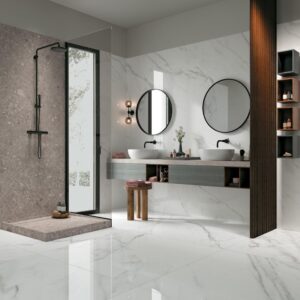
For marble-look porcelain, ask how many different graphic faces are available. A collection with limited pattern variation may create repetitive visual effects across large installations.
Understand Your Target Market
Different markets may prefer different product characteristics.
For instance, luxury residential projects may prioritize large formats, marble-inspired designs, and premium surface finishes.
Commercial projects may place greater emphasis on durability, slip resistance, maintenance requirements, and consistent availability.
A reliable supplier should help you select a product portfolio based on actual market demand rather than simply promoting its most expensive collections.
Practical recommendation: Request a complete catalogue with product codes, dimensions, thicknesses, finishes, technical information, and available stock or production status. This makes it easier to compare products and plan future purchases.
۵. Request Physical Samples Before Placing a Large Order
One of the most common mistakes in international tile sourcing is making purchasing decisions based entirely on digital photographs.
Product images are useful for initial selection, but they cannot accurately demonstrate every characteristic of a porcelain tile.
Screen settings, lighting conditions, image editing, and photography techniques can all influence how a product appears.
A sample inspection gives buyers a more realistic understanding of the product.
What Should You Examine in a Tile Sample?
When requesting samples from a porcelain tile supplier, evaluate the following characteristics.
۱. Color Accuracy
Compare the sample with the supplier’s catalogue and product photographs.
Check whether the actual color matches the expected shade.
۲. Surface Texture
Touch the surface and examine its finish.
Determine whether the texture is suitable for the intended application.
۳. Edge Quality
Inspect the edges for chipping, irregularities, and manufacturing defects.
۴. Thickness
Measure the actual thickness and compare it with the supplier’s technical specifications.
۵. Flatness
Place the sample on a suitable flat surface and examine any visible deformation.
For large-format products, dimensional stability and flatness are particularly important.
۶. Printing and Pattern Quality
Look for repeated patterns, blurred details, inconsistent veining, and differences in surface appearance.
۷. Cleaning and Maintenance
Ask for cleaning recommendations and evaluate whether the finish is appropriate for the intended environment.
Why Full-Size Samples Matter
Small samples are useful for preliminary evaluation, but they cannot always demonstrate the complete visual appearance of a large tile.
This is especially true for marble-look porcelain and porcelain slabs.
A small sample may show only a fraction of the printed pattern. It may not reveal the complete veining, color transitions, or overall design balance.
For large projects, request larger samples or photographs of complete production pieces under neutral lighting.
For porcelain slabs, reviewing full-size images and, when possible, inspecting the actual slab is particularly valuable.
Check Shade and Calibration Codes
Two important terms in tile purchasing are shade variation and calibration.
Shade variation refers to differences in color or appearance between tiles.
Manufacturers commonly use shade codes or batch identification systems to help manage these differences.
Calibration refers to the dimensional grouping or control of tiles to ensure that products within a specified category have compatible dimensions.
Before confirming your order, ask the supplier:
-
How are shade variations identified?
-
Are all cartons supplied from the same production batch?
-
What dimensional tolerances apply?
-
Can the same shade and calibration be maintained in repeat orders?
-
Are replacement products available if additional quantities are required?
Sample Approval Should Be Documented
A professional purchasing process should include written sample approval.
Record the following information:
| Item | Information to confirm |
|---|---|
| Product code | Exact collection and model |
| Size | Nominal dimensions |
| Thickness | Specified thickness |
| Finish | Polished, matte, satin, or textured |
| Shade | Approved shade code |
| Calibration | Approved dimensional category |
| Technical properties | Relevant test specifications |
| Visual approval | Sample reference or signed approval |
Keep an approved sample as a reference whenever practical.
This helps resolve potential disputes if the delivered products differ from the originally approved material.
Remember: A sample is not merely a marketing tool. It is an important part of your quality assurance and purchasing documentation.
۶. Evaluate Production Capacity, Quality Control, and Delivery Reliability
A supplier may offer attractive prices and impressive product designs, but can it deliver the required quantity within your project schedule?
Production capacity and delivery reliability are essential considerations, particularly for importers purchasing full containers or supplying large construction projects.
A delayed shipment can affect construction schedules, increase storage expenses, and damage relationships with customers.
For this reason, buyers should investigate how a supplier manages manufacturing, quality inspections, inventory, and delivery commitments.
Understand the Supplier’s Production Capacity
Start by asking about the company’s manufacturing facilities and available production lines.
Important questions include:
-
How many production lines are operational?
-
What is the approximate monthly production capacity?
-
Which tile dimensions can be manufactured regularly?
-
Does the factory produce large-format porcelain tiles?
-
Are porcelain slabs manufactured in-house or sourced from another producer?
-
What is the average lead time for standard products?
-
How much additional time is required for customized orders?
These questions help you determine whether the supplier can handle your order without compromising quality or delivery schedules.
For example, a distributor requiring 15,000 square meters of 60 × ۱۲۰ cm porcelain tiles may need a different production arrangement from a contractor ordering several hundred square meters of specialized slabs.
The supplier should be able to provide a realistic production schedule for both situations.
Investigate the Quality Control Process
Quality control should be integrated into every stage of manufacturing.
A professional factory generally monitors raw materials, pressing, drying, glazing, firing, finishing, sorting, and packaging.
Ask the supplier to explain its inspection procedures.
A structured quality control system should address:
Raw material inspection: Evaluating the consistency and suitability of incoming materials.
Production monitoring: Controlling important manufacturing parameters such as pressing and firing conditions.
Dimensional inspection: Checking product dimensions, thickness, and flatness.
Surface inspection: Identifying visual defects, glaze irregularities, and printing problems.
Technical testing: Performing relevant tests according to product specifications.
Final sorting: Separating products according to quality classifications and applicable shade or calibration categories.
Packaging inspection: Checking carton labels, protective materials, and pallet stability.
Request Information About Production Lead Times
Delivery schedules should be discussed before confirming the purchase order.
A supplier should distinguish between:
-
Products currently available in stock.
-
Products requiring additional production.
-
Special orders requiring customized manufacturing.
-
Large-format slabs requiring specific production arrangements.
Ask for a written estimated completion date and shipment schedule.
Also clarify what happens if production is delayed.
Why Repeat-Order Capability Matters
For distributors and wholesalers, one successful shipment is not enough.
The supplier must be able to support future purchases with reasonably consistent specifications and product availability.
Imagine that a distributor introduces a new porcelain collection to its market and successfully sells several containers.
If the manufacturer discontinues the product or cannot reproduce the same shade, the distributor may struggle to satisfy existing customers.
A reliable supplier should communicate product availability, collection changes, and production limitations in advance.
Practical recommendation: Request a production plan before placing a substantial order. A written schedule should identify the production period, inspection stage, packaging completion, and expected shipment date.
۷. Compare Prices, Payment Terms, and the Total Cost of Purchasing
Price is an important factor when selecting a porcelain tile supplier. However, the lowest quotation does not necessarily represent the most economical purchasing decision.
International tile transactions involve several costs beyond the factory price.
A buyer who focuses exclusively on the quoted price per square meter may overlook freight, insurance, customs duties, handling expenses, installation losses, and other charges.
The correct approach is to calculate the total landed cost.
What Determines Porcelain Tile Prices?
The price of porcelain tiles depends on several factors.
Raw materials: The quality and cost of minerals, pigments, and other production inputs influence manufacturing expenses.
Manufacturing technology: Advanced production equipment, digital printing systems, and finishing processes can affect product costs.
Tile dimensions: Large-format products and specialized slabs may require different manufacturing and handling arrangements.
Thickness: Different thicknesses involve different material requirements and production specifications.
Surface finish: Polished, structured, textured, and specialized finishes may have different production costs.
Design complexity: Premium graphics and advanced digital printing can influence pricing.
Order quantity: Larger orders may provide opportunities for more competitive unit prices.
Packaging: Specialized protective packaging, particularly for porcelain slabs, can increase costs.
Understand Incoterms Before Comparing Quotations
International commercial terms determine how responsibilities, costs, and risks are divided between buyers and sellers.
Common Incoterms used in tile exports include:
| Incoterm | General responsibility |
|---|---|
| EXW | Buyer arranges collection and most transportation responsibilities |
| FCA | Seller delivers goods to the agreed carrier or location |
| FOB | Seller delivers goods on board the nominated vessel at the agreed port |
| CFR | Seller pays freight to the destination port |
| CIF | Seller pays freight and specified insurance to the destination port |
| DAP | Seller arranges delivery to the agreed destination, with import clearance generally handled by the buyer |
The exact contractual obligations depend on the named place and the selected Incoterms rule.
When comparing suppliers, make sure you are comparing equivalent delivery conditions.
A quotation based on EXW cannot be directly compared with a CIF quotation without accounting for the additional transportation and insurance costs.
Calculate the Total Landed Cost
A useful purchasing calculation includes:
-
Factory purchase price.
-
Inland transportation.
-
Export documentation and handling.
-
International freight.
-
Cargo insurance, where applicable.
-
Customs duties and taxes.
-
Destination port charges.
-
Local transportation.
-
Unloading and warehousing.
-
Expected breakage and installation waste.
For example, Supplier A may offer a lower factory price but use less protective packaging.
Supplier B may charge slightly more but provide stronger packaging, better batch control, and more reliable shipping arrangements.
If Supplier A’s products experience higher breakage during transportation, its apparent price advantage may disappear.
Evaluate Payment Conditions
Before transferring money, clarify:
-
Required deposit percentage.
-
Balance payment deadline.
-
Accepted payment methods.
-
Currency of payment.
-
Bank charges.
-
Refund or cancellation conditions.
-
Procedures for handling quality disputes.
For larger transactions, consider appropriate payment protections, such as letters of credit, where commercially and legally suitable.
Never transfer funds to an account that has not been independently verified as belonging to the contracting business.
The main principle: Compare the total cost of receiving acceptable products, not simply the price printed on the quotation.
۸. Examine Packaging, Transportation, and Export Experience
Packaging and transportation are particularly important when purchasing porcelain tiles internationally.
Even technically excellent products can arrive damaged if they are packed incorrectly, handled carelessly, or transported without appropriate protection.
This risk increases with large-format porcelain tiles and slabs because their dimensions, weight distribution, and handling requirements create additional logistical challenges.
What Should Good Porcelain Tile Packaging Include?
For conventional porcelain tiles, packaging generally needs to protect the products against movement, impact, moisture exposure, and stacking pressure during transportation.
A reliable supplier should use packaging appropriate to the product dimensions and shipping method.
Common packaging components include:
-
Strong corrugated cartons.
-
Protective separators.
-
Corner protection.
-
Suitable wooden pallets.
-
Stretch wrapping.
-
Strapping materials.
-
Clear product identification labels.
Each carton should contain accurate information about the product and its specifications.
Depending on the destination market and commercial requirements, labels may include:
-
Manufacturer’s name.
-
Product code.
-
Tile dimensions.
-
Thickness.
-
Number of pieces.
-
Covered area.
-
Shade identification.
-
Calibration code.
-
Quality classification.
-
Batch number.
-
Country of origin.
Special Packaging Requirements for Porcelain Slabs
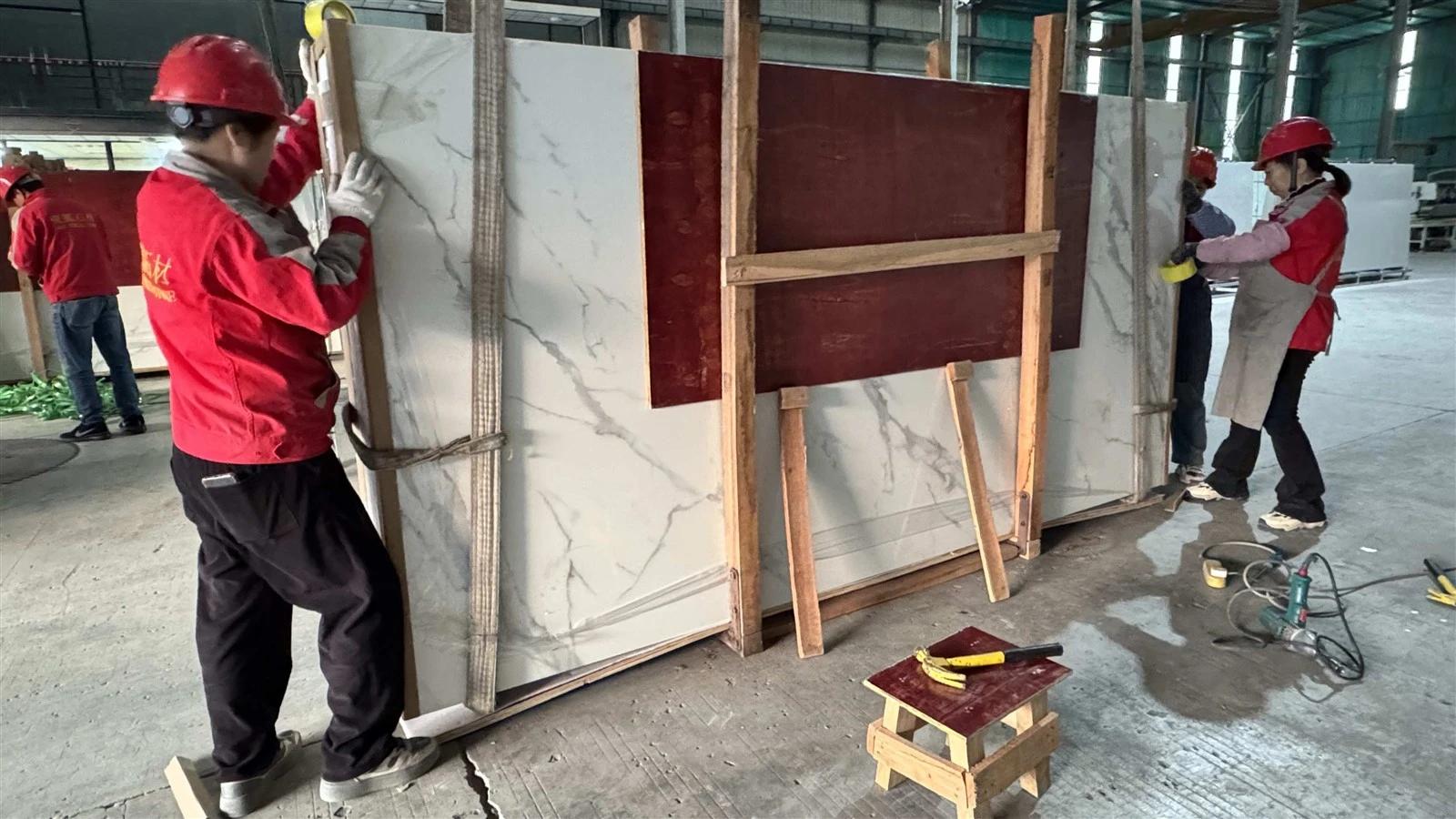
Porcelain slabs require more specialized packaging than conventional tiles.
Their large dimensions make them sensitive to improper support, uneven pressure, and careless handling.
Ask your supplier about:
A-frame supports: These structures are commonly used to support large slabs during storage and transportation.
Protective separators: Appropriate materials help prevent surface scratching and direct contact between slabs.
Edge protection: Vulnerable corners and edges should receive suitable protection.
Load stability: Slabs must be secured to prevent unwanted movement during transportation.
Handling equipment: Appropriate lifting equipment and procedures should be available.
Loading documentation: Photographs and loading records can help establish the condition of goods before shipment.
Packaging requirements should be agreed upon before production and confirmed before loading.
Check the Supplier’s Export Experience
International export experience is another important indicator of a supplier’s operational capability.
A company that regularly exports porcelain tiles should understand the documentation and logistics procedures involved in international shipments.
Ask whether the supplier can prepare the following documents, as applicable:
-
Commercial invoice.
-
Packing list.
-
Certificate of origin.
-
Bill of lading.
-
Export customs documentation.
-
Insurance documentation.
-
Product declarations and technical documents.
-
Additional certificates required by the destination country.
The exact requirements depend on the importing country’s customs regulations and the nature of the transaction.
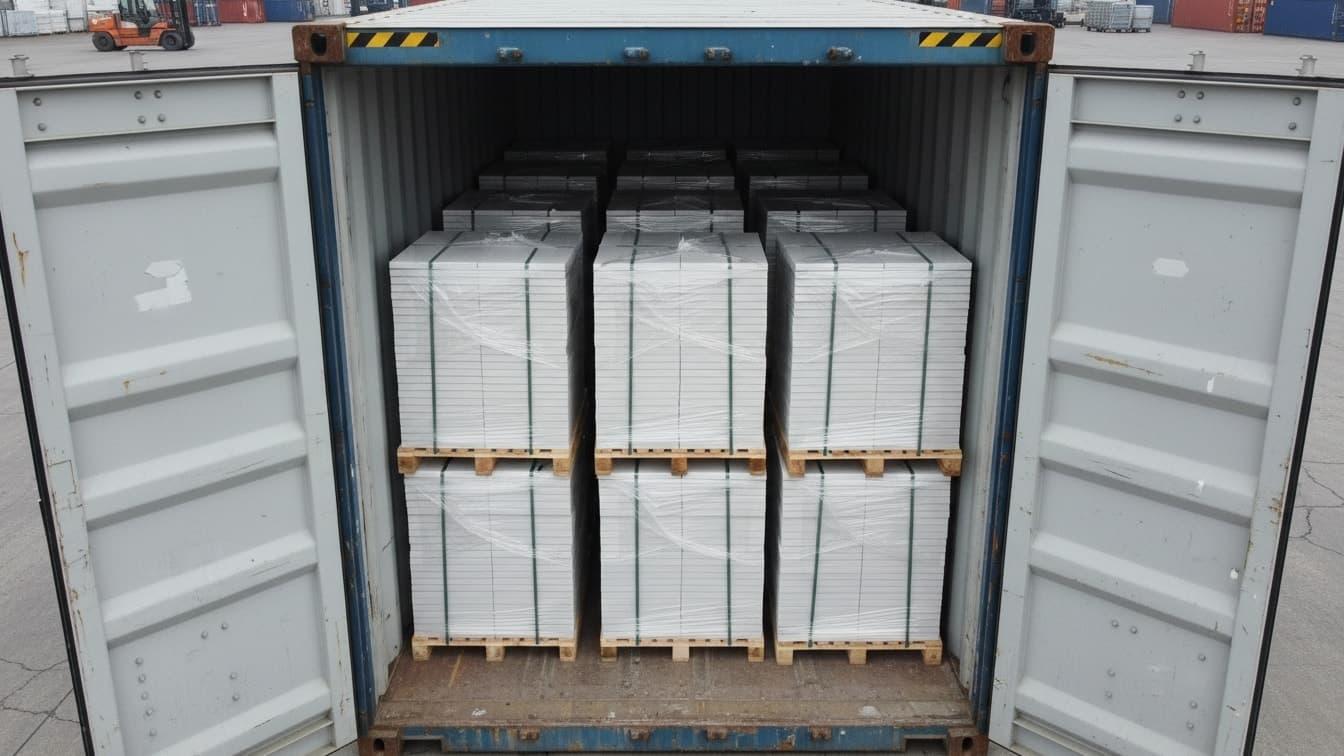
Request Photographs and Loading Records
Before the goods leave the factory, ask for photographs of:
-
Finished products.
-
Carton labels.
-
Pallet arrangements.
-
Protective packaging.
-
Container condition.
-
Container loading.
-
Final container sealing.
These records provide useful evidence of the shipment’s condition and help identify problems if a dispute occurs later.
Consider Freight and Breakage Risks
The most suitable shipping method depends on product dimensions, order quantity, destination, and handling requirements.
Conventional tiles are frequently transported in containers using pallets.
Large-format slabs may require specialized crates, loading arrangements, and equipment.
A professional supplier should explain its recommended transportation method and coordinate with the freight forwarder where necessary.
Practical recommendation: Do not finalize an export order until packaging specifications, loading responsibilities, shipping documents, and damage-reporting procedures have been agreed upon in writing.
۹. Evaluate Communication, Customer Service, and After-Sales Support
A reliable porcelain tile supplier should be more than a company that sends quotations and delivers products.
International trade often involves multiple stages of communication, including product selection, technical clarification, sample approval, production monitoring, shipping coordination, and after-sales support.
A supplier’s ability to communicate professionally can make a significant difference to the success of a long-term business relationship.
What Does Professional Communication Look Like?
Start by evaluating the quality and clarity of the supplier’s responses.
A dependable supplier should:
-
Respond within a reasonable timeframe.
-
Provide accurate product information.
-
Explain technical specifications clearly.
-
Answer questions about production and delivery.
-
Provide written quotations.
-
Communicate changes in production schedules.
-
Identify potential problems before they become serious.
-
Maintain consistent contact throughout the transaction.
Pay particular attention to how the company responds to technical questions.
If a supplier cannot explain the difference between polished and matte surfaces, or cannot provide information about the thickness and water absorption of its products, you should investigate further.
Evaluate the Export Sales Team
A professional export department should understand both the products and the practical requirements of international buyers.
Ideally, the team should be able to communicate effectively in English and provide:
-
Digital product catalogues.
-
Technical data sheets.
-
Product photographs.
-
Sample arrangements.
-
Price quotations.
-
Packaging specifications.
-
Shipping updates.
-
Export documentation.
For international buyers, clear English communication reduces the possibility of misunderstandings regarding product dimensions, quantities, finishes, and commercial conditions.
Why After-Sales Support Matters
After-sales service becomes particularly important when products are used in large construction projects.
Potential problems may include:
-
Damaged products.
-
Missing cartons.
-
Incorrect quantities.
-
Shade inconsistencies.
-
Dimensional discrepancies.
-
Technical performance issues.
-
Documentation errors.
Before purchasing, ask the supplier to explain its complaint-handling procedures.
A professional company should have a clear process for receiving, investigating, and responding to complaints.
It should also explain what evidence is required, such as photographs, batch numbers, carton labels, inspection records, and delivery documents.
Establish a Written Complaint Procedure
A useful commercial agreement should identify:
-
The period within which visible shipping damage must be reported.
-
The documentation required for a quality claim.
-
The procedure for independent inspection, if necessary.
-
Responsibilities for replacement products or agreed compensation.
-
The process for resolving technical disputes.
-
Applicable contractual deadlines.
For example, if a buyer discovers that several cartons are damaged after delivery, the supplier should already have an agreed process for reviewing the evidence.
This is more effective than attempting to negotiate a solution after the problem has occurred.
Build a Long-Term Business Relationship
For importers and distributors, supplier reliability should be evaluated over multiple transactions.
A dependable partner can help you:
-
Introduce new porcelain tile collections.
-
Develop market-specific product ranges.
-
Plan repeat orders.
-
Maintain product availability.
-
Improve purchasing efficiency.
-
Reduce communication and logistics risks.
Practical recommendation: Evaluate the supplier’s communication throughout the entire purchasing process, not just during the initial sales negotiation. The way a company handles difficult questions and unexpected problems often reveals more than its promotional materials.
۱۰. Identify Warning Signs Before Signing a Contract
Even when a supplier offers competitive prices and an attractive product catalogue, certain warning signs should make buyers more cautious.
Identifying these issues before making a financial commitment can prevent unnecessary expenses and commercial disputes.
Common Red Flags in International Tile Sourcing
۱. Prices That Are Unusually Low
An exceptionally low quotation may indicate differences in product specifications, quality classification, packaging, or commercial terms.
Ask for an explanation rather than assuming the lowest price represents the best deal.
Compare products with identical dimensions, thicknesses, finishes, technical characteristics, and delivery conditions.
۲. Refusal to Provide Technical Documentation
A supplier that refuses to share available product specifications or relevant test reports makes independent quality assessment difficult.
Technical transparency should be a basic part of professional business communication.
۳. Unclear Business Identity
Be cautious if a company cannot provide its legal name, business address, registration information, or verifiable payment details.
۴. Pressure to Make Immediate Payments
Professional suppliers should allow reasonable time for reviewing quotations, checking documents, approving samples, and preparing contracts.
Unusual pressure to transfer money immediately should trigger additional verification.
۵. Inconsistent Product Information
If the product catalogue, quotation, technical data sheet, and commercial invoice contain different dimensions, thicknesses, or product codes, request clarification before proceeding.
۶. No Clear Quality Inspection Process
A supplier should explain how finished products are inspected and how defective products are handled.
۷. Unreliable Delivery Promises
Be careful with companies that guarantee unrealistic production or shipping schedules without checking actual production capacity and logistics arrangements.
۸. Poor Packaging Information
If the supplier cannot explain how products will be protected during transportation, particularly large-format slabs, the risk of breakage may be higher.
۹. No Written Commercial Agreement
Verbal promises are insufficient for significant international purchases.
Product specifications, quantities, payment conditions, delivery schedules, packaging, and quality requirements should be documented.
۱۰. No Clear Complaint or Replacement Policy
A supplier should be able to explain what happens if products arrive damaged, quantities are incorrect, or delivered materials fail to meet agreed specifications.
Use a Supplier Evaluation Scorecard
One practical way to compare different companies is to create a supplier evaluation system.
The following model assigns different weights to the most important purchasing criteria.
| Evaluation criterion | Suggested weight |
|---|---|
| Product quality and technical performance | ۲۵% |
| Business credibility and experience | ۱۵% |
| Certifications and compliance | ۱۵% |
| Pricing and payment conditions | ۱۵% |
| Production and delivery capacity | ۱۰% |
| Packaging and export experience | ۱۰% |
| Communication and after-sales service | ۱۰% |
| Total | ۱۰۰% |
Score each supplier from 1 to 5 for every criterion.
Multiply each score by its corresponding weight and divide by 5 to calculate the weighted result.
For example, a supplier scoring 4 out of 5 in product quality receives 20 points from that category.
This approach makes comparisons more objective and reduces the risk of selecting a supplier simply because of a persuasive sales presentation.
A Final Pre-Purchase Checklist
Before confirming your order, make sure you have completed these steps:
Completing these steps will not eliminate every commercial risk, but it can significantly improve the quality of your purchasing decisions.
Frequently Asked Questions About Choosing a Porcelain Tile Supplier
۱. How Can I Find a Reliable Porcelain Tile Supplier?
Start by identifying manufacturers and exporters with a verifiable business background, relevant manufacturing experience, and a documented quality control system.
Request product catalogues, technical data sheets, laboratory test reports, and physical samples.
You should also evaluate their production capacity, export experience, packaging methods, delivery schedules, and after-sales support.
Comparing several suppliers using the same technical and commercial criteria is one of the most effective ways to identify a suitable business partner.
۲. What Certifications Should a Porcelain Tile Manufacturer Have?
The appropriate documentation depends on the destination market and intended application.
Important references include ISO 13006 for ceramic tile classification, EN 14411 for relevant European product requirements, and the ISO 10545 series for testing ceramic tile characteristics.
For European markets, buyers should also investigate applicable CE marking and Declaration of Performance requirements.
ISO 9001 and ISO 14001 can provide additional information about a manufacturer’s management systems, but they do not replace product-specific testing.
۳. Is Buying Porcelain Tiles Directly from a Manufacturer Better?
Buying directly from a manufacturer can provide better access to production information, customization opportunities, and factory-level pricing.
However, a professional trading company may offer advantages such as a broader product portfolio, flexible sourcing, consolidated shipments, and export coordination.
The best option depends on your order quantity, product requirements, destination market, and the supplier’s commercial capabilities.
۴. What Should I Check Before Importing Porcelain Slabs?
Porcelain slabs require particular attention because of their dimensions and specialized handling requirements.
Before purchasing, check:
-
Actual slab dimensions and thickness.
-
Surface finish and design consistency.
-
Dimensional tolerances and flatness.
-
Relevant technical test results.
-
Packaging and protective structures.
-
Transportation and unloading arrangements.
-
Compatibility with the intended installation.
-
Availability of replacement products.
For major projects, inspecting actual slabs before shipment is recommended whenever practical.
۵. What Is the Difference Between a Porcelain Tile Supplier and a Porcelain Tile Manufacturer?
A manufacturer produces tiles using its own production facilities or directly managed manufacturing operations.
A supplier is a broader term that includes manufacturers, exporters, wholesalers, and trading companies.
A porcelain tile supplier may offer products from several factories, while a manufacturer generally focuses on its own collections.
When choosing between them, consider product traceability, quality responsibility, technical support, and the ability to meet your purchasing requirements.
Conclusion: Choose a Porcelain Tile Supplier Based on Value, Not Just Price
Finding a reliable porcelain tile supplier is a strategic decision that can directly influence the profitability and long-term success of your import business or construction project.
The right supplier should offer more than attractive designs and competitive prices. It should demonstrate consistent product quality, transparent business practices, technical knowledge, dependable production capacity, and professional export capabilities.
As we have discussed, ten essential factors deserve particular attention: business credibility, technical specifications, international standards, product diversity, sample approval, production capacity, pricing, packaging, communication, and commercial transparency.
These considerations become even more important when purchasing large-format porcelain tiles and porcelain slabs. Their specialized manufacturing, handling, transportation, and installation requirements demand careful evaluation before placing an order.
Looking ahead to 2027 and 2028, international buyers will likely continue placing greater emphasis on product performance, architectural design, sustainability documentation, and supply chain reliability. The global ceramic tile industry’s recent production slowdown, alongside the recovery in international trade during 2025, also highlights the importance of choosing suppliers capable of competing through quality and operational efficiency rather than price alone.
For importers and distributors, establishing a long-term relationship with a dependable manufacturer can create opportunities for better purchasing conditions, consistent product availability, and stronger market positioning.
Are you looking for a reliable partner for porcelain tile and porcelain slab sourcing?
At Goldis Tile, we believe successful international trade begins with product knowledge, transparent communication, and a commitment to quality.
Explore our porcelain tile collections, review our available product specifications, and contact our export team to discuss your requirements. Our specialists can help you identify suitable products, evaluate available options, and take the next step toward a successful business partnership.
Choose your supplier carefully. The quality of your next project starts with the quality of your sourcing decision.



نظرات ۰