
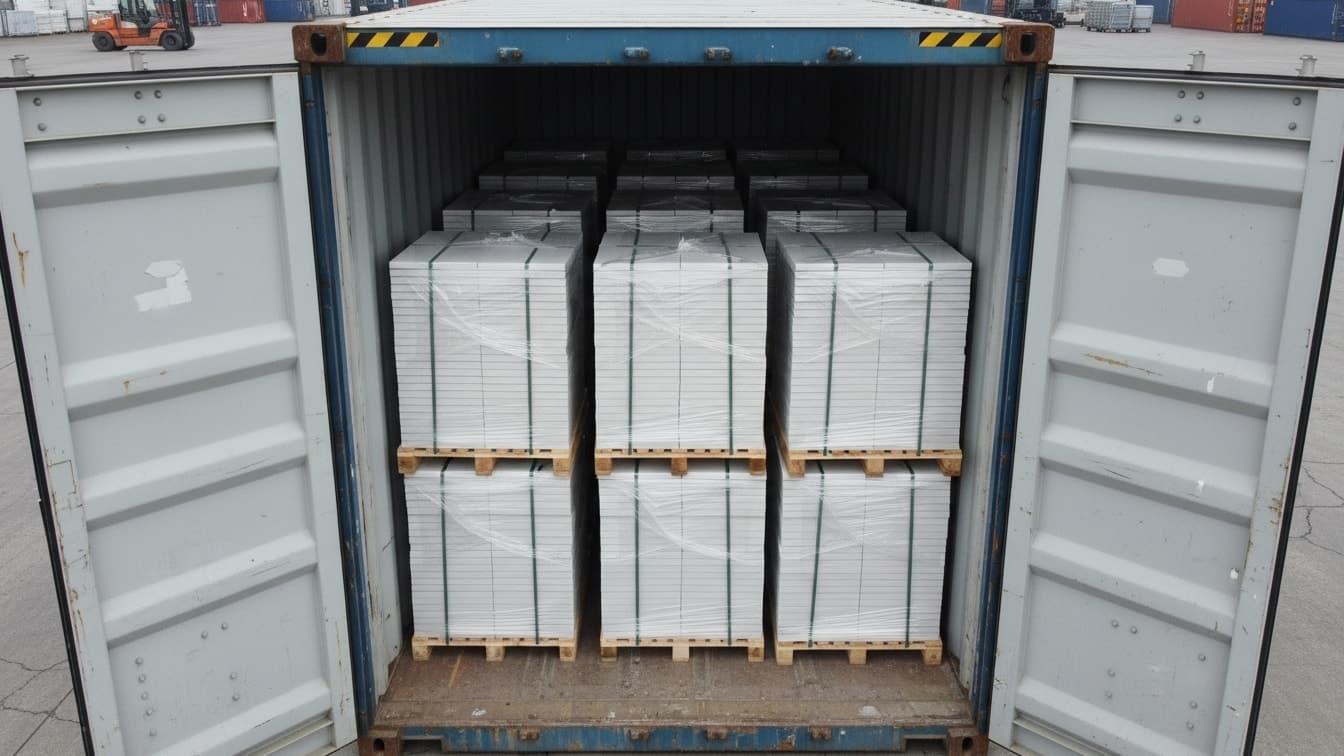



Sourcing Iranian porcelain tile export for your European build? This guide covers pricing, EN 14411 compliance, logistics, and supplier vetting — start smarter today.
Iran now ships roughly 200 million square meters of ceramic and porcelain tile abroad every year, placing it among the five largest tile producers on earth. Yet most European contractors still default to Spanish or Italian suppliers out of habit, not economics.
That habit is expensive. A single container of mid-grade porcelain from Western Europe can cost 30–۴۰% more than an equivalent Iranian shipment, without a proportional jump in technical performance. For a mid-size residential development, that gap alone can swallow a contractor’s entire profit margin.
The real barrier isn’t quality — it’s information. Procurement managers in Germany, Poland, or the Netherlands often don’t know how to evaluate an Iranian porcelain tile export deal: which standards apply, how customs clearance actually works, or which suppliers can survive a full container order without missing a shipping window.
This guide answers those questions directly. You’ll learn how Iran’s tile industry compares to established European and Turkish suppliers, what EN 14411 and CE marking actually require, how pricing and logistics break down for a typical order, and which red flags separate a reliable exporter from a risky one.
By the end, you should be able to walk into a supplier negotiation with the same leverage as a buyer who has done this a hundred times. That means knowing the right questions to ask about water absorption ratings, container loading capacity, and Incoterms — not just the color catalog.
We wrote this from the perspective of a sourcing consultant advising European contractors, not a marketing brochure for any single factory. Where the data supports caution, we say so. Where Iranian porcelain genuinely outperforms alternatives on cost or specification, we say that too.

Why European Contractors Are Looking at Iranian Porcelain Tile
The Scale of Iran’s Tile Industry
Iran produced approximately 444 million square meters of ceramic tile in 2024, more than any other country in the Middle East, and exported around 16 million square meters of that volume internationally. Industry officials report that Iranian manufacturers currently export roughly 40% of total output to more than 50 countries.
That export volume grew at a compound annual rate above 13% between 2013 and 2024 — a pace few other tile-exporting nations matched. The growth reflects deliberate industrial policy: Iranian producers have invested heavily in kiln capacity and glazing technology specifically to compete for hard-currency export contracts.
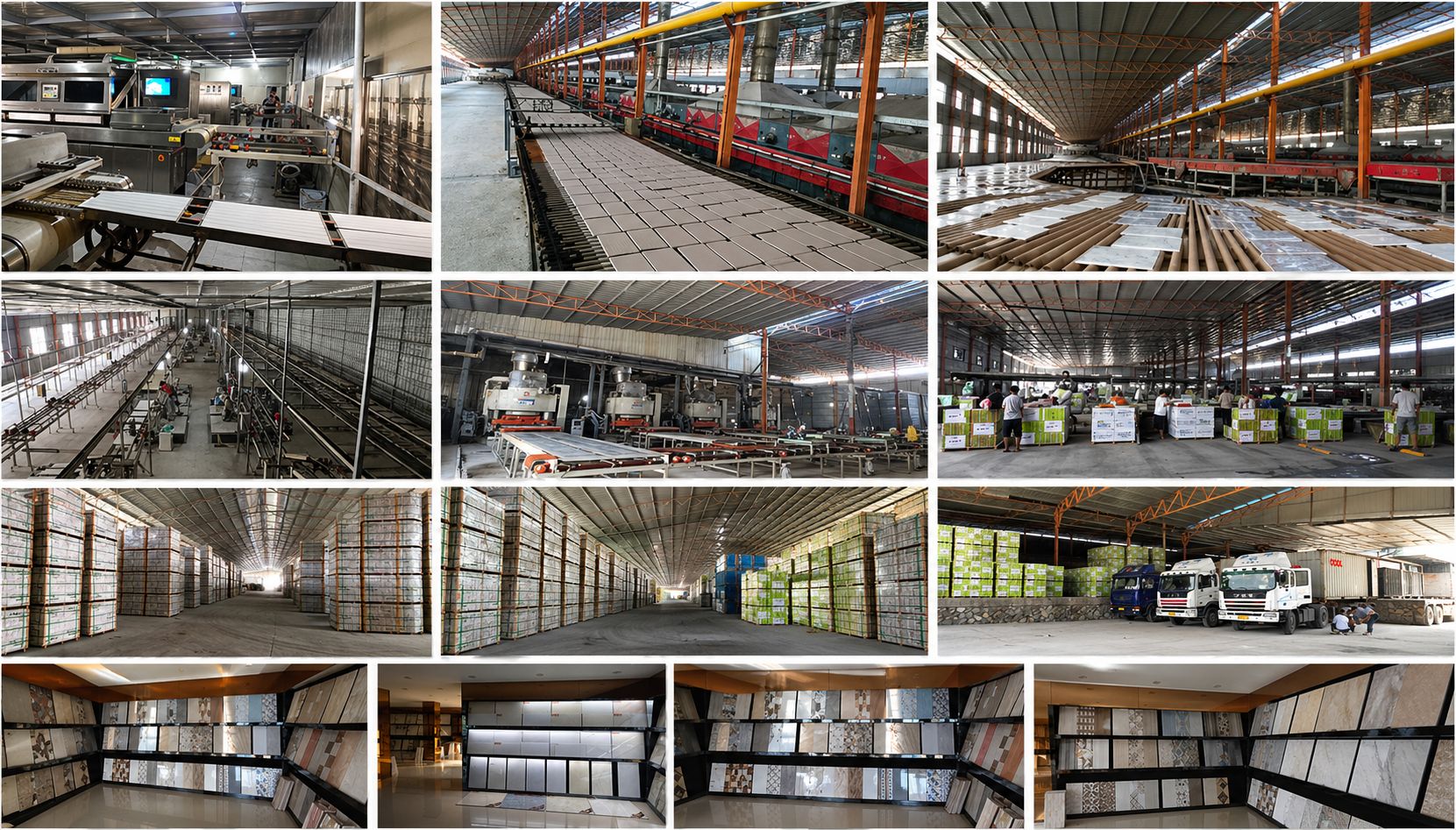
For European buyers, scale matters for a practical reason. A factory producing hundreds of thousands of square meters monthly can absorb a large single order without disrupting its production schedule. Smaller boutique producers, by contrast, may need to interrupt other clients’ orders to fill yours, creating delivery risk.
Cost Advantage Compared to Traditional EU Suppliers
Iranian ceramic tile carried an average export price near $5.40 per square meter in 2024, a figure that sits well below equivalent Italian or Spanish porcelain lines, which often start above $8–۱۰ per square meter for comparable technical grades.
That price gap exists for structural reasons, not corner-cutting:
- Lower energy costs. Natural gas, the dominant input for firing kilns, is heavily subsidized domestically in Iran, cutting one of the largest line items in ceramic production.
- Currency dynamics. Export contracts priced in euros or dollars benefit from favorable exchange conversion against the Iranian rial, letting factories quote competitively while still profiting domestically.
- Labor cost structure. Skilled ceramic labor in Iran costs a fraction of equivalent roles in Italy or Spain, though this gap narrows for highly automated finishing lines.
None of this means every Iranian tile is cheap-and-cheerful. Premium Iranian porcelain lines — large-format slabs, rectified edges, digital-print finishes — compete on specification with mid-tier Italian product while undercutting it on price by a meaningful margin.
Where Iran Fits Against Turkey and China
Turkey remains the dominant Middle Eastern exporter by volume, generating over half of regional tile exports in 2024, while the United Arab Emirates and Iran trail behind it. China dominates globally on raw volume but has ceded some price-sensitive European business as logistics costs and anti-dumping duties on Chinese ceramic tile have made Turkish and Iranian alternatives more attractive.
For a European buyer comparing options, the practical distinctions are:
- Turkey offers shorter shipping times to EU ports and existing customs union familiarity, but at a price premium over Iran.
- China offers rock-bottom pricing on basic product but faces EU anti-dumping tariffs on certain ceramic tile categories, plus far longer transit times.
- Iran sits between the two — competitive pricing without China’s tariff exposure, though with more complex banking and sanctions-compliance logistics than either alternative.
That third point is the crux of this entire guide, and we address it head-on in the next section.
Navigating Sanctions, Banking, and Legal Compliance
What EU Buyers Need to Understand About Sanctions Exposure
International sanctions on Iran have shifted multiple times over the past decade, and rules differ by product category, banking channel, and country of destination within the EU. Ceramic and porcelain tile is a civilian construction material, not a dual-use or restricted good, but the banking mechanisms used to pay for it can still be affected by broader sanctions frameworks.
Because sanctions policy is a live political and legal topic that continues to evolve, this guide does not attempt to state a fixed legal position. Before signing any contract, European buyers should:
- Consult their own legal counsel or a trade compliance specialist familiar with current EU and national sanctions regimes.
- Verify the payment channel proposed by the supplier — most legitimate Iranian export transactions now route through intermediary countries or specialized trade finance arrangements rather than direct SWIFT transfers.
- Confirm the exporter holds valid Iranian export licensing (documentation issued by Iran’s Trade Promotion Organization) and can provide a clean chain of custody for the goods.
A reputable Iranian tile exporter with established European clients will already have working answers to these questions and should be able to point to prior shipments cleared through EU customs without incident.
Import Documentation Checklist
Regardless of the payment mechanism used, a standard porcelain tile import into the EU requires the following documents:
- Commercial invoice stating unit price, total value, and Incoterm (commonly FOB or CFR from Iranian ports).
- Packing list detailing carton counts, weights, and container loading configuration.
- Bill of lading issued by the shipping line.
- Certificate of origin, which affects tariff classification.
- Declaration of Performance (DoP) and CE marking documentation confirming EN 14411 compliance — covered in depth below.
- Phytosanitary or fumigation certificate, if wooden pallets are used, per ISPM 15 requirements.
Missing any one of these documents is the single most common cause of container hold-ups at European ports, so confirm the exporter’s documentation team has handled EU-bound shipments before, not just domestic or regional Middle Eastern orders.
Technical Standards: EN 14411, CE Marking, and What “Porcelain” Actually Means
Understanding EN 14411
EN 14411 is the harmonized European standard governing ceramic tile definitions, classification, and performance testing. It covers tiles made by extrusion or dry-pressing for interior and exterior floor and wall use, and it specifies the test methods — drawn from the EN ISO 10545 series — used to verify mechanical strength, water absorption, thermal shock resistance, frost resistance, and slip resistance.
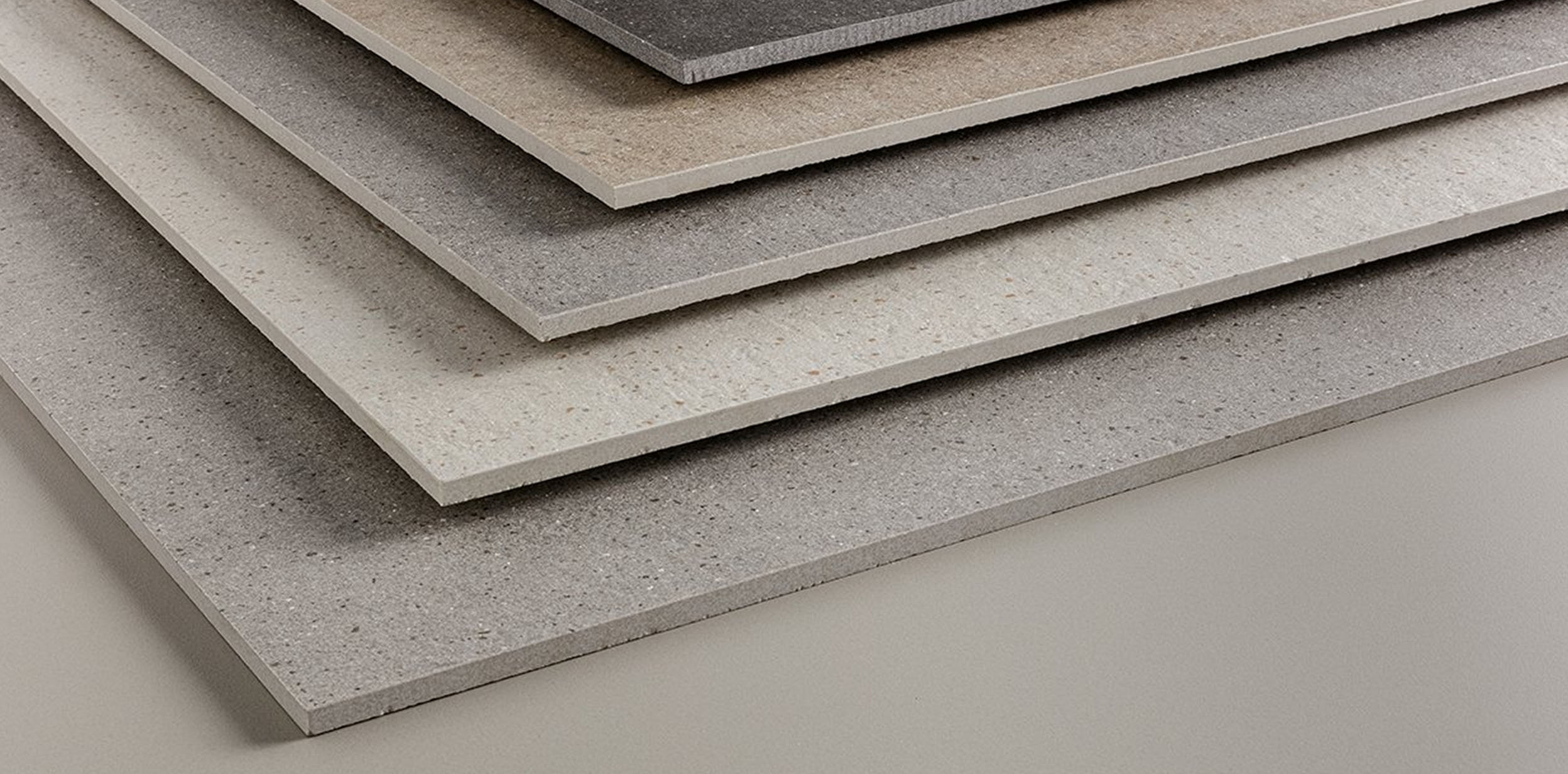
Under this standard, a “porcelain tile” is technically a dry-pressed tile with water absorption of 0.5% or lower, placing it in classification group BIa. This low absorption rate is what gives porcelain its durability advantage over standard ceramic or earthenware tile in freeze-thaw climates common across Northern and Central Europe.
Any tile sold into the EU market must carry CE marking that demonstrates conformity with EN 14411, backed by a formal Declaration of Performance. This has been mandatory for construction-grade ceramic tile since the Construction Products Regulation (EU) No 305/2011 came into full effect.
Why This Matters for Iranian Suppliers Specifically
Iranian manufacturers exporting into the EU generally test their product against Iranian national standards (ISIRI) domestically first. That does not automatically satisfy EN 14411. Before finalizing an order, insist on:
- A current Declaration of Performance issued for the specific product line and batch you intend to purchase, not a generic factory certificate.
- Third-party lab test reports (ideally from an EU-recognized testing body) confirming water absorption, breaking strength, and slip resistance (DCOF) values for the specific tile.
- Confirmation of which AVCP (Assessment and Verification of Constancy of Performance) system applies to your product category, since this determines whether ongoing factory audits are required.
People Also Ask: Is Iranian Porcelain Tile as Durable as Italian or Spanish Porcelain?
Technically, yes, when the tile is manufactured to the same body composition and firing standards. Porcelain’s core durability characteristics — hardness, water resistance, frost resistance — come from raw material composition and kiln temperature, not country of origin. Several Iranian manufacturers now operate Italian and Spanish-made kiln and press lines under technology transfer agreements, producing tile that meets identical EN ISO 10545 test thresholds.
The variable isn’t nationality — it’s factory-by-factory quality control consistency, which is exactly why third-party lab verification matters more than brand reputation when sourcing from a newer export market.
Pricing Breakdown: What a European Buyer Actually Pays
Factory Price vs. Landed Cost
A common mistake among first-time buyers is comparing factory quoted prices directly against EU retail or wholesale pricing without accounting for the full landed cost. A realistic breakdown for a full 20-foot container (roughly 900–۱,۰۰۰ square meters of standard-format porcelain) looks like this:
- Factory FOB price: Base cost per square meter at the Iranian port, typically $5–۹ depending on format, finish, and rectification.
- Ocean freight: Varies significantly by route and current shipping capacity; Persian Gulf-to-EU port freight has ranged widely in recent years due to regional shipping disruptions.
- Insurance: Typically 0.3–۰.۵% of cargo value for marine cargo insurance.
- EU import duty: Ceramic tile generally falls under a standard tariff rate, though country-of-origin trade agreements can shift this; confirm current rates with your customs broker, since tariff schedules change.
- VAT: Applied at the destination country’s standard rate upon customs clearance.
- Inland transport: From the EU port of entry to the project site.
Once all of these are stacked, the landed cost typically still sits 15–۲۵% below equivalent Italian or Spanish product delivered to the same site, though the gap narrows for smaller, less-than-container-load orders where freight cost is proportionally higher.
Minimum Order Quantities and Container Economics
Most Iranian exporters set minimum order quantities around a full container load, both because it’s the most freight-efficient shipping unit and because smaller runs disrupt factory production scheduling. For contractors with smaller projects, two practical options exist:
- Consolidation through a trading agent who combines multiple buyers’ orders into a single container.
- Working with a supplier that maintains EU warehouse stock, allowing smaller draw-downs against a pre-shipped bulk order — though this adds a warehousing markup.
People Also Ask: How Long Does Shipping Take From Iran to Europe?
Ocean freight from major Iranian ports (typically Bandar Abbas) to Northern European ports such as Rotterdam or Hamburg generally takes four to six weeks, depending on transshipment routing and current Red Sea shipping conditions, which have periodically added delays and rerouting costs over the past several years. Mediterranean-facing EU ports can sometimes see faster transit. Buyers should build a minimum six-to-eight-week buffer between order confirmation and required on-site delivery to absorb documentation, loading, and customs variability.
Vetting an Iranian Tile Supplier: A Practical Checklist
Questions to Ask Before Signing a Contract
Serious suppliers will answer these without hesitation. Hesitation or vague answers are themselves useful signals.
- Can you provide EN 14411 test reports from an EU-recognized laboratory for this specific product line?
- What is your current production capacity, and what is your realistic lead time for a container of this size?
- Can you provide references from at least two prior European clients, along with shipment records?
- What Incoterm do you operate under, and who arranges marine insurance?
- How do you handle breakage claims — Iranian tile shipped by sea typically sees breakage rates in the low single digits, and a supplier without a clear replacement policy is a warning sign.
- What payment terms and channel do you use, and how does that channel handle current sanctions-compliance requirements?
Sample Ordering Before Bulk Commitment
No European contractor should place a full container order without first receiving physical samples and verifying them independently. A reasonable sequence looks like this:
- Request digital catalog and pricing for shortlisted product lines.
- Order physical samples (typically shipped by air, at modest cost) to inspect color consistency, edge rectification, and surface finish firsthand.
- Send samples to an independent lab, or request the supplier’s existing third-party DoP documentation, to confirm EN 14411 compliance.
- Negotiate a trial order — sometimes a partial container — before committing to full project volume, particularly for a first-time supplier relationship.
Common Mistakes First-Time Buyers Make
- Skipping third-party verification and relying solely on factory-issued documentation.
- Underestimating lead time, especially during peak export seasons around major Iranian trade exhibitions.
- Ignoring Incoterm details, which shift risk and cost responsibility at different points in the shipping chain.
- Failing to clarify batch consistency — porcelain tile can show slight shade variation between production runs, so specify that your full order ships from a single batch wherever the project requires visual uniformity.
Conclusion
Iranian porcelain tile export has matured into a legitimate, cost-competitive option for European construction projects, backed by a production base that now exceeds most regional competitors in raw output. The price advantage over traditional Italian and Spanish suppliers is real and structural, not a temporary discount.
That said, the opportunity comes with genuine complexity. Compliance with EN 14411 and CE marking isn’t optional, banking and sanctions logistics require careful legal guidance, and shipping timelines demand more buffer than a domestic EU order would. Buyers who treat these as manageable project variables — rather than reasons to avoid the market entirely — are the ones capturing the cost savings without absorbing unnecessary risk.
Looking ahead, expect Iranian export volume to keep climbing as manufacturers continue investing in EU-standard testing infrastructure and digital-print porcelain lines that compete directly with premium Italian aesthetics at a lower price point. Contractors who build supplier relationships now, with proper documentation and sample verification in place, will be positioned to scale orders efficiently as that trend continues.
If you’re evaluating an Iranian porcelain tile export deal for an upcoming project, the highest-leverage next step is independent verification — not another catalog review. Get physical samples, request EN 14411 lab documentation, and speak with a trade compliance specialist about the payment channel before you commit to a container order. For a second opinion on supplier vetting or landed-cost calculations specific to your project, our sourcing team is available for a direct consultation.


نظرات ۰